


1967
He also joined an expedition to the Huautla area to Cueva de Rio Iglesia during 2007. During this expedition, Matt and Yuri Schwartz found a connection between Cueva de Rio Iglesia and the rest of Sistema Huautla. The previous team that had explored to the bottom of Rio Iglesia in 1967 had been stopped by a sand plug. When Matt and Yuri reached the bottom of the cave they found that the plug had been opened and the passage quickly lead to a connection with Cueva de San Augustin.


May 15, 1980
Matthew D. Covington (born May 15, 1980 in Fort Worth) is an American speleologist, most known for his work in hydrogeology and geomorphology, especially in the field of mathematical modeling of karst systems, as well as by his contribution to Cueva Cheve project in Mexico, since 1999.
September 1995
Covington grew up in a caving area, the Ozark Mountains, and first visited a cave at the age of 6. He became quite interested in caving at about 14, and at 15 he read the National Geographic report about Bill Stone's expedition to Huautla cave (NG, September 1995) which was decisive for his later caving. At 16 he joined the Boston Mountain Grotto in Fayetteville. At first it was recreational caving in the neighbourhood, the first expedition he took part in was to the Tongass National Forest in Southeast Alaska in the summer of 1999.
1998
He was born in Fort Worth, his father is an electrical engineer, and his mother is a retired middle school teacher. After graduating high school in Fayetteville in 1998 he graduated in physics (The Trebuchet: Physics, numerics, and connections to millennia of human activity) and philosophy (Quantum mechanics and libertarian free will) at the University of Arkansas in 2002. In 2008 he completed his doctoral study in theoretical astrophysics at the University of California in Santa Cruz, with the thesis: The production and evolution of scaling laws via galaxy merging. After his PhD he pursued a postdoc study with a grant by NSF. In 2010 he completed it and started another postdoc in Postojna, Slovenia, also supported by NSF.
2004
In 2004 he took part in Bill Stone's expedition to Cueva Chevé area in Mexico, when J2 cave was discovered. He was involved in all of the subsequent expeditions to Cueva J2 (2005, 2006, 2009, 2010, 2013) and co-led the 2010 expedition with Marcin Gala and Jon Lillestolen. In 2009 he dove through the sump in the bottom of J2 with Marcin Gala and established the first camp on the far side of the sump. He also participated in the expeditions to Cueva Chevé and Peña Negra cave in 2016.
August 2010
From August 2010 to August 2012, Covington worked as a postdoc at the Karst Research Institute in Postojna, Slovenia, supported by a National Science Foundation International Research Fellowship. While there, he worked with Franci Gabrovšek, who had a similar academic background in that he was a physicist by training but was using physics to understand processes occurring in caves. Covington read the book "Processes of Speleogenesis: A modeling approach", co-authored by Gabrovšek, and met Gabrovšek at the Karst Waters Institute "Future directions in karst research" conference in San Antonio, TX. During this period, Covington joined DZRJL, Ljubljana Cave Exploration Society, and began exploration of caves in Slovenia. He discovered a new caving area on Pokljuka near the mountain Viševnik.
2025
In 2025, he was featured in a CNN article regarding Grant Hardin’s escape from the high-security Calico Rock prison in northern Arkansas. He explained, that with over 1500 caves in northern Arkansas, Hardin could easily be camped within the caves.
Trending
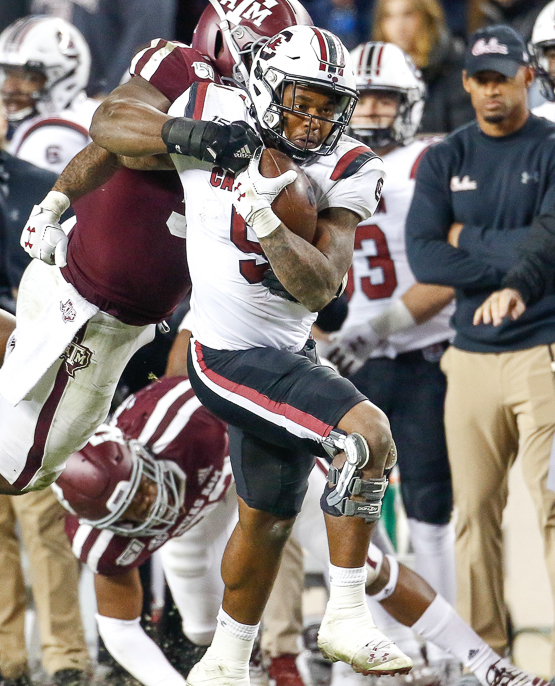
Rico Dowdle is an American professional football running back currently playing for the Carolina Panthers in the NFL He played...
6 months ago Robert De Niro's best and worst performances, Netflix movie review and The Intern
7 months ago Paul Skenes enjoys College World Series while Olivia Dunne supports with LSU jersey.

8 months ago Damiano David Explores Vulnerability and Growth in New Album 'FUNNY little FEARS'
8 months ago Declan Rice returns against Newcastle; Havertz nearing return from hamstring injury at Arsenal.
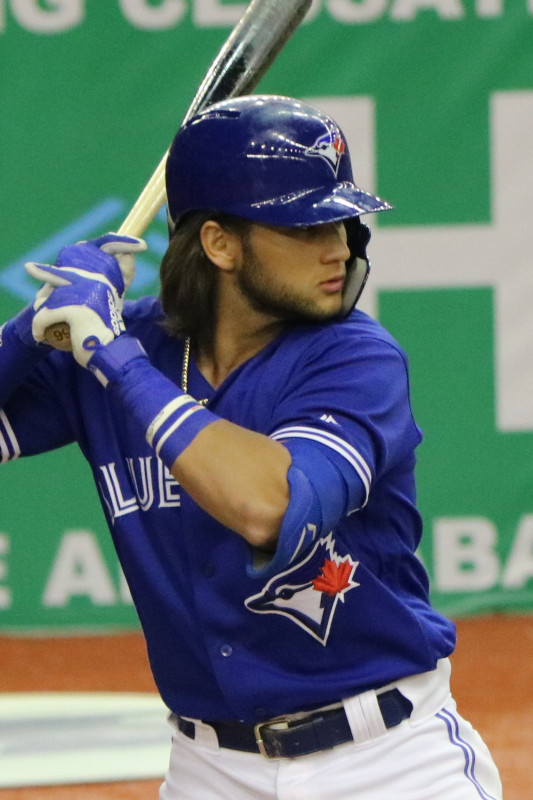
5 months ago Bo Bichette Hailed Jays Fans After Yankees Series Amid Lineup Placement Debate
Popular

Stranger Things created by the Duffer Brothers is a popular...

XXXTentacion born Jahseh Dwayne Ricardo Onfroy was a controversial yet...
Kelsey Grammer is an accomplished American actor producer and singer...

Candace Owens is an American conservative political commentator and author...

Melania Trump a Slovenian-American former model has served as First...

Bernie Sanders is a prominent American politician currently serving as...