


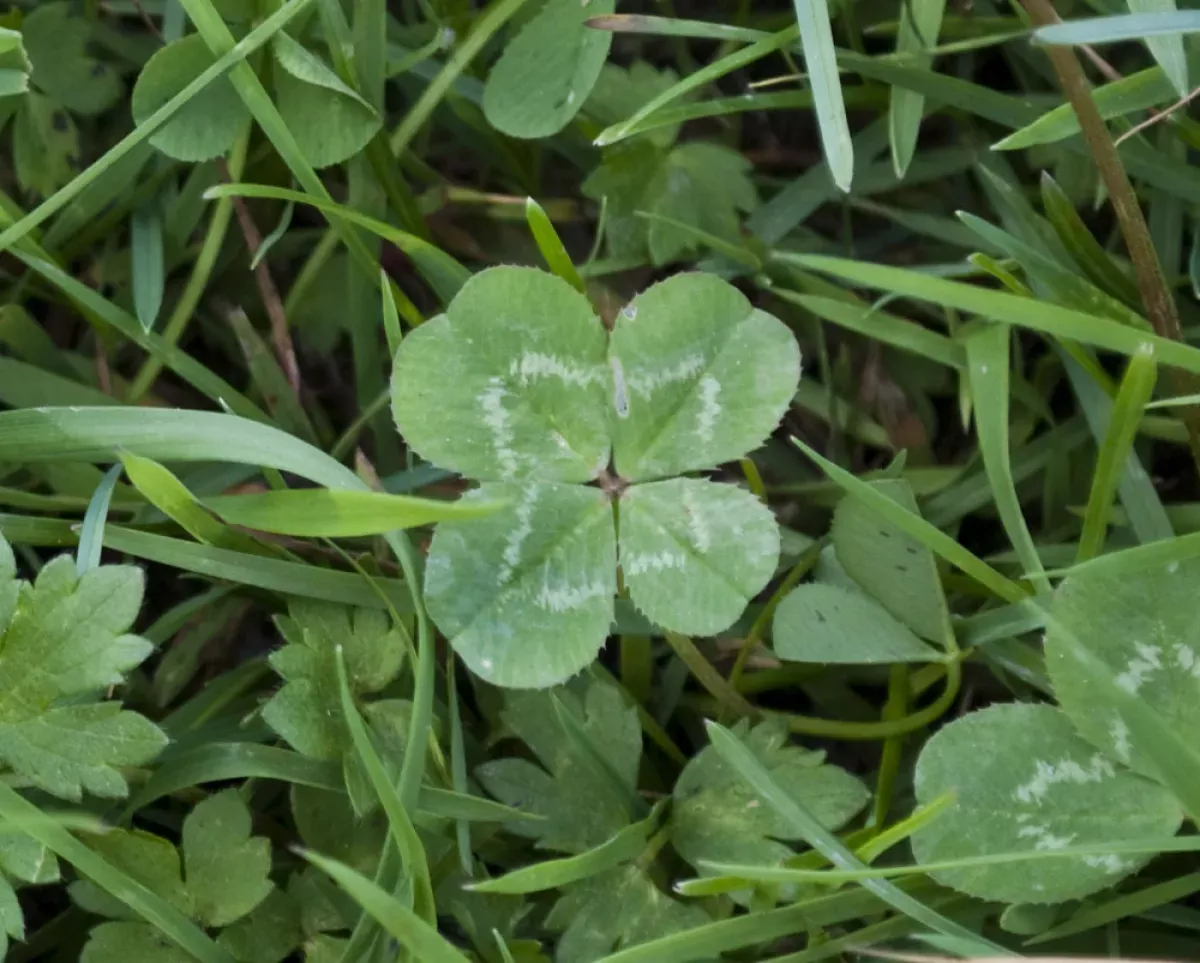
The four-leaf clover, an uncommon variant of the three-leaf clover, is traditionally associated with good luck. While the origin of this belief remains unclear, an early reference from 1640 mentions "Fower-leafed or purple grasse" being cultivated in gardens for its supposed medicinal benefits, particularly for treating "purples" in children.
May 2009: World Record for Most Leaves on a Clover Stem
The highest number of leaves ever recorded on a single clover stem is 56. This remarkable discovery was made by Shigeo Obara in Hanamaki, Iwate, Japan, on May 10, 2009.


August 2010: Discovery of the Four-Leaf Clover Gene
In August 2010, researchers at the University of Georgia announced the identification of the gene responsible for transforming ordinary three-leaf clovers into the sought-after four-leaf variety. This discovery, published in the Crop Science journal, opened up possibilities for breeders to selectively cultivate four-leaf clovers.
2017: Clover Survey Reveals Frequency of Four-Leaf Clovers
In 2017, a survey conducted in central Europe examined approximately 5.7 million clovers. The findings revealed that the occurrence of four-leaf clovers was about one in every 5,000 three-leaf clovers. This frequency is twice as high as the commonly cited probability of one in 10,000.
June 2018: World Record for Most Four-Leaf Clovers Collected in One Hour
On June 23, 2018, Katie Borka from the United States achieved a remarkable feat by collecting 166 four-leaf clovers in a single hour, setting a new world record.
Mentioned in this timeline

Japan is an East Asian island country located in the...
Trending

4 hours ago LIV Golf Players Face Backlash Seeking DP World Tour Return Amid Future Uncertainty

4 hours ago Experts Warn Byron Donalds' Energy Plan May Increase Florida Electric Bills

5 hours ago 49ers Open Practice Window for Wide Receiver Christian Kirk
5 hours ago Cade Smith Secures Crucial Six Outs in Guardians' ALCS Game 3 Victory

5 hours ago Cole Palmer Key Figure in Chelsea's Tactical Clash Against Everton
4 hours ago Analysis of America's Global Standing and Trump's Political Legacy
Popular

Ilhan Omar is a prominent American politician currently serving as...

Ken Paxton is an American politician and lawyer serving as...

Jameis Winston is an American football quarterback currently playing for...

Elon Musk is a visionary entrepreneur and engineer known for...

Michael Joseph Jackson the King of Pop was a highly...

Cristiano Ronaldo widely considered one of the greatest footballers captains...