


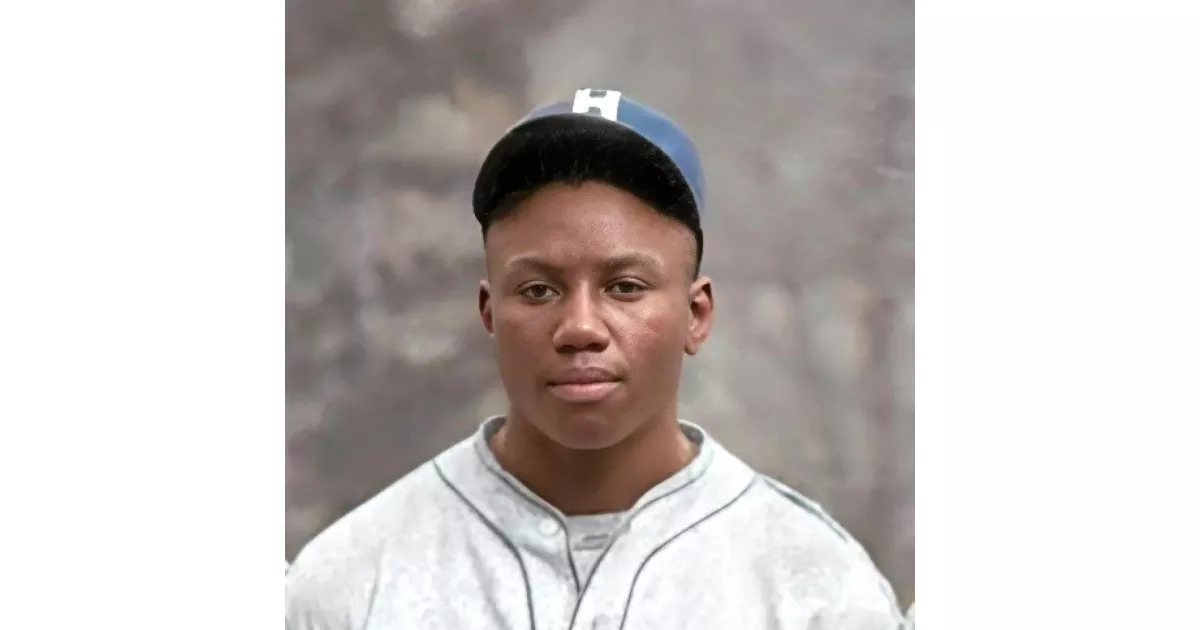
Joshua Gibson was an American baseball catcher known for his remarkable power-hitting abilities and exceptional skills as a catcher in the Negro leagues. Regarded by baseball historians as one of the greatest power hitters and catchers in the history of the sport, Gibson's legacy was cemented when he was inducted into the National Baseball Hall of Fame in 1972, becoming the second Negro league player to receive this honor.
December 21, 1911: Birth of Josh Gibson
Josh Gibson was born on December 21, 1911, in Buena Vista, Georgia. He would go on to become one of the most celebrated power hitters and catchers in baseball history.


1920: Start of Negro Leagues
The Negro Leagues formally began in 1920, providing a platform for African American baseball players, including future stars like Josh Gibson.
1923: Move to Pittsburgh
In 1923, Josh Gibson moved to Pittsburgh, where his father found work at the Carnegie-Illinois Steel Company. This move set the stage for Gibson's future in baseball.
1928: Meeting Helen Mason
In 1928, Josh Gibson met Helen Mason, who would later become his wife. This meeting was a pivotal moment in his personal life.
1928: Recruitment by Pittsburgh Crawfords
In 1928, while playing third base for an amateur team, Josh Gibson was recruited by the Pittsburgh Crawfords, marking the beginning of his professional baseball journey.
March 7, 1929: Marriage to Helen Mason
On March 7, 1929, Josh Gibson married Helen Mason, marking a significant personal milestone in his life.
July 31, 1930: Debut with Homestead Grays
Josh Gibson debuted with the Homestead Grays on July 31, 1930. This marked the beginning of his storied career with one of the top teams in the Negro leagues.
1930: Homestead Grays Recruitment
In 1930, Josh Gibson began playing for the Homestead Grays, marking the start of his career with one of the most storied teams in the Negro leagues.
1930: Playing for Memphis Red Sox
In the summer of 1930, 18-year-old Josh Gibson played for the Memphis Red Sox in a game in Scranton, Pennsylvania. Despite his performance, the manager was not impressed by his catching skills.
1931: Pittsburgh Crawfords Professional Status
By 1931, the Pittsburgh Crawfords had achieved fully professional, major Negro league status, aligning with the early years of Gibson's career.
1931: Playing for Homestead Grays
During 1931, Gibson continued to play for the Homestead Grays, further establishing his career in the Negro leagues.
1932: Move to Pittsburgh Crawfords
In 1932, Josh Gibson moved to the Pittsburgh Crawfords, where he played until 1936. This period was significant in his career as he built his reputation as a top player.
1933: Batting Achievements
In 1933, Josh Gibson hit .467 with 55 home runs in 137 games against all competition. His lifetime batting average is reported to be over .350, making him one of the best hitters in Negro league history.
1934: Home Run Records
In 1934, Josh Gibson hit 69 home runs against all levels of competition, with 11 of those in league games. This year highlighted his exceptional power-hitting abilities.
1934: Remarkable Home Run Feats
In 1934, Josh Gibson reportedly hit a home run at Yankee Stadium that struck two feet from the top of the wall circling the center field bleachers. He also allegedly hit one over the third deck next to the left-field bullpen, the only fair ball hit out of Yankee Stadium recorded by a Negro league player.
1936: End of First Stint with Pittsburgh Crawfords
Gibson's first stint with the Pittsburgh Crawfords ended in 1936, marking a key transition in his career.
1937: Batting Average Leader
In 1937, Josh Gibson led his league with a batting average of .417, showcasing his exceptional hitting skills.
1937: Playing in Dominican League
In 1937, Josh Gibson played for Ciudad Trujillo in the Dominican League, showcasing his talents internationally.
1939: Playing for Homestead Grays
By 1939, Josh Gibson had returned to the Homestead Grays, continuing his impressive career in the Negro leagues.
1940: Playing in Mexican League
From 1940 to 1941, Gibson played in the Mexican League for Azules de Veracruz, further broadening his international experience.
1941: Playing in Mexican League
In 1941, Gibson continued his stint in the Mexican League with Azules de Veracruz, showcasing his talents on an international stage.
1942: Return to Homestead Grays
In 1942, Gibson returned to the Homestead Grays, where he played until 1946, cementing his legacy in the Negro leagues.
1943: Highest Single-Season Batting Average
In 1943, Josh Gibson achieved the highest single-season batting average at .466, a record recognized by Major League Baseball decades later.
1943: Diagnosis with Brain Tumor
In early 1943, Josh Gibson fell into a coma and was diagnosed with a brain tumor. Despite regaining consciousness, he refused surgery and lived with recurring headaches for the next four years.
1944: Hospitalization for Mental Observation
In 1944, Josh Gibson was hospitalized at Gallinger Hospital in Washington, D.C., for mental observation, reflecting the severe impact of his health issues.
1945: Best Black Player
Larry Doby remarked that in 1945, Josh Gibson was considered the best black player, despite not breaking into the major leagues himself.
1946: End of Career with Homestead Grays
In 1946, Josh Gibson ended his career with the Homestead Grays, marking the conclusion of his illustrious time in the Negro leagues.
1946: East–West All-Star Game Appearances
In 1946, Josh Gibson made double duty appearances in the East–West All-Star Game, playing at Griffith Stadium and Comiskey Park, underscoring his enduring skill and popularity.
1946: Best Black Player
In 1946, Josh Gibson was still considered the best black player by his peers, even as the baseball color barrier was about to be broken by others.
January 20, 1947: Death of Josh Gibson
On January 20, 1947, Josh Gibson passed away at the age of 35 in Pittsburgh. Despite his early death, his legacy as one of the greatest players in baseball history endures.
April 1947: Jackie Robinson Breaks Color Barrier
In April 1947, Jackie Robinson became the first black player in modern major league history. Larry Doby later expressed that many felt Josh Gibson was the best black player at the time, a sentiment that contributed to Gibson's heartbreak and early death.
1948: End of Negro Leagues as Major League
The recognition of the Negro Leagues as a major league by Major League Baseball in 2021 marks the period from 1920 to 1948 as a significant era in baseball history.
1972: Induction into the Baseball Hall of Fame
In 1972, Josh Gibson became the second Negro league player to be inducted into the National Baseball Hall of Fame, solidifying his legacy as one of baseball's all-time greats.
1972: Hall of Fame Induction
In 1972, Josh Gibson, along with Buck Leonard, became the second and third Negro league players inducted into the Baseball Hall of Fame, following Satchel Paige. His plaque claims nearly 800 home runs in his career.
1975: Plaque Placed on Grave
In 1975, a small plaque was placed on Josh Gibson's grave at Allegheny Cemetery in Pittsburgh, marking his final resting place and honoring his legacy.
2000: Ranking in 100 Greatest Baseball Players
In 2000, Josh Gibson was ranked 18th on The Sporting News' list of the 100 Greatest Baseball Players, the highest-ranking player who spent most of his career in the Negro leagues. He was also a finalist for the Major League Baseball All-Century Team in the same year.
2006: PNC Park Introduces Exhibit Honoring Negro League Teams
In 2006, PNC Park, home of the Pittsburgh Pirates, introduced an exhibit honoring Pittsburgh's two Negro league baseball teams. Named Legacy Square, the display featured statues of seven players, including Josh Gibson, and was located by the stadium's left field entrance.
2006: First Official Statistics for Negro Leagues Compiled
In 2006, the first official statistics for the Negro leagues were compiled as part of a study sponsored by the National Baseball Hall of Fame. These statistics included the official records for Josh Gibson and were published in Shades of Glory by Lawrence D. Hogan.
2009: Josh Gibson Statue Installed at Nationals Park
In 2009, a statue of Josh Gibson was installed inside the center field gate of Nationals Park, alongside statues of Frank Howard and Walter Johnson.
August 10, 2010: Gibson Named to Nationals Ring of Honor
On August 10, 2010, Josh Gibson was named to the Washington Nationals Ring of Honor for his significant contribution to the game of baseball in Washington, D.C. as part of the Homestead Grays.
2015: Pirates Remove Statues from Legacy Square
In 2015, the Pittsburgh Pirates removed all seven statues from the Legacy Square area without any public announcement. These statues, including Josh Gibson's, were donated to the Josh Gibson Foundation and later sold at auction to benefit the Foundation. Most statues are now displayed at the Negro Leagues Baseball Museum in Kansas City, Missouri.
April 29, 2017: Opera Based on Josh Gibson's Life Premieres
On April 29, 2017, an opera based on Josh Gibson's life, titled The Summer King, premiered in Pittsburgh. The opera was composed by Daniel Sonenberg.
2020: SABR Article on Gibson's Home Runs
In 2020, the Society for American Baseball Research published an article providing details on Josh Gibson's home run feats in major league parks, adding to his legendary status.
2021: Recognition of Negro Leagues as Major League
In 2021, Major League Baseball formally recognized the Negro Leagues (1920–1948) as a major league, further cementing Josh Gibson's legacy as one of the greatest players in baseball history.
May 28, 2024: MLB Recognizes Negro League Statistics
On May 28, 2024, Major League Baseball announced it would recognize Negro league statistics, giving Josh Gibson the highest single-season major league batting average at .466 (1943) and the highest career batting average at .372.
Mentioned in this timeline
Jackie Robinson was a pivotal figure in American history as...
The rapid advancement of artificial intelligence continues to dominate the...

Washington D C the capital of the United States is...
A star is a self-gravitating luminous plasma spheroid exemplified by...
Pennsylvania is a U S state located in the Mid-Atlantic...
Illinois is a Midwestern state in the United States bordered...
Trending

4 hours ago Josiah Harrell Faces Elves Brener at UFC Vegas 121
6 months ago Rob Dillingham's NBA Journey: From Wolves Question to Bulls' Rising Star

5 hours ago Deadly Russian Drone Barrage Strikes Kyiv and Ukrainian Attacks Leave Ten Dead

5 hours ago Cavan Sullivan Becomes Youngest USMNT Player Since 2006

29 days ago Harry Kane Named Germany's Player of the Year Following Historic Season
6 hours ago Texas Rangers Provide Multiple Roster Updates and Triple-A Recalls
Popular

Jameis Winston is an American football quarterback currently playing for...

Shakira Isabel Mebarak Ripoll the Queen of Latin Music is...

Ken Paxton is an American politician and lawyer serving as...

Michael Joseph Jackson the King of Pop was a highly...

Lane Kiffin is an American football coach with a notable...

Cristiano Ronaldo widely considered one of the greatest footballers captains...