


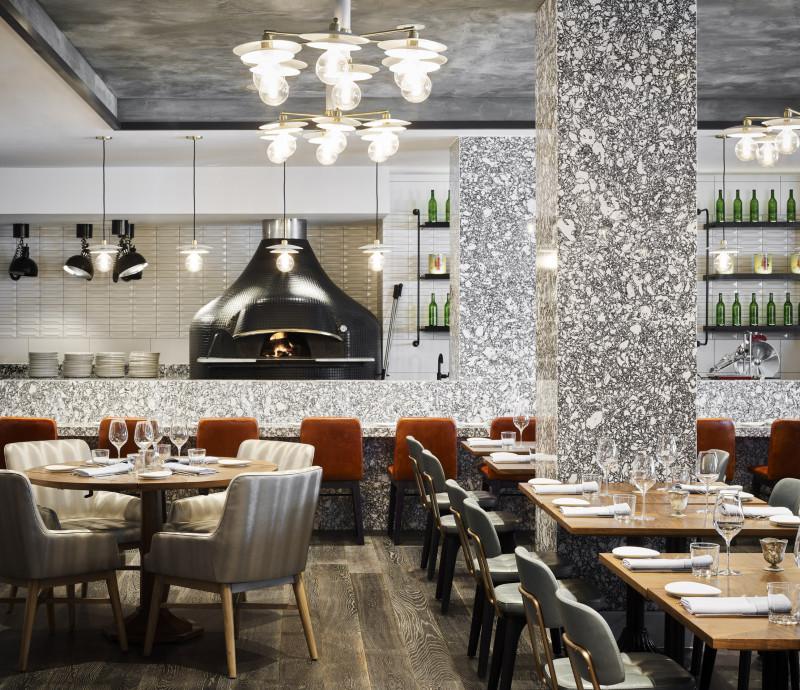
A restaurant is a business that prepares and serves food and drinks to customers, typically for consumption on the premises. However, many restaurants also provide take-out and delivery options. Restaurants exhibit significant diversity in their appearance, cuisine, and service styles, encompassing a spectrum from budget-friendly fast-food outlets and cafeterias to moderately priced family-style eateries and upscale, high-end establishments.
1920: Prohibition Impacts Fine Dining Restaurants
In 1920, the implementation of Prohibition caused fine dining restaurants that relied on alcohol sales to struggle, leading to a rise in more casual dining establishments like cafeterias and diners.


1950: Proportion of Meals Consumed Outside Home in 1950
In 1950, 25% of meals were consumed outside the home in restaurants or institutions.
1964: Civil Rights Act Outlaws Segregation in Restaurants
In 1964, The Civil Rights Act of 1964 outlawed segregation based on race, color, religion, or national origin in all public accommodations engaged in interstate commerce, including restaurants.
1990: Proportion of Meals Consumed Outside Home in 1990
By 1990, the proportion of meals consumed outside the home in restaurants or institutions had risen to 46% due to factors such as a growing older population and the increasing number of single-parent households.
2000: Restaurant Count in Vietnam in 2000
In 2000, Vietnam had approximately 20,000 restaurants nationwide.
2005: Michelin Releases New York City Guide
In 2005, Michelin released its first guide for the United States, focusing on New York City, using a star rating system to evaluate restaurants.
2006: Restaurant Sales in the United States in 2006
In 2006, full-service restaurants in the United States accounted for $298 billion in sales, while limited-service restaurants accounted for $260 billion.
2008: Restaurant Industry Growth During the 2008 Recession
During the 2008 recession, the restaurant industry continued to grow, employing 10 million workers, despite having low wages attributed to thin profit margins.
2012: Waiting Staff Employment and Earnings in 2012
In 2012, the waiting staff in restaurants numbered 4,438,100 and earned an average of $8.84 per hour.
2013: Cooks' Employment and Earnings in 2013
In 2013, restaurants employed 912,100 cooks who earned an average of $9.83 per hour.
2014: American Spending on Dining Out in 2014
In 2014, Jiaxi Lu of the Washington Post reported that Americans were spending $683.4 billion annually on dining out and demanding better food quality and greater variety.
2016: Restaurant Statistics in 2016
In 2016, there were 1,000,000 restaurants in the United States, with the average person eating out five to six times weekly. Additionally, Americans began spending more money at restaurants than on groceries.
2016: Restaurant Spending Exceeds Grocery Spending
Starting in 2016, Americans spent more money on restaurants than on groceries.
October 2017: Number of Eating and Drinking Places in the U.S.
In October 2017, The New York Times reported that there were 620,000 eating and drinking places in the United States and that the number of restaurants are growing almost twice as fast as the population.
2020: Projected Decrease in Restaurant Sales due to COVID-19 Pandemic
In 2020, the National Restaurant Association projected that the COVID-19 pandemic would decrease restaurant sales by $274 billion from their initial estimate, lowering it to $675 billion.
2021: Revenue of the Restaurant Industry in Vietnam in 2021
In 2021, the revenue of the restaurant industry in Vietnam increased, with the out-of-home market accounting for VND333.69 trillion.
2022: Restaurant Growth and Revenue in Vietnam in 2022
In 2022, Vietnam saw its number of restaurants increase to over 400,000, with the restaurant industry's revenue reaching VND610 trillion, a 16% increase from 2021, with the out-of-home market accounting for VND333.69 trillion.
2023: Archaeological Excavations Reveal Ancient Sumerian Food Establishment
In 2023, archaeological excavations at Lagash in southern Iraq uncovered a third-millennium BCE public food establishment from around 2700 BCE, featuring benches, an oven, food preparation areas, and bowls with food and beer traces, suggesting a communal dining space for prepared meals and beverages accessible to non-elites.
Mentioned in this timeline
The United States of America is a federal republic primarily...

A supreme court the highest court in a legal jurisdiction...

Vietnam officially the Socialist Republic of Viet Nam is a...
Trending

4 hours ago Julia Grabher Faces Geerlings in Mallorca Tennis Tournament Match

4 hours ago Investors Rotate Assets Away From AI Stocks Towards Healthcare and Bonds

5 hours ago Maja Chwali?ska Faces Maria Sakkari at WTA Wuhan Tournament
5 hours ago Morris Chestnut Shares Details on His Early A Different World Acting Experience

5 hours ago Rhea Ripley Featured in Recent WWE News Updates and WrestleMania Rumors

6 hours ago Sean Payton and Charissa Thompson Share Unexpected On-Air Kiss
Popular

Ilhan Omar is a prominent American politician currently serving as...

Ken Paxton is an American politician and lawyer serving as...

Michael Joseph Jackson the King of Pop was a highly...

Elon Musk is a visionary entrepreneur and engineer known for...

Jameis Winston is an American football quarterback currently playing for...

Cristiano Ronaldo widely considered one of the greatest footballers captains...