


Ain is a French department located in the Auvergne-Rhône-Alpes region of Eastern France. Named after the Ain river, it is bordered by the Saône and Rhône rivers. Situated on France's eastern edge, it shares a border with Switzerland (cantons of Geneva and Vaud). As of 2019, Ain had a population of 652,432.
1937: Construction of Barrage de Génissiat
In 1937, the construction of the Barrage de Génissiat started in the department.


1939: World War II impact
In 1939, World War II struck the department of Ain hard, resulting in the deportation of 600 people.
1945: End of World War II
By 1945, at the end of World War II, half of the 600 people deported from Ain did not return.
1979: Number of farms
In 1979, there were 14,600 farms in the department of Ain.
1988: Number of farms
In 1988, the number of farms in Ain was counted as 11,320.
1990: Population of Ain
In 1990, the population of the department of Ain was 471,019 inhabitants.
1992: Polytechnic university founded
In 1992, a polytechnic university was founded in Bellignat, focusing on plastics engineering and research.
1992: Alimentec technology platform founded
In 1992, the technology platform "Alimentec" was founded in Bourg-en-Bresse to focus on applied research and technical education in the agro-industrial sector.
2002: Tourism sector
In 2002, 2.7 million nights were spent in the department of Ain.
2003: Services sector employment
Since 2003, the services branch has employed more people than any other economic sector in Ain.
December 2006: Tourism employment
In December 2006, 2.9% of the employment in Ain was related to the tourist sector.
2006: Tourism sector
During the 2006 season, 2.5 million nights were spent in the department of Ain.
2006: Commercial Sector Enterprises
In 2006, the commercial sector in Ain comprised 5,861 enterprises, including wholesalers, distributors, automobile dealers, garages, retailers, and repair businesses.
2006: Employment in the Commercial Sector
In 2006, the commercial sector in Ain employed 22,973 employees and 9,000 self-employed persons.
September 2007: Timber industry employment
In September 2007, the timber industry in Ain employed approximately 4,500 workers.
2007: Winter sports activity
During the winter of 2006/2007, winter sports activity in Ain was strongly restrained by the lack of snow, with 238,000 daily skiing tourists.
2007: Roads transferred to the department
In 2007, former national roads were transferred to the department of Ain, adding to its already well-developed transport network.
2016: Average Population Density
In 2016, the average population density in Ain was 111 inhabitants/km.
2016: Population of Ain
In 2016, the population of the department of Ain grew to 638,425 inhabitants due to natural growth and a slightly positive migration balance.
2017: President of the Departmental Council
Jean Deguerry of The Republicans has been president of the Departmental Council of Ain since 2017.
2019: Most populous commune
As of 2019, Bourg-en-Bresse is the most populous commune in Ain.
2019: Population of Ain
In 2019, the department of Ain had a population of 652,432.
2021: Departmental election
In the 2021 departmental election, the Departmental Council of Ain was elected.
Mentioned in this timeline
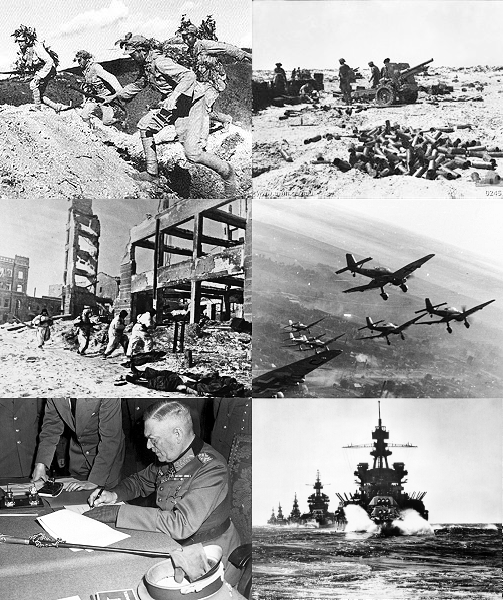
World War II - was a global conflict between the...

War is defined as an armed conflict involving the armed...
Travel involves the movement of people between geographical locations using...

September is the ninth month of the year in the...
Paris is the capital and largest city of France situated...
Time is a fundamental dimension used to sequence events measure...
Trending

5 hours ago Stefanos Tsitsipas Advances to Almaty Open Semifinals

4 hours ago Anna Wintour Faces Social Media Buzz Following Harry Styles Concert Appearance
4 hours ago Gina Hinojosa Campaigns Across Texas Ahead of 2026 Gubernatorial Race
5 hours ago Ms. Rachel Supports Toddler Following Alleged Discrimination at Darien Library Puppet Show
5 hours ago Curt Cignetti Reviews Ohio State Loss and Prepares Indiana for Upcoming Michigan Game

5 hours ago Elena Rybakina Advances to WTA Ningbo Open Semifinals
Popular

Ilhan Omar is a prominent American politician currently serving as...

Ken Paxton is an American politician and lawyer serving as...

Elon Musk is a visionary entrepreneur and engineer known for...

Michael Joseph Jackson the King of Pop was a highly...

Cristiano Ronaldo widely considered one of the greatest footballers captains...

Elizabeth Holmes is an American entrepreneur and the founder of...