



A city is a sizable human settlement, though the term's definition varies globally. While size thresholds differ, cities are generally characterized as permanent, densely populated areas with defined boundaries where residents primarily engage in non-agricultural activities. Cities feature comprehensive infrastructure for housing, transportation, sanitation, utilities, land management, production, and communication. Their high density fosters interactions between individuals, governmental bodies, and businesses, potentially enhancing the efficiency of goods and service distribution.
1 day ago : City Developments and Local Government Updates Across Various Regions
Local leaders address urban revitalization, political candidacies, and community safety regulations. Discussions include mayoral efforts in Newport, Coral Springs commission elections, and municipal handling of residential archery safety concerns, highlighting diverse priorities in city management.


1900: Urban Population Growth
In 1900, 15% of the world's population lived in cities, marking a significant increase due to the agricultural and industrial revolutions and the cultural appeal of urban centers.
1910: Manufacturing Centers Emerge in the US
In the United States, by 1910, the introduction of railroads led to lower transportation costs, and large manufacturing centers began to emerge, which stimulated migration from rural to city areas.
1927: Fritz Lang conceives Metropolis
In 1927, Fritz Lang conceived the idea for his film Metropolis after visiting Times Square, marveling at the nighttime neon lighting.
1962: Release of The Fast Lady
In 1962, traffic congestion began to appear in films such as The Fast Lady.
1967: Release of Playtime
In 1967, traffic congestion appeared in films such as Playtime.
1968: King Assassination Riots
In 1968, during the King assassination riots in America, armies assumed responsibility for policing cities due to the domestic turmoil.
1999: Cities Alliance Established
In 1999, the World Bank and UN-Habitat jointly established the Cities Alliance to guide policymaking, knowledge sharing, and grant distribution around urban poverty.
2014: More Than Half of the World Population Lives in Cities
In 2014, the Population Division of the United Nations Department of Economic and Social Affairs reported that, for the first time, more than half of the world's population lives in cities.
2019: Study on Health Benefits of Nature
In 2019, a study published in Scientific Reports found that spending at least two hours per week in nature improved life satisfaction and health, based on data from almost 20,000 people in the UK.
2021: City Status in the UK
As of 2021, St Davids in the United Kingdom has a population of 1,751, highlighting the lack of official qualifying criteria for city status, which is awarded by the Crown and remains permanent with few exceptions.
2021: UN Endorsement of Urbanization Metric
In March 2021, the United Nations endorsed a metric, devised by the European Commission, OECD, World Bank, and others, to define a city as having at least 50,000 inhabitants in contiguous dense grid cells, primarily for international statistical comparison.
2024: Olympics in Paris
In the summer of 2024, the Olympic Games were held in Paris, a city known for its cultural history.
2050: Predicted Increase in City Dwellers
By 2050, the UN predicts an additional 2.5 billion city dwellers worldwide, with 90% of urban population expansion occurring in Asia and Africa.
Mentioned in this timeline
The United States of America is a federal republic primarily...
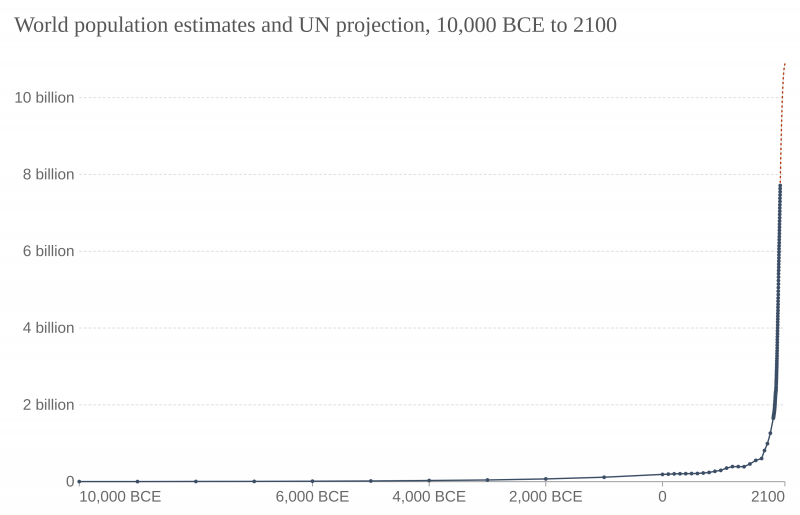
The world population the total number of living humans surpassed...

Washington D C the capital of the United States is...

A bank is a regulated financial institution licensed to accept...
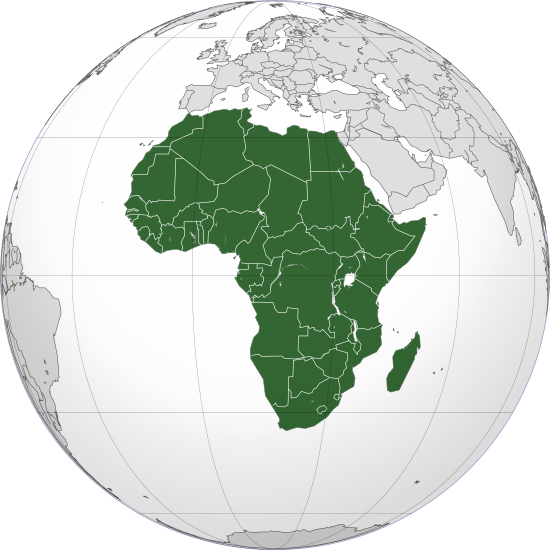
Africa is the second-largest and second-most populous continent home to...
The World Bank is an international financial institution offering loans...
Trending

1 day ago Machine Gun Kelly Refutes Viral Fake Post About Relationship Status With Megan Fox

3 hours ago Tommy Edman Adjusts Role in Dodgers NLCS Postseason Lineup

3 hours ago Teoscar Hernandez Leads Dodgers Against Brewers In Intense NL Championship Series Matchup
3 hours ago Modders Enable PlayStation 5 Games to Run on Xbox Hardware via Emulation

3 hours ago Vanessa Hudgens Shines in New Photoshoot Amid High School Musical Stage Revival Interest

3 hours ago Robert and Michelle King Release New Silicon Valley Satirical Series Cupertino
Popular

Ilhan Omar is a prominent American politician currently serving as...

Ken Paxton is an American politician and lawyer serving as...

Jameis Winston is an American football quarterback currently playing for...

Elon Musk is a visionary entrepreneur and engineer known for...

Michael Joseph Jackson the King of Pop was a highly...

Cristiano Ronaldo widely considered one of the greatest footballers captains...