History of Dubai in Timeline


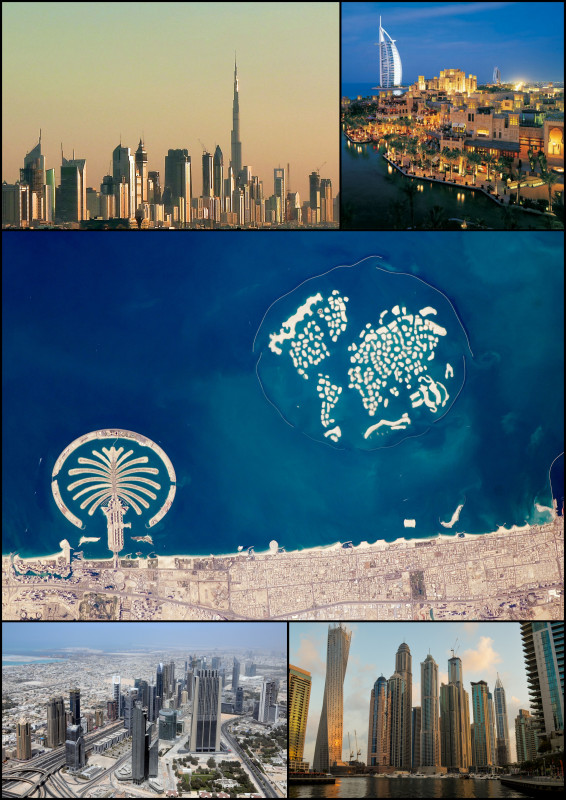
Dubai is the most populous city in the United Arab Emirates and the capital of the Emirate of Dubai, situated on the Persian Gulf's southeastern coast. Its 2025 population is 4 million, with a significant expatriate presence (92%). The broader urban area, including Sharjah, holds 5 million people (2023), while the Dubai–Sharjah–Ajman metropolitan area is home to 6 million residents.
4 hours ago : Katie Price's husband, Lee Andrews, vanished in Dubai. Search and speculation surround his disappearance.
Lee Andrews, Katie Price's husband, reportedly vanished in Dubai, leading to speculation. Evidence suggests phone use, but Price denies publicity stunt claims. The search continues amidst controversy.


1901: Dubai Declares Itself a Free Port in 1901
In 1901, Dubai declared itself a free port, marking a significant step in becoming a regional trade hub.
1901: Dubai Established as a Free Port in 1901
In 1901, Maktoum bin Hasher Al Maktoum established Dubai as a free port, eliminating taxation on imports and exports.
1902: Increased Steamer Visits to Dubai in 1902
In 1902, the steamer of the Bombay and Persia Steam Navigation Company made 21 visits to Dubai, indicating the growing importance of the port.
1904: Fortnightly Steamer Calls to Dubai in 1904
From 1904, the steamers called fortnightly, accelerating Dubai's role as an emerging port and trading hub.
1906: Dubai Supplants Lingeh as Chief Entrepôt in 1906
By 1906, Dubai had supplanted Lingeh as the chief entrepôt of the Trucial States, trading 70,000 tons of cargo that year.
1908: The "Great Storm" of 1908
The "Great Storm" of 1908 struck the pearling boats of Dubai and the coastal emirates, resulting in the loss of a dozen boats and over 100 men.
1910: Bombardment by HMS Hyacinth in 1910
In 1910, the town of Dubai was bombarded by HMS Hyacinth, resulting in 37 deaths.
1911: Poverty and Strife in 1911
In 1911, Butti lamented about the misery and poverty raging among the tribes, leading to looting and killing.
1937: Oil Exploration Contract Signed in 1937
In 1937, an oil exploration contract was signed, guaranteeing royalty rights for Dubai and concessionary payments to Sheikh Saeed bin Maktoum.
1947: Border Dispute War in 1947
In 1947, a border dispute between Dubai and Abu Dhabi escalated into war, leading to British government arbitration and a cessation of hostilities.
1954: Establishment of the Dubai Municipality
In 1954, the Dubai Municipality (DM) was established by Rashid bin Saeed Al Maktoum for city planning, citizen services, and upkeep of local facilities.
1958: Sheikh Rashid's Rule from 1958
From 1958, Dubai's ruler Sheikh Rashid bin Saeed Al Maktoum used revenue from trading activities to build infrastructure.
1959: Construction of Dubai's First Airport Begins in 1959
Construction of Dubai's first airport began on the northern edge of the town in 1959.
1959: Establishment of Dubai's First Telephone Company in 1959
In 1959, Dubai's first telephone company was established, with 51% owned by IAL (International Aeradio Ltd) and 49% by Sheikh Rashid and local businesspeople.
1959: Invitation to Architect John Harris in 1959
In 1959, Sheikh Rashid invited architect John Harris to Dubai to discuss parameters of a town plan.
1959: Construction of First Hotel in 1959
In 1959, the emirate's first hotel, the Airlines Hotel, was constructed in Dubai.
May 1960: Return of John Harris with the Town Plan in May 1960
In May 1960, John Harris returned to Dubai with the town plan.
September 1960: Opening of the Terminal Building in September 1960
The terminal building of Dubai's first airport opened for business in September 1960.
April 1961: MV Dara Disaster in April 1961
On 7 April 1961, the Dubai-based MV Dara was caught in unusually high winds. The next morning, an explosion occurred, and 238 of the 819 persons on board were lost in the disaster.
1961: Extension of the Creek in 1961
In 1961, Dubai extended the Creek, furthering its development as a trade center.
1961: Iran Air Commences Services to Shiraz in 1961
In 1961, Iran Air commenced services to Shiraz at Dubai's new airport.
1961: Rollout of Electricity and Telephone Networks in 1961
In 1961, both the electricity and telephone companies rolled out operational networks in Dubai.
1961: Halcrow Marks the City's Street System in 1961
No later than 1961, British engineering firm Halcrow was marking the city's street system and hardening designated routes with asphalt.
1962: Loan for Dubai Creek Bridge in 1962
In 1962, Sheikh Rashid approached the Ruler of Qatar for a loan to build the first bridge crossing Dubai Creek.
1962: Growth and Development in 1962
In 1962, the British Political Agent noted the construction of new houses and offices, the development of a jet airport, and the influx of European and Arab firms.
May 1963: Completion of the First Bridge Crossing Dubai Creek in May 1963
In May 1963, the first bridge crossing Dubai Creek was completed and paid for by a toll levied on traffic.
1965: Construction of Dubai Airport's Asphalt Runway in 1965
In 1965, the asphalt runway of Dubai Airport was constructed, opening Dubai to regional and long-haul traffic.
1966: High Volume of Gold and Goods Shipped to Dubai in 1966
In 1966, Dubai received significant shipments, including 4 million ounces of gold, $15 million in watches, and 5 million ounces of silver.
1966: Discovery of Oil in 1966
In 1966, oil was discovered in territorial waters off Dubai, leading to infrastructure development and a construction boom.
1967: Gold Price Discrepancy in 1967
In 1967, the price of gold was $35 an ounce, but its market price in India was $68 an ounce.
January 1968: British Troop Withdrawal Announcement in January 1968
On 16 January 1968, Prime Minister Harold Wilson announced the withdrawal of all British troops from "East of Aden".
February 1968: Agreement on the Principle of Union in February 1968
On 18 February 1968, Sheikh Zayed of Abu Dhabi and Sheikh Rashid of Dubai agreed on the principle of union at a meeting in Argoub Al Sedirah.
1968: Dubai's Reliable Water Supply and Short-Lived Sand Tax in 1968
By 1968, Dubai had a reliable supply of piped water. Also in 1968, a sand tax was briefly imposed but lifted after 11 days.
1968: Start of Population Growth in 1968
From 1968, Dubai experienced a massive influx of foreign workers due to the oil discovery.
1968: Construction of Ambassador and Carlton Hotels in 1968
In 1968, the Ambassador and Carlton Hotels were constructed in Dubai.
1968: Dubai's Lively Gold Trade in 1968
Throughout the 1960s, Dubai was the center of a lively gold trade, with 1968 imports of gold at some £56 million, mainly re-exported to customers off India.
October 1969: British Intervention and Walkouts in October 1969
The nine-state union never recovered from the October 1969 meeting, when British intervention prompted walkouts by Bahrain and Qatar.
1969: Start of Oil Revenue Flowing in 1969
From 1969 onwards, oil revenue supported a period of growth in Dubai.
1970: Construction of New Airport Terminal in 1970
In 1970, a new airport terminal building was constructed, including Dubai's first duty-free shops.
July 1971: Agreement on a Union of Six Emirates in July 1971
On 18 July 1971, six of the seven "trucial" emirates agreed on a union.
December 1971: Dubai joins the United Arab Emirates
On December 1971, Dubai, along with Abu Dhabi, Sharjah, Ajman, Umm al-Quwain, and Fujairah, united to establish the United Arab Emirates.
February 1972: Ras Al Khaimah joins the UAE
In February 1972, Ras Al Khaimah became the seventh emirate to join the UAE, following Iran's annexation of the Tunbs islands.
October 1972: Inauguration of Port Rashid in October 1972
Port Rashid was inaugurated on 5 October 1972, becoming a very successful deep-water free port.
1973: Adoption of the UAE Dirham
In 1973, Dubai and the other emirates adopted the UAE dirham as their uniform currency, dissolving the monetary union with Qatar.
1975: Population Growth in 1975
Between 1968 and 1975, Dubai's population grew by over 300%.
1975: Expansion of Port Rashid in 1975
In 1975, Port Rashid was expanded by 35 berths before the larger Jebel Ali port was constructed.
1977: Decision to Construct Dubai Hospital Made
In 1977, the decision to construct Dubai Hospital was made.
1979: Establishment of Jebel Ali Port
In 1979, the Jebel Ali port was established in Dubai. It is a deep-water port designed to accommodate larger ships, marking a significant infrastructural development.
March 1983: Dubai Hospital Started Admitting Patients
In March 1983, Dubai Hospital began admitting patients, consisting of 14 stories with the lower two for Accident & Emergency and outpatients, and the upper ten floors.
1985: Establishment of JAFZA
In 1985, Sheikh Mohammed established JAFZA (Jebel Ali Free Zone) around the Jebel Ali port, to facilitate unrestricted import of labour and the export of capital for foreign companies.
1990: Oil Contribution to GDP in 1990
In 1990, oil accounted for 24% of Dubai's GDP.
1991: Financial impact of the Gulf War
In early 1991, the Gulf War negatively impacted Dubai's finances, causing depositors and traders to withdraw funds and halt trading activities.
1995: Internet Introduced in Dubai
In 1995, the Internet was introduced into the UAE, including Dubai, with a network bandwidth of 7.5 Gbit/s supporting 49 STM-1 links.
December 1999: Opening of the Burj Al Arab
The Burj Al Arab, a luxury hotel, opened in December 1999 and is frequently called "the world's only 7-star", although its management has never made that claim.
2000: Establishment of the Dubai Financial Market
In 2000, the Dubai Financial Market (DFM) was established as a secondary market for trading securities and bonds.
2001: Property Depreciation
From 2001 to November 2008, Dubai's property market saw depreciation with some properties losing up to 64% of their value.
2001: Construction of Palm Jumeirah
The Palm Jumeirah, an artificial archipelago, was built from 2001 to 2006 using land reclamation by Nakheel Properties.
2002: Electronic Transactions and Commerce Law Enacted
In 2002, Dubai enacted the Electronic Transactions and Commerce Law, which addresses digital signatures and electronic registers and prohibits Internet Service Providers (ISPs) from disclosing information gathered in the course of providing services.
2002: Establishment of DMCC
In 2002, the Dubai Multi Commodities Centre (DMCC) was established.
2003: Dubai as a refuelling base during the Invasion of Iraq
In 2003, Dubai served as a refuelling base for allied forces at the Jebel Ali Free Zone during the Invasion of Iraq.
2003: Executive authority delegated to the Dubai Executive Council
Since 2003, the executive authority of managing and overseeing Dubai Governmental agencies has been delegated to the Dubai Executive Council, led by the Crown Prince of Dubai Hamdan bin Mohammed Al Maktoum.
September 2004: Dubai International Financial Centre Opening
Since it opened in September 2004, the Dubai IFC has attracted leading international firms as a regional hub and has established NASDAQ Dubai, which lists equity, derivatives, structured products, Islamic bonds (sukuk), and other bonds.
2004: Oil Contribution to GDP in 2004
By 2004, oil accounted for only 7% of Dubai's GDP.
2004: Driving Property Appreciation
In 2004 the government's decision to diversify from a trade-based, oil-reliant economy to services and tourism increased property value, driving property appreciation until 2006.
2004: Al Maktoum International Airport Development Announced
In 2004, the development of Al Maktoum International Airport was announced, marking the beginning of a project to create the world's largest airport.
2004: Dubai International Film Festival
Since 2004, Dubai has hosted the annual Dubai International Film Festival, serving as a showcase for Arab and Middle Eastern filmmaking talent.
2004: Construction of Burj Khalifa
The construction of the Burj Khalifa started in 2004 and lasted until 2009.
2005: Dubai's Foreign-Born Population
In 2005, 84% of Dubai's metropolitan population was foreign-born, with about half originating from India, indicating the city's diverse demographic makeup.
2005: Formation of the Roads and Transport Authority
In 2005, the Roads and Transport Authority (RTA) was formed by royal decree as an agency of the government of Dubai to oversee and manage the city's transport infrastructure.
2006: Trading volume of Dubai Financial Market
As of the fourth quarter of 2006, the Dubai Financial Market's (DFM) trading volume stood at approximately 400 billion shares, valued at $95 billion.
2006: Dubai's Weekend Change
From 2006, the weekend in Dubai had been Friday and Saturday, as a compromise between Friday's holiness to Muslims and the Western weekend of Saturday and Sunday.
2006: Establishment of Du
In 2006, Emirates Integrated Telecommunications Company (EITC), better known as Du, was established, breaking Etisalat's virtual monopoly over telecommunications services in Dubai.
2006: Construction of Bus Shelters Announced
In 2006, the transport authority announced the construction of 500 air-conditioned passenger bus shelters and planned for 1,000 more across the emirates to encourage the use of public buses.
2006: Completion of Palm Jumeirah
The Palm Jumeirah, an artificial archipelago, was built from 2001 to 2006 using land reclamation by Nakheel Properties.
2006: Driving Property Appreciation
Until 2006 the government's decision to diversify from a trade-based, oil-reliant economy to services and tourism increased property value, driving property appreciation from 2004.
2007: Dubai's Ranking among the World's Best Financial Cities
A City Mayors survey ranked Dubai 44th among the world's best financial cities in 2007.
November 2008: Property Market Depreciation
In November 2008, Dubai's property market experienced depreciation, with some properties losing as much as 64% of their value from 2001.
2008: Bus System Statistics
In 2008, Dubai's public bus transport system serviced 140 routes and transported over 109 million people, illustrating the significant role of buses in the city's transport network.
2008: Emergence of Contemporary Art Galleries
Since 2008, leading contemporary art galleries such as Carbon 12 Dubai, Green Art, gallery Isabelle van den Eynde, and The Third Line have brought Dubai onto the international art map.
February 2009: Dubai's Foreign Debt
As of February 2009, Dubai's foreign debt was estimated at $80 billion amid a major downturn in the property market due to the slowing economic climate and the Great Recession.
April 2009: Palm Jumeirah Monorail Opens
On April 30, 2009, a monorail line connecting the Palm Jumeirah to the mainland opened, marking the introduction of the first monorail in the Middle East.
September 2009: Dubai Metro Opens
In September 2009, the Dubai Metro, consisting of the Red and Green lines, opened, becoming the first urban train network in the Arabian Peninsula.
2009: Dubai's School System in 2009
As of 2009, Dubai has 79 public schools run by the Ministry of Education and 207 private schools.
2009: Car Statistics in Dubai
In 2009, Dubai Municipality statistics estimated there were 1,021,880 cars in Dubai, highlighting the city's reliance on private vehicles.
2009: Dubai hosted the 2009 Rugby World Cup Sevens
In 2009, Dubai hosted the 2009 Rugby World Cup Sevens, a major event in the Sevens World Series.
2009: Taxi Trip Statistics
In 2009, taxi trips in Dubai exceeded 70 million, serving around 140.45 million passengers, highlighting the extensive use of taxis in the emirate.
2009: Construction of Burj Khalifa
The construction of the Burj Khalifa started in 2004 and lasted until 2009.
January 2010: Public Transport Usage
In January 2010, only 6% of Dubai residents used public transport, indicating a need for improved public transportation options.
January 2010: Opening of Burj Khalifa
The Burj Khalifa, formerly known as the Burj Dubai, opened on 4 January 2010, as the tallest building in the world, inspired by the desert flower Hymenocallis.
January 2010: Dubai's Tallest Skyline
As of 4 January 2010, the completion of the Burj Khalifa resulted in Dubai having the world's tallest skyline.
2010: Expansion of Bus Fleet
By the end of 2010, there were 2,100 buses in service across the city, expanding the capacity of Dubai's public bus transport system.
2010: Opening of the Burj Khalifa
In 2010, the Burj Khalifa opened in Dubai and became the tallest skyscraper in the world, surpassing Taipei 101.
November 2011: Cities Lodged Bids for Expo 2020
On 2 November 2011, four cities had their bids for Expo 2020 already lodged, with Dubai making a last-minute entry.
2011: Dubai's Gold Trading Volumes
In 2011, Dubai's total gold trading volumes in H1 reached 580 tonnes at an average price of US$1,455 per troy ounce.
2012: Medical Clinics in Dubai by the End of 2012
By the end of 2012, there were a total of 1,348 medical clinics in Dubai, with 97% operated privately.
2012: Dubai's ranking as the world's richest city
In 2012, a report by City Mayors indicated that Dubai was the world's 27th richest city in terms of purchasing power parity (PPP).
2012: Global City Competitiveness Index Ranking
In 2012, the Global City Competitiveness Index by the Economist Intelligence Unit ranked Dubai at No. 40 with a total score of 55.9.
2012: Dubai Crowned IFEA World Festival and Event City
In 2012, the International Festivals and Events Association (IFEA) crowned Dubai as the IFEA World Festival and Event City in the cities category with a population of more than one million.
February 2013: Dubai Miracle Garden Opens
In February 2013, the Dubai Miracle Garden, the world's largest flower garden spanning 72,000 square meters, opened in Dubailand, showcasing over 50 million flowers from more than 70 species, utilizing treated wastewater and drip irrigation.
February 2013: Bureau International des Expositions Visited Dubai
In February 2013, the delegation from the Bureau International des Expositions visited Dubai to examine its readiness for the largest exposition and was impressed by the infrastructure and level of national support.
May 2013: Dubai Expo 2020 Master Plan Revealed
In May 2013, the Dubai Expo 2020 Master Plan was revealed.
September 2013: Dubai Creek Proposed as UNESCO World Heritage Site
As of September 2013, Dubai Creek has been proposed as a UNESCO World Heritage Site.
November 2013: Dubai Won Right to Host Expo 2020
On 27 November 2013, Dubai won the right to host Expo 2020.
2013: Future Competitiveness of Cities Research Report
According to its 2013 research report on the future competitiveness of cities, Dubai will rank 23rd overall in the Index in 2025.
2013: UAE Nationals
As of 2013, approximately 15% of Dubai's population comprised UAE nationals, with expatriates making up the rest.
2013: Visitors at the Top of Burj Khalifa
In 2013, At The Top in Burj Khalifa, the world's second highest observatory deck, had over 1.87 million visitors.
2013: Synergy University Dubai Campus Opened in Jumeirah Lakes Towers
In 2013, Synergy University Dubai Campus opened its campus in Jumeirah Lakes Towers, being the first University in Dubai to be located outside of Educational Zones (Knowledge Village or Academic City).
2013: Increase of Total Trade Volume
In 2014, China emerged as Dubai's largest international trading partner, with total trade amounting to $47.7 billion, which was up by 29% from 2013.
March 2014: Inaugural Dubai Food Festival
The inaugural Dubai Food Festival, held between 21 February and 15 March 2014, aimed to enhance and celebrate Dubai's position as the gastronomic capital of the region, showcasing a variety of flavours and cuisines from over 200 nationalities.
2014: Dubai's Largest International Trading Partner
By 2014, China emerged as Dubai's largest international trading partner, with total trade amounting to $47.7 billion, which was up by 29% from 2013.
2014: Commencement of Dubai Frame construction
Construction of Dubai Frame, a 150-meter marvel, commenced in 2014.
2014: Dubai International Airport Cargo Traffic
In 2014, Dubai International Airport handled 2.37 million tons of cargo, making it the sixth-busiest cargo airport in the world.
2014: Dubai's GDP Growth Rate
In 2014, Dubai experienced a GDP growth rate of 6.1%.
2014: Dubai's Non-Oil Foreign Trade
In 2014, Dubai's non-oil foreign trade totaled $362 billion, with imports accounting for the largest share at $230 billion.
2014: Religious Demographics in Dubai
In 2014, more than 56% of Dubai residents were Muslims, 25% were Christians, 16% were Hindus, and approximately 2% followed other religions.
2014: Dubai Tramway Opens
In 2014, the first section of the Dubai Tramway, a 10.6 km-long line serving 11 stations, opened, running along Al Sufouh Road from Dubai Marina to the Burj Al Arab and the Mall of the Emirates.
2014: Births and Deaths per 1,000 people
In 2014, there were an estimated 15.54 births and 1.99 deaths per 1,000 people in Dubai.
2015: Mandatory Health Insurance Phased In
In 2015, Dubai phased in mandatory health insurance for all inhabitants, leading to increased demand for medical services.
2015: Completion of the first phase of Dubai Design District
The AED 4 billion first phase of the Dubai Design District project was completed in 2015.
August 2016: Dubai Opera Opens
On August 31, 2016, Dubai Opera opened in Downtown Dubai with a performance by Plácido Domingo, offering a 2000-seat multifunctional performing arts center.
2016: Number of Overnight Visitors
In 2016, Dubai hosted 14.9 million overnight visitors and was expected to reach 20 million tourists by 2020.
2016: DMCC nominated for 'Global Free Zone of the Year 2016'
In 2016, the Dubai Multi Commodities Centre (DMCC) was nominated for "Global Free Zone of the Year 2016" by The Financial Times Magazine.
2016: Opening of the World's First 3D-Printed Office Building
In 2016, the world's first functioning 3D-printed office building was opened in Dubai. It was built in just 17 days.
February 2017: Second Dubai Food Festival
The second Dubai Food Festival was held between 23 February 2017 and 11 March 2017 to showcase the variety of flavours and cuisines on offer in Dubai.
March 2017: Second Dubai Food Festival Concludes
The second Dubai Food Festival, which started on 23 February 2017, concluded on 11 March 2017, further establishing Dubai's reputation as a gastronomic hub.
2017: Completion of Dubai Frame
Construction of Dubai Frame, which commenced in 2014, was completed in 2017.
2017: The Dubai Run became a highlight of the Dubai Fitness Challenge
Since 2017, the Dubai Run has become a main highlight of the Dubai Fitness Challenge. It is the world's largest free fun run.
2018: Fourth-Most-Visited City
As of 2018, Dubai is the fourth-most-visited city in the world based on the number of international visitors and the fastest growing, increasing at a 10.7% rate.
2018: Emirates Airline Operations
As of 2018, Emirates airline operated internationally, serving over 150 destinations in over 70 countries across six continents from its hub at Dubai International Airport.
2018: Dubai Marina Population Reaches 55,052
As of 2018, the artificial canal city of Dubai Marina had a population of 55,052, with plans to accommodate over 120,000 people upon completion, featuring a 3.5-kilometer water canal offering sea access.
2018: Total Spend of Tourists
In 2018, Dubai topped the list for the fourth consecutive year for tourists spending, with a total spend of $30.82 billion.
2018: Oil Contribution to Dubai's GDP in 2018
In 2018, oil production contributed less than 1% to the emirate's GDP, highlighting the diversification of Dubai's economy.
September 2019: Establishment of Higher Committee for Real Estate Planning
In September 2019, Dubai's ruler Sheikh Mohammed bin Rashid Al Maktoum ordered the establishment of the Higher Committee for Real Estate Planning to study and evaluate future real estate construction projects to balance supply and demand in Dubai.
September 2019: Dubai's Population
As of September 2019, Dubai's population was 3,331,420, representing an annual increase of 177,020 people or a 5.64% growth rate.
2019: Loosening of Liquor Laws
In 2019, Dubai loosened its liquor laws, allowing tourists to purchase alcohol from state-controlled stores due to a severe economic crisis.
2019: "Hi Dubai" Cross-Media Project
In 2019, Italian artist Princess Bee produced "Hi Dubai", a cross-media project showcasing the lives and work experiences of 25 Emirati and expat women, promoting Emirati lifestyle and events on Dubai One and other platforms.
2019: Tourists Spending in Dubai
Mastercard's Global Destination Cities Index 2019 found that tourists spend more in Dubai than in any other city.
April 2020: Announcement of The Church of Jesus Christ of Latter-day Saints Temple
On April 5, 2020, The Church of Jesus Christ of Latter-day Saints announced the construction of one of their temples in Dubai.
October 2020: Scheduled Date for Dubai Expo 2020
The Dubai Expo 2020 was scheduled to take place from 20 October 2020 until 10 April 2021, featuring narratives from every part of the globe and different thematic districts.
December 2020: Jumeirah Gate Opens
In December 2020, Jumeirah Gate, consisting of two towers connected by a sky bridge housing luxury apartments, opened along the beach and features the world's highest infinity pool in a building at a height of 293.906 meters.
2020: Planned Transport Improvements
By 2020, a large investment program planned over AED 70 billion of improvements was scheduled for completion, addressing congestion and reliability issues in Dubai's public transport network, with the city's population projected to exceed 3.5 million.
2020: Launch of Dubai Fashion 2020
Dubai launched Dubai Fashion 2020 as a major project to support its economy and develop different sectors.
2020: Postponement of Expo 2020
Due to the impact of COVID-19, the organisers of Expo 2020 postponed the Expo by one year to begin in 2021.
2020: Expected Number of Tourists
In 2016, Dubai hosted 14.9 million overnight visitors and was expected to reach 20 million tourists by 2020.
2020: Dubai School Ratings in 2020
In 2020, 17 schools in Dubai are rated Outstanding, and 40 are rated Very Good by the KHDA.
2020: "Dubai Unlocked" Investigation
In 2020, data leaks revealed how Dubai's real estate market became a haven for criminals, money launderers, and sanctioned individuals.
2020: Real Estate Owners Involved in Criminal Activities
In 2020, data revealed that several real estate owners in Dubai were subject to international sanctions or involved in criminal activities. The report "Dubai Uncovered" also named Russian oligarchs, public officials, and Europeans involved in money laundering.
2020: Indian Premier League cricket competition held in the UAE
In 2020, the Indian Premier League cricket competition was held in the UAE due to the COVID-19 pandemic.
2020: Deportation of LGBTQ Tourists
In 2022, several LGBTQ tourists who travelled to Dubai were deported. The data is since 2020.
2020: Bids for Expo 2020
On 2 November 2011, four cities had their bids for Expo 2020 already lodged, with Dubai making a last-minute entry.
2020: Increase in Property Prices
Since 2020, property prices in Dubai have increased by 124%.
2020: Social Enlistment Projects and Monetary Boons
The Expo 2020 also created various social enlistment projects and monetary boons to the city targeting the year 2020, such as initiating the world's largest solar power project.
2020: Opening of the Theatre of Digital Art Dubai (ToDA)
The Theatre of Digital Art Dubai (ToDA) opened in 2020 and presents immersive digital art, including contemporary work.
April 2021: Scheduled Date for Dubai Expo 2020
The Dubai Expo 2020 was scheduled to take place from 20 October 2020 until 10 April 2021, featuring narratives from every part of the globe and different thematic districts.
June 2021: Red Line Extension Opens
On June 1, 2021, an extension to the Red Line of the Dubai Metro connecting to the EXPO 2020 site was opened, enhancing transportation to the event.
October 2021: Postponed Expo Start Date
Due to COVID-19, the organisers of Expo 2020 postponed the Expo by one year to begin on 1 October 2021 and end on 31 March 2022.
2021: Dubai's GDP Projected
In 2021, Dubai's gross domestic product (GDP) was projected at over US$177 billion.
2021: Ranked Among Dangerous Places for LGBTQ Tourists
In 2021, the UAE was ranked among the 20 most dangerous places for LGBTQ tourists to visit.
January 2022: Dubai Shifts to Four-and-a-Half-Day Work Week
On January 1, 2022, Dubai shifted to a four-and-a-half-day working week, with the weekend comprising Friday afternoon, Saturday, and Sunday, accompanied by stringent rules for foreign migrant workers.
February 2022: Rise in Property Prices
Following the February 2022 invasion of Ukraine, property prices in Dubai rose sharply as wealthy Russians began investing in the UAE's real estate market.
March 2022: Postponed Expo End Date
Due to COVID-19, the organisers of Expo 2020 postponed the Expo by one year to end on 31 March 2022, after starting on 1 October 2021.
March 2022: Deportation of Thai Transgender Model
In March 2022, Thai transgender model Rachaya Noppakaroon was sent back from Dubai because her passport gave her sex as male.
2022: Foreign Ownership of Real Estate
In 2022, the EU Tax Observatory and Norway's Centre for Tax Research estimated that foreign ownership of real estate in Dubai was approximately $160 billion. Until 2022, there was no obligation for real estate agents, brokers, and lawyers in Dubai to report large cash or cryptocurrency transactions to authorities.
2023: Population of Dubai's Urban Area in 2023
As of 2023, the wider urban area including Sharjah has a population of 5 million people.
2023: Increase in Transaction Volume
In 2024, real estate transactions in Dubai reached an all-time high, marking a 36.5% increase in transaction volume since 2023.
January 2024: Dubai Announces Aeternitas Tower Construction
In January 2024, Dubai announced the construction of the Aeternitas Tower, set to be the world's tallest residential clock tower at 450 meters, a collaboration between London Gate and Franck Muller featuring luxury apartments with interiors inspired by Franck Muller's designs.
March 2024: Operation of the world's biggest waste-to-energy facility
As of March 2024, Dubai began operating the world's biggest waste-to-energy facility, which will power approximately 135,000 homes.
April 2024: Record-setting flooding in Dubai
In April 2024, record-setting flooding inundated Dubai, exposing a lack of adequate drainage infrastructure to cope with climate change-induced challenges.
June 2024: Emaar Properties Expansion Plans
In June 2024, Emaar Properties announced plans to expand The Dubai Mall for 1.5 billion dirhams, adding 240 luxury stores and new food outlets.
July 2024: Agreement to Develop a Logistics Hub for Food, Fruits, and Vegetables
In July 2024, Dubai signed an agreement to develop a logistics hub for food, fruits, and vegetables, planned to be the world's largest of its kind.
2024: Top 10 Largest Universities in Dubai by Student Numbers
According to the KHDA, in 2024 the top 10 largest universities by student numbers in Dubai are: Middlesex University Dubai, Heriot-Watt University Dubai, University of Wollongong in Dubai, Manipal Academy of Higher Education, Dubai, American University in Dubai, S P Jain School of Global Management, Rochester Institute of Technology of Dubai, Amity University Dubai, University of Birmingham Dubai, and Birla Institute of Technology and Science Pilani Dubai.
2024: Dubai's Tourism and Airport Traffic in 2024
In 2024, Dubai was the seventh most-visited city globally. Also in 2024, Dubai International Airport (DXB) was the world's busiest airport for international passenger traffic, handling over 92 million passengers.
2024: All-Time High in Real Estate Transactions
In 2024, real estate transactions in Dubai reached an all-time high, totaling 180,987 and worth AED 522.5bn.
2024: Dubai's Ranking in the Smart City Index
In 2024, the city of Dubai ranked 12 out of 142 cities in the Smart City Index.
2024: QS World University Rankings 2024/2025
In 2024/2025, only 4 Dubai Universities are present in the QS World University Rankings.
2025: Future Competitiveness of Cities Research Report
According to its 2013 research report on the future competitiveness of cities, Dubai will rank 23rd overall in the Index in 2025.
2025: Population of Dubai in 2025
As of 2025, Dubai's population stands at 4 million, with 92% being expatriates.
2025: Major hospitals scheduled to be built by 2025
By 2025, three more major hospitals are scheduled to be built in Dubai, adding to the existing 28 hospitals.
2025: Dubai introduced the "Dubai Sports Strategy 2033"
In 2025, Dubai introduced the "Dubai Sports Strategy 2033", a long-term plan to support the sports sector and enhance Dubai's status as a global sports destination.
2025: The National Higher Education Institutions Classification Framework Launched
In 2025, the Ministry of Education launched The National Higher Education Institutions Classification Framework, to classify UAE Universities based on their research and teaching.
February 2026: Bombardment of Dubai by Iranian Strikes
In February 2026, due to heightened tensions in the Middle East, parts of Dubai were bombarded by Iranian strikes in retaliation for joint Israeli-American strikes on Iran. Locations hit included the Fairmont The Palm hotel and the municipal airport.
2033: Dubai Sports Strategy 2033
In 2033, the long-term framework "Dubai Sports Strategy 2033", introduced in 2025, aims to expand community participation in physical activity, enhance the quality and number of sporting events, and develop local talent across multiple disciplines.
Mentioned in this timeline

TikTok also known as Douyin in China is a social...
Ukraine is a country in Eastern Europe the second-largest on...

Facebook is a social media and networking service created in...
Palm Jumeirah is an artificial archipelago located in Dubai United...
Saudi Arabia officially the Kingdom of Saudi Arabia KSA is...

Qatar is a country located on the Qatar Peninsula in...
Trending

44 minutes ago Ray J shouts 'Free Diddy', faces Supa Hot Fire, trains for MMA fight.
2 hours ago Scorsese Makes Cameo as Alien Chef in 'The Mandalorian & Grogu'
3 hours ago Lash Legend reflects on her WWE career and wants Megan Thee Stallion in ring.

3 hours ago Paige's Wardrobe Malfunction on SmackDown, Comeback Plans & WWE Future Update
4 hours ago Katie Price's husband, Lee Andrews, vanished in Dubai. Search and speculation surround his disappearance.

5 hours ago Starmer Urges TNT: Champions League Final Should Be Free in UK
Popular

Thomas Massie is a Republican politician and engineer representing Kentucky's...

Ken Paxton is an American politician and lawyer serving as...

William Franklin Graham III known as Franklin Graham is an...

Michael Joseph Jackson the King of Pop was a highly...

Tulsi Gabbard is an American politician and U S military...

Chip Roy is an American attorney and politician currently serving...