


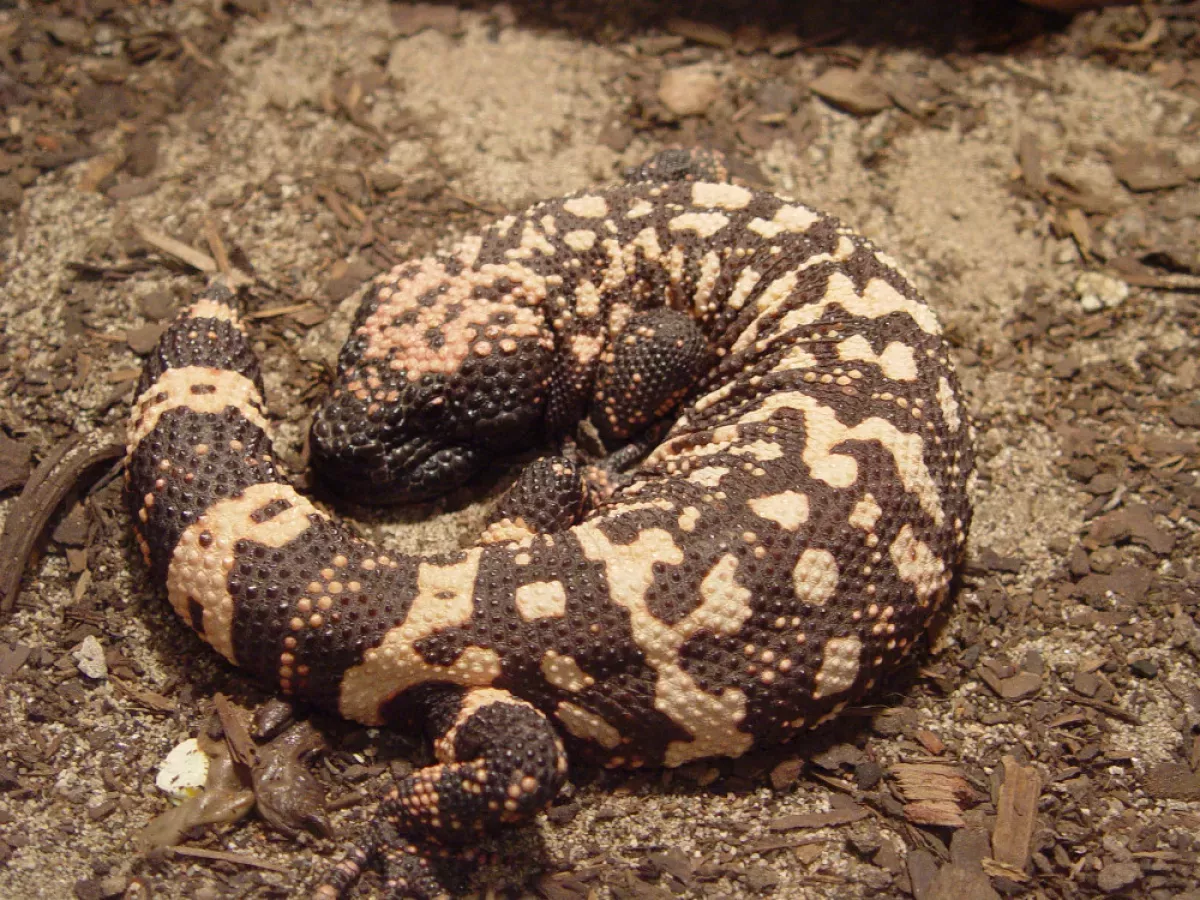
The Gila monster is a venomous lizard native to the Southwestern United States and the northwestern Mexican state of Sonora. It is a heavy and slow-moving reptile, reaching up to 56 centimeters (22 inches) in length. It is the only venomous lizard native to the United States, with its close relatives, the four beaded lizards, found in Mexico and Guatemala. Despite its sluggish nature and low threat level to humans, the Gila monster has a fearsome reputation. It is sometimes killed, although it is a protected species under Arizona state law.
1930: Rare Fatalities Before 1930
Before 1930, rare fatalities from Gila monster bites were recorded, often involving adults who were intoxicated by alcohol or had mismanaged the treatment of the bite. The year 1930 marks a notable point in understanding the severity and risks associated with Gila monster bites.


1952: Legal Protection for Gila Monsters
In 1952, the Gila monster became the first venomous animal to receive legal protection. This protection is now extended across all states of their distribution, with international trade regulated under Appendix II of CITES.
1963: First Successful Captive Breeding
In 1963, the San Diego Zoo successfully bred Gila monsters in captivity for the first time. This milestone paved the way for experienced breeders to share their expertise, aiding other herpetologists in overcoming challenges related to Heloderma reproduction under human care.
1971: Gila Monster in Popular Culture
In 1971, Brock Brower's novel 'The Late Great Creature' featured a fictional character, Simon Moro, famous for playing the reptilian Gila Man. This demonstrates the Gila monster's influence on popular culture and literature.
2005: FDA Approval of Exenatide
In 2005, the U.S. Food and Drug Administration approved the drug exenatide (marketed as Byetta) for managing type 2 diabetes. This drug is a synthetic blueprint of the protein exendin-4, isolated from Gila monster venom, and has shown to sustain healthy glucose levels in diabetic patients over a 3-year study.
2011: Gila Monster in 'Rango'
In 2011, the animated film 'Rango' included a Gila monster character named Bad Bill, an Old West outlaw voiced by Ray Winstone. This further illustrates the Gila monster's role in popular culture and media.
October 28, 2016: Discovery of Gila Monster Nest
On October 28, 2016, a backhoe in northern Tucson unearthed a nest of a female Gila monster with five eggs in the process of hatching. This discovery provided significant insights into the egg development and hatching cycle of Gila monsters, revealing that they hatch near the end of October and hibernate immediately.
2017: Vegas Golden Knights Mascot
In 2017, the Vegas Golden Knights selected a Gila monster named Chance as their official mascot. This highlights the Gila monster's cultural significance and its adoption as a symbol by sports teams.
2019: Utah's Official State Reptile
In 2019, Utah designated the Gila monster as its official state reptile, recognizing its importance and promoting awareness of this unique species.
2023: King Gizzard and the Lizard Wizard's 'Gila Monster'
In 2023, Australian band King Gizzard and the Lizard Wizard released a single titled 'Gila Monster' from their album 'PetroDragonic Apocalypse'. The album's artwork and narrative prominently featured the Gila monster, showcasing the animal's influence in modern music.
February 2024: Fatal Gila Monster Bite in Colorado
In February 2024, a Colorado man died after sustaining a 4-minute-long bite from a Gila monster. Autopsy reports confirmed that the cause of death was due to the venom from the bite. This incident highlights the dangerous potential of Gila monster bites, even within a short time frame.
2024: Confirmed Fatality in 2024
On February 12th, 2024, a confirmed fatality occurred due to a Gila monster bite, marking the first such case since 1930. This event underscores the potential danger of these bites, despite their general non-lethality to healthy adults.
Trending

3 hours ago Donald Trump Considers Iran Strike Strategy Amid Rising Middle East Tensions
3 hours ago Josh Brolin and Original Cast Return for Sicario 3

3 hours ago Ashley Judd Speaks Out Against Sexual Assault at the University of Kentucky

3 hours ago Ben Affleck and Kerry Washington Collaborate on New Projects and Iconic Scenes

4 hours ago Controversy Surrounds Proposed Trump Presidential Library Development in Miami

4 hours ago Cameron Norrie Faces Dalibor Svrcina in ATP Shanghai Masters Second Round Match
Popular

Ken Paxton is an American politician and lawyer serving as...
Elon Musk is a visionary entrepreneur and engineer known for...

Cristiano Ronaldo widely considered one of the greatest footballers captains...

Shakira Isabel Mebarak Ripoll the Queen of Latin Music is...

Jameis Winston is an American football quarterback currently playing for...

Michael Joseph Jackson the King of Pop was a highly...