



Golf is a precision club-and-ball sport in which competing players use various clubs to hit balls into a series of holes on a course in as few strokes as possible. Unlike most field games, golf does not utilize a standardized playing area; instead, the sport is played on a course consisting of either 9 or 18 holes, each featuring a teeing ground, the fairway, rough, and a putting green surrounding the hole. Players must navigate natural or man-made obstacles, known as hazards, while managing varying distances and terrain. The sport emphasizes mental discipline, accuracy, and consistency, requiring a diverse set of technical skills including long-game driving and short-game putting. Scoring is typically stroke-based, where the lowest cumulative total wins, though match-play formats also exist. Governed by organizations like the R&A and the USGA, golf is both an individual pursuit and a professional competitive sport played globally at recreational, amateur, and professional levels.
1900: Golf debut at the Summer Olympics
In 1900, golf was officially included in the programme for the Summer Olympic Games for the first time.


1904: Golf featured in the 1904 Summer Olympics
Golf continued its presence in the Olympic movement by being featured in the official programme of the 1904 Summer Olympic Games.
1930: Bobby Jones Praises Joyce Wethered
In 1930, professional golfer Bobby Jones participated in an exhibition match against Joyce Wethered and subsequently publicly praised her, expressing his belief that she was potentially the greatest golfer of either gender to have ever played the sport.
1934: Inauguration of The Masters Tournament
In 1934, The Masters golf tournament was held for the first time at Augusta National Golf Club in Augusta, Georgia, establishing a tradition of hosting this major championship at the same venue annually.
1937: Founding of the Senior PGA Championship
In 1937, the Senior PGA Championship was officially founded, marking it as the oldest of the five senior golf major events.
1950: Formation of the Ladies Professional Golf Association
In 1950, the Ladies Professional Golf Association (LPGA) was established to increase the popularity of golf and to create new competitive avenues for female golfers.
1960: Jack Nicklaus at the 1960 U.S. Open
In 1960, Jack Nicklaus gained significant attention by finishing second in the U.S. Open with a 72-hole score of 282, which marked the best performance by an amateur in the tournament's history at that time.
1961: Jack Nicklaus Wins U.S. Amateur
After his notable performance in 1960, Jack Nicklaus continued his amateur career through 1961, during which he successfully won the U.S. Amateur title.
1962: Jack Nicklaus Turns Professional
Following his successful amateur career, including his 1961 victory, Jack Nicklaus officially transitioned to professional status in 1962.
February 1971: First Golf Played on the Moon
In February 1971, astronaut Alan Shepard made history as the first person to play golf on the Moon during the Apollo 14 mission. After smuggling a golf club head and two balls, he attached the club to a rock-sampling tool and successfully performed two drives on the lunar surface.
1972: Passage of Title IX of the Education Amendments
The U.S. Congress passed Title IX of the Education Amendments in 1972, a legislative act that played a crucial role in promoting equal opportunities for women in the sport of golf.
1977: Renee Powell's historic tournament participation
In 1977, American golfer Renee Powell made history by becoming the first woman to compete in a British men's professional golf tournament after moving to the UK in the 1970s.
1984: Release of Nintendo's Golf
In 1984, Nintendo released the video game titled Golf, which would go on to be recognized as the best-selling golf video game in history.
1984: Opening of China's First Golf Course
In 1984, the very first golf course was established in China, marking the formal beginning of the sport's development in the country.
1996: Founding of the International Federation of PGA Tours
In 1996, the International Federation of PGA Tours was established as a trade body for the world's main golf tours, featuring the Japan, Australasian, Sunshine, PGA, and European Tours as charter members.
1999: Asian Tour Membership
The Asian Tour officially became a full member of the International Federation of PGA Tours in 1999.
2000: Canadian Tour Joins Federation
During the year 2000, the Canadian Tour joined the International Federation of PGA Tours as an associate member.
2000: Peak Golf Participation Figures
In 2000, the National Golf Foundation recorded that 6.9 million individuals in the United States participated in golf at least twenty-five times during the year.
2001: Women's British Open designated as an LPGA major
In 2001, the Women's British Open replaced the du Maurier Classic as one of the official major championships recognized by the LPGA Tour.
2003: Senior Open Championship Major Status Recognition
In 2003, the Senior Open Championship officially gained recognition as a major championship by the PGA Tour Champions.
2004: Formation of The R&A
In 2004, The R&A was established as a governing body for golf, created as a spin-off from The Royal and Ancient Golf Club of St Andrews.
2004: Expansion Period of Chinese Golf Courses
Starting in 2004, the inventory of golf courses in China began a phase of rapid expansion, tripling in total number by the time 2009 arrived.
2005: Decline in Golf Participation
By 2005, the National Golf Foundation reported a downturn in the sport, with frequent players dropping to 4.6 million and total participants falling to 26 million.
2005: Golf Digest per capita course rankings
In 2005, Golf Digest published a study identifying the nations with the highest number of golf courses per capita, excluding countries with populations under 500,000, ranking Scotland at the top followed by New Zealand, Australia, Ireland, Canada, Wales, the United States, Sweden, and England.
2007: Tour de las Américas Joins Federation
The Tour de las Américas in Latin America attained associate membership status within the International Federation of PGA Tours in 2007.
2008: Ladies European Tour Scheduling Shift
In 2008, the Ladies European Tour (LET) ended its tradition of avoiding conflicts with U.S. LPGA majors by scheduling an event to take place during the LPGA Championship. Additionally, in 2008, the LPGA of Japan Tour expanded its own set of designated major championships from three to four.
2009: Rapid Growth of Golf Courses in China
By the end of 2009, despite official government restrictions, the number of golf courses in China had grown to approximately 600, representing a significant increase over the previous years.
2009: International Federation of PGA Tours Expansion
In 2009, the Federation significantly expanded by welcoming eleven new full members, including various national golf associations and all six major women's golf tours.
2010: Start of shared money titles era
Beginning in 2010, a trend emerged where professional golfers began claiming the money titles for both the PGA Tour and the European Tour in the same year.
2011: Baseline female participation in golf
As of 2011, women accounted for 19 percent of the total golfing population in the United States, serving as a baseline for growth over the subsequent decade.
2011: Luke Donald achieves dual tour success
In 2011, golfer Luke Donald successfully claimed the money titles on both the PGA Tour and the European Tour.
2011: PGA Tour Takeover of Tour de las Américas
In 2011, the Tour de las Américas was effectively absorbed by the PGA Tour as part of a restructuring effort.
2012: Rory McIlroy claims dual money titles
During the 2012 season, Rory McIlroy achieved the milestone of securing the money titles for both the PGA Tour and the European Tour simultaneously.
2013: Henrik Stenson wins FedEx Cup
In 2013, Henrik Stenson dominated by winning the FedEx Cup points race on the PGA Tour and the European Tour money title, while Tiger Woods topped the official PGA Tour money list.
2013: The Evian Championship elevated to major status
In 2013, The Evian Championship was officially added as the fifth major championship on the LPGA Tour schedule.
2014: Rory McIlroy's second dual title year
In 2014, Rory McIlroy repeated his previous accomplishment by winning the money titles on both the PGA Tour and the European Tour.
2016: Golf returns to the Summer Olympics in Rio
After a 112-year absence from the Olympic programme, golf made a successful return to the international stage during the 2016 Summer Olympic Games held in Rio.
2016: Ban on Anchored Putting
In 2016, professional golf circuits implemented a ban on the putting style known as anchored putting, which involved using a longer putter shaft secured against the stomach or below the chin to stabilize the stroke.
2017: USGA and R&A Rule Rewrite
During 2017, the United States Golf Association (USGA) and The R&A collaborated on a complete rewrite of the international rules of golf with the primary objective of simplifying the game's regulations.
January 2019: Implementation of New Golf Rule Book
In January 2019, a comprehensive new rule book for the sport of golf officially came into effect, marking the conclusion of a simplification process led by the USGA and The R&A.
2019: Global Golf Course Distribution Statistics
In 2019, it was reported that the United States held 43% of the world's golf courses, and when combined with Japan's share, the two nations accounted for 51% of all golf courses globally.
2020: Global Introduction of the World Handicap System
Starting in 2020, the USGA and The R&A launched the World Handicap System globally to create a unified method for assessing golf courses and calculating handicaps, effectively replacing various disparate systems previously used around the world.
2021: Growth in female participation in golf
In 2021, women represented 25 percent of the total golfing population in the United States, with junior female golfers reaching a total of 1.1 million or 35 percent of junior players.
2025: Persistent Pay Disparity in Professional Women's Golf
In 2025, women's professional golf, including the LPGA and the Ladies European Tour, continues to grapple with a significant pay gap between genders. Despite the physical demands of the sport, golf remains identified as one of the sporting disciplines with the most pronounced pay disparity based on sex as of 2025.
Mentioned in this timeline

FedEx Corporation originally Federal Express is a multinational conglomerate based...

Rory McIlroy is a Northern Irish professional golfer who is...
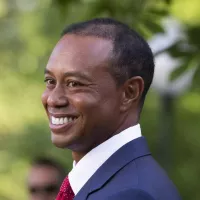
Tiger Woods is an American professional golfer considered one of...
China officially the People's Republic of China PRC is located...
The modern Olympic Games are a leading international sporting event...
Canada is a North American country spanning from the Atlantic...
Trending

4 hours ago SpaceX Disrupts Telecommunications Industry with Major Low-Band Spectrum Acquisition Plans

4 hours ago Mirra Andreeva Advances to China Open Semifinals After Victory Over Alexandrova

4 hours ago ATP Shanghai Tennis Tournament Schedule and Round Two Match Predictions
4 hours ago Nintendo President Discusses Potential GTA 6 Integration for Upcoming Switch 2 Console
5 hours ago SpaceX Launches Falcon 9 Rocket Carrying Cygnus XL Cargo to Space Station

5 hours ago Alexandra Daddario Stuns at NYCC as Mayfair Witches Reveals New Trailer and Premiere Date
Popular

Ken Paxton is an American politician and lawyer serving as...

Cristiano Ronaldo widely considered one of the greatest footballers captains...

Michael Joseph Jackson the King of Pop was a highly...

Elon Musk is a visionary entrepreneur and engineer known for...

Shakira Isabel Mebarak Ripoll the Queen of Latin Music is...

Jameis Winston is an American football quarterback currently playing for...