History of Las Vegas in Timeline


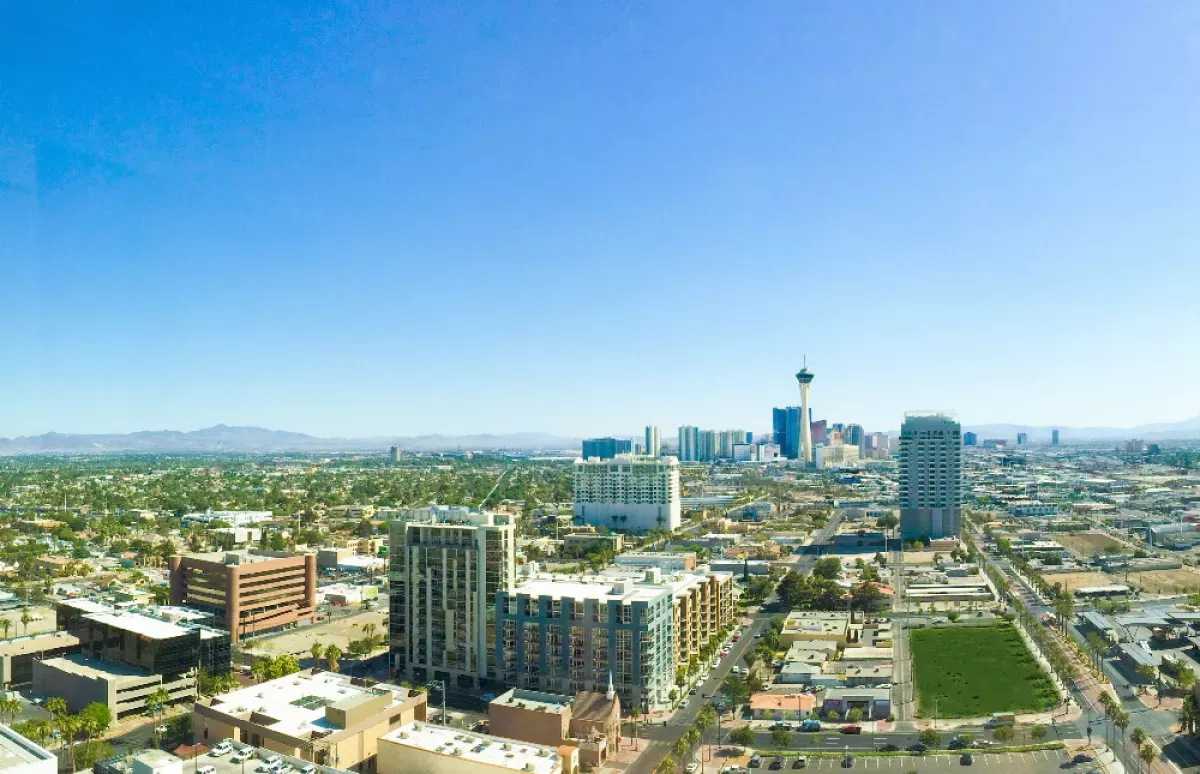
Las Vegas, Nevada, is the state's most populous city and the seat of Clark County. With a metropolitan area of approximately 2.4 million residents, it stands as a major international resort city. Las Vegas is globally recognized for its gambling, shopping, fine dining, entertainment, and vibrant nightlife, primarily concentrated in downtown and along the Las Vegas Strip. Serving as Nevada's leading financial, commercial, and cultural hub, Las Vegas attracts millions of visitors annually.
1905: Foundation of Las Vegas
Las Vegas was founded as a city in 1905 when 110 acres of land adjacent to the Union Pacific Railroad tracks were auctioned off in what would become the downtown area.


1909: Largest Snowfall on Record (Unofficial)
In 1909, Las Vegas unofficially experienced its largest snowfall on record, with 12 inches (30 cm) of snow falling.
1911: Incorporation of Las Vegas
In 1911, Las Vegas was incorporated as a city.
1929: Installation of Welcome Arch
In 1929, the city installed a welcome arch over Fremont Street, at the corner of Main Street.
1931: Opening of the Northern Club
In 1931, the Northern Club (now the La Bayou) opened in Las Vegas.
1931: Removal of Welcome Arch
The welcome arch that was installed in 1929 over Fremont Street, at the corner of Main Street remained in place until 1931.
1931: Nevada Legalizes Gambling and Reduced Divorce Residency Requirements
The year 1931 was pivotal for Las Vegas as Nevada legalized casino gambling and reduced residency requirements for divorce to six weeks. This year also witnessed the beginning of construction of the tunnels of nearby Hoover Dam.
1935: Completion of Hoover Dam Construction
In 1935, the construction work on the Hoover Dam was completed, helping Las Vegas avoid economic calamity during the Great Depression.
January 25, 1937: Lowest Temperature Recorded
On January 25, 1937, the lowest temperature recorded in Las Vegas was 8 °F (−13 °C).
1941: Establishment of Las Vegas Army Airfield
In late 1941, the Las Vegas Army Airfield was established.
1950: Renaming of Nellis Air Force Base
In 1950, the Las Vegas Army Airfield was renamed Nellis Air Force Base, which is now home to the United States Air Force Thunderbirds aerobatic team.
1951: Nuclear Weapons Testing Begins
In 1951, nuclear weapons testing began at the Nevada Test Site, 65 miles northwest of Las Vegas. The city was nicknamed the "Atomic City" during this time.
1955: Opening of the Moulin Rouge Hotel
In 1955, the Moulin Rouge Hotel opened and became the first racially integrated casino-hotel in Las Vegas.
1959: Installation of Welcome to Fabulous Las Vegas Sign
In 1959, the 25-foot-tall Welcome to Fabulous Las Vegas sign was installed at the south end of the Las Vegas Strip.
January 13, 1963: Lowest Temperature Recorded
On January 13, 1963, the lowest temperature recorded in Las Vegas was 8 °F (−13 °C).
1963: Coldest Temperature Measured
In 1963, a temperature of 29 °F (−2 °C) was measured in Las Vegas, though ice days did not occur.
1963: Partial Nuclear Test Ban Treaty
In 1963, the Partial Nuclear Test Ban Treaty required that nuclear tests be moved underground, ending the visibility of mushroom clouds for residents and visitors of Las Vegas.
1972: Las Vegas Motor Speedway Construction
In 1972, the Las Vegas Motor Speedway, a 1.5 mile tri-oval, was constructed.
1973: Las Vegas Metropolitan Police Department Merger
In 1973, the Las Vegas Police Department and the Clark County Sheriff's Department merged to form the Las Vegas Metropolitan Police Department.
1980: Circa Resort & Casino
Circa Resort & Casino opened in 2020, becoming the first all-new hotel-casino to be built on Fremont Street since 1980.
1989: Opening of The Mirage and Trend of Resort Development
When The Mirage opened in 1989, it started a trend of major resort development on the Las Vegas Strip outside the city, leading to a drop in tourism in the downtown area.
1990: Divorce Rate
In 1990, Nevada had 11.4 divorces per 1,000 marriages, which decreased to 4.4 divorces per 1,000 marriages in 2022.
1990: Population Growth Acceleration
Population growth in Las Vegas accelerated from the 1960s into the 21st century. Between 1990 and 2000, the population increased by 85.2%.
1995: Opening of the Fremont Street Experience
In 1995, the Fremont Street Experience opened in Las Vegas's downtown area, featuring 12.5 million LED lights and 550,000 watts of sound during shows held at the top of each hour from dusk until midnight.
1995: Fremont Street Experience Startup
In 1995, the Fremont Street Experience was built in an effort to draw tourists back to the area and has been popular since its startup.
1997: Amtrak Service Ceases
Amtrak trains have not served Las Vegas since the service via the Desert Wind at Las Vegas station ceased in 1997.
1997: Allegiant Air Launch
In 1997, Allegiant Air, a low-cost air carrier, launched with its first hub at Harry Reid International Airport and headquarters in nearby Summerlin.
1997: Amtrak Desert Wind Train Service Ends
Until 1997, the Amtrak Desert Wind train service ran through Las Vegas using the Union Pacific Railroad tracks.
2000: 2000 Census Results
According to the 2000 census, Las Vegas had a population of 474,434 people. The racial makeup of the city was 58.52% White alone (non-Hispanic), 10.19% Black or African American alone (non-Hispanic), 0.51% Native American or Alaska Native alone (non-Hispanic), 4.72% Asian alone (non-Hispanic), 0.41% Pacific Islander alone (non-Hispanic), 0.14% Other Race alone (non-Hispanic), and 2.52% Mixed race or Multiracial (non-Hispanic). Hispanic or Latino individuals of any race made up 23.81% of the population.
2000: Land-swap deal with Lehman Brothers
In 2000, the city of Las Vegas conducted a land-swap deal with Lehman Brothers, acquiring 61 acres of property near downtown Las Vegas in exchange for 91 acres of the Las Vegas Technology Center.
2000: Population Growth Acceleration
Population growth in Las Vegas accelerated from the 1960s into the 21st century. Between 1990 and 2000, the population increased by 85.2%.
2002: Drought Concerns
Due to concerns about climate change in the wake of a 2002 drought, efforts to reduce water consumption were intensified in Las Vegas.
2002: Drought and Water Conservation
In 2002, a drought prompted water conservation efforts in the Las Vegas Valley, aiming to mitigate water scarcity issues.
2002: Installation of Replica Welcome Sign
In 2002, a replica of the Welcome to Fabulous Las Vegas sign, standing nearly 16 feet tall, was installed within city limits at Las Vegas Boulevard and Fourth Street.
2003: Daily Water Consumption
In 2003, daily water consumption in Las Vegas was 314 US gallons (1,190 L) per resident.
2004: High Divorce Rates
According to a 2004 study, Las Vegas has one of the highest divorce rates, partly due to residents of states with more restrictive divorce laws traveling to Nevada to get divorced.
2004: Symphony Park announcement
In 2004, Las Vegas Mayor Oscar Goodman announced that the area acquired in the land-swap would become home to Symphony Park (originally called "Union Park"), a mixed-use development.
July 19, 2005: Record Hot Daily Minimum
On July 19, 2005, the official record hot daily minimum temperature in Las Vegas was 95 °F (35 °C).
2005: World Market Center Opening
In 2005, the World Market Center opened, consisting of three large buildings taking up 5,400,000 square feet. Trade shows for the furniture and furnishing industries are held there semiannually.
December 17, 2008: Significant Snow Accumulation
On December 17, 2008, Las Vegas experienced another significant snow accumulation.
2008: EPA Grant for Environmental Analysis
In 2008, a U.S. Environmental Protection Agency grant funded a program that analyzed and forecast growth and environmental effects through 2019 in Las Vegas.
March 2010: RTC Launches Strip & Downtown Express
In March 2010, the RTC launched a bus rapid transit link in Las Vegas called the Strip & Downtown Express with limited stops and frequent service connecting downtown Las Vegas, the Strip, and the Las Vegas Convention Center.
2010: 2010 Census Results
According to the 2010 Census, the city of Las Vegas had a population of 583,756. The racial composition had shifted slightly, with 47.91% White alone (non-Hispanic), 10.63% Black or African American alone (non-Hispanic), 0.41% Native American or Alaska Native alone (non-Hispanic), 5.93% Asian alone (non-Hispanic), 0.53% Pacific Islander alone (non-Hispanic), 0.19% Other Race alone (non-Hispanic), and 2.91% Mixed race or Multiracial (non-Hispanic). Hispanic or Latino individuals of any race represented 31.50% of the population.
2011: Water Usage Levels
In 2011, The Las Vegas Valley started facing significant water usage issues.
2012: "The Year of Downtown"
2012 was dubbed "The Year of Downtown" in Las Vegas due to the realization of many revitalization efforts, including the debut of the Smith Center for the Performing Arts, the Discovery Children's Museum, the Mob Museum, the Neon Museum, a new City Hall complex, and renovations for a new Zappos.com corporate headquarters in the old City Hall building.
February 2013: New Las Vegas City Hall Opens
In February 2013, city offices moved to a new Las Vegas City Hall on downtown's Main Street.
July 1, 2013: Record Hot Daily Minimum
On July 1, 2013, the official record hot daily minimum temperature in Las Vegas was 95 °F (35 °C).
2013: Zappos Headquarters Move to Las Vegas
By 2013, Zappos.com, now an Amazon subsidiary, had moved its headquarters to downtown Las Vegas.
2014: Increased Water Usage
In 2014, the Las Vegas Valley used 1.2 billion US gallons more water than in 2011, highlighting growing water consumption concerns despite conservation efforts.
May 2015: Las Vegas North Premium Outlets Expansion
In May 2015, the second expansion of the Las Vegas North Premium Outlets was completed, bringing the total number of stores to 175.
December 25, 2015: Significant Snow Accumulation
On December 25, 2015, Las Vegas experienced a significant snow accumulation.
2015: Reduced Daily Water Consumption
By 2015, daily water consumption in Las Vegas had been reduced to around 205 US gallons (780 L) per resident.
2015: Households without a car
In 2015, 10.2 percent of city of Las Vegas households were without a car.
2016: Las Vegas Commuting Statistics
In 2016, 77.1 percent of working Las Vegas residents commuted by driving alone, while about 11 percent commuted via carpool and 3.9 percent used public transportation.
2016: Destruction of Replica Welcome Sign
In 2016, the replica of the Welcome to Fabulous Las Vegas sign that was installed in 2002 was destroyed when a pickup truck crashed into it.
2017: Vegas Golden Knights Inaugural Season
In 2017, the Vegas Golden Knights, an NHL expansion team, began playing at T-Mobile Arena.
2018: Installation of Giant Neon Showgirls
In 2018, a pair of giant neon showgirls were initially added just north of the Strat as part of a $400,000 welcome display. The original showgirls were 25 feet tall.
2018: Approval of Plans for Gateway Arches
In 2018, the city approved plans for a new gateway landmark in the form of neon arches to be built within city limits, in front of the Strat resort and north of Sahara Avenue.
February 18, 2019: Significant Snow Accumulation
On February 18, 2019, parts of Las Vegas received about 1 to 2 inches (2.5 to 5.1 cm) of snow.
2019: Commute and Digital Connectivity
Between 2019 and 2023, the mean travel time to work for residents aged 16 and older in Las Vegas was approximately 25.8 minutes. 95.6% of households had a computer and 89.1% subscribed to broadband internet services.
2019: Household Statistics
From 2019 to 2023, Las Vegas had approximately 244,429 households, with an average of 2.63 persons per household. About 55.7% of housing units were owner-occupied, and the median value of owner-occupied housing was $395,300.
2019: EPA Grant Program Completion
In 2019, a program funded by a U.S. Environmental Protection Agency grant, which analyzed and forecast growth and environmental effects, concluded its analysis in Las Vegas.
2020: United States Census
According to the 2020 United States census, the city of Las Vegas had 644,883 people living in 244,429 households. The racial composition of the City of Las Vegas was 49.2% white, 11.9% black, 1.1% American Indian or Alaska Native, 6.9% Asian, Hispanic or Latino residents of any race were 34.1% and 16.2% from two or more races. 40.8% were non-Hispanic white.
2020: Clark County Population Census
As of the 2020 Census, Clark County had a population of 2,265,461 people, with approximately 1,030,000 living in unincorporated areas and 650,000 in incorporated cities.
2020: Opening of Circa Resort & Casino
In 2020, Circa Resort & Casino opened, becoming the first all-new hotel-casino to be built on Fremont Street since 1980.
2020: Completion of Gateway Arches
In 2020, the Gateway Arches project was completed, featuring steel arches that are blue during the day and light up in a variety of colors at night. The project, built by YESCO, cost $6.5 million and stands 80 feet high.
2020: Las Vegas Raiders Relocation
In 2020, the Las Vegas Raiders relocated from Oakland, California, and began playing at Allegiant Stadium.
2022: Nevada's Divorce Rate
As of 2022, the Centers for Disease Control and Prevention identified Nevada as a whole as having the highest divorce rate in the United States, with 4.4 divorces per 1,000 marriages.
2022: Replacement of Neon Showgirls
In 2022, the original 25-foot-tall neon showgirls were replaced by new ones rising 50 feet (15 m). The originals were refurbished following weather damage and installed at the Las Vegas Arts District.
2023: Las Vegas Tourism
As of 2023, Las Vegas attracts over 40.8 million visitors annually, making it one of the most visited cities in the United States and consistently ranking among the world's top tourist destinations.
2023: Ancestry and Hawaiian Population
As of 2023, Native Hawaiians numbered around 22,000 in the Las Vegas metropolitan area, the largest Hawaiian population outside Hawaii. Las Vegas has been nicknamed the "ninth island of Hawaii."
2023: Commute and Digital Connectivity
Between 2019 and 2023, the mean travel time to work for residents aged 16 and older in Las Vegas was approximately 25.8 minutes. 95.6% of households had a computer and 89.1% subscribed to broadband internet services.
2023: Household Statistics
From 2019 to 2023, Las Vegas had approximately 244,429 households, with an average of 2.63 persons per household. About 55.7% of housing units were owner-occupied, and the median value of owner-occupied housing was $395,300. Median gross rent during this period was $1,456 per month (in 2023 dollars).
2023: Inaugural Las Vegas Grand Prix
Since 2023 there has been a Formula One race on the streets of Las Vegas. The Las Vegas Grand Prix takes place on the Las Vegas Strip Circuit.
July 7, 2024: Highest Temperature Officially Observed
On July 7, 2024, the highest temperature officially observed for Las Vegas was recorded at Harry Reid International Airport, reaching 120 °F (48.9 °C).
July 2024: Hottest Month Ever Recorded
July 2024 was the hottest month ever recorded in Las Vegas, with its highest recorded mean daily average temperature over the month of 99.9 °F (38 °C), its highest recorded mean daily maximum temperature of 111.5 °F (44 °C), and its highest recorded mean nightly minimum temperature of 88.3 °F (31 °C).
2024: Symphony Park residential project completion
As of 2024, Symphony Park houses four residential projects totaling 600 residential units.
2024: Brightline West Construction Begins
Construction of the Brightline West high-speed rail project began in 2024, aiming to connect Las Vegas station and the Rancho Cucamonga station in Greater Los Angeles.
2028: Athletics of Major League Baseball (MLB) will move to Las Vegas
By 2028 the Athletics of Major League Baseball (MLB) will move to Las Vegas.
Mentioned in this timeline
San Francisco is the fourth-most populous city in California and...
Los Angeles California's most populous city and Southern California's hub...
Arizona is a state in the Southwestern United States part...
A car also known as an automobile is a wheeled...
A desert is a landscape characterized by minimal precipitation leading...
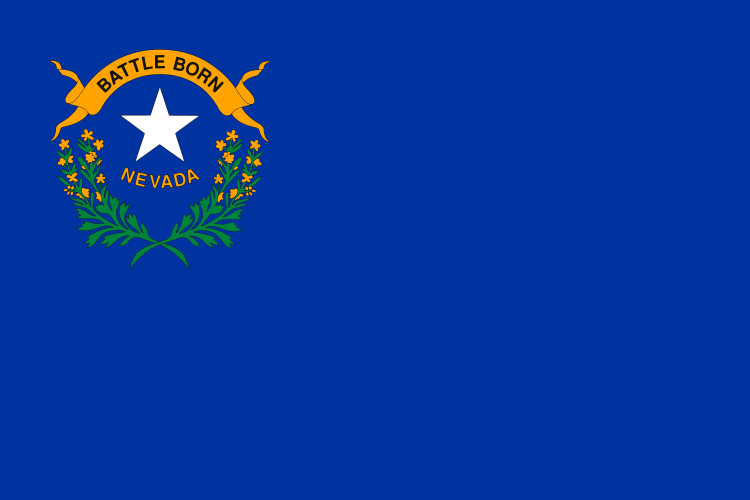
Nevada a landlocked state in the Western US is the...
Trending
2 months ago Koa Peat shines with fadeaway bucket; Alcaraz mentioned; boosts draft stock.

2 hours ago NHL Rumors: Suzuki, Hischier's Future, Coaching Carousel, and Potential Wild Trade Target

4 hours ago Orel Hershiser Partners with Chevy Dealership, Adding Legacy to Automotive World.
5 hours ago Oliver Glasner leads Crystal Palace to European glory after prior dismissal.

6 hours ago Dusty Baker's 'Crossroads' event arrives in Santa Cruz, marking a significant moment.
7 hours ago Kelly Clarkson shares tour warm-up secrets with Rita Wilson on the show.
Popular

Ken Paxton is an American politician and lawyer serving as...

Thomas Massie is a Republican politician and engineer representing Kentucky's...

Michael Joseph Jackson the King of Pop was a highly...

William Franklin Graham III known as Franklin Graham is an...

Tulsi Gabbard is an American politician and U S military...

Elon Musk is a businessman and public official primarily known...