


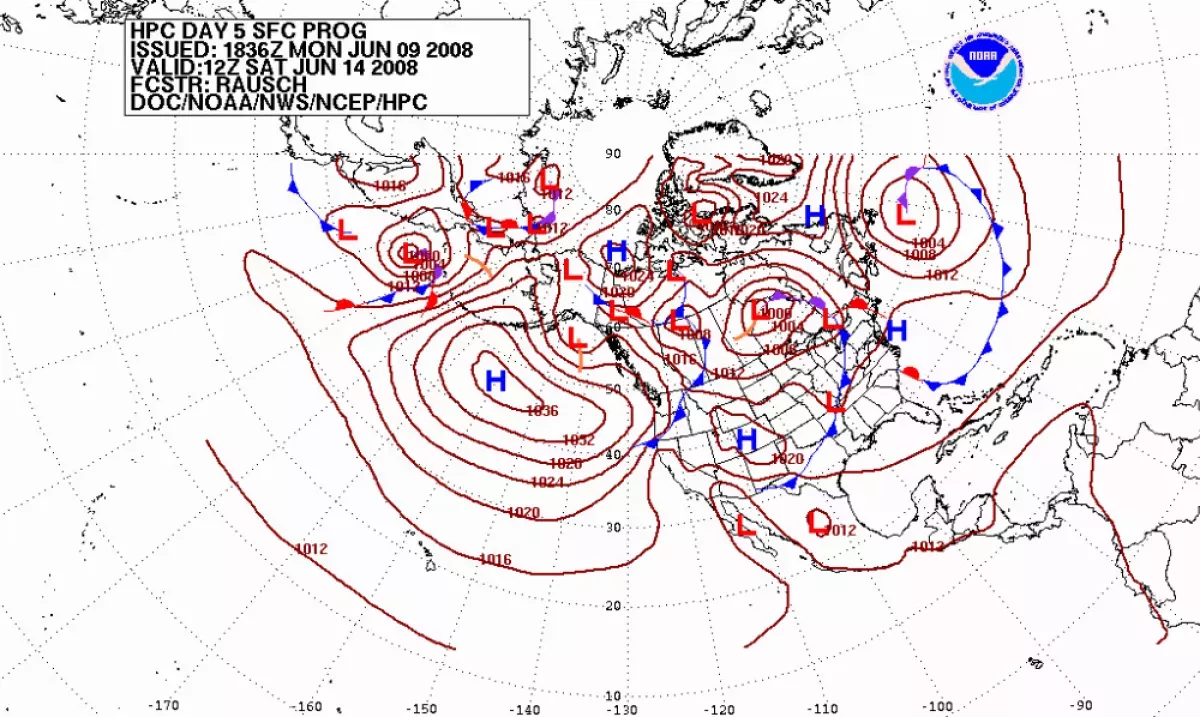
Weather forecasting is the application of science and technology to predict the state of the atmosphere at a future time and for a given location. The process begins with gathering massive amounts of data from satellites, weather stations, radar, and ocean buoys to establish the current atmospheric conditions. Meteorologists input this observational data into sophisticated numerical weather prediction models—complex computer programs that solve mathematical equations describing the physics and dynamics of the atmosphere. Supercomputers process these calculations to simulate atmospheric changes over time. Once the model outputs are generated, forecasters analyze the results, accounting for local topography and historical patterns to refine the predictions. Despite advancements in artificial intelligence and computational power, forecasting remains challenging due to the chaotic nature of the atmosphere. Consequently, accuracy is generally high for short-term predictions, while long-term forecasts remain probabilistic, providing guidance on trends rather than exact conditions.
22 hours ago : Severe Storms and Major Heat Risk Expected Across Alabama This Weekend
Alabama faces a weekend of scattered showers and potentially severe storms. Meteorological reports indicate unstable weather conditions followed by a significant return of major heat risks across the region, requiring residents to stay updated on local forecasts and safety advisories.


1911: Met Office Marine Radio Forecasts
In 1911, the Met Office inaugurated the practice of disseminating marine weather forecasts, including critical gale and storm warnings for regions surrounding Great Britain, through radio transmissions.
1922: Publication of Weather Prediction By Numerical Process
In 1922, English scientist Lewis Fry Richardson published his seminal work, 'Weather Prediction By Numerical Process', which established a framework for modern numerical weather forecasting by utilizing finite differencing schemes to solve atmospheric fluid dynamics equations.

1925: First Public Radio Weather Forecast in the US
The inaugural public weather forecast transmitted via radio in the United States took place in 1925, delivered by Edward B. Rideout on the WEEI station based in Boston.
1931: G. Harold Noyes Joins WBZ
In 1931, G. Harold Noyes, a professional forecaster formerly associated with the U.S. Weather Bureau, began providing weather updates for the WBZ station.
November 1936: First Experimental Televised Weather Forecasts
In November 1936, the BBC conducted the world's first experimental televised weather forecasts, which included the utilization of weather maps.
1940: Early Experimental Forecasts on DuMont
James C. Fidler performed experimental television weather forecasts on the DuMont Television Network in Cincinnati around 1940.
1947: Alternative Date for Early Experimental Forecasts
Historical records note that 1947 is a potential date for the early experimental television weather forecasts conducted by James C. Fidler in Cincinnati.
1949: Implementation of Televised Weather Forecasts
Following the conclusion of World War II, the practice of broadcasting weather forecasts on television was officially implemented in 1949.
1954: First On-Air Weather Forecast with Map
George Cowling made history in 1954 by becoming the first person to present a weather forecast while standing in front of a televised weather map.
1955: Practical Implementation of Numerical Weather Prediction
In 1955, the practical application of numerical weather prediction officially began, a major advancement made possible by the development of programmable electronic computers.
1963: Edward Lorenz's Proposal on Long-Range Forecast Limitations
In 1963, Edward Lorenz proposed that long-range weather forecasts extending two weeks or more are inherently incapable of definitive accuracy. This limitation arises from the chaotic nature of fluid dynamics equations, where minor errors in initial values grow exponentially, doubling approximately every five days for variables like temperature and wind velocity.
1982: Launch of The Weather Channel
In 1982, John Coleman and Landmark Communications CEO Frank Batten collaborated to launch The Weather Channel, a dedicated 24-hour cable network for weather information.
2009: US Weather Forecasting Economic Valuation
In 2009, the United States invested roughly $5.8 billion into weather forecasting, resulting in an economic return estimated to be six times greater than the initial expenditure.
2022: Emergence of Advanced AI Weather Models
During 2022, several pioneering artificial intelligence models for weather forecasting were introduced to the field, marking a significant shift toward AI-driven meteorology.
2023: Expansion of AI Forecasting Systems
In 2023, the development and deployment of various machine learning models for weather prediction continued to accelerate, further cementing the role of AI in atmospheric science.
2024: AIFS Madden–Julian Oscillation Simulation Study
In 2024, Lang et al. utilized the AIFS to conduct 30-day ensemble simulations specifically focused on the Madden–Julian oscillation, marking a significant step in long-range weather modeling.
2024: Publication of GenCast Machine Learning Model
In 2024, researchers at Google's DeepMind AI research laboratories introduced GenCast in a Nature paper, a machine-learning model designed to outperform traditional weather forecasting systems in terms of accuracy.
2024: Real-time Operational Debut of AIFS
Starting in 2024, the AIFS began publishing real-time forecasts, demonstrating a high proficiency in predicting hurricane tracks while noting limitations in forecasting storm intensity compared to traditional physics-based models.
2025: Discontinuation of the Haines Index
In 2025, the American Haines Index, a tool previously used to assess wildfire risk, was officially discontinued as part of evolving weather forecasting and wildfire management protocols.
Mentioned in this timeline

The Weather Channel TWC is an American pay television channel...

War is defined as an armed conflict involving the armed...

Boston is the capital and most populous city of Massachusetts...
Trending

4 hours ago Paula Badosa Returns to Tennis Form and Prepares for WTA Iasi Match
4 hours ago US Launches Military Strikes Against Iran Targets Following Service Member Casualties

7 hours ago Chris Hemsworth Honors Wife Elsa Pataky on Her 50th Birthday Celebration
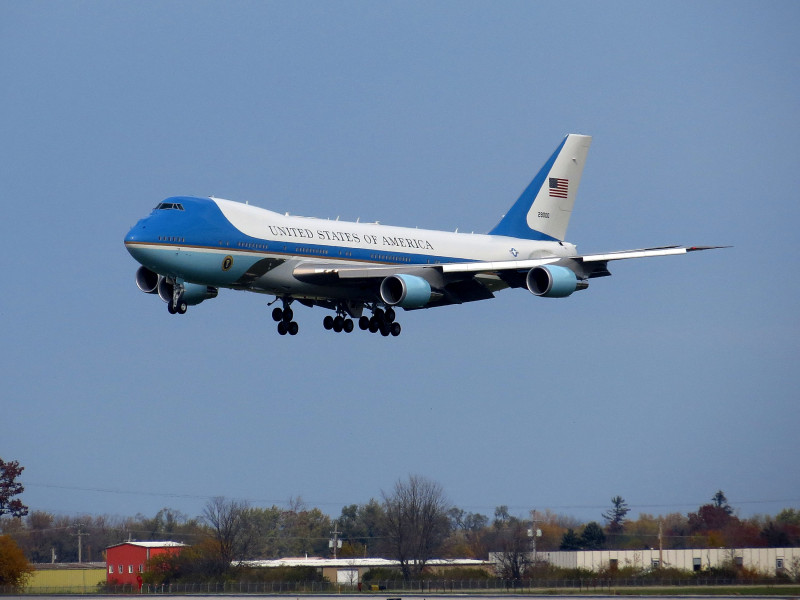
8 hours ago Trump Announces Extensive Maxed Out Security Upgrades for New Air Force One Aircraft

9 hours ago Three Fatalities Reported in New York City Legionnaires' Disease Outbreak

9 hours ago Yaxel Lendeborg Named MVP After Leading Warriors to 2026 NBA Summer League Championship Victory
Popular

Lindsey Graham is a prominent American politician serving as the...

Cristiano Ronaldo widely considered one of the greatest footballers captains...

Elon Musk is a visionary entrepreneur and engineer known for...

Mitch McConnell is a prominent American politician and the longest-serving...
Argentina Spain relations are rooted in deep historical linguistic and...

E Jean Carroll is an American journalist author and advice...