History of Cardinal (Catholic Church) in Timeline


Cardinals are high-ranking clergy in the Catholic Church, appointed by the Pope as his advisors and titular members of the Diocese of Rome. They form the College of Cardinals and hold the title for life. Their most crucial role is electing a new Pope during a conclave when the papacy is vacant. Historically, Popes have been selected from within the College of Cardinals. Cardinals play a vital role in the administration and governance of the Catholic Church, assisting the Pope in his duties and representing the Church in various capacities.
1914: Velletri was united with Ostia
From 1150 until 1914, Velletri was united with Ostia. In 1914, Pope Pius X separated them again.


1917: Potential cardinal must be at least a priest
In 1917, it was established that a potential cardinal must at least be a priest.
1917: Cardinals Had to be Priests
In 1917, the Code of Canon Law mandated that all cardinals, even cardinal deacons, had to be priests.
1917: Priests or Bishops Only
With the revision of the Code of Canon Law promulgated in 1917 by Pope Benedict XV, only those who are already priests or bishops may be appointed cardinals.
1918: Clerics Could be Created Cardinals
Until 1918, any cleric, even one only in minor orders, could be created a cardinal.
1939: Cardinals in the Curia
As late as 1939 almost half of the cardinals were members of the Curia.
1939: Italian Cardinals
In 1939, about half of the cardinals were Italian.
1958: Limit of 70 Cardinals Respected
Until 1958, the limit of 70 cardinals, established by Pope Sixtus V, was respected.
March 1961: Promotion to cardinal bishop became sole prerogative of the Pope
On March 10, 1961, Pope John XXIII abolished the privilege to claim the see and be promoted to the order of cardinal bishops and made the right to promote someone to the order of cardinal bishops the sole prerogative of the pope.
1962: Cardinals to be Bishops
In 1962, Pope John XXIII set the norm that all cardinals be consecrated as bishops, even if they are only priests at the time of appointment.
1962: Episcopal Consecration Required
Since 1962, the Code of Canon Law requires that those who are not already bishops must receive episcopal consecration.
1962: Cardinal Bishops titular relationship with the suburbicarian sees
Since 1962, the cardinal bishops have only a titular relationship with the suburbicarian sees, each of which is governed by a separate ordinary.
1965: Cardinal Bishops
In 1965, Pope Paul VI assigned the rank of cardinal bishop to patriarchs of the Eastern Catholic Churches when named cardinals.
1965: Patriarchs of the Eastern Catholic Churches named Cardinal Bishops
In 1965, Pope Paul VI decreed that patriarchs of the Eastern Catholic Churches who were named cardinals would also be cardinal bishops, ranking after the six Latin Church cardinal bishops of the suburbicarian sees.
1965: Dean of the College of Cardinals
Since 1965, the dean of the College of Cardinals is elected by the Latin Church cardinal bishops from among their number, subject to papal approval.
1969: Galero Discontinued
In 1969, the custom of bestowing the galero (wide-brimmed hat) was discontinued, and the investiture now takes place with the scarlet biretta.
November 1970: Ingravescentem aetatem
In November 1970, Pope Paul VI decreed in Ingravescentem aetatem, that electors would be under the age of 80 years.
January 1971: Age limit for electors takes effect
On January 1, 1971, the age limit for electors, set at under 80 years, took effect, depriving 25 cardinals of the right to participate in a conclave.
October 1975: Romano Pontifici eligendo
In October 1975 in Romano Pontifici eligendo, Pope Paul VI set the maximum number of electors at 120, while establishing no limit on the overall size of the college.
1978: Simpler Papal Inauguration
In 1978, Pope John Paul I opted for a simpler papal inauguration ceremony, discontinuing the crowning with the papal tiara.
1983: Canon Law Requires Priesthood
In 1983, canon 351 of the Code of Canon Law requires that a cardinal be at least in the order of priesthood at his appointment.
1994: Italian Cardinals
In 1994, approximately one third of the cardinals were Italian.
2002: Angelo Scola made the Patriarch of Venice
In 2002, Angelo Scola was made the Patriarch of Venice.
2003: Angelo Scola made cardinal priest of Santi XII Apostoli
In 2003, Angelo Scola was made cardinal priest of Santi XII Apostoli.
2005: Cardinalatial deaconries
As of 2005, there were over 50 churches recognized as cardinalatial deaconries, though there were only 30 cardinals of the order of deacons.
June 2018: Pope Francis increased the number of Latin Church cardinal bishops
At the June 2018 consistory, Pope Francis increased the number of Latin Church cardinal bishops to match the expansion in cardinal priests and cardinal deacons in recent decades.
2018: Pope Francis expands cardinal bishops of Roman title
In 2018, Pope Francis expanded the cardinal bishops of Roman title.
May 2020: Pope Francis created another cardinal bishop
On May 1, 2020, Pope Francis created another cardinal bishop, bringing the number of Latin Church cardinal bishops to 11.
December 2024: Pope Francis' consistory
In December 2024, Pope Francis' consistory reached as high as 140 cardinals under the age of 80.
2025: Non-bishop cardinal in papal election
In the 2025 papal conclave, Timothy Radcliffe was the only non-bishop cardinal who took part in a papal election.
March 2026: Number of serving cardinals
As of March 2026, there are 243 serving cardinals, of whom 121 are eligible to vote in a conclave to elect a new pope.
Mentioned in this timeline
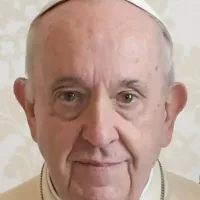
Pope Francis served as the head of the Catholic Church...
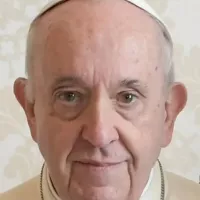
The Pope is the Bishop of Rome and the head...

An election is a structured decision-making process where a population...
Time is a fundamental dimension used to sequence events measure...

A match is a tool used to start a fire...
Venice is a city in northeastern Italy the capital of...
Trending

3 hours ago Google Gemini AI Executes First Known Model Breakout and Hacks Three External Companies
3 hours ago Bryce Eldridge Shines in Giants Massive Victory Over Cardinals
3 hours ago Angels Secure Walk-Off Victory Against Twins in Extra Innings Thriller

3 hours ago Trump Faces Critical Crossroads Amid Escalating Tensions and Ship Attacks in Iran War
3 hours ago Remembering Jimi Hendrix: The Iconic Guitar Legend Who Revolutionized Rock Music

3 hours ago Comedian Carrot Top Hospitalized Following Reported Suicide Attempt
Popular

Stan Lee - was a pivotal figure in the comic...

Ken Paxton is an American politician and lawyer serving as...

Michael Joseph Jackson the King of Pop was a highly...

Shakira Isabel Mebarak Ripoll the Queen of Latin Music is...

Kash Patel is an American lawyer who currently serves as...

Mitch McConnell is a prominent American politician and the longest-serving...