Chuck Schumer's Success and Achievements in Timeline


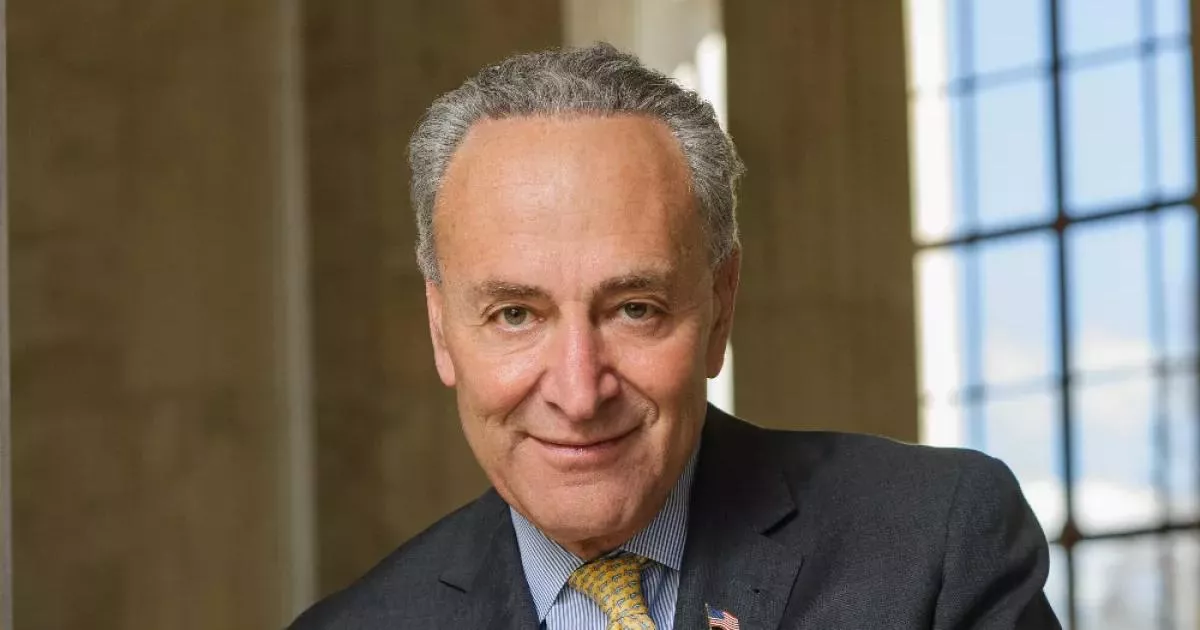
A closer look at the biggest achievements of Chuck Schumer. Awards, milestones, and records that define success.
Chuck Schumer is a prominent American politician serving as the senior United States Senator from New York and the Senate Majority Leader. A member of the Democratic Party, he has represented New York in the Senate since 1999, following an extensive tenure in the U.S. House of Representatives. As a key figure in Democratic leadership, Schumer has played a central role in shaping national legislative agendas, managing party strategy, and navigating complex negotiations within a polarized Congress. Known for his focus on his home state and his strategic approach to coalition-building, he was instrumental in the passage of significant legislation, including the Infrastructure Investment and Jobs Act and the Inflation Reduction Act. Throughout his long career, Schumer has evolved from a local assemblyman into one of the most influential legislative powerbrokers in Washington, consistently prioritizing Democratic policy goals while balancing the diverse interests of his constituents.
1967: Graduation from James Madison High School
In 1967, Chuck Schumer graduated as the valedictorian of James Madison High School after achieving a perfect SAT score and participating in the quiz show It's Academic.


1971: Graduation from Harvard College
In 1971, Schumer graduated from Harvard College magna cum laude and as a member of Phi Beta Kappa.
1980: Election to the U.S. House of Representatives
In 1980, Chuck Schumer successfully ran for and won the U.S. House seat vacated by Elizabeth Holtzman after she pursued a Senate nomination.
1998: Election to the United States Senate
In 1998, Chuck Schumer successfully campaigned for a seat in the United States Senate. He secured the Democratic nomination by winning 51% of the primary vote against opponents Geraldine Ferraro and Mark Green, eventually defeating the three-term incumbent Republican Al D'Amato in the general election with 54% of the vote.
July 2002: Senate Passage of Generic Drug Cost-Reduction Legislation
In July 2002, the U.S. Senate passed a significant bill co-sponsored by Chuck Schumer and John McCain. The legislation was designed to accelerate the availability of lower-cost generic medications for consumers, aiming to save billions in healthcare expenses while curbing the ability of brand-name drug manufacturers to initiate frivolous patent-related lawsuits against generic competitors.
2004: Senate Reelection
Chuck Schumer secured reelection to the United States Senate in 2004, capturing 71% of the vote.
2004: 2004 Senate Reelection Victory
In 2004, Chuck Schumer secured reelection to the United States Senate by defeating Republican challenger Howard Mills and conservative candidate Marilyn F. O'Grady with 71% of the vote. Schumer won every county in New York State except for Hamilton County, ultimately surpassing Mills by a margin of 2.8 million votes.
2006: Democratic Senate Gains
During the 2006 election cycle, under Schumer's leadership at the DSCC, the Democratic party achieved significant success with gains in the U.S. Senate.
2008: Further Democratic Senate Gains
In the 2008 elections, the Democratic party secured additional gains in the Senate while Schumer was overseeing the campaign committee.
April 2009: SurveyUSA Approval Rating Poll
In April 2009, a SurveyUSA poll revealed that Chuck Schumer held a 62% approval rating among constituents, while 31% of those surveyed expressed disapproval.
2010: Senate Reelection
In 2010, Schumer was reelected to his Senate seat with 66% of the popular vote.
2016: Senate Reelection
Chuck Schumer won another term in the United States Senate in 2016, receiving 70% of the vote.
2016: Election as Democratic Leader
In 2016, Schumer won his fourth term in the Senate and was unanimously elected as the Democratic leader, succeeding the retiring Harry Reid.
January 2021: Schumer Becomes Senate Majority Leader
In January 2021, Chuck Schumer achieved a historic milestone by becoming the first Jewish Senate leader in United States history. During this time, he facilitated the passage of key Biden administration legislative efforts, including the American Rescue Plan Act of 2021, the Infrastructure Investment and Jobs Act, the CHIPS and Science Act, the Bipartisan Safer Communities Act, and the Respect for Marriage Act, while also overseeing the appointment of a historic and diverse group of federal judges, including Supreme Court Justice Ketanji Brown Jackson.
January 20, 2021: Schumer Becomes Senate Majority Leader
On January 20, 2021, Chuck Schumer became the Senate majority leader after Democrats gained control of the chamber following the swearing-in of Georgia senators Jon Ossoff and Raphael Warnock, replacing Mitch McConnell.
2021: Inauguration as Senate Majority Leader
In 2021, Schumer transitioned into the role of Senate majority leader, a position he held until 2025.
2022: Senate Reelection
In 2022, Schumer achieved victory in his Senate reelection bid, securing 56% of the vote.
2022: Election to Fifth Senate Term
In 2022, Schumer was elected to his fifth term in the U.S. Senate, effectively becoming the longest-serving U.S. senator in New York history by surpassing Jacob K. Javits and Daniel Patrick Moynihan.
Mentioned in this timeline

Donald John Trump is an American politician media personality and...
Lindsey Graham is a prominent American politician serving as the...
Bill Clinton served as the nd U S President from...

Hillary Diane Rodham Clinton is a prominent American politician lawyer...
George W Bush the rd U S President - is...
Joe Biden served as the th President of the United...
Trending

3 hours ago Bubba Wallace Involved in Major Multi-Car Racing Wreck at Charlotte Motor Speedway
4 hours ago IBM Market Outlook: Quantum Milestones and SAP Partnership Shape Earnings Expectations
5 hours ago John Wayne's Lasting Legacy, Family Relations, and True Grit Comparisons

5 hours ago Alexandra Eala Prepares for Wuhan Open First Round Battle Against Han Shi

5 hours ago US Authorities Take Associate of Maduro's Front Man Into Custody

5 hours ago Alexander Bublik Smashes Racket Five Times During Wild Shanghai Masters Outburst
Popular

Ken Paxton is an American politician and lawyer serving as...

Jameis Winston is an American football quarterback currently playing for...

Cristiano Ronaldo widely considered one of the greatest footballers captains...

Michael Joseph Jackson the King of Pop was a highly...

Elon Musk is a visionary entrepreneur and engineer known for...
Marco Rubio is a prominent American politician serving as the...