


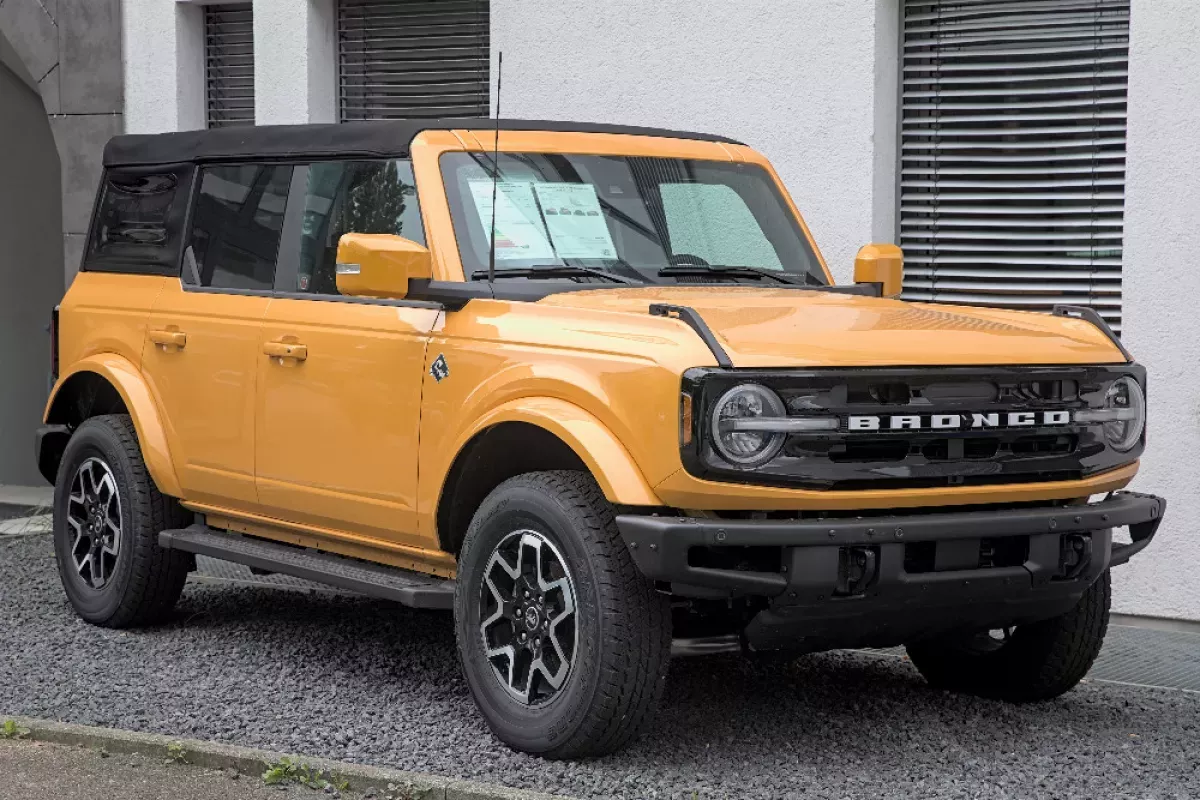
The Ford Bronco is an iconic American SUV line first introduced by Ford in 1966. Originally designed as a compact off-road vehicle to compete with the Jeep CJ-5, it evolved through several generations, growing in size and capability before being discontinued in 1996. The Bronco gained significant cultural notoriety in the 1990s, particularly due to the televised 1994 low-speed chase involving O.J. Simpson. After a 25-year hiatus, Ford revived the nameplate in 2021 with a modern, modular design that pays homage to its rugged heritage. The current lineup includes both a mid-size SUV and the smaller Bronco Sport. Known for its exceptional off-road performance, removable doors and roof, and retro-inspired styling, the modern Bronco has quickly reclaimed its status as a highly sought-after vehicle for adventure enthusiasts, successfully blending classic nostalgia with contemporary automotive technology.
1963: Creation of first Bronco clay models
In 1963, the design process for the Ford Bronco reached an early development stage with the construction of the vehicle's first clay models.


February 1964: Production approval of the Ford Bronco
In February 1964, Lee Iacocca officially approved the Ford Bronco for mass production following its development phase.
August 1965: Launch of the Ford Bronco
In August 1965, the Ford Bronco officially launched, featuring a 105-hp 170-cubic-inch inline-six engine derived from the Ford Falcon.
1965: Beginning of Ford Bronco Production
In 1965, Ford commenced the manufacturing of the original Ford Bronco at the Michigan Truck Plant located in Wayne, Michigan.
1965: Formation of the SHM Racing Team
In 1965, race car builder Bill Stroppe joined forces with Holman-Moody to create the Stroppe/Holman/Moody (SHM) racing team, which prepared several Ford Broncos for participation in grueling off-road endurance events like the Mint 400, Baja 500, and Mexican 1000.
March 1966: Introduction of the 289 V8 Engine
In March 1966, Ford introduced an optional 200-hp 289-cubic-inch V8 engine for the Bronco.
1966: Launch of the First Generation Ford Bronco
In 1966, Ford launched the original Bronco, offering three distinct body configurations including a two-door wagon, a half-cab pickup, and an open-body roadster. The vehicle was introduced with a base price of $2,194 and featured a wide array of dealer-installed options, from functional tools like snowplows and winches to interior amenities like bucket seats and CB radios.
1966: Ford Bronco Production Launch
In 1966, Ford officially launched the Ford Bronco, marking the company's entry into the SUV market and the beginning of the first of five generations produced through 1996.
1966: Doug Nash Bronco Funny Car Dragstrip Debut
In 1966, a custom Bronco funny car engineered by Doug Nash achieved impressive low 8-second dragstrip times, though it was eventually disqualified from competition following regulatory changes banning pickup trucks and aluminum frames.
1966: Shared Components with 1966 Galaxie
In 1966, the first-generation Ford Bronco featured optional full wheel covers that were identical to those utilized on the 1966 Ford Galaxie.
1967: Introduction of the Sport Option Package
In 1967, Ford introduced the Sport option package for the Bronco wagon, which featured chrome exterior trim, special wheel covers, and signature red-painted FORD lettering on the grille.
1967: Addition of back-up lights
In 1967, the Ford Bronco was updated to include back-up lights in order to meet new federal regulatory requirements.
1968: Addition of side marker lamps and discontinuation of the roadster model
During 1968, the Ford Bronco was equipped with side marker lamps to comply with federal regulations, and the struggling open-body roadster model was officially withdrawn from the lineup after the 1968 model year.
1969: SHM Baja 1000 Competition
During 1969, the Stroppe/Holman/Moody racing team entered a specialized fleet of six Ford Broncos to compete in the Baja 1000 off-road race.
1969: Engine Upgrade to 302 Cubic Inches
For the 1969 model year, the Bronco's 289 V8 engine was upgraded to a 302-cubic-inch displacement.
1969: Increased Competition in the SUV Market
Starting in 1969, the Ford Bronco began to face intensified market pressure as competitors like the Chevrolet Blazer, Jeep Cherokee, and International Scout II were introduced, drawing consumer interest away from the Bronco toward vehicles with superior on-road performance.
1970: Bronco Sport Becomes a Standalone Model
During 1970, the Bronco Sport transitioned from being an optional equipment package to serving as a distinct, freestanding model in the Ford lineup.
1971: Launch of the Baja Bronco Dealer Package
In 1971, Ford introduced the specialized 'Baja Bronco' performance package to dealership customers. This retail offering featured significant performance and aesthetic upgrades, including custom tires and paint, at a premium price point, though sales were limited to 650 units over four years.
1971: Dana 44 Front Axle Implementation
In 1971, Ford upgraded the front axle of the Ford Bronco, replacing the previous Dana 30 unit with a more robust Dana 44 front axle to improve vehicle durability.
1972: Discontinuation of the Ford Bronco half-cab
In 1972, Ford decided to withdraw the half-cab body style of the Bronco from its lineup due to low sales volume and the introduction of the Ford Courier compact pickup.
1972: Introduction of the Ranger Trim
In 1972, Ford elevated the Bronco by introducing the Ranger trim as the top-tier option, which featured premium interior appointments such as cloth seats, woodgrain door panel trim, and carpeting, alongside exterior enhancements like body stripes and unique wheel covers.
1973: Start of Ford F-100 Sixth Generation Production
In 1973, Ford initiated the production of the sixth generation F-100 pickup truck, a chassis design that would later serve as the foundation for the second generation Ford Bronco.
1973: Introduction of Automatic Transmission Option
In 1973, Ford introduced a three-speed automatic transmission as an optional feature for the Bronco in direct response to increasing buyer demand for more convenient shifting options.
1973: Standardization of the 200 Cubic-Inch Inline Six
In 1973, a 200-cubic-inch inline-six engine became the standard offering for the Bronco, a configuration that lasted through 1977.
1973: Fuel Crisis Impact
The 1973 fuel crisis caused significant fuel economy concerns that led to the postponement of the second-generation Bronco development.
1974: Decline in Bronco Demand
By 1974, the ongoing competition from rival SUVs continued to drive a shift in consumer demand, resulting in a sustained decline in Bronco sales as buyers prioritized on-road handling and comfort over the Bronco's original design profile.
1974: Original Launch Target
In 1974, the second-generation Ford Bronco was originally intended to be launched, but the project was postponed.
1975: Interior Revision for Bronco Sport and Bronco Ranger
In 1975, both the Bronco Sport and the Bronco Ranger models underwent an interior update, incorporating a new two-spoke steering wheel design that was previously utilized in the F-Series vehicles.
1977: End of Engine Production Cycle
By 1977, the production cycles for both the 302-cubic-inch V8 and the 200-cubic-inch inline-six engines concluded for the Bronco.
1977: 1977 Ford Bronco exterior fuel door revision
In 1977, Ford implemented a design change for the Ford Bronco where the exterior-mounted fuel tank caps were moved and concealed behind hinged doors, matching the design aesthetic used on other Ford trucks of that era.
1977: Predecessor Model Reference
The 1977 Ford Bronco model is identified as the predecessor to the 1978 version, which gained significantly more weight.
1978: Introduction of Standard Rectangular Headlamps
During the 1978 model year, rectangular headlamps were first introduced on the Ranger trim of the Ford Bronco and F-Series vehicles.
1978: Second-Generation Bronco Release
Following a delay from 1974, the second-generation Ford Bronco was released in 1978, featuring a significantly larger design based on the F-Series.
1978: Launch of the Second-Generation Ford Bronco
In 1978, Ford introduced the second-generation Bronco, which was redesigned as a 3-door wagon featuring a lift-off rear hardtop. As part of the Project Shorthorn development, the vehicle was engineered to share significant bodywork and chassis components with the F-series truck line, specifically the F-100.
1978: Redesign of the Ford Bronco
In 1978, Ford significantly redesigned the Bronco by transitioning it to a full-size vehicle based on the F-Series pickup truck chassis, moving away from its original compact off-road roots to compete with the Chevrolet K5 Blazer and Dodge Ramcharger.
1978: Introduction of Free-Wheelin' Package
In 1978, the Ford Bronco was introduced with an optional cosmetic package called 'Free-Wheelin'' which featured distinct tricolor striping and blacked-out exterior trim.
1978: Launch of the 1978 Ford Bronco
In 1978, the Ford Bronco was redesigned based on the F-Series platform, featuring a unique three-door wagon design that replaced the previous steel top with a fiberglass half-length lift-off hardtop.
1978: Second-Generation Bronco Trim and Headlamp Differentiation
In 1978, the second-generation Ford Bronco launched with trim levels aligned with the F-Series, featuring round headlamps on the Bronco Custom and rectangular headlamps on the top-tier Ranger XLT trim.
1979: Standardization of Rectangular Headlamps
By 1979, the rectangular headlamps previously exclusive to the Ranger XLT trim became the standard design for all Ford Bronco models.
1979: Revision of Free-Wheelin' Striping
During the 1979 model year, the design of the tricolor striping used for the 'Free-Wheelin'' package on the Ford Bronco was officially revised.
1979: 1979 Ford Bronco Emissions Update
In 1979, Ford implemented significant emissions control updates to its light-truck lineup, which included equipping both available V8 engines in the Ford Bronco with catalytic converters.
1979: Ford Bronco 158 hp Engine Specification
In 1979, the Ford Bronco featured a powertrain configuration capable of producing 158 horsepower.
1979: 1979 Ford Bronco Horsepower Rating
In 1979, the Ford Bronco was recorded as having an engine output of 156 horsepower.
1979: Conclusion of Ford F-100 Sixth Generation Production
The production run for the sixth generation Ford F-100, which provided the structural basis for the second generation Bronco, concluded in 1979.
1980: Successor Development
By 1980, the successor to the second-generation Bronco had its development nearly finalized.
1984: Introduction of Bronco II
In 1984, Ford expanded the Bronco nameplate by introducing the Bronco II, a compact SUV that remained in production until 1990.
1990: Conclusion of Bronco II Production
By 1990, Ford ended the production run of the Bronco II compact SUV, which had originally debuted in 1984.
1996: Discontinuation of the Ford Bronco
In 1996, Ford discontinued the production of the Bronco due to a waning market interest in large two-door SUVs, opting to replace it with the four-door Ford Expedition.
1996: End of Initial Ford Bronco Production Run
The production cycle for the original generation series of the Ford Bronco concluded in 1996 at the Michigan Truck Plant.
1996: End of Fifth Generation Bronco
The production run for the first five generations of the Ford Bronco concluded in 1996, marking the end of the model's initial multi-decade production cycle.
1996: Retirement of the Bronco model line
The production run of the Ford Bronco, which utilized the three-door wagon configuration established in the 1978 redesign, officially concluded in 1996.
2021: Reintroduction of the Sixth-Generation Ford Bronco
After a hiatus lasting 25 years, the Ford Bronco was officially brought back to the market in 2021 as a mid-size SUV, available in both two-door and four-door configurations to compete with the Jeep Wrangler.
2021: Sixth Generation Bronco and Bronco Sport Launch
In 2021, Ford reintroduced the model line with the launch of the sixth-generation Ford Bronco and the debut of the Bronco Sport compact crossover.
2025: Inflation Adjustment Analysis
As of 2025, the original 1966 base price of the Ford Bronco is calculated to be equivalent to $22,415, reflecting historical inflation and market changes since the vehicle's debut.
2025: Introduction of Bronco New Energy
In 2025, Ford introduced the Bronco New Energy, a vehicle model specifically designated for the Chinese market.
Mentioned in this timeline

China officially the People's Republic of China PRC is located...
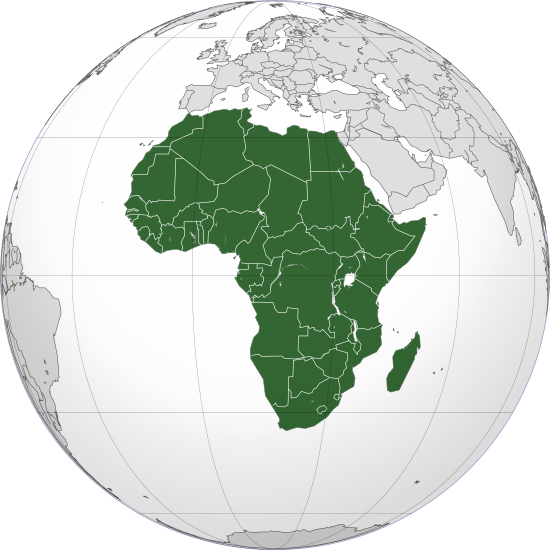
Africa is the second-largest and second-most populous continent home to...
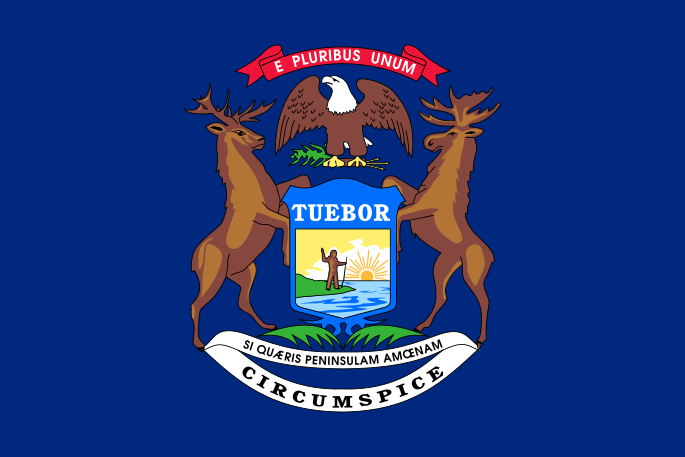
Michigan is a state in the Great Lakes region of...

Australia officially the Commonwealth of Australia is a country encompassing...

Detroit Michigan's most populous city sits on the Detroit River...

A car also known as an automobile is a wheeled...
Trending

4 hours ago Troy Aikman Faces Uncertain Future in Broadcasting Following Potential ESPN Departure
4 hours ago Arsenal Fear Long-Term Injury Absence for Bukayo Saka Following Latest Update

4 hours ago Texas Football Faces Uncertainty Amid Arch Manning and Steve Sarkisian Challenges

4 hours ago Millie Bobby Brown Steps Out in Chic Pink Ensemble for Date Night with Husband
5 hours ago Alvin Kamara Cleared to Play Against Steelers in Paris

5 hours ago Flavio Cobolli Contends for Prestigious ATP Finals Spot in Turin
Popular

Ilhan Omar is a prominent American politician currently serving as...

Ken Paxton is an American politician and lawyer serving as...

Elon Musk is a visionary entrepreneur and engineer known for...

Michael Joseph Jackson the King of Pop was a highly...

Elizabeth Holmes is an American entrepreneur and the founder of...

Cristiano Ronaldo widely considered one of the greatest footballers captains...