


A hallmark is an official mark, or a series of marks, applied to metallic items, particularly those made of precious metals like gold, silver, and platinum. Its primary purpose is to certify the content and purity of these metals. While traditionally associated with metal goods, the term "hallmark" is broadly used to denote any standard of quality or authenticity. It is important to distinguish hallmarks from responsibility marks, which identify the maker of the item.
1919: French mark
In 1919, the French mark head of horse for jewellery and watches from 18k gold made in the French provinces was used.


November 1972: Vienna Convention on the Control of the Fineness and the Hallmarking of Precious Metal Objects Signed
In November 1972, a core group of European nations signed the Vienna Convention on the Control of the Fineness and the Hallmarking of Precious Metal Objects, in an attempt at standardizing the legislation on the inspection of precious metals and to facilitate international trade. Articles conforming to the standard receive the Common Control Mark (CCM).
1972: Official French Hallmarks
In 1972, official French Hallmarks for gold and silver were used.
1973: Hallmarking Act 1973
In 1973, the Hallmarking Act 1973 made Britain a member of the Vienna Convention and introduced marking for platinum.
1999: Changes to the UK hallmarking system
In 1999, changes were made to the UK hallmarking system to align it with the European Union, with the date letter no longer a compulsory part of the hallmark.
2000: Date mark (lowercase a for the year 2000)
In the year 2000, the date mark was lowercase a.
July 2009: Hallmarking Act Amendment
In July 2009, the Hallmarking Act was amended to include palladium.
January 2010: Palladium Inclusion
From January 2010, palladium was included in the Hallmarking Act.
February 2013: Legislative Reform Order (LRO) Effective
In February 2013, a Legislative Reform Order (LRO) came into effect, granting UK assay offices the legal right to strike hallmarks outside of UK territory.
July 2016: Birmingham Assay Office strikes hallmarks in Mumbai, India
In July 2016, Birmingham Assay Office began striking Birmingham hallmarks in Mumbai, India, with the possibility of establishing further offshore offices.
March 2018: British Hallmarking Council Announcement
In March 2018, the British Hallmarking Council announced that UK assay office marks struck offshore must be distinguishable from those struck in the UK.
Mentioned in this timeline

India officially the Republic of India is a South Asian...

Vienna the capital and most populous city of Austria boasts...

The horse scientifically known as Equus ferus caballus is a...
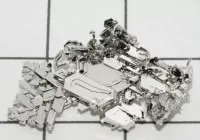
Platinum Pt atomic number is a dense malleable ductile and...
Trending

4 hours ago Speculation Grows Over Jayson Tatum and Jaylen Brown Partnership Dynamics

5 hours ago Kevin Bacon Seeks Fan Assistance Following Recent Heartbreaking Personal Loss
5 hours ago Tacoma Grocery Owner Extradited from India Over $600K Food Stamp Fraud Scheme

6 hours ago Elizabeth Hurley and Billy Ray Cyrus Announce Their Engagement

6 hours ago Fabio Wardley Praises Anthony Joshua's Aura Ahead of Daniel Dubois Boxing Match

6 hours ago Ariel Winter Reveals Modern Family Connection to New Boyfriend Introduced by Nolan Gould
Popular

Ilhan Omar is a prominent American politician currently serving as...

Ken Paxton is an American politician and lawyer serving as...

Elon Musk is a visionary entrepreneur and engineer known for...

Michael Joseph Jackson the King of Pop was a highly...

Jameis Winston is an American football quarterback currently playing for...

Cristiano Ronaldo widely considered one of the greatest footballers captains...