


1955: Aintree Motor Racing Circuit hosted the British Grand Prix in 1955
Aintree Motor Racing Circuit hosted the British Grand Prix in 1955.


1958: Designation as a "Special Review" Area in 1958
In 1958, Merseyside was designated a "Special Review" area under the Local Government Act.
1961: Aintree Motor Racing Circuit hosted the British Grand Prix in 1961
Aintree Motor Racing Circuit hosted the British Grand Prix in 1961.
1962: Aintree Motor Racing Circuit hosted the British Grand Prix in 1962
Aintree Motor Racing Circuit hosted the British Grand Prix in 1962.
1962: Review of the "Special Review" Area started in 1962
In 1962, the Local Government Commission for England started a review of the Merseyside area, which had been designated as a "Special Review" area.
1965: Further areas added to the Special Review Area in 1965
In 1965, further areas, including Widnes and Runcorn, were added to the Merseyside Special Review Area.
1966: Abolishment of the commission in 1966
In 1966, the Local Government Commission was abolished and never completed its final proposals.
1970: Rejection of the Redcliffe-Maud Report by the Conservative government elected in 1970
The Redcliffe-Maud Report was rejected by the Conservative government elected in 1970.
1971: White paper published in 1971 retains the concept of a two-tier metropolitan area.
In 1971, a white paper was published which retained the concept of a two-tier metropolitan area based on the Mersey area.
April 1973: First elections of the county council members held in April 1973
In April 1973, the first elections of the 99 members of the county council were held in advance of the formal establishment of the council.
April 1974: Formal establishment of the county council on 1 April 1974
On April 1, 1974, the Merseyside County Council was formally established, sharing power with the five metropolitan boroughs.
1974: Creation of the County of Merseyside in 1974
In 1974, the county of Merseyside was created from areas previously part of the administrative counties of Lancashire and Cheshire, along with several county boroughs.
1974: Establishment of Merseyside in 1974
In 1974, the county of Merseyside was established, incorporating areas that were previously part of Cheshire and Lancashire.
1985: Local Government Act 1985
In 1986 the county council, along with all other metropolitan county councils, was abolished under the Local Government Act of 1985.
1986: Abolishment of the county council in 1986
In 1986, the Merseyside County Council was abolished under the Local Government Act 1985, making the boroughs effectively unitary authorities.
2009: 684,000 passengers used Mersey Ferry in 2009-2010
In 2009-2010, the Mersey Ferry had 684,000 passengers using the service.
2010: 684,000 passengers used Mersey Ferry in 2009-2010
In 2009-2010, the Mersey Ferry had 684,000 passengers using the service.
2016: Liverpool2 container terminal opened in 2016
In 2016, Liverpool2, a second container terminal at Seaforth, opened which can handle Post-Panamax vessels and doubled the port's capacity.
2017: Opening of the Mersey Gateway Bridge in 2017
In 2017, the Mersey Gateway Bridge opened, designed to improve transport links between Widnes and Runcorn and other key locations in the vicinity.
2017: Steve Rotheram elected Mayor in 2017
Steve Rotheram was elected Mayor of the Liverpool City Region in 2017.
2020: Liverpool Airport had 5 million departures in 2020
Liverpool John Lennon Airport had 5 million departures in 2020.
2021: Liverpool Lime Street station used by 10.46 million passengers in 2021-22
In 2021-22, Liverpool Lime Street main line station was used by 10.46 million passengers.
2021: 10.75 million passengers in Liverpool Central in 2021-22
In 2021–22, Liverpool Central is the county's most-used station, with 10.75 million passengers.
2021: Steve Rotheram re-elected Mayor in 2021
Steve Rotheram was re-elected as the Mayor of the Liverpool City Region in 2021.
2022: Port of Liverpool is fourth busiest port in the UK in 2022
As of 2022, the Port of Liverpool handles over 33 million tonnes of freight cargo per year, making it the fourth busiest port in the United Kingdom.
2024: NHS Cheshire and Merseyside serve 2.7 million in 2024
As of 2024, NHS Cheshire and Merseyside serves a combined population of 2.7 million people, overseeing NHS and other care services within the Cheshire and Merseyside areas.
2024: Merseyside Population in 2024
In 2024, Merseyside has a population of 1,475,541, residing in an area of 249 square miles (645 km).
2024: Steve Rotheram re-elected Mayor in 2024
Steve Rotheram was re-elected Mayor of the Liverpool City Region in 2024.
Mentioned in this timeline

John Lennon was a highly influential English singer-songwriter musician and...
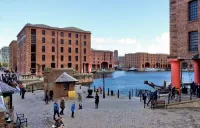
Liverpool is a major city and metropolitan borough in Merseyside...
England a constituent country of the United Kingdom occupies roughly...
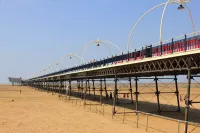
Southport is a coastal town located in Merseyside England specifically...
The letter S or s is the th letter in...
Trending

3 hours ago Active Tennis Betting Markets for Professional Matches

3 hours ago Henrique Rocha Makes History Entering ATP Top 100

4 hours ago Sophia Bush Addresses Relationship Rumors with Ashlyn Harris

4 hours ago Court Rejects Australian Prisoner's Bid for Vegemite Access

4 hours ago New Netflix Docuseries Explores Life and Legacy of Matthew Perry

3 days ago Speculation Grows Over Next Member of WWE Faction 946 Ahead of RAW
Popular

Ilhan Omar is a prominent American politician currently serving as...

Ken Paxton is an American politician and lawyer serving as...

Elon Musk is a visionary entrepreneur and engineer known for...

Barack Obama the th U S President - was the...

Greg Abbott is the current and th Governor of Texas...

Michael Joseph Jackson the King of Pop was a highly...