History of Meteor shower in Timeline


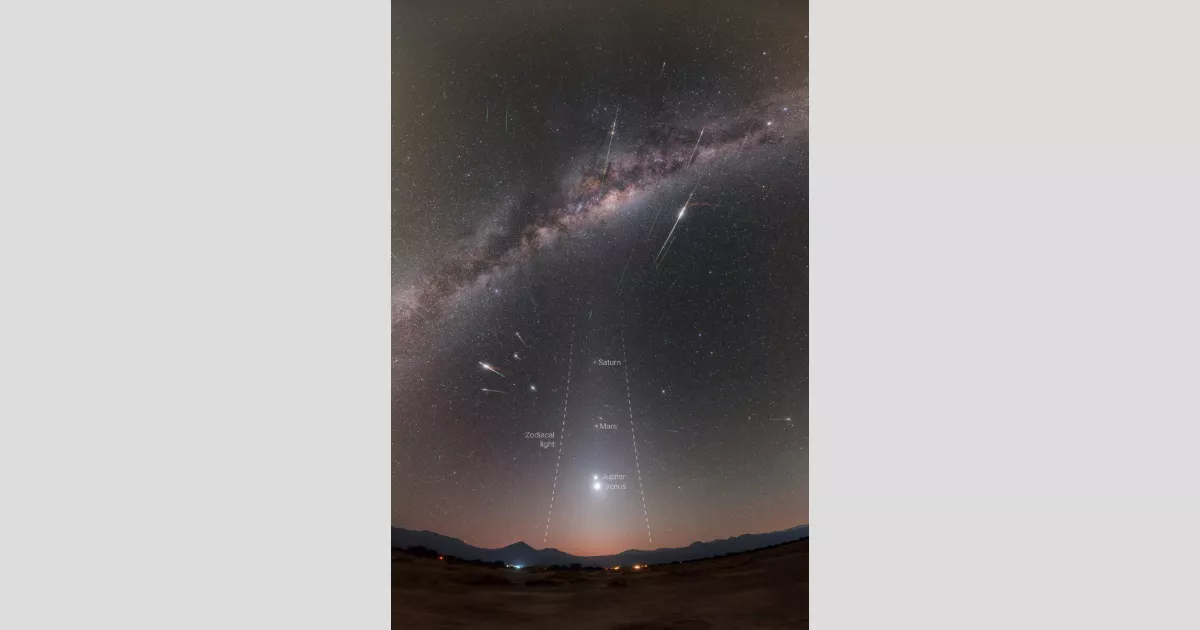
A meteor shower is a celestial event where numerous meteors appear to originate from a single point in the night sky. These meteors are caused by meteoroids, streams of cosmic debris, entering Earth's atmosphere at high speeds. Typically, meteors are small, often disintegrating before reaching the surface. Intense showers, known as outbursts or storms (like the Leonids), can produce over 1,000 meteors per hour. The Meteor Data Centre lists many suspected showers, with about 100 well-established. Resources like NASA provide information on viewing opportunities and active showers.
3 hours ago : Full Pink Moon Illuminates Skies: Viewing Opportunities and Hiking Events Abound
The April full moon, known as the 'Pink Moon,' will be visible in Metro Vancouver and celebrated with hikes in Northern Minnesota. It's named for spring flowers, not its color.


1911: George Johnstone Stoney's Death
In 1911, Irish astronomer George Johnstone Stoney, who had been calculating the position of dust at Earth's orbit, passed away.
1917: Arthur Matthew Weld Downing's Death
In 1917, British astronomer Arthur Matthew Weld Downing, who had been calculating the position of dust at Earth's orbit, passed away.
1933: Draconids meteor storm of 1933
In 1933, the Draconids produced a meteor storm.
1946: Draconids meteor storm of 1946
In 1946, the Draconids produced a meteor storm, with zenithal hourly rates of thousands of meteors per hour.
1951: Whipple demonstrates water vapor drag in comets
In 1951, Fred Whipple demonstrated that comets can produce debris by water vapor drag and by breakup, envisioning comets as "dirty snowballs".
1951: Fred Whipple's Comet Model
In 1951, Fred Whipple proposed that comets are "dirty snowballs" that shed meteoritic debris as their volatiles are ablated by solar energy in the inner Solar System.
1966: Leonid meteor storm of 1966
The Leonid meteor storm in 1966 was one of the most intense, recording peak rates that exceeded 120,000 meteors per hour.
1981: Donald K. Yeomans reviews Leonid meteor shower history
In 1981, Donald K. Yeomans of the Jet Propulsion Laboratory reviewed the history of meteor showers for the Leonids and the history of the dynamic orbit of Comet Tempel-Tuttle, showing relative positions of the Earth and Tempel-Tuttle and marking where Earth encountered dense dust.
1985: Identification of Leonid meteor storm source years
In 1985, E. D. Kondrat'eva and E. A. Reznikov of Kazan State University correctly identified the years when dust was released which was responsible for several past Leonid meteor storms.
1994: Comet Shoemaker–Levy 9 impact on Jupiter
In 1994, Comet Shoemaker–Levy 9 impacted Jupiter, forming a brief trail.
1995: Prediction of 1995 Alpha Monocerotids outburst
In 1995, Peter Jenniskens predicted the 1995 Alpha Monocerotids outburst from dust trails.
1995: Observations of alpha Monocerotids
In 1995, observations of the alpha Monocerotids demonstrated how the gravitational pull of planets affects the dust trail's path near Earth's orbit, leading to meteor showers in some years.
1999: Leonid meteor storm of 1999
In 1999, there was a Leonid meteor storm.
1999: Application of dust trail method for Leonid storm
In anticipation of the 1999 Leonid storm, Robert H. McNaught, David Asher, and Esko Lyytinen were the first to apply this method in the West.
2001: Leonid meteor storms of 2001
In 2001, there were Leonid meteor storms.
2002: Leonid meteor storms of 2002
In 2002, there were Leonid meteor storms.
2003: Origin of Quadrantids and Geminids
In 2003, Peter Jenniskens argued that short-period meteor showers like Quadrantids and Geminids are from infrequent disintegrations of dormant comets.
March 7, 2004: Meteor on Mars recorded by Spirit
On March 7, 2004, the panoramic camera on Mars Exploration Rover Spirit recorded a streak believed to be a meteor from a Martian meteor shower associated with comet 114P/Wiseman-Skiff.
2006: Jenniskens publishes future dust trail predictions
In 2006, Jenniskens published predictions for future dust trail encounters covering the next 50 years.
December 20, 2007: Expected strong display from a shower associated with comet 114P/Wiseman-Skiff
A strong display was expected on December 20, 2007, from a Martian meteor shower associated with comet 114P/Wiseman-Skiff.
2017: IMO Meteor Shower Calendar
The IMO Meteor Shower Calendar 2017 features maps of drifting "fixed points" of meteor showers.
August 2028: Potential Perseids meteor storm in August 2028
Finnish astronomer Esko Lyytinen predicted a potential Perseids meteor storm in August 2028, with peak rates of at least 1,000 meteors per hour possible.
2034: Anticipation of the next Leonid meteor storm around 2034
Astronomers don't anticipate the next Leonid meteor storm until around 2034.
2098: Predicted Draconid meteor storm in 2098
Astronomers have predicted a potentially prolific Draconid meteor storm in 2098, with peak rates potentially reaching 20,000 meteors per hour.
2099: Anticipation of the next Leonid meteor storm around 2099
Astronomers don't anticipate the next Leonid meteor storm until around 2099.
Trending

16 minutes ago Wyatt Teller Joins Texans: Two-Year Deal to Boost Offensive Line.
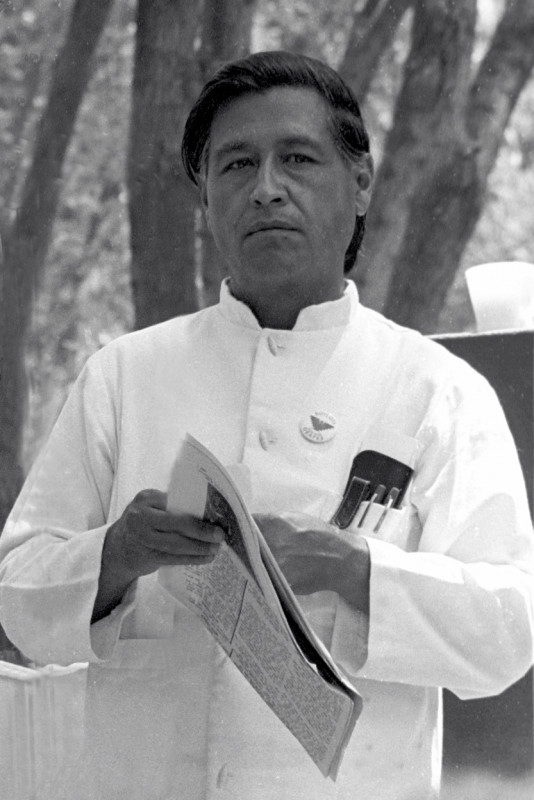
17 minutes ago Cesar Chavez faced abuse allegations, UFW march in Tucson got canceled.
17 minutes ago AIPAC Spending Big in Illinois Primaries Amidst Debates on Israel Policy.

17 minutes ago Matt Hinkin, Knoxville's Beloved Meteorologist, Passes Away at 62: A Legacy Remembered

1 hour ago NATO allies refuse to help secure Hormuz Strait; Europe stands up to Trump

1 hour ago Churchill's Special Relationship faces challenges amidst evolving US-UK national security strategies.
Popular

Sean Penn is a highly acclaimed American actor and film...

Paula White-Cain is a prominent American televangelist and key figure...
Cesar Chavez was a prominent American labor leader and civil...

Chaz Bono is an American writer musician and actor known...

XXXTentacion born Jahseh Dwayne Ricardo Onfroy was a controversial yet...

Benjamin Bibi Netanyahu is an Israeli politician and diplomat currently...