


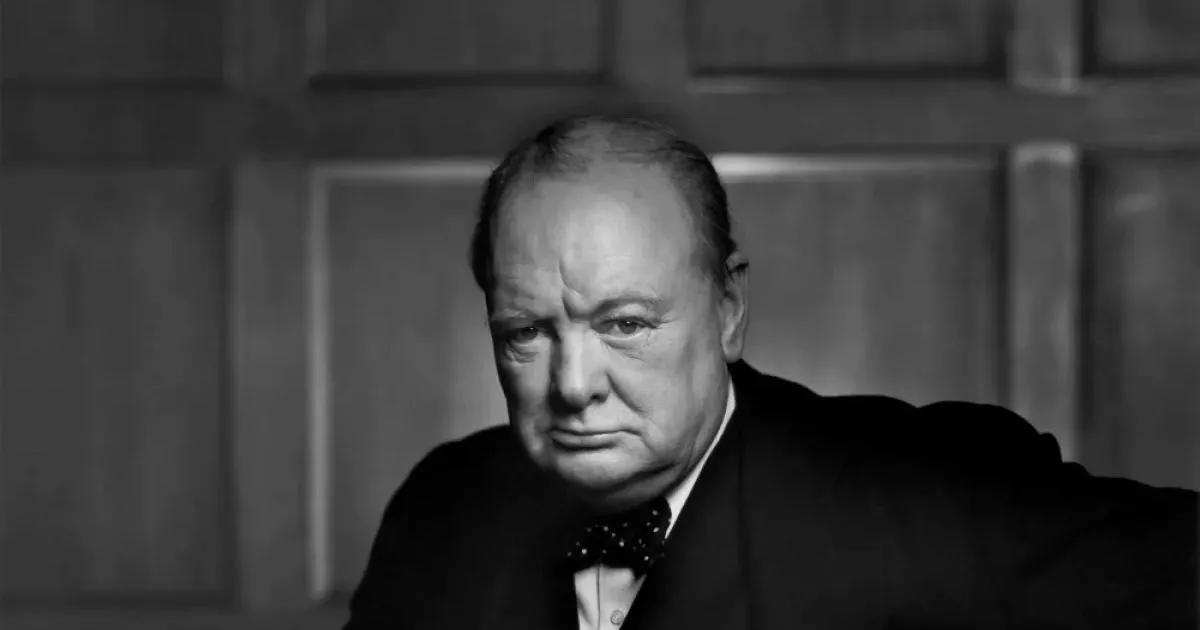
Winston Churchill was a prominent British statesman, military officer, and writer who served as Prime Minister of the United Kingdom during World War II (1940-1945) and again from 1951-1955. He was a Member of Parliament for 62 years, representing five constituencies. Ideologically aligned with economic liberalism and imperialism, he led the Conservative Party from 1940 to 1955, having previously been a member of the Liberal Party from 1904 to 1924. His leadership during WWII cemented his place as one of the most important figures in British history.
January 1900: Rejoined the Army
In January 1900, Churchill rejoined the army as a lieutenant in the South African Light Horse regiment.


October 1900: Elected as Member of Parliament
In October 1900, Churchill secured a narrow victory in the general election to become a Member of Parliament at the age of 25.
1900: Elected as Conservative MP
In 1900, Churchill was elected as a Conservative Member of Parliament (MP).
1900: Elected as Member of Parliament
In 1900, Winston Churchill was elected as a Member of Parliament, beginning his extensive career in British politics.
February 1901: Took Seat in the House of Commons
In February 1901, Churchill took his seat in the House of Commons, where his maiden speech received widespread coverage.
1901: Lecture tour in Paris, Madrid, and Gibraltar
In spring 1901, Churchill gave lectures in Paris, Madrid, and Gibraltar.
October 1903: Announced protectionist legislation
In October 1903, Arthur Balfour's government announced protectionist legislation.
May 1904: Joined Liberal Party
In May 1904, Churchill joined the Liberal Party.
1904: Defection to the Liberals
In 1904, Churchill defected from the Conservative Party to the Liberal Party.
1904: Churchill Critical of Aliens Bill
In 1904, Churchill was critical of the proposed Aliens Bill, opposing antisemitism.
1904: Possible Defection
In 1904, Churchill's possible defection may have been influenced by ambition.
1904: Joined the Liberal Party
In 1904, Winston Churchill joined the Liberal Party after being a Conservative MP.
December 1905: Balfour Resigned
In December 1905, Balfour resigned as prime minister and King Edward VII invited the Liberal leader Henry Campbell-Bannerman to replace him.
January 1906: Liberal victory in general election
In January 1906, the Liberals won the general election in a massive landslide.
April 1908: President of the Board of Trade
In April 1908, Churchill was appointed as President of the Board of Trade.
September 1908: Churchill Marries Clementine Hozier
In September 1908, Winston Churchill married Clementine Hozier.
September 1908: Marriage to Clementine Hozier
On September 12, 1908, Churchill married Clementine Hozier at St Margaret's, Westminster. They honeymooned in Baveno, Venice, and Veveří Castle in Moravia.
April 1909: People's Budget
On April 29, 1909, Lloyd George presented his "People's Budget", calling it a war budget to eliminate poverty. With Churchill as his closest ally, Lloyd George proposed unprecedented taxes on the rich to fund Liberal welfare programmes.
May 1909: Proposed Labour Exchanges Bill
In May 1909, Churchill proposed the Labour Exchanges Bill to establish over 200 Labour Exchanges to assist the unemployed in finding employment.
July 1909: Diana Churchill's Birth
In July 1909, Diana, the first child of Winston and Clementine Churchill, was born.
1909: Birth of Daughter, Diana
In 1909, Churchill's first daughter, Diana, was born.
January 1910: General Election
In January 1910, the government called a general election, which resulted in a Liberal victory. Churchill retained his seat at Dundee.
February 1910: Promotion to Home Secretary
In February 1910, Churchill was promoted to Home Secretary, giving him control over the police and prison services, where he implemented prison reform.
February 1910: Churchill's Letter on Sterilization
In February 1910, as Home Secretary, Churchill wrote a letter to Prime Minister H. H. Asquith supporting the forced sterilization of the "feeble minded,".
November 1910: Tonypandy riots
In November 1910, Churchill addressed the Tonypandy riots, where coal miners protested working conditions. Though troops were dispatched, Churchill prevented their deployment to avoid bloodshed, opting to send unarmed London police instead and offered the protesters an interview, and this incurred the long-term suspicion of the labour movement.
November 1910: Attacked by Hugh Franklin
In November 1910, the suffragist Hugh Franklin attacked Churchill with a whip.
December 1910: General election
In December 1910, Asquith called a general election and the Liberals were re-elected with Churchill secure in Dundee.
January 1911: Siege of Sidney Street
In January 1911, Churchill was involved in the Siege of Sidney Street where he stood with the police and allowed the house where burglars were hiding to burn down rather than risk British lives.
March 1911: Introduction of Coal Mines Bill
In March 1911, Churchill introduced the second reading of the Coal Mines Bill, which imposed stricter safety standards for mines.
April 1911: Agadir Crisis
During the Agadir Crisis in April 1911, Churchill proposed an alliance with France and Russia to protect Belgium, Denmark, and the Netherlands against potential German expansion, which significantly influenced his perspective on naval expansion.
May 1911: Randolph Churchill's Birth
Randolph, the second child of Winston and Clementine Churchill, was born in May 1911.
October 1911: First Lord of the Admiralty
In October 1911, Churchill was appointed First Lord of the Admiralty, where he created a naval war staff and focused on naval preparation.
1911: Churchill Supports Forced Sterilization
During his time as Home Secretary in 1910–1911, Churchill supported the forced sterilization of the "feeble minded."
1911: Parliament Act Passage
In 1911, Churchill assisted in the passage of the Parliament Act, which reduced and restricted the powers of the House of Lords.
1912: Irish Home Rule Bill
In 1912, Churchill supported Asquith's government's introduction of the Home Rule Bill and opposed the Partition of Ireland, urging Ulster Unionists to accept it.
1912: German Naval Law
In 1912, after Germany increased warship production through its Naval Law, Churchill pledged that Britain would build two warships for every new German battleship but Germany refused mutual de-escalation.
December 1913: Threat to resign
In December 1913, Churchill threatened to resign if his proposal for 4 new battleships in 1914–15 was rejected due to objections from some Liberals over his level of naval expenditure.
June 1914: Securing oil access for the navy
In June 1914, Churchill convinced the House of Commons to authorize the government purchase of a 51% share in the profits of the Anglo-Persian Oil Company to secure oil access for the navy.
October 1914: Sarah Churchill's Birth
In October 1914, Sarah, the third child of Winston and Clementine Churchill, was born.
March 1915: Naval bombardment of Turkish defences
In March 1915, an Anglo-French task force attempted a naval bombardment of Turkish defenses in the Dardanelles, under Churchill's direction.
November 1915: Resignation and Joining Royal Scots Fusiliers
In November 1915, Churchill resigned from his position and joined the Royal Scots Fusiliers on the Western Front for six months.
November 1915: Resignation from the government
On 25 November 1915, Churchill resigned from the government but remained an MP.
1915: Churchill Began Painting
After resigning from the Admiralty in 1915, Churchill began painting as an amateur artist, often using the pseudonym "Charles Morin".
January 1916: Command of 6th Royal Scots Fusiliers
In January 1916, Churchill was temporarily promoted to lieutenant-colonel and given command of the 6th Royal Scots Fusiliers on the Western Front.
May 1916: End of temporary promotion
In May 1916, Churchill's temporary promotion ended, and he returned to the rank of major after the 6th Royal Scots Fusiliers were merged into the 15th Division.
October 1916: Asquith resigns
In October 1916, Asquith resigned as prime minister.
November 1916: The greater application of mechanical power to the prosecution of an offensive on land
In November 1916, Churchill wrote "The greater application of mechanical power to the prosecution of an offensive on land", but his ideas were ignored.
May 1917: Churchill inspects the French war effort
In May 1917, Lloyd George sent Churchill to inspect the French war effort.
October 1917: Plan of attack for the next year
In his October 1917 letter to his Cabinet colleagues, Churchill wrote the plan of attack for the next year, that would bring final victory to the Allies.
1917: Return to Government
In 1917, Churchill returned to government, serving in various ministerial roles.
June 1918: Ending of a second strike
In June 1918, Churchill ended a second strike by threatening to conscript strikers into the army.
November 1918: Marigold Churchill's Birth
In November 1918, Marigold, the fourth child of Winston and Clementine Churchill, was born.
November 1918: Birth of Marigold
In November 1918, four days after the Armistice, Churchill's fourth child, Marigold, was born.
December 1918: General election campaign
During the campaign in December 1918, Churchill called for nationalization of the railways, control on monopolies, tax reform, and the creation of a League of Nations to prevent wars.
1918: Women's Suffrage
In 1918, women's suffrage remained unresolved until 1918.
January 1919: Secretary of State for War and Air
In January 1919, Lloyd George appointed Churchill as Secretary of State for War and Secretary of State for Air.
1919: Charles Camille Morin death
French landscape painter Charles Camille Morin died in 1919, and Churchill started using his pseudonym "Charles Morin" for his paintings.
January 1921: Inheritance from Frances Vane
In January 1921, Churchill unexpectedly inherited money from the estate of Frances Vane, Marchioness of Londonderry, a life-changing figure.
February 1921: Secretary of State for the Colonies
In February 1921, Churchill became Secretary of State for the Colonies.
August 1921: Marigold Churchill's Death
In August 1921, Marigold Churchill died from sepsis.
February 1922: Churchill speaks on Irish unity in the House of Commons
Speaking in the House of Commons on 16 February 1922, Churchill stated: "What Irishmen all over the world most desire is not hostility against this country, but the unity of their own".
September 1922: Mary Churchill's Birth and Chartwell Purchase
In September 1922, Mary, the Churchills' last child, was born and later that month, the Churchills bought Chartwell.
September 1922: Chanak Crisis
In September 1922, the Chanak Crisis erupted as Turkish forces threatened to occupy the Dardanelles neutral zone. Churchill and Lloyd George favoured military resistance to any Turkish advance, but the Conservatives opposed it.
October 1922: Appendectomy and loss of seat
In October 1922, Churchill underwent an appendectomy. While he was in hospital, Lloyd George's coalition was dissolved, and in the general election, Churchill lost his Dundee seat.
November 1922: General election
In November 1922, a political debacle ensued which resulted in the Conservative withdrawal from the government, precipitating the general election.
April 1923: Publication of The World Crisis
In April 1923, Churchill published the first volume of his autobiographical history of the war, 'The World Crisis'.
March 1924: Defeat in Westminster Abbey By-Election
In March 1924, alienated by Liberal support for Labour, Churchill stood as an independent anti-socialist candidate in the Westminster Abbey by-election but was defeated.
November 1924: Rejoins Conservative Party and Becomes Chancellor
In November 1924, Churchill became Chancellor of the Exchequer and formally rejoined the Conservative Party a year later.
1924: Returned to Conservative Party
In 1924, Winston Churchill returned to the Conservative Party after being a member of the Liberal Party since 1904.
April 1925: Restoration of the Gold Standard
In April 1925, Churchill controversially restored the gold standard at its 1914 parity in his first budget, against the advice of leading economists like John Maynard Keynes, a move that led to deflation and unemployment.
1925: Chancellor of the Exchequer
In 1925, Churchill, as Chancellor of the Exchequer, returned sterling to the gold standard, impacting the UK economy.
1926: Involvement in the General Strike
In 1926, during the General Strike, Churchill edited the British Gazette and later called for a legally binding minimum wage, also expressing his views on Irish unity.
1927: Meeting with Mussolini in Rome
In early 1927, Churchill visited Rome and met with Mussolini, praising him for his stance against Leninism.
April 1929: Presents Fifth Budget
In April 1929, Churchill presented his fifth budget, which included measures such as reducing the state pension age and cutting military expenditure.
1929: Defeat in General Election and Beginning of Marlborough Biography
In the 1929 general election, Churchill retained his seat, but the Conservatives were defeated, and he began working on "Marlborough: His Life and Times".
October 1930: Publication of My Early Life
In October 1930, Churchill published his autobiography, "My Early Life", which sold well and was translated into multiple languages.
1930: Advocacy for a "United States of Europe"
In 1930, Churchill was an early proponent of pan-Europeanism, calling for a "United States of Europe" in an article.
January 1931: Resignation from Shadow Cabinet over India Policy
In January 1931, Churchill resigned from the Conservative Shadow Cabinet due to disagreement over granting Dominion Status to India, opposing Mohandas Gandhi.
October 1931: Victory in General Election but Exclusion from Ministerial Position
In October 1931, Churchill nearly doubled his majority in Epping during the Conservative landslide victory but was not given a ministerial position.
January 1932: Accident in New York
In January 1932, Churchill was struck by a car in New York, resulting in a head wound and neuritis, leading to convalescence in Nassau.
1932: Visit to Battlefields and Illness
In 1932, Churchill visited his ancestor's battlefields and met Ernst Hanfstaengl in Munich. He later suffered from paratyphoid fever, leading to hospitalization.
January 1933: Recognition of the Menace of Hitler's Regime
In January 1933, Churchill quickly recognized the menace of Hitler's regime and expressed alarm about British air force spending reductions.
October 1933: Publication of Marlborough: His Life and Times
In October 1933, the first volume of "Marlborough: His Life and Times" was published, with subsequent volumes released until September 1938, all selling well.
November 1934: Radio Broadcast Denouncing Nazism
In November 1934, Churchill gave a radio broadcast denouncing the intolerance and militarism of Nazism, having already voiced his concerns in the House of Commons.
December 1934: Opposition to India Bill in Parliament
In December 1934, Churchill and 83 other Conservative MPs voted against the India Bill in Parliament.
February 1935: India Bill Passed Despite Churchill's Opposition
In February 1935, despite Churchill's opposition, the India Bill was passed in Parliament.
June 1935: Baldwin Succeeds MacDonald as Prime Minister
In June 1935, Baldwin succeeded MacDonald as prime minister, and led the Conservatives to victory in the general election, while Churchill remained outside the government.
January 1936: Support for Edward VIII During Abdication Crisis
In January 1936, following Edward VIII's succession, Churchill supported the King during the abdication crisis, clashing with Baldwin and expressing regret over the abdication.
May 1937: Chamberlain Becomes Prime Minister
In May 1937, Baldwin resigned, and Neville Chamberlain became prime minister.
February 1938: Eden Resigns Over Appeasement Policy
In February 1938, Foreign Secretary Anthony Eden resigned over Chamberlain's appeasement policy towards Mussolini, which was being extended to Hitler.
September 1938: Publication of Marlborough: His Life and Times Concludes
In September 1938, the final volume of "Marlborough: His Life and Times" was published, completing the series.
March 1939: Calls for a National Coalition
Following the dismemberment of Czechoslovakia in March 1939, Churchill and his supporters called for the foundation of a national coalition.
September 1939: Reappointed as First Lord of the Admiralty
On 3 September 1939, the day Britain declared war on Germany, Chamberlain reappointed Churchill as First Lord of the Admiralty.
December 1939: Celebration of Battle of the River Plate
In December 1939, Churchill celebrated the victory in the Battle of the River Plate, congratulating the crews.
February 1940: Order to Board Altmark and Free British Seamen
On 16 February 1940, Churchill ordered Captain Philip Vian to board the German supply ship Altmark, freeing 299 British merchant seamen.
April 1940: Delay of Operation Wilfred
In April 1940, Operation Wilfred, a plan to mine Norwegian waters, was delayed until the day before the German invasion of Norway.
May 1940: Became Prime Minister
In May 1940, Churchill became Prime Minister of the United Kingdom, succeeding Neville Chamberlain.
July 1940: Formation of Special Operations Executive (SOE) and Commandos
In July 1940, Churchill ordered the formation of the Special Operations Executive (SOE) and Commandos to promote subversive activity and raids in Nazi-occupied Europe.
August 1940: Famous Nickname for the RAF Fighter Pilots
On 20 August 1940, Churchill addressed the Commons and gave a famous nickname for the RAF fighter pilots involved in the Battle of Britain.
September 1940: Start of the Blitz
From 7 September 1940, the Luftwaffe began the Blitz. In November, Churchill expressed confidence about Britain's ability to hold its own but recognized the need for American intervention.
September 1940: Destroyers-for-Bases Deal with the US
In September 1940, the British and American governments concluded the destroyers-for-bases deal, transferring 50 American destroyers to the Royal Navy in exchange for US base rights.
1940: Prime Minister of the United Kingdom
In 1940, Winston Churchill became the Prime Minister of the United Kingdom, leading the country during the Second World War.
1940: Church bells rung in Great Britain
In 1940, church bells to be rung throughout Great Britain for the first time since 1940.
1940: French predictions about Britain
In 1940, the French predicted that "Britain alone would have her neck wrung like a chicken".
March 1941: Enactment of Lend-Lease
In March 1941, the Lend-Lease policy was formally enacted, providing necessities to Great Britain without immediate monetary payment.
June 1941: Hitler invades the Soviet Union
In June 1941, Hitler launched his invasion of the Soviet Union. Churchill, aware of the imminent attack since April 1941 from Enigma decrypts, had tried to warn Stalin, but Stalin distrusted him.
August 1941: Churchill meets Roosevelt and issues the Atlantic Charter
In August 1941, Churchill met Roosevelt in Placentia Bay, Newfoundland, and issued the Atlantic Charter, outlining their countries' goals for the future of the world.
December 1941: Churchill Declares War on Japan and Seeks Irish Unity
In December 1941, following the Japanese attack on Pearl Harbor, Churchill declared war on Japan and offered Irish unity to Éamon de Valera in exchange for using Irish ports, but no meeting occurred. He also attended the Arcadia Conference in Washington with Roosevelt, prioritizing victory in Europe.
1941: German Support Requested by Mussolini
In early 1941, Mussolini requested German support, leading Hitler to send the Afrika Korps to Tripoli under Rommel.
January 1942: Rommel's Counter-Attack and Enigma Compromise
In January 1942, Rommel launched a surprise counter-attack, driving the Allies back, and the Kriegsmarine introduced its M4 4-rotor Enigma, compromising British success in the Battle of the Atlantic.
February 1942: Fall of Singapore and Channel Dash
In February 1942, Singapore fell to the Japanese, which Churchill called "the worst disaster and largest capitulation in British military history". The Kriegsmarine also pulled off its audacious "Channel Dash", sinking Churchill's morale to its lowest point of the war.
April 1942: Japanese Occupation of Burma
By the end of April 1942, the Japanese had occupied most of Burma.
May 1942: Molotov Arrives in London to Sign Treaty
In May 1942, Soviet Foreign minister Vyacheslav Molotov arrived in London to sign a treaty of friendship. A twenty-year treaty was formalized, with the question of frontiers placed on hold. Molotov also sought a Second Front in Europe.
October 1942: Severe Cyclone in Bengal
In October 1942, a severe cyclone devastated the Bengal region, contributing to disordered conditions.
November 1942: Operation Torch Launched
In November 1942, Operation Torch, the invasion of French North Africa, was launched.
November 1942: Publication of the Beveridge Report
In November 1942, the Beveridge Report was published.
December 1942: Food shortages prompt requests for grain imports
From December 1942, food shortages in Bengal prompted senior officials to ask London for grain imports.
1942: Turning Tide of War and Mansion House Speech
As 1942 drew to a close, the tide of war began to turn with Allied victories. Churchill delivered his "end of the beginning" speech at Mansion House in London.
1942: Declaration by United Nations
In 1942, the Declaration by United Nations, was created based on the Atlantic Charter.
January 1943: Casablanca Conference
In January 1943, Churchill met Roosevelt at the Casablanca Conference and committed the Allies to securing "unconditional surrender".
January 1943: Churchill Sets Off for Casablanca
On 12 January 1943, Churchill set off for Casablanca.
September 1943: Churchill orders grain transportation to alleviate Bengal famine
In September 1943, after realizing the full extent of the famine in Bengal, Churchill ordered the transportation of 130,000 tons of grain and the cabinet agreed to send 200,000 tons by the end of the year.
1943: Bengal Famine
In 1943, a combination of factors, including the curtailment of essential rice imports from Burma, poor administration, wartime inflation and large-scale natural disasters such as flooding and crop disease led to the Bengal famine of 1943, in which an estimated 2.1–3.8 million people died.
January 1944: Churchill Returns to London After Illness and Travel
On 14 January 1944, Churchill flew to Gibraltar and sailed home, returning to London on 18 January, after being abroad or seriously ill for 203 of the past 371 days since January 1943.
February 1944: Churchill Cabled Wavell Regarding Grain Shipments
In February 1944, with Operation Overlord increasing demands on Allied shipping, Churchill cabled Wavell stating he would help but not with the impossible regarding grain shipment requests for India.
March 1944: Radio broadcast on post-war reforms
In March 1944, Churchill delivered a radio broadcast on post-war reforms, showing a lack of interest and coming across as a worn and petulant old man.
May 1944: Allies Overcome Monte Cassino
In May 1944, Monte Cassino was finally overcome, enabling the Allies to advance on Rome, which was taken on 4 June.
June 1944: D-Day and Visit to Normandy
In June 1944, Churchill wanted to cross the Channel on D-Day but was vetoed by the King. He visited Normandy on 12 June, and on 22–23 July, he went to Cherbourg and Arromanches to see the Mulberry Harbour.
September 1944: Second Quebec Conference
In September 1944, Churchill met with Roosevelt at the Second Quebec Conference, where they agreed on the Morgenthau Plan for the Allied occupation of Germany, aimed at demilitarization and de-industrialization. However, the plan faced opposition from Eden and US Secretary of State Cordell Hull, who eventually persuaded Churchill and Roosevelt to disown it due to its infeasibility.
October 1944: Fourth Moscow Conference and Percentages Agreement
In October 1944, Churchill and Eden met with Stalin and Molotov at the fourth Moscow conference, resulting in the "Percentages agreement." This agreement effectively divided post-war control in the Balkans, with Russia gaining 90% control of Romania and 75% of Bulgaria, while the United Kingdom and the United States would have 90% control of Greece. Hungary and Yugoslavia would be 50% each.
1944: Churchill involved in planning of Overlord
In 1944, after the Anzio stalemate, Churchill became heavily involved in planning Operation Overlord, focusing on Mulberry harbors and Allied airpower.
February 1945: Malta Conference and Yalta Conference
In February 1945, Churchill and Roosevelt met for the Malta Conference leading up to the Yalta Conference from February 4 to 11. The Yalta Conference addressed the establishment of the United Nations Organisation and the post-war status of Poland. Churchill faced criticism regarding the agreement on Poland, but Jenkins argued that Churchill achieved the best possible outcome given Roosevelt's ill health.
February 1945: Bombing of Dresden
On the nights of February 13–15, 1945, British and US bombers attacked Dresden, resulting in a high number of civilian casualties. The attacks were part of an area bombing campaign initiated by Churchill with the aim of shortening the war. Churchill later regretted the bombing due to the excessive civilian casualties.
May 1945: Commissioning of Operation Unthinkable
In May 1945, Winston Churchill commissioned the Chiefs of Staff Committee to develop a plan for a potential military campaign against the USSR, code-named Operation Unthinkable, which involved a surprise attack on Soviet troops stationed in Germany.
May 1945: Resignation and Reappointment as Prime Minister
On May 23, 1945, with a general election approaching and Labour ministers refusing to continue the coalition, Churchill resigned as prime minister. Later that day, he accepted the King's invitation to form a new government, known as the National Government or caretaker ministry. He was formally reappointed on May 28.
May 1945: Germany's Surrender and VE Day
On May 7, 1945, the Allies accepted Germany's surrender at SHAEF headquarters in Reims. The next day, May 8, was Victory in Europe Day (VE Day), and Churchill broadcast to the nation that Germany had surrendered and a final ceasefire would take effect. Churchill appeared on the balcony of Buckingham Palace with the Royal Family and addressed a large crowd in Whitehall.
July 1945: Hypothetical Start Date for Operation Unthinkable
The hypothetical start date for the Allied invasion of Soviet-held Europe as part of Operation Unthinkable, the proposed military campaign against the USSR, was set for July 1, 1945.
1945: End of First Term as Prime Minister
In 1945, Winston Churchill's first term as Prime Minister came to an end.
1945: Labour Party wins general election
In 1945, demand for reform led to the Labour Party's victory in the general election, as they were seen as the party that would deliver the Beveridge Report.
1945: Conservatives' Defeat
In 1945, the Conservative Party was defeated in the general election, leading to Churchill becoming Leader of the Opposition.
1945: Founding of the UN
In 1945, the UN was founded based on the Declaration by United Nations.
August 1946: Implementation of Operation Keelhaul
In August 1946, the Western Allies began implementing Operation Keelhaul, which involved the forcible repatriation of Soviet citizens, including prisoners of war, to the Soviet Union. This policy was later extended to Eastern European refugees, many of whom were anti-communist.
1946: "Iron Curtain" Speech
In 1946, Winston Churchill delivered his "Iron Curtain" speech in Fulton, Missouri, at the National Churchill Museum.
May 1947: Continuation of Operation Keelhaul
In May 1947, Operation Keelhaul continued, involving the forcible repatriation of Soviet citizens and Eastern European refugees to the Soviet Union, a policy that had begun in August 1946.
1947: India's Independence and Churchill's Stance
Following the independence of India in 1947, Churchill adopted a pragmatic stance towards empire, although he continued to use imperial rhetoric.
1948: Start of the Malayan Emergency
In 1948, the Malayan Emergency, a guerrilla war fought by Communist fighters against Commonwealth forces, began and continued until 1960. Churchill's government maintained the military response to the crisis.
1949: Support for the Creation of the Council of Europe
In 1949, Churchill supported the creation of the Council of Europe.
1950: Labour Wins General Election
In 1950, the Labour Party won the general election, but with a significantly reduced majority.
October 1951: Conservative Victory and Return as Prime Minister
In October 1951, despite losing the popular vote, the Conservatives secured a majority of 17 seats in the general election, leading to Churchill's return as prime minister. Eden was appointed Foreign Affairs Minister.
December 1951: George VI's Concerns About Churchill's Health
By December 1951, George VI became concerned about Churchill's declining health and considered asking him to step down in favor of Eden. However, the King himself had health issues and died in February 1952.
1951: Support for the European Coal and Steel Community
In 1951, Churchill supported the creation of the European Coal and Steel Community, with the stipulation that Britain should not join any federal grouping.
1951: Second Term as Prime Minister
In 1951, Winston Churchill began his second term as Prime Minister of the United Kingdom.
January 1952: Transatlantic Visits and Relationship with Truman
From January 1952 to July 1954, Churchill made four official transatlantic visits, fostering a good relationship with Truman. Disagreements arose over the European Defence Community (EDC), as well as British interests in Egypt and the Middle East.
February 1952: Death of King George VI
King George VI, who had been concerned about Churchill's health in December 1951, died on February 6, 1952.
1952: Mau Mau Uprising in British Kenya
Churchill's government adopted a military strategy for the Mau Mau Uprising in British Kenya, which began in 1952 and continued until 1960.
March 1953: Death of Stalin and Churchill's Summit Proposal
After Stalin's death in March 1953, Churchill sought a summit meeting with the Soviets, but Eisenhower refused due to fears of Soviet propaganda.
April 1953: Knighthood and Order of the Garter
In spring 1953, Churchill accepted the Order of the Garter at Queen Elizabeth II's request, and on April 24, 1953, he was knighted as Sir Winston.
June 1953: Serious Stroke and Recuperation
On the evening of June 23, 1953, Churchill suffered a serious stroke. The matter was kept secret, and Churchill went to Chartwell to recuperate. He had recovered by November.
1953: Nobel Prize in Literature
In 1953, Churchill was awarded the Nobel Prize in Literature.
July 1954: Meeting at the White House with Eisenhower
Churchill met with Eisenhower again in June/July 1954 at the White House.
July 1954: Transatlantic Visits and Relationship with Truman
From January 1952 to July 1954, Churchill made four official transatlantic visits, fostering a good relationship with Truman. Disagreements arose over the European Defence Community (EDC), as well as British interests in Egypt and the Middle East.
October 1954: Agreement on Evacuation of British Troops from Suez
In October 1954, much to Churchill's dismay, an agreement was reached on the phased evacuation of British troops from their Suez base. Britain also agreed to terminate its rule in Anglo-Egyptian Sudan by 1956.
November 1954: 80th Birthday Portrait Presentation
On 30 November 1954, at a public ceremony in Westminster Hall celebrating Churchill's 80th birthday, the joint Houses of Parliament presented him with a full-length portrait painted by Graham Sutherland.
1954: Macmillan Appointed Minister of Defence
In 1954, Harold Macmillan, who had been appointed Minister of Housing and Local Government with a commitment to build 300,000 new houses per year, was promoted to Minister of Defence.
April 1955: Resignation as Prime Minister
Churchill remained in office as prime minister until his resignation on April 5, 1955.
April 1955: Retirement and Succession by Eden
Churchill retired in April 1955 and was succeeded by Eden as Prime Minister.
July 1955: Four-Power Summit
A four-power summit was proposed by the Soviets, but it did not meet until July 1955, three months after Churchill's retirement.
1955: Resignation as Prime Minister
In 1955, Winston Churchill resigned from his position as Prime Minister.
1956: Termination of British Rule in Anglo-Egyptian Sudan
In 1956, Britain terminated its rule in Anglo-Egyptian Sudan as part of an agreement with Nasser, who abandoned Egyptian claims over the region. This was part of an agreement reached in October 1954.
1956: Winston Churchill Range Renamed
In 1956, the mountain range northwest of Lake Louise in Alberta was renamed the Winston Churchill Range in honour of Winston Churchill.
1959: Conservative Landslide and Reduced Majority
In 1959, despite the Conservative landslide in the general election, Churchill's own majority fell by more than 1,000.
1960: End of Malayan Emergency and Mau Mau Uprising
The Malayan Emergency, which began in 1948, and the Mau Mau Uprising in British Kenya, which started in 1952, both concluded in 1960.
June 1962: Hip Fracture in Monte Carlo
In June 1962, at the age of 87, Churchill had a fall in Monte Carlo and broke his hip. He was flown back to a London hospital and remained there for 3 weeks. According to Jenkins, Churchill was never the same after this incident.
1963: Honorary Citizenship of the United States
In 1963, US President John F. Kennedy proclaimed Churchill an honorary citizen of the United States, acting under authorization granted by an Act of Congress, but Churchill was unable to attend the White House ceremony.
1964: Standing Down at the General Election
Churchill remained a Member of Parliament until he stood down at the 1964 general election.
1964: End of Parliamentary Career
In 1964, Winston Churchill's long career as a Member of Parliament came to an end.
January 1965: Death of Winston Churchill
In January 1965, Winston Churchill passed away, marking the end of a prominent figure in British history.
January 1965: Final Stroke and Death
On January 10, 1965, Churchill suffered his final stroke and died at his London home on January 24, aged 90. He was given a state funeral, and his coffin was taken by boat along the River Thames to Waterloo Station before being transported to the family plot at St Martin's Church, Bladon.
1965: Churchill's Death and Chartwell
Chartwell was the home of Winston Churchill until his death in 1965.
1965: Death and State Funeral
In 1965, Churchill died and was given a state funeral.
1972: Young Winston Film Release
In 1972, the biographical film Young Winston, directed by Richard Attenborough and featuring Simon Ward, was released.
1973: Unveiling of Statue in Parliament Square
In 1973, Churchill's statue in Parliament Square was unveiled by his widow, Clementine.
1981: Winston Churchill: The Wilderness Years
In 1981, Winston Churchill: The Wilderness Years was released, starring Robert Hardy.
1999: USS Winston S. Churchill Named
In 1999, the United States Navy honoured Winston Churchill by naming an Arleigh Burke-class destroyer the USS Winston S. Churchill.
2002: The Gathering Storm Film Release
In 2002, the movie The Gathering Storm starring Albert Finney as Churchill, was released.
2002: Greatest Briton BBC Poll
In a 2002 BBC poll, Churchill was voted the greatest-ever Briton, with Isambard Kingdom Brunel as his nearest rival.
2009: Into the Storm Film Release
The film Into the Storm, starring Brendan Gleeson as Churchill, was released in 2009.
2010: Independent Commission on Dresden Death Toll
In 2010, an independent commission confirmed the death toll of the February 1945 bombing of Dresden to be approximately 24,000.
2016: The Crown Premiere
John Lithgow played Churchill in The Crown starting in 2016.
2017: Darkest Hour Film Release
In 2017, the film Darkest Hour was released, starring Gary Oldman as Churchill.
2019: The Crown Season End
John Lithgow's role as Churchill in The Crown ended in 2019.
Mentioned in this timeline
John F Kennedy JFK was the th U S President...
Elizabeth II reigned as Queen of the United Kingdom and...
The White House located at Pennsylvania Avenue NW in Washington...
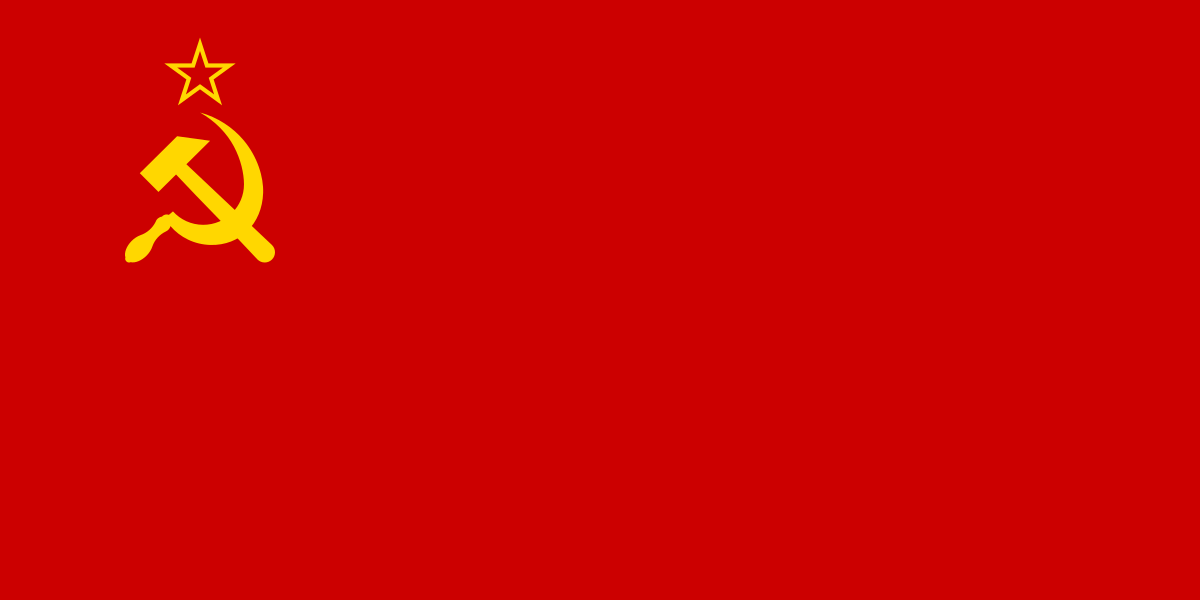
The Union of Soviet Socialist Republics USSR existed from to...

Sudan officially the Republic of the Sudan is a country...
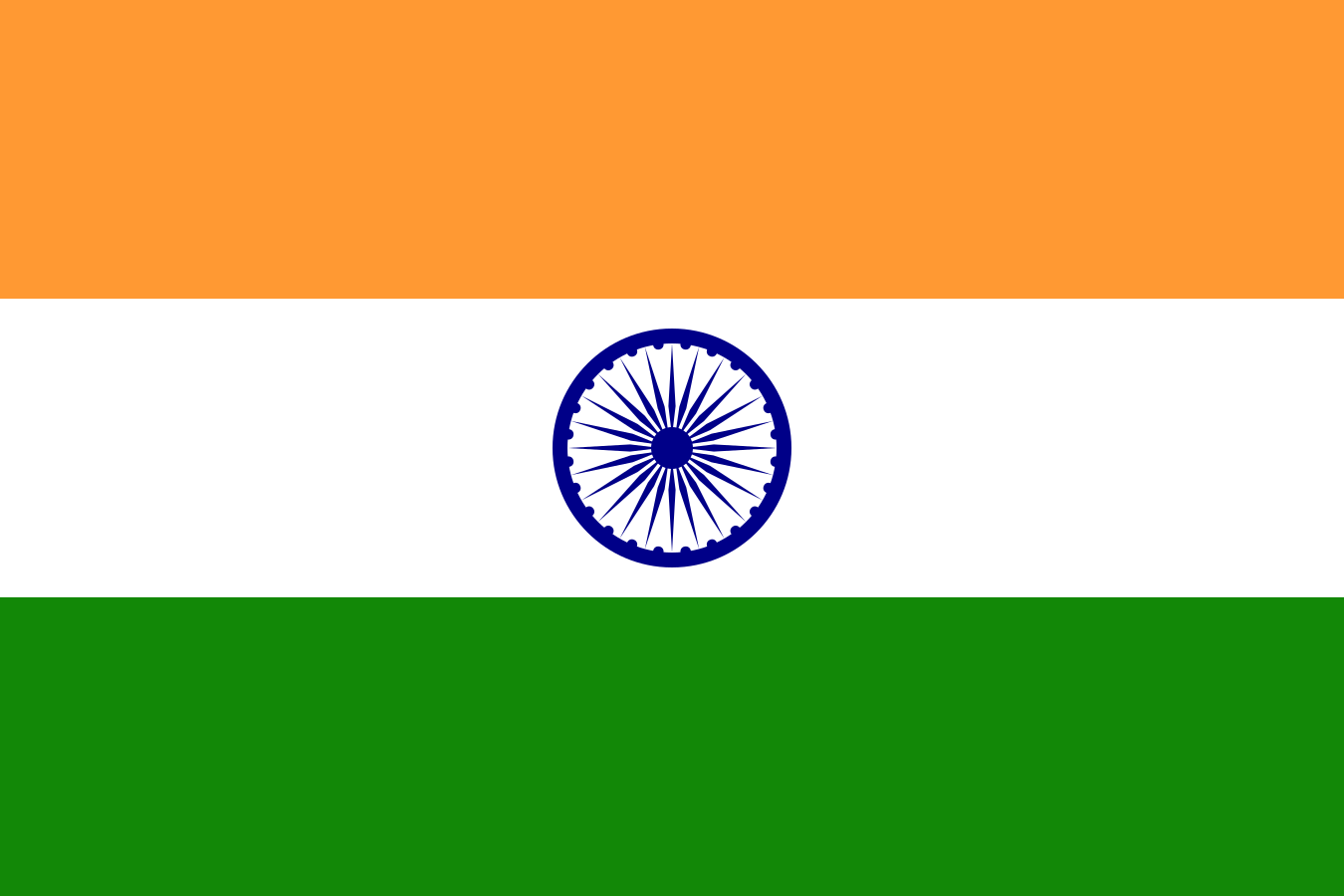
India officially the Republic of India is a South Asian...
Trending
4 hours ago DeForest Buckner Faces Trade Speculation Amid Indianapolis Colts Struggles

4 hours ago Alex Michelsen Competes in Recent Professional Tennis Match Updates
4 hours ago Peyton Manning Rules Out Pursuing Indianapolis Colts General Manager Position

5 hours ago Arthur Fils and Top Players Featured at the ATP 500 Basel Tournament

5 hours ago Rapper Yella Beezy Faces Trial for Alleged Involvement in Rapper Mo3 Murder

6 hours ago The View Executives Consider Future for Joy Behar Following Serious On-Set Injury
Popular

Ilhan Omar is a prominent American politician currently serving as...

Ken Paxton is an American politician and lawyer serving as...

Elon Musk is a visionary entrepreneur and engineer known for...
William Franklin Graham III known as Franklin Graham is an...
Barack Obama the th U S President - was the...

Nicki Minaj born Onika Tanya Maraj-Petty is a highly influential...