


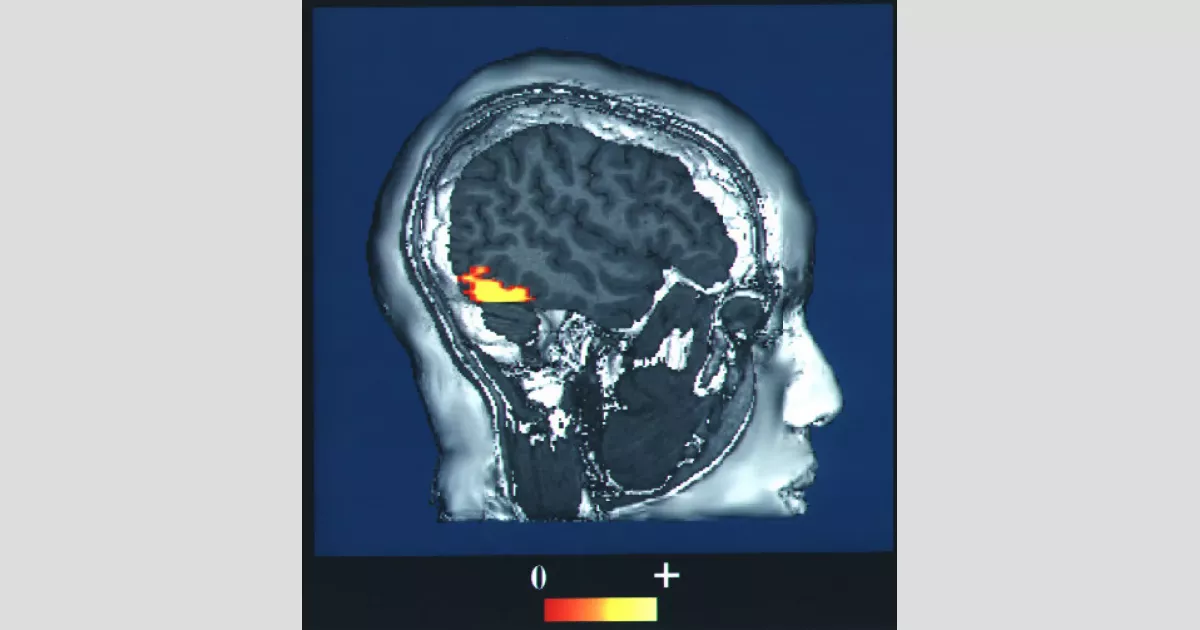
Prosopagnosia, or face blindness, is a cognitive disorder characterized by the inability to recognize familiar faces, even one's own. While other visual and intellectual functions remain unaffected, individuals with prosopagnosia struggle with facial recognition. This condition can result from acute brain damage (acquired prosopagnosia) or be present from birth (developmental prosopagnosia), affecting approximately 2.5% of the population. The disorder specifically impairs face perception, not general visual processing or intelligence.
1947: Term "Prosopagnosia" Coined
In 1947, German neurologist Joachim Bodamer coined the term "prosopagnosia" to describe the inability to recognize faces, derived from Greek words meaning "face" and "non-knowledge". He documented three cases, including a patient who lost facial recognition after a head injury but could still identify people through other senses.


1965: Prosopagnosia in Film
The 1965 film "Those Magnificent Men in Their Flying Machines" featured a character, Pierre DuBois, who experienced prosopagnosia, perceiving different women as having the same face.
1985: Dr. P. and Visual Agnosia
Oliver Sacks' 1985 book "The Man Who Mistook His Wife for a Hat" featured "Dr. P.", a case of visual agnosia, which included prosopagnosia. While unable to recognize his wife's face, Dr. P. could identify her by her voice.
October 1996: Popularization of "Face Blindness"
In October 1996, Bill Choisser began popularizing the term "face blindness" to describe prosopagnosia, although earlier medical uses of the term exist.
2005: Study Supports Congenital Prosopagnosia
In 2005, a study led by Ingo Kennerknecht provided evidence supporting the existence of congenital prosopagnosia, a form of face blindness present from birth.
2006: Hereditary Prosopagnosia and Autosomal Dominant Inheritance
In 2006, further analysis of the 2005 study's pedigree trees suggested that hereditary prosopagnosia (HPA) follows an autosomal dominant inheritance pattern, explaining its prevalence in certain families.
Mentioned in this timeline

Books are a means of storing information as text or...
Trending

4 hours ago Coco Gauff Faces Elise Mertens in WTA China Open Round of 16 Match

4 hours ago Tennis Prediction Markets for Upcoming October 2026 Matches

4 hours ago Miranda Rijnsburger Celebrates 61st Birthday Amid Julio Iglesias Family Updates

4 hours ago Kiara Advani and Sidharth Malhotra Announce They Are Expecting Their Second Child

4 hours ago Adrian Mannarino Faces Nikoloz Basilashvili at the Rolex Shanghai Masters

5 hours ago Iva Jovic Faces Iga Swiatek in WTA Beijing Round of Sixteen
Popular

Ken Paxton is an American politician and lawyer serving as...

Elon Musk is a visionary entrepreneur and engineer known for...

Cristiano Ronaldo widely considered one of the greatest footballers captains...

Shakira Isabel Mebarak Ripoll the Queen of Latin Music is...

Jameis Winston is an American football quarterback currently playing for...

Bernie Sanders is a prominent American politician and the senior...