History of San Diego Fire-Rescue Department in Timeline


The San Diego Fire-Rescue Department (SDFD) is a full-service fire department serving San Diego, California. Established in 1889, the SDFD responds to over 183,000 calls annually, covering a 343 square-mile service area, which includes 17 miles of coastline. It's the second largest municipal fire department in California, only smaller than the Los Angeles Fire Department.
1917: Motorization and First Aerial Firefighting Attempt
In 1917, the San Diego Fire Department fully transitioned to motorized vehicles, retiring its last fire horses. The same year, it experimented with using an airplane for firefighting, marking the first attempt of its kind. Although the aircraft wasn't practical, it demonstrated the department's innovative spirit.


July 1918: First Hispanic-American Firefighter
In July 1918, Alfredo Salazar became the first Mexican-American firefighter hired by the San Diego Fire Department.
1919: World's First Gasoline-Powered Fire Boat
The San Diego Fire Department built the world's first gasoline-powered fire boat, the "Bill Ketner," in 1919. Constructed by firefighters at Station 6 (now the Fire House Museum), the boat boasted ten hose streams and two deck guns.
June 1929: New Central Fire Alarm Station
A new central fire alarm station was acquired in June 1929.
1930: Department Resources and Personnel
By 1930, the department had grown to 206 members, 32 pieces of equipment, and 20 stations.
1933: Impact of the Great Depression
The department faced significant cutbacks in 1933 due to the Great Depression, including station closures, reduced equipment and personnel, and part-time shifts.
1935: Recovery from the Depression
By 1935, thanks to public support and concerns about rising insurance rates, the department had recovered from the effects of the Depression.
July 1942: Wildland Fires During WWII
In July 1942, amidst wartime growth and increased housing construction, a large wildland fire damaged or destroyed several buildings.
September 1944: Second Wildland Fire
Another major wildland fire occurred in September 1944, further highlighting the risks posed by canyon rim development.
1951: Integration of the Fire Department
Chief Courser ordered the integration of the San Diego Fire Department in 1951, ending the segregation of African American firefighters.
1956: Post-War Expansion
The department significantly expanded by 1956 to accommodate post-war growth, with increased companies, stations, firefighters, and the addition of specialized staff positions.
July 1969: Implementation of the 56-Hour Workweek
In July 1969, the 56-hour workweek and three-platoon system were introduced, leading to a substantial increase in staff and the creation of "C" Division.
February 1979: Start of Paramedic Service
Paramedic service, provided by a private company, began in February 1979 with three units. Prior to this, the Police Department handled ambulance services with limited medical training.
July 1980: Start of EMT Training
From July 1980, the SDFD started training its personnel as EMTs.
August 1981: Completion of EMT Training
By August 1981, all SDFD personnel were trained as EMTs, marking a shift towards a more modern approach to emergency response.
1992: Urban Search and Rescue and Paramedic-Engine Program
In 1992, the SDFD became the sponsoring agency for the county's Urban Search and Rescue Task Force 8 and launched a First Responder Paramedic-Engine program.
1993: Expansion of Medic-Engines
By 1993, fifteen fire engines were designated as "Medic-Engines" staffed with Firefighter/Paramedics, improving response times and paving the way for future developments.
1994: New Training Facility
The department established a new training facility at the former Camp Nimitz Naval Training Center in 1994, consolidating training previously conducted at various locations.
Mentioned in this timeline

War is defined as an armed conflict involving the armed...
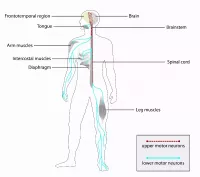
Amyotrophic lateral sclerosis ALS also known as motor neurone disease...
Fire is a rapid oxidation process specifically combustion that releases...

September is the ninth month of the year in the...
Trending
4 hours ago IonQ and Quantum Computing Stocks Face Market Evaluation and Potential Industry Shakeout

4 hours ago Mariska Hargitay Appears with Son and Advances Sexual Assault Kit Testing Efforts

5 hours ago Julian Sayin Out Indefinitely Due to Injury Impacting Ohio State Football Season
5 hours ago Indian Stock Indices Nifty 50 and Sensex Face Sharp Decline Amid Rising Crude Oil Prices

6 hours ago Iva Jovic Reaches WTA Ningbo Quarterfinals After Defeating Jasmine Paolini
6 hours ago Cornell 7 Op-Ed Sparks Intense Controversy and Campus Outcry at Columbia University
Popular

Ilhan Omar is a prominent American politician currently serving as...

Ken Paxton is an American politician and lawyer serving as...

Elon Musk is a visionary entrepreneur and engineer known for...

Michael Joseph Jackson the King of Pop was a highly...

Cristiano Ronaldo widely considered one of the greatest footballers captains...

Kathy Hochul is an American politician and lawyer who has...