


Water (H2O) is an essential inorganic compound crucial for life on Earth. It's transparent, tasteless, odorless, and nearly colorless. It serves as the primary component of Earth's water bodies and the fluids within all known organisms, functioning as a solvent. Water's polarity and strong hydrogen bonding contribute significantly to its unique physical and chemical properties. Despite lacking food energy or being an organic micronutrient, water is indispensable for all known life forms. Its ubiquitous presence, chemical stability, abundance, and strong polarity relative to its size, lead to water being frequently called the "universal solvent".
1922: "Water hymn" in James Joyce's Ulysses
In 1922, James Joyce's novel Ulysses included a chapter called "Ithaca" that contains the "water hymn", a section praised for its poetic treatment of water-related information.


1945: Water intake recommendation by the U.S. National Research Council
In 1945, the Food and Nutrition Board of the U.S. National Research Council recommended a water intake of 1 milliliter for each calorie of food.
1970: Significant wetland loss since 1970
By 2026, the UN reports that 35% of wetlands have disappeared since 1970.
1970: Increase in access to safe water since 1970.
Since 1970, access to safe water in developing countries has increased, from 30% in 1970 to 71% in 1990, 79% in 2000, and 84% in 2004.
1983: Dihydrogen monoxide hoax begins
In 1983, an April Fools' Day article in Durand, Michigan, initiated the "dihydrogen monoxide" hoax, a series of pranks playing on scientific illiteracy by presenting safety concerns about water.
1990: 1.6 billion people gained access to a safe water source
Since 1990, 1.6 billion people have gained access to a safe water source. The proportion of people in developing countries with access to safe water is calculated to have improved from 30% in 1970 to 71% in 1990.
2000: Access to safe water in developing countries reaches 79%
By 2000, the proportion of people in developing countries with access to safe water had improved to 79%, compared to 30% in 1970.
2000: United Nations establishes Millennium Development Goals for water
In 2000, the United Nations established the Millennium Development Goals for water to halve by 2015 the proportion of people worldwide without access to safe water and sanitation.
2000: Increased flooding in the tropics
Since 2000, flooding in the tropics has quadrupled, resulting in significant deaths and financial losses.
2003: UN World Water Development Report initiated
Since 2003, the UN World Water Development Report has provided decision-makers with tools for developing sustainable water policies.
2004: Access to safe water in developing countries reaches 84%
By 2004, the proportion of people in developing countries with access to safe water had improved to 84%, compared to 30% in 1970.
2004: WaterAid reports on child deaths from water-related diseases
In 2004, the UK charity WaterAid reported that a child dies every 15 seconds from easily preventable water-related diseases, which are often tied to a lack of adequate sanitation.
2006: United Nations report on water availability
In 2006, a United Nations report stated that "there is enough water for everyone", but that access to it is hampered by mismanagement and corruption.
2007: Assessment of water management in agriculture conducted
In 2007, the International Water Management Institute conducted an assessment of water management in agriculture, finding that a fifth of the world's people live in areas of physical water scarcity and another 1.6 billion in areas experiencing economic water scarcity.
2007: Poor governance as a reason for water scarcity.
In 2007, the authors of the Comprehensive Assessment of Water Management in Agriculture cited poor governance as one reason for some forms of water scarcity.
November 2009: Report suggests water demand will exceed supply by 50% in developing regions
A report issued in November 2009, suggests that by 2030, in some developing regions of the world, water demand will exceed supply by 50%.
2010: Water Footprint organization reports on water use in beef production
In 2010, the Water Footprint organization reported that a single kilogram of beef requires 15 thousand litres of water on average, while emphasizing the role of circumstantial factors in beef production.
July 2011: Discovery of a gigantic cloud of water vapor
In July 2011, a report described the discovery of a gigantic cloud of water vapor containing "140 trillion times more water than all of Earth's oceans combined" around a quasar located 12 billion light years from Earth.
2015: UN commits to Sustainable Development Goals for water
In 2015, the UN committed to the Sustainable Development Goals of achieving universal access to safe and affordable water and sanitation by 2030.
May 2019: Kelvin temperature scale redefined
As of May 2019, the Kelvin temperature scale is based on the Boltzmann constant instead of the triple point of water.
2019: Flood cost assessment
The cost of floods between 2000 and 2019 was 100,000 deaths and $650 million.
2019: Triple point no longer defines Kelvin temperature scale
Until 2019, the triple point of water was used to define the Kelvin temperature scale, but as of 2019 it is based on the Boltzmann constant instead.
August 2020: Researchers report sufficient water since Earth's formation
In August 2020, researchers reported that sufficient water to fill the oceans may have always been on Earth since the beginning of the planet's formation.
2020: Maritime transport accounts for 80% of international trade.
According to UNCTAD in 2020, maritime transport accounts for roughly 80% of international trade.
2023: Danny Towers releases "Florida Water"
In 2023, Danny Towers released the song "Florida Water", which is dedicated to the water in Florida. Other rappers such as XXXTentacion and Ski Mask the Slump God have also created songs about water.
2023: UN World Water Development Report highlights water access and sanitation challenges
The 2023 UN World Water Development Report states that two billion people do not have access to drinking water and 3.6 billion lack access to safely managed sanitation.
2024: Experimentally confirmed 20 forms of ice
As of 2024, twenty forms of ice have been experimentally confirmed and several more are predicted theoretically.
2025: Prediction of water-based vulnerability for over half the world population
Some observers estimated that by 2025 more than half of the world population will be facing water-based vulnerability.
2026: United Nations declares era of "Water bankruptcy"
In 2026, the United Nations declared that humanity had entered the era of "Water bankruptcy" due to various concerning water-related statistics and called for policies that match reality rather than past norms.
2030: Projected water demand exceeding supply in developing regions
A report issued in November 2009, suggests that by 2030, in some developing regions of the world, water demand will exceed supply by 50%.
2030: Target date for achieving universal access to safe water and sanitation
The UN set 2030 as the target date for achieving universal access to safe and affordable water and sanitation.
2050: Projected water scarcity in urban areas
The 2023 UN World Water Development Report projects that 2.4 billion people in urban areas will face water scarcity by 2050.
Mentioned in this timeline

XXXTentacion born Jahseh Dwayne Ricardo Onfroy was a controversial yet...
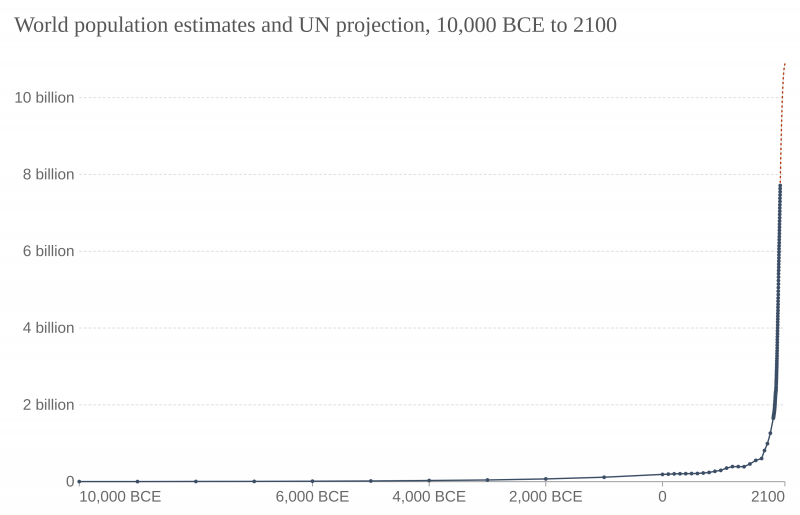
The world population the total number of living humans surpassed...
Florida the southernmost state in the contiguous United States is...
Michigan is a state in the Great Lakes region of...
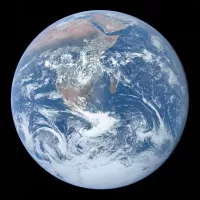
Earth the third planet from the Sun is unique in...
Cloud computing is the on-demand delivery of computing services including...
Trending

3 hours ago San Francisco 49ers Announce Key Roster Updates Before Matchup Against Seattle Seahawks

3 hours ago Keke Palmer Jokes About Future Sports Parenting and Celebrates Ebony Power 100 Inclusion

3 hours ago Nick Bosa Reveals Foster Baby While Sharing Romantic Moment With Girlfriend Ella Ailiff

3 hours ago Security Guard Killed and Woman Injured in South Seattle Nightclub Drive-By Shooting

3 hours ago Marissa Ayers Announces Major Life Change Amid Jaxson Dart's Injury Recovery

3 hours ago Jacoby Brissett Analyzed as Fantasy Football Quarterback Value Option for Week 5
Popular

Ken Paxton is an American politician and lawyer serving as...

Jameis Winston is an American football quarterback currently playing for...

Cristiano Ronaldo widely considered one of the greatest footballers captains...

Michael Joseph Jackson the King of Pop was a highly...

Elon Musk is a visionary entrepreneur and engineer known for...

Shakira Isabel Mebarak Ripoll the Queen of Latin Music is...