History of White House State Ballroom in Timeline


The White House State Ballroom is a planned expansion of the White House's East Wing, aimed at providing a larger venue for formal events like state dinners. This 89,000-square-foot addition is under construction in Washington, D.C., after the original East Wing was demolished in October 2025. The project, announced in July 2025, has faced criticism concerning its funding, design choices, permitting process, and the removal of historical architectural and landscape elements. Despite legal challenges and debates, the National Capital Planning Commission approved the design in April 2026, and above-ground construction is permitted to continue until June 2026.
1922: Harding Tree Initially Planted
In 1922, First Lady Florence Harding initially planted the commemorative magnolia tree for President Warren G. Harding in a different location.


1942: Franklin D. Roosevelt Tree Planted
In 1942, a magnolia tree was planted as a commemorative tree for President Franklin D. Roosevelt.
1947: Warren G. Harding Tree Planted
In 1947, a magnolia tree was planted as a commemorative tree for President Warren G. Harding.
1948: Truman Balcony Constructed
The demolition of the East Wing for the new State Ballroom was the first major structural change to the White House complex since the construction of the Truman Balcony in 1948.
1949: White House Reconstruction Begins
In 1949, the White House Reconstruction project began under President Harry S. Truman to save the 150-year-old building from collapse.
1952: NCPC Tasked with Reviewing Federal Development Projects
In 1952, the National Capital Planning Commission (NCPC) was tasked with reviewing federal development projects in Washington, D.C., presidents have voluntarily submitted their plans to the NCPC prior to the beginning of construction.
1952: White House Reconstruction Completed
In 1952, the White House Reconstruction project was completed, featuring a new steel frame inside the original sandstone walls.
1964: Executive Order referenced by White House
In July 2025, the administration initially claimed that a 1964 executive order allowed the president to bypass the commission.
1966: National Historic Preservation Act of 1966
In 1966, the White House is exempt from the review process of the National Historic Preservation Act.
2010: Trump Expresses Desire for a Ballroom
As early as 2010, then-private citizen Donald Trump spoke to senior advisor David Axelrod and expressed a desire to build a ballroom on White House grounds.
2016: Hillary Clinton and Jamie Raskin Criticize Construction
In 2016, shortly after the construction began, former first lady and 2016 presidential candidate Hillary Clinton posted about the construction on Twitter, stating, "It's not his house. It's your house. And he's destroying it." Representative Jamie Raskin tweeted a picture of the construction linking it to the War of 1812 when the White House was set on fire by British troops and how Trump was also destroying the White House while fashioning himself as a king.
2021: Alphabet Donates to Ballroom Project
In 2021, Alphabet, the owner of Google, donated $22 million towards the ballroom project as part of a settlement for a lawsuit Trump filed in 2021 accusing the company of violating his First Amendment rights.
July 13, 2025: James McCrery II Hired as Architect
On July 13, 2025, Donald Trump hired architect James McCrery II, founder and principal of McCrery Architects, for the White House State Ballroom project.
July 2025: Trump Appoints Loyalists to NCPC
In July 2025, President Trump appointed three loyalists, including his former personal lawyer Will Scharf, to the National Capital Planning Commission (NCPC).
July 2025: Expansion Announced
In July 2025, the planned expansion of the White House East Wing, including the new State Ballroom, was announced. The purpose of the 89,000-square-foot expansion is to add a venue with a higher seating capacity than the East Room for formal events such as state dinners.
July 2025: White House Announces Project Timeline
In a July 2025 announcement, the White House stated the project would be finished before President Trump's term ends in 2029. Experts interviewed by The New York Times described that proposed timeline as "optimistic".
July 31, 2025: Ballroom Plans Announced
On July 31, 2025, the White House announced plans for the White House State Ballroom, to be built alongside a "modernized" East Wing.
August 2025: Clark Construction Awarded Contract
In August 2025, a consortium led by Clark Construction was awarded the US$200M contract for the White House State Ballroom project.
September 2025: Construction Begins
Construction of the new East Wing and State Ballroom began in September 2025 on the White House grounds in Washington, D.C..
September 2025: Construction Begins on East Wing
In September 2025, construction of the White House State Ballroom and modernized East Wing began. The demolition of the East Wing began on October 20th.
October 2025: Military Involvement Confirmed
In October 2025, President Trump confirmed that "The military is very much involved in this [ballroom project]", referring to the construction of a massive complex under the ballroom.
October 2025: Trump Fires Members of the U.S. Commission of Fine Arts
In October 2025, President Trump fired all six members of the U.S. Commission of Fine Arts, planning to replace them with individuals more aligned with his "America First Policies".
October 2025: Demolition of the East Wing
In October 2025, the East Wing was demolished leading to ADAO filing a federal Freedom of Information Act lawsuit in January 2026 seeking public records concerning asbestos inspection, abatement, public notification, and disposal activities connected to the demolition.
October 2025: Cost Estimate Increases
In October 2025, the cost estimate for the White House State Ballroom increased from the initially announced $200 million to $300 million. By the end of October, $350 million had been raised.
October 2025: Magnolia Trees Removed
In late October 2025, two magnolia trees, commemorative trees for presidents Warren G. Harding and Franklin D. Roosevelt, are believed to have been removed during the construction of the White House State Ballroom.
October 22, 2025: White House Releases List of Donors
On October 22, 2025, the White House released a list of companies and private citizens who had donated to the funding of the White House State Ballroom, without disclosing the amount of each donation.
December 2025: Cost Estimate Increased to $400 Million
By December 2025, the cost estimate for the White House State Ballroom had increased to $400 million.
December 2025: National Trust Sues Trump Administration
In December 2025, the National Trust for Historic Preservation (NTHP) sued the Trump administration for failing to observe federal guidelines in the White House State Ballroom project.
December 2025: Shalom Baranes Selected for Design
In December 2025, the White House announced that Shalom Baranes had been selected to pick up the design of the White House State Ballroom, while James McCrery would move to a consulting role.
January 8, 2026: Ballroom Details Announced
On January 8, 2026, the White House announced that the banquet hall would be 22,000 square feet and that the modernized East Wing would include offices for the first lady and a movie theater.
January 2026: ADAO Files Lawsuit for Records on Asbestos
In January 2026, ADAO filed a federal Freedom of Information Act lawsuit seeking public records concerning asbestos inspection, abatement, public notification, and disposal activities connected to the October 2025 demolition of the East Wing.
February 2, 2026: Justice Department Warns of National Security Implications
On February 2, 2026, Justice Department lawyers said in a court filing that if the district court were to halt the White House State Ballroom project, the Trump administration would appeal on the grounds of "national security implications".
February 19, 2026: CFA Approves Renovation
On February 19, 2026, the CFA appointed by Trump approved the renovation by a vote of 6–0.
February 26, 2026: Judge Allows Construction to Continue
On February 26, 2026, US district judge Richard J. Leon decided that construction on the White House State Ballroom could continue, but was willing to consider new arguments from the National Trust for Historic Preservation (NTHP).
March 5, 2026: NCPC Delays Vote Due to Negative Comments
On March 5, 2026, the National Capital Planning Commission announced that it would delay its vote to April 2 because a New York Times analysis found that 98% of the 32,000 public comments on the plan were negative.
March 29, 2026: Article on Design Flaws Published
Following a March 29, 2026, article from The New York Times concerning design flaws, President Trump revealed an updated version of the White House State Ballroom design the next day.
April 2, 2026: National Capital Planning Commission Approves Final Design
On April 2, 2026, the National Capital Planning Commission approved the final project design for the White House State Ballroom with an 8-1 vote.
April 11, 2026: Construction Resumes Temporarily
On April 11, 2026, a three-judge panel from the U.S. Court of Appeals for the D.C. Circuit ruled 2–1 that construction could resume temporarily, with the preliminary injunction paused until April 17. The panel asked Judge Leon to clarify his ruling in an appeal.
April 16, 2026: Judge Leon Halts Construction
On April 16, 2026, Judge Leon issued a ruling which again halted aboveground construction of the ballroom.
April 25, 2026: Security Concerns Raised
Following the shooting at the White House Correspondents' Dinner on April 25, 2026, some Republicans argued for taxpayer funds to be allocated to the White House State Ballroom construction, citing security concerns.
May 4, 2026: Senate Judiciary Committee Proposes Security Funding
On May 4, 2026, the Senate Judiciary Committee proposed $1 billion for "above-ground and below-ground security features" for the White House; these funds would not be used for "non-security elements of the East Wing Modernization Project".
May 2026: ArcelorMittal Confirms Steel Donation
In May 2026, a senior executive at ArcelorMittal confirmed that the company had delivered 600 tons of steel from its Canadian plant for the White House State Ballroom project.
June 2026: Construction Allowed to Continue
As of April 18, 2026, above-ground construction of the White House State Ballroom has faced legal challenges, with construction being allowed to continue until June 2026.
2029: Projected Completion Date
In July 2025, the White House projected that the White House State Ballroom project would be completed before Trump's term ends in 2029.
Mentioned in this timeline

Google LLC is a multinational technology corporation specializing in a...
The United States of America is a federal republic primarily...
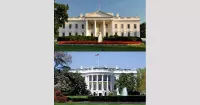
The White House located at Pennsylvania Avenue NW in Washington...

Washington D C the capital of the United States is...
The New York Times is a globally influential American newspaper...

Justice in its broadest sense is the concept of treating...
Trending

5 hours ago Severe Thunderstorm Warnings Issued Across Rochester and Kansas City Regions
5 hours ago Indianapolis Colts Release Wide Receiver Darius Slayton

5 hours ago Bradley Whitford Discusses The Diplomat Season 5 and A Few Good Men Broadway Revival

5 hours ago Today Show Travels to Ireland Featuring Local Sights and Exclusive Hotel Experiences

6 hours ago Trump Allies Discuss Potential Martial Law and Seizing Voting Machines
6 hours ago South African President Reinstates Suspended Police Chief
Popular

Ilhan Omar is a prominent American politician currently serving as...

Ken Paxton is an American politician and lawyer serving as...

Michael Joseph Jackson the King of Pop was a highly...

Elon Musk is a visionary entrepreneur and engineer known for...

Jameis Winston is an American football quarterback currently playing for...

Cristiano Ronaldo widely considered one of the greatest footballers captains...