


Andy Burnham is a prominent British politician serving as the Mayor of Greater Manchester since 2017. A member of the Labour Party, he previously held several high-profile positions in the UK government, including Secretary of State for Health and Secretary of State for Culture, Media and Sport under Prime Ministers Gordon Brown and Tony Blair. Burnham is widely recognized for his advocacy for regional devolution, seeking to shift political and economic power from London to the North of England. His tenure as Mayor has been marked by his focus on integrated public transport, housing reforms, and his vocal leadership during the COVID-19 pandemic, where he frequently challenged central government policies to protect the interests of his region. Often described as a 'King of the North,' Burnham remains a influential figure in British politics, consistently emphasizing social justice, the 'levelling up' agenda, and the necessity of empowering local communities to address systemic inequalities.
January 1970: Birth of Andrew Murray Burnham
Andrew Murray Burnham was born in January 1970, marking the beginning of the life of the future British politician.


1991: Beginning of journalism career at Baltic Publishing
In 1991, Andy Burnham began his career as a journalist for Baltic Publishing, where he worked on the trade magazine Tank World until 1994.
1994: Transition to political research
In 1994, Burnham shifted from journalism to politics, taking on the role of researcher for Tessa Jowell, a position he held until the 1997 general election.
1995: Joining the Transport and General Workers' Union
In 1995, Burnham officially joined the Transport and General Workers' Union to further his professional associations.
December 1997: Transitioning to the Football Task Force
In December 1997, after finishing his tenure as a parliamentary officer for the NHS Confederation, Burnham moved on to serve as an administrator for the Football Task Force for a one-year period.
1998: Appointment as Special Adviser
In 1998, Burnham was appointed as a special adviser to Chris Smith, the Secretary of State for Culture, Media and Sport, serving in this role until his election to Parliament.
July 2001: Maiden speech in the House of Commons
On July 4, 2001, following his election as the Member of Parliament for Leigh with a majority of 16,362, Andy Burnham delivered his maiden speech in the House of Commons.
2001: Election as MP for Leigh
Andy Burnham commenced his long-standing parliamentary career in 2001, serving as the MP for Leigh until 2017.
2001: Election to the House of Commons
In 2001, Burnham successfully contested the general election, resulting in his election as a Member of Parliament for the House of Commons.
2003: Appointment as Parliamentary Private Secretary
In 2003, having served on the Health Select Committee since 2001, Andy Burnham was appointed as the Parliamentary private secretary (PPS) to the Home Secretary David Blunkett.
2004: Transition to PPS for Ruth Kelly
Following the resignation of David Blunkett in 2004, Andy Burnham moved to a new role as the Parliamentary private secretary (PPS) to the education secretary, Ruth Kelly.
2005: Promotion to Parliamentary Under Secretary of State
In 2005, following the general election, Andy Burnham was appointed as a Parliamentary Under Secretary of State in Tony Blair's government, where he was tasked with the implementation of the Identity Cards Act 2006.
2005: Initial concerns raised regarding NHS mortality rates
In 2005, initial concerns were raised regarding the correlation between mortality rates and the standards of care across various NHS trusts, eventually leading to reports of significantly higher than expected death rates at 14 NHS trusts, a statistic later deemed controversial.
May 2006: Appointment as Minister of State for Delivery and Reform
During a government reshuffle on May 2006, Burnham transitioned from the Home Office to the Department of Health, taking on the role of Minister of State for Delivery and Reform.
June 2007: Appointment as Chief Secretary to the Treasury
On June 2007, as part of Gordon Brown's initial cabinet, Burnham was named Chief Secretary to the Treasury, a role he maintained until 2008 while contributing to the 2007 Comprehensive Spending Review.
January 2008: Appointed Secretary of State for Culture, Media and Sport
In January 2008, Andy Burnham was promoted to the position of Secretary of State for Culture, Media and Sport, taking over the role from James Purnell during a government re-shuffle.
June 2008: Apology to Shami Chakrabarti regarding libel threat
In June 2008, Andy Burnham issued an apology to Shami Chakrabarti, the director of Liberty, following a threat of a libel lawsuit regarding comments he made about her in an article published in Progress magazine.
2008: Conclusion of Chief Secretary to the Treasury role
Andy Burnham concluded his tenure as Chief Secretary to the Treasury in 2008, having spent his time there assisting with the development of the 2007 Comprehensive Spending Review.
2008: Proposal for Internet Content Regulation and Music Industry Partnership
In late 2008, Andy Burnham introduced government initiatives aimed at increasing the regulation of internet content to align it with existing television standards. Additionally, during a 2008 speech to the UK Music lobbying group, he advocated for a collaborative partnership between the government and the music industry to preserve the economic value within the creative sector.
April 2009: Initiation of the second Hillsborough inquiry
In April 2009, following a difficult reception at the 20th anniversary of the Hillsborough disaster, Andy Burnham successfully requested that Prime Minister Gordon Brown allow him to raise the Hillsborough issue in Parliament, which ultimately led to the establishment of the second Hillsborough inquiry.
June 2009: Appointed Secretary of State for Health
In June 2009, Andy Burnham received a promotion to the position of Secretary of State for Health, a role he maintained until the Labour government stepped down after the 2010 general election.
July 2009: Launch of the Stafford Hospital Inquiry
During July 2009, shortly after assuming his new role, Burnham initiated an independent inquiry led by Robert Francis, QC, to investigate the alarming mortality rates observed at Stafford Hospital.
July 2009: Release of Shaping the Future of Care Together
In July 2009, the Department of Health, under Andy Burnham, published a green paper titled Shaping the Future of Care Together, which outlined a proposal to establish a National Care Service that would function on par with the NHS.
2009: Promotion to Health Secretary
In 2009, Andy Burnham was appointed as the Health Secretary, a role in which he managed the response to the swine flu pandemic and initiated an independent inquiry regarding the Stafford Hospital scandal.
2009: Appointment as Secretary of State for Health
In 2009, Andy Burnham was appointed as the Secretary of State for Health, a cabinet position he held within Gordon Brown's government until 2010.
April 2010: Passing of the Personal Care at Home Act 2010
In April 2010, the government took the first step toward implementing the National Care Service by passing the Personal Care at Home Act 2010.
May 2010: Appointment as Shadow Secretary of State for Health
In May 2010, Andy Burnham was appointed as the Shadow Secretary of State for Health following the transition of the Labour Party into opposition. This period also saw him launch his campaign for the Labour Party leadership, where he advocated for aspirational socialism and proposed the creation of a National Care Service. His leadership bid concluded in May 2010 when he was eliminated in the second ballot.
October 2010: Appointment as Shadow Secretary of State for Education
In October 2010, Andy Burnham was appointed as the Shadow Secretary of State for Education and served as the election co-ordinator for the Labour Party, where he vocally opposed the government's free school policy in favor of a comprehensive education system.
2010: Conclusion of Secretary of State for Health Tenure
Andy Burnham concluded his service as the Secretary of State for Health in 2010, having held the cabinet role since 2009.
2010: Repeal of the Personal Care at Home Act
Following the 2010 general election defeat of the Labour Party, the new coalition government led by David Cameron and Nick Clegg scrapped the National Care Service and repealed the Personal Care at Home Act 2010.
2010: Labour Leadership Bid and Shadow Cabinet Appointment
In 2010, following the Labour Party's loss of power, Andy Burnham competed in the party's leadership election, finishing in fourth place, and subsequently joined the Shadow Cabinet as Shadow Education Secretary.
2010: General Election and Public Inquiry
In 2010, the Labour government resigned following the general election, and Burnham's successor, Andrew Lansley, launched a more comprehensive public inquiry into the failures at Stafford Hospital, which concluded that linking the failings to specific death statistics would be misleading.
July 2013: Wikipedia Editing Controversy
In July 2013, The Daily Telegraph reported that Andy Burnham's staff had edited his Wikipedia page to delete criticisms regarding his management of the Stafford Hospital scandal, an action his office defended as the removal of false information.
2014: Positive reception at the 25th anniversary of the Hillsborough disaster
During the 25th anniversary of the Hillsborough disaster in 2014, Andy Burnham delivered a speech that was met with cheers and applause from the audience, marking a significant shift in public sentiment compared to his experience five years earlier.
2014: Planned Second Stage of the National Care Service
In 2014, the second stage of the National Care Service was scheduled to launch, aiming to provide free social care to individuals who had been in residential care for more than two years.
2015: Second Labour Leadership Campaign
Andy Burnham launched his second bid for the Labour Party leadership in 2015, where he ultimately placed second in the contest.
2015: Conclusion of Shadow Secretary of State for Health Tenure
In 2015, Andy Burnham concluded his service as the Shadow Secretary of State for Health, a position he had held since 2011.
2015: Planned Full Implementation of the National Care Service
The third and final stage of the National Care Service was set to take effect after 2015, which would have granted all adults access to free social care.
2016: Conclusion of Shadow Cabinet Tenure
The year 2016 marked the end of Andy Burnham's service in the Shadow Cabinets of Ed Miliband and Jeremy Corbyn, during which he held various roles including Shadow Health Secretary and Shadow Home Secretary.
2017: Election as Mayor of Greater Manchester
In 2017, Andy Burnham was elected as the inaugural Mayor of Greater Manchester, a victory that led him to resign his position as a Member of Parliament.
2021: Re-election as Mayor
Andy Burnham secured a second term in office during the 2021 Greater Manchester mayoral election, having gained prominence for his regional advocacy during the pandemic.
2024: Third Mayoral Election Victory
Andy Burnham successfully won re-election to serve another term as the Mayor of Greater Manchester in 2024.
2024: Post-Election Political Climate
Following the Labour Party's return to power in 2024, Andy Burnham maintained high approval ratings as the Mayor of Greater Manchester, which stood in stark contrast to the rapidly diminishing popularity of Prime Minister Keir Starmer.
June 2026: Election as MP for Makerfield
In June 2026, Andy Burnham began his tenure as the Member of Parliament for the Makerfield constituency.
June 2026: Return to Parliament and Leadership Bid
In June 2026, Andy Burnham won the Makerfield by-election, necessitating his resignation as mayor. Shortly thereafter, Keir Starmer announced his resignation as Prime Minister. Following this, Burnham secured a nomination from over 90% of Labour MPs to become the sole candidate in the subsequent leadership election.
July 2026: Ascension to Labour Leadership and Prime Minister
Following events in July 2026, Andy Burnham is slated to become the leader of the Labour Party on July 17, 2026, and is expected to assume the office of Prime Minister on July 20, 2026.
Mentioned in this timeline
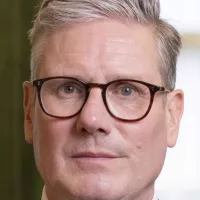
Sir Keir Starmer is a British politician and lawyer currently...

Football commonly known as soccer in many regions is the...

A tank is an armored fighting vehicle designed for front-line...
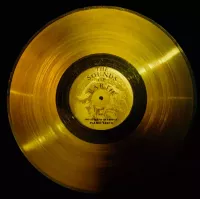
Music involves arranging sounds to create form harmony melody rhythm...
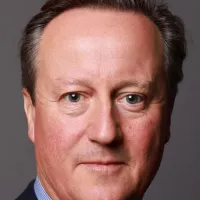
David Cameron Baron Cameron of Chipping Norton is a prominent...

Sport encompasses physical activities or games frequently competitive and structured...
Trending

1 day ago Sonay Kartal Advances to Wuhan Open Semi-Finals

3 hours ago Abdul El-Sayed Addresses Sister-in-Law's Terror Watchlist Lawsuit Ahead of Obama Visit

3 hours ago Maja Chwali?ska Competes for Major Career Success in Wuhan WTA Final
3 hours ago Netflix Renews 3 Body Problem for Seasons 2 and 3 Following Major Success

3 hours ago Alejandro Davidovich Fokina Stuns Alexander Zverev to Reach Shanghai Masters Final

3 hours ago Kyler Gordon Activated from PUP List, Set for 2026 Season Debut
Popular
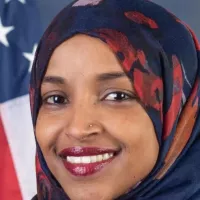
Ilhan Omar is a prominent American politician currently serving as...

Ken Paxton is an American politician and lawyer serving as...

Elon Musk is a visionary entrepreneur and engineer known for...

Michael Joseph Jackson the King of Pop was a highly...

Jameis Winston is an American football quarterback currently playing for...

Cristiano Ronaldo widely considered one of the greatest footballers captains...