


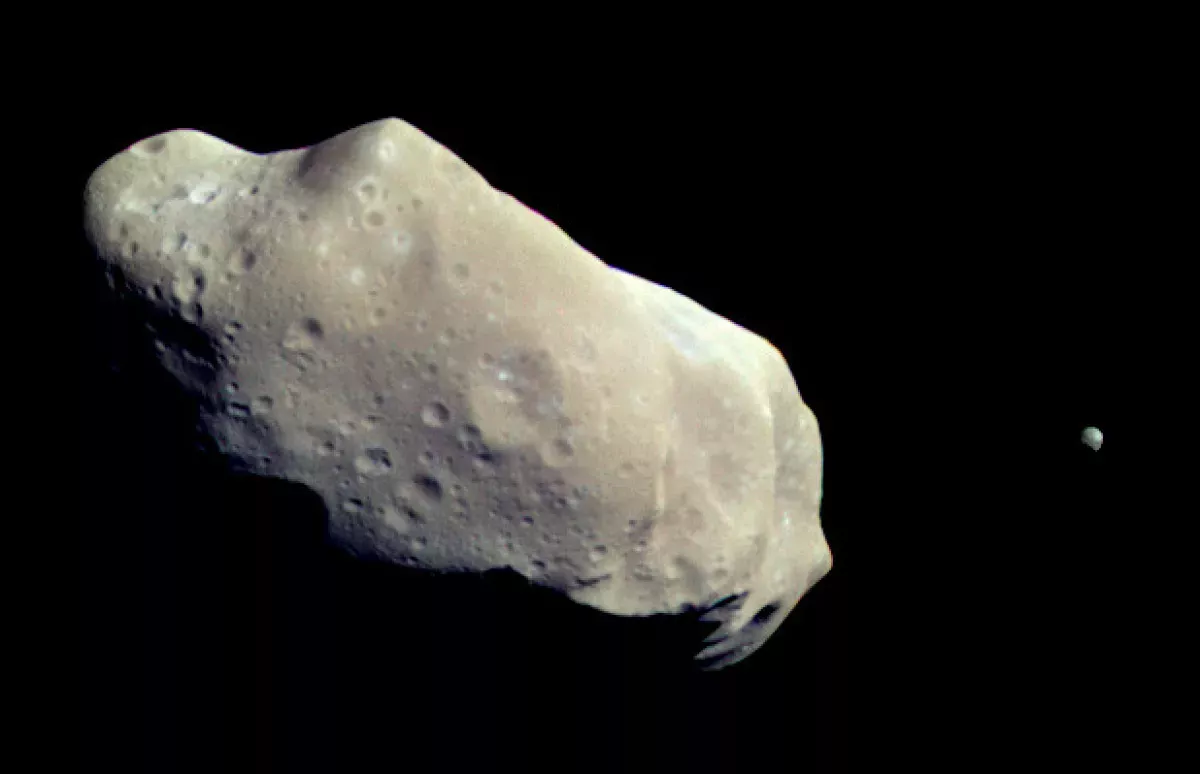
Asteroids are minor planets orbiting within the inner Solar System or co-orbital with Jupiter, larger than meteoroids but not planets or comets. They are rocky, metallic, or icy bodies lacking an atmosphere, categorized as C-type (carbonaceous), M-type (metallic), or S-type (silicaceous). Asteroid size varies greatly, from small rubble piles to Ceres, a dwarf planet nearly 1000 km in diameter. Bodies showing a coma when warmed by the sun are classified as comets, though a continuum exists between asteroids and comets.
7 hours ago : NASA Detects Massive Rare Asteroid Impact Crater on the Moon
NASA's Lunar Reconnaissance Orbiter has identified a massive new crater on the moon caused by a six-story building-sized asteroid. Experts describe this as a once-in-a-century event, providing rare insights into celestial impacts on the lunar surface.


1914: Use of Greek letters in asteroid designation
In 1914, a number of variations of methods were tried, including designations that included year plus a Greek letter.
1918: Recognition of Main belt families
In 1918, Kiyotsugu Hirayama first recognized Main belt families, which are often called Hirayama families in his honor.
1925: Establishment of a simple chronological numbering system
In 1925, a simple chronological numbering system for asteroids was established.
1975: Asteroid taxonomic system developed
In 1975, Chapman, Morrison, and Zellner developed an asteroid taxonomic system based on color, albedo, and spectral shape, with three categories: C-types, S-types, and U.
1977: Discovery of Centaurs
In 1977, astronomers discovered small bodies, now called centaurs, that permanently resided further out than Jupiter, starting with 2060 Chiron.
1990: Discovery of Acfer 049 meteorite
In 1990, the Acfer 049 meteorite was discovered in Algeria.
1992: Discovery of the first Trans-Neptunian object
In 1992, 15760 Albion was discovered, marking the first object found beyond Neptune's orbit, excluding Pluto.
1998: Provisional designation example 1998 FJ74
In 1998, the observer has only found an apparition, which gets a provisional designation, made up of the year of discovery, a letter representing the half-month of discovery, and finally a letter and a number indicating the discovery's sequential number (example: 1998 FJ74).
2002: Discovery of asteroid 2002 AA29
In 2002, 2002 AA29 with an unusual horseshoe orbit that are co-orbital with Earth was discovered.
2002: Example of provisional designation
In 2002, an example of a newly discovered asteroid received a provisional designation (such as 2002 AT4) consisting of the year of discovery and an alphanumeric code indicating the half-month of discovery and the sequence within that half-month.
2006: IAU creates class of dwarf planets
In 2006, the International Astronomical Union (IAU) created the class of dwarf planets for the largest minor planets, including Ceres, the largest object in the asteroid belt.
2006: IAU introduces "small Solar System body" term
In 2006, the International Astronomical Union (IAU) introduced the term 'small Solar System body', encompassing asteroids, comets, and other recently discovered classes, as a general term for objects that are neither planets, dwarf planets, nor natural satellites.
August 2011: Report suggesting DNA and RNA components may have been formed on asteroids and comets
In August 2011, a report based on NASA studies with meteorites found on Earth suggested that DNA and RNA components (adenine, guanine, and related organic molecules) may have been formed on asteroids and comets in outer space.
October 2013: Detection of water on extrasolar body
In October 2013, water was detected for the first time on an extrasolar body, specifically an asteroid orbiting the white dwarf GD 61.
January 2014: Detection of water vapor on Ceres
On January 22, 2014, European Space Agency (ESA) scientists reported the definitive detection of water vapor on Ceres, the largest object in the asteroid belt, using the Herschel Space Observatory.
2017: Observations of Hygiea with the Very Large Telescope's SPHERE imager
In 2017, Observations taken with the Very Large Telescope's SPHERE imager, revealed that Hygiea has a nearly spherical shape.
2017: Discovery of moons around asteroid 3122 Florence
In 2017, radar imaging during the asteroid's approach to Earth led to the discovery of two moons orbiting the asteroid 3122 Florence.
2018: Observations of Hygiea with the Very Large Telescope's SPHERE imager
In 2018, Observations taken with the Very Large Telescope's SPHERE imager, revealed that Hygiea has a nearly spherical shape.
November 2019: Detection of sugar molecules in meteorites
In November 2019, scientists reported detecting sugar molecules, including ribose, in meteorites, suggesting that chemical processes on asteroids can produce essential bio-ingredients for life.
2019: Acfer 049 ultraporous lithology shown
In 2019, it was shown that Acfer 049, a meteorite discovered in Algeria in 1990, has an ultraporous lithology (UPL): porous texture that could be formed by removal of ice that filled these pores, this suggests that UPL "represent fossils of primordial ice".
2020: OSIRIS-REx sample collection
In 2020, the OSIRIS-REx mission studied asteroid Bennu and collected a sample.
October 2021: Number of Near-Earth Asteroids (NEAs) with moons
As of October 2021, there were 85 Near-Earth Asteroids (NEAs) known to have at least one moon, including three with two moons.
April 2022: Near-Earth asteroid count
As of April 2022, a total of 28,772 near-Earth asteroids were known, with 878 having a diameter of one kilometer or larger.
September 2022: Double Asteroid Redirection Test (DART) success
In September 2022, the Double Asteroid Redirection Test spacecraft successfully altered the orbit of the non-threatening asteroid Dimorphos by crashing into it.
October 2023: Psyche mission launch
In October 2023, NASA launched the Psyche mission, which aims to study the metallic asteroid Psyche.
October 2024: Hera mission launch
In October 2024, ESA launched the Hera mission, which is intended to study the results of the DART impact on an asteroid.
May 2025: Tianwen-2 launch
In May 2025, CNSA launched Tianwen-2 to explore the co-orbital near-Earth asteroid 469219 Kamoʻoalewa and the active asteroid 311P/PanSTARRS, planning to collect samples of the regolith of Kamo'oalewa.
May 2025: Minor Planet Center data
As of May 2025, the Minor Planet Center had data on 1,460,356 minor planets in the inner and outer Solar System, of which about 826,864 had enough information to be given numbered designations.
Mentioned in this timeline
Jupiter is the fifth and largest planet from the Sun...
Radar Radio Detection and Ranging is a detection system that...
NASA the National Aeronautics and Space Administration is the U...

China officially the People's Republic of China PRC is located...
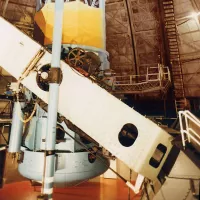
A telescope is an instrument used to observe distant objects...
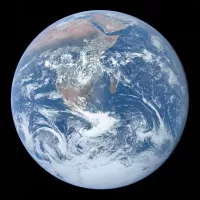
Earth the third planet from the Sun is unique in...
Trending

4 hours ago Kyle Harrison Scheduled to Start Series Finale for Milwaukee Brewers Against Pittsburgh Pirates

4 hours ago Kyle Tucker Secures Dodgers Playoff Roster Spot Amidst High Expectations
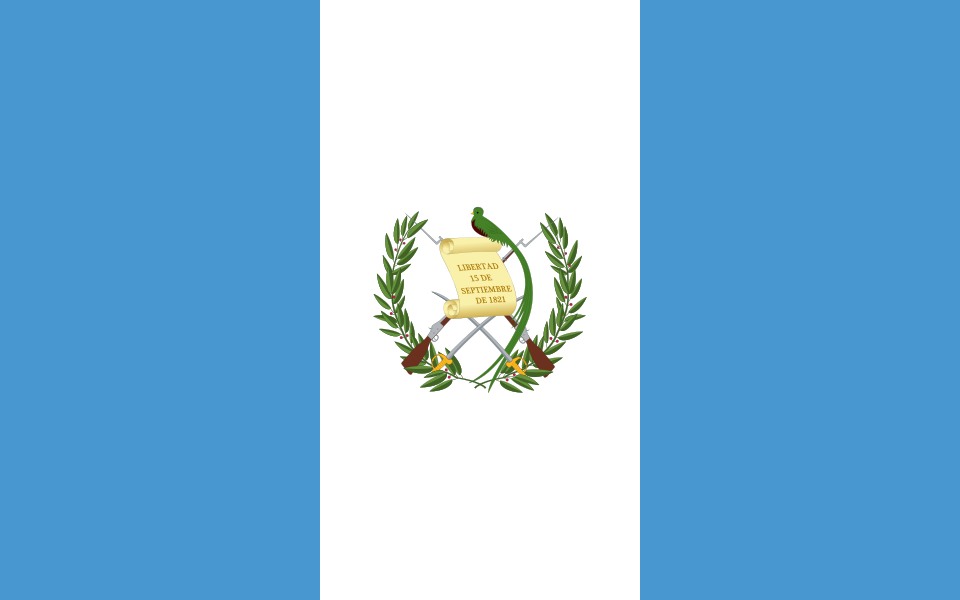
4 hours ago Severe Drought Devastates Crops Across Guatemala Prompting Emergency Government Response Strategy

5 hours ago Morgan Freeman Named College GameDay Guest Picker for Ole Miss-LSU Showdown

5 hours ago Rolling Loud Florida Announces Highly Anticipated 2027 Return to Orlando at Camping World Stadium

5 hours ago Honduras Faces Political Turmoil, Severe Climate Challenges, and Migration Struggles
Popular

Stan Lee - was a pivotal figure in the comic...

Ken Paxton is an American politician and lawyer serving as...

Michael Joseph Jackson the King of Pop was a highly...

Charlie Kirk was a prominent American right-wing political activist entrepreneur...

JD Vance is an American politician author and venture capitalist...

Kash Patel is an American lawyer who currently serves as...