History of Chernobyl in Timeline


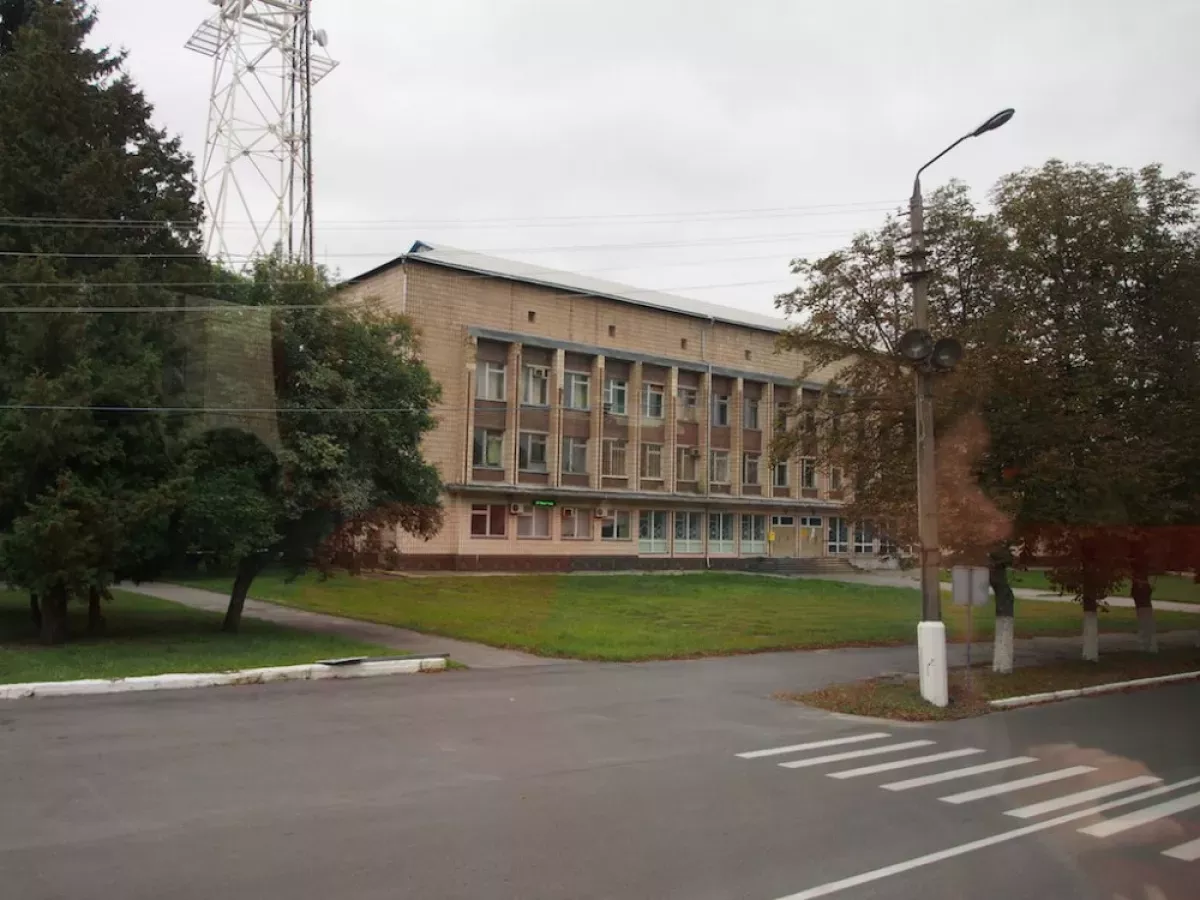
Chernobyl is a partially abandoned city in Ukraine's Kyiv Oblast, located within the Chernobyl Exclusion Zone. Prior to the 1986 Chernobyl disaster, it housed around 14,000 residents. Following the disaster, the city was evacuated, though some have since returned to live in less irradiated areas. As of 2020, the estimated population was around 150 people.
1902: Unknown founding date
According to the Polish Geographical Dictionary of the Kingdom of Poland, published from 1880-1902, the founding date of Chernobyl is unknown.


October 1905: Pogroms against Jewish population
In October 1905, the Jewish population of Chernobyl suffered greatly from pogroms, instigated by the Russian nationalist Black Hundreds.
1910: Chodkiewicz family ownership
Until 1910, the Chodkiewicz family owned a castle and a house in Chernobyl, even after selling the city to the state in 1896.
March 1918: German occupation of Chernobyl
In March 1918, during World War I, Chernobyl was occupied by German forces in accordance with the Treaty of Brest-Litovsk.
April 1919: Pogroms against Jewish population
In March–April 1919, the Jewish population of Chernobyl suffered greatly from pogroms; many Jews were killed or robbed at the instigation of the Russian nationalist Black Hundreds.
1919: Polish-Soviet War
In the Polish–Soviet War of 1919–20, Chernobyl was taken first by the Polish Army and then by the cavalry of the Red Army.
1920: End of Chernobyl as Hasidism center
In 1920, the Twersky Dynasty left Chernobyl, causing it to cease as a center of Hasidism.
1921: Incorporation into Ukrainian SSR
From 1921 onwards, Chernobyl was officially incorporated into the Ukrainian SSR.
1923: Chernobyl as administrative center
From 1923 onwards, Chernobyl had been the administrative centre of Chernobyl Raion.
1929: Stalin's collectivization
Between 1929 and 1933, Chernobyl suffered from killings during Stalin's collectivization campaign.
1933: Famine effects
Between 1929 and 1933, Chernobyl was also affected by the famine that resulted from Stalin's policies.
1936: Deportation to Kazakhstan
In 1936, the Polish and German community of Chernobyl was deported to Kazakhstan during the Frontier Clearances.
August 1941: German occupation begins
On August 25, 1941, during World War II, Chernobyl was occupied by the German Army.
November 1943: End of German occupation
On November 17, 1943, the German Army was removed from Chernobyl.
February 1970: Foundation of Pripyat
On 4 February 1970, Pripyat, an "atomograd" city, was founded to serve the nuclear power plant.
August 1972: Chernobyl Nuclear Power Plant Construction Begins
On 15 August 1972, construction of the Chernobyl Nuclear Power Plant (officially the Vladimir Ilyich Lenin Nuclear Power Plant) began about 15 km (9.3 mi) northwest of Chernobyl.
1972: Chernobyl selected as Nuclear Power Plant site
In 1972, Chernobyl was chosen as the site for the Chernobyl Nuclear Power Plant, leading to its rise in prominence within the Soviet Union.
1972: Duga-1 radio receiver construction
In 1972, construction began on the Duga-1 radio receiver, part of the Duga over-the-horizon radar array, 11 km west-northwest of Chernobyl. It was designed as part of an anti-ballistic missile early-warning radar network.
1977: Chernobyl Nuclear Power Plant opening
In 1977, the Chernobyl Nuclear Power Plant opened 15 kilometers north of Chernobyl.
April 1986: Chernobyl Nuclear Power Plant explosion
On April 26, 1986, one of the reactors at the Chernobyl Nuclear Power Plant exploded due to design flaws of the RBMK reactor after a scheduled test was carried out improperly by plant operators.
May 1986: Evacuation After Disaster
On May 5, 1986, following the Chernobyl Nuclear Power Plant disaster, the city of Chernobyl was evacuated. Residents, along with those from nearby Pripyat, were relocated to Slavutych.
May 1986: Evacuation of Chernobyl and Pripyat residents
On May 5, 1986, nine days after the Reactor No. 4 explosion at the Chernobyl Nuclear Power Plant, the Soviet government began evacuating residents of Chernobyl and Pripyat to prepare for disaster management.
1986: Evacuation of Chernobyl city
In 1986 Chernobyl city was evacuated nine days after the disaster, with caesium-137 contamination levels around 555 kBq/m.
1986: Chernobyl disaster and evacuation
In 1986, the Chernobyl disaster led to the evacuation of the city. Prior to this event, Chernobyl was home to approximately 14,000 residents.
1988: Dissolution of Chernobyl Raion
In 1988, Chernobyl Raion was dissolved and merged with Ivankiv Raion due to widespread radioactive contamination.
1991: Part of Ukraine
With the dissolution of the Soviet Union in 1991, Chernobyl remained part of Ukraine within the Chernobyl Exclusion Zone, which Ukraine inherited from the Soviet Union.
1998: Average caesium-137 doses
In 1998, average caesium-137 doses from the accident (estimated at 1–2 mSv per year) did not exceed those from other sources of exposure.
2003: Chernobyl Recovery and Development Programme launch
In 2003, the United Nations Development Programme launched the Chernobyl Recovery and Development Programme (CRDP) to aid recovery in affected areas.
2005: Archaeological excavations
Archaeological excavations were conducted in 2005–2008 and found a cultural layer from the 10–12th centuries AD, pre-dating the first documentary mention of Chernobyl.
2008: Archaeological excavations
Archaeological excavations were conducted in 2005–2008 and found a cultural layer from the 10–12th centuries AD, pre-dating the first documentary mention of Chernobyl.
2019: Current effective caesium-137 dose rates
As of 2019, current effective caesium-137 dose rates are 200–250 nSv/h, or roughly 1.7–2.2 mSv per year, comparable to the worldwide average background radiation from natural sources.
2019: Publication of Roman Kyiv or Castrum Azagarium at Kyiv-Podil
In 2019, Ukrainian architect Boris Yerofalov-Pylypchak published the book "Roman Kyiv or Castrum Azagarium at Kyiv-Podil".
2020: Merger with Vyshhorod Raion
During Ukraine's 2020 administrative reform, Ivankiv Raion was dissolved and merged with Vyshhorod Raion.
2020: Population estimate
In 2020, the population estimate for Chernobyl was 150 people, even though living within the Chernobyl Exclusion Zone is technically illegal.
February 2022: Russian Capture of Chernobyl
In February 2022, shortly after the Russian invasion of Ukraine, Russian forces captured Chernobyl, using it as a staging point for attacks on Kyiv. Radiation levels reportedly rose due to military activity.
April 2022: Russian occupation and radiation spike
In April 2022, the Russian occupation of the Chernobyl Exclusion Zone caused a spike in radiation levels, sparking international concern.
Mentioned in this timeline

Ukraine is a country in Eastern Europe the second-largest on...

Radar is a radiodetermination system employing radio waves to ascertain...

The Union of Soviet Socialist Republics USSR existed from to...

A dictionary is a reference work containing lexemes from one...
Kazakhstan a landlocked country in Central Asia with a small...

Books are a means of storing information as text or...
Trending

Evan Phillips is an American professional baseball pitcher currently a free agent He has played in MLB for several teams...
11 months ago Alex Freeland's Versatility Key for Dodgers Amid Injuries; Roberts Reveals Future Plans

1 year ago Quinten Post: Warriors' Rookie Ready for Big Time, X-Factor in Playoffs
2 months ago Chernobyl: Baby Moose Rescued, Drone Crash Sparks Fire, Wildfire Erupts in Exclusion Zone

1 month ago Shohei Ohtani to Pitch and Hit After Hand Injury Scare Wednesday.
1 year ago Mel B & Eddie Murphy's Child, Angel, Announces Transition; Receives Parental Support
Popular

Cristiano Ronaldo widely considered one of the greatest footballers captains...

Addison Mitchell McConnell III is a prominent American politician and...

Neymar J nior is a Brazilian professional footballer renowned for...
Buc-ee's is an American chain of large country stores gas...

Bernie Sanders is a prominent American politician and the senior...

Taylor Swift is a highly influential American singer-songwriter celebrated for...