History of Cleveland in Timeline


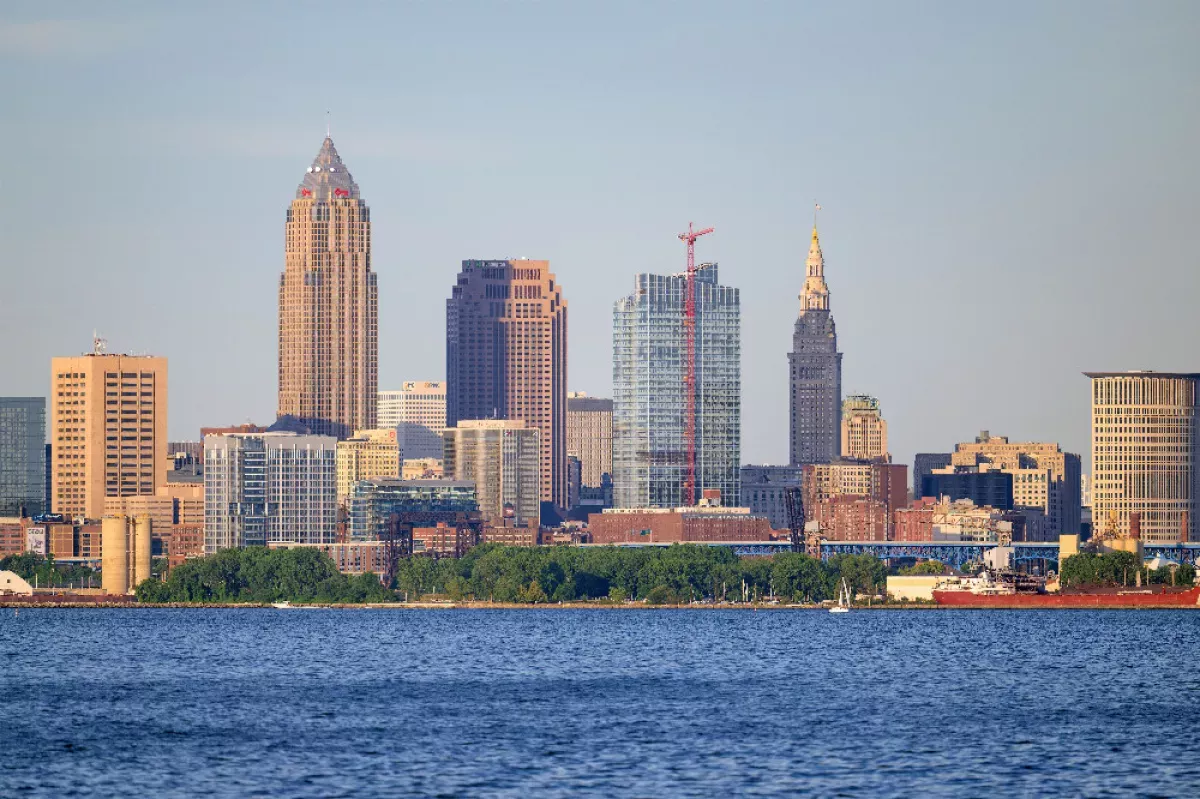
Cleveland is a major city in Ohio, United States, situated on the southern shore of Lake Erie. As the county seat of Cuyahoga County, it's a significant population center, being the most populous city on Lake Erie and the second-most populous in Ohio, with over 372,000 residents according to the 2020 census. The Greater Cleveland metropolitan area has an estimated population of 2.17 million, making it the 34th-largest metropolitan area in the country.
4 hours ago : Cleveland Metroparks and Asian Festival Shut Down Due to Overcrowding Issues
Cleveland Metroparks and the Cleveland Asian Festival were shut down due to overcrowding. Police cited capacity issues as the primary reason for closures.


1903: Group Plan
In 1903, the Group Plan started in Cleveland to build the city's government and civic buildings around the open Cleveland Mall in a neoclassical architecture.
1904: Carnegie Libraries Opened
Between 1904 and 1920, 15 libraries built with funds from Andrew Carnegie were opened in Cleveland.
1907: Cleveland Trust Company Building Completed
The Cleveland Trust Company Building was completed in 1907.
1910: Cleveland's Status as "Sixth City"
By 1910, Cleveland was known as the "Sixth City" due to its rank as the sixth-largest U.S. city. Automotive companies like Peerless, Chandler, and Winton (maker of the first car driven across the U.S.) were located there.
1910: Start of the First Great Migration
Starting in 1910, the black population of Cleveland increased significantly as a result of the First Great Migration, with jobs attracting African Americans from the South.
1912: City Club of Cleveland Founded
Founded in 1912, the City Club of Cleveland provides a platform for national and local debates and discussions.
1914: Establishment of the Federal Reserve Bank of Cleveland
The Federal Reserve Bank of Cleveland was established in 1914 as one of the 12 U.S. Federal Reserve Banks.
October 1915: Signing of the Cleveland Agreement
In October 1915 at Cleveland's Bohemian National Hall, Czech American and Slovak American representatives signed the Cleveland Agreement, calling for the formation of a joint Czech and Slovak state.
1915: Establishment of Karamu House
In 1915, Karamu House, the oldest African American theater in the nation, was established.
1915: Indians Name Change
In 1915, the Cleveland Guardians were named the Indians, which they were know as until 2021.
1916: Hart Crane moves to New York City
In 1916, American modernist poet Hart Crane, who spent his adolescence divided between Cleveland and Akron, moved to New York City.
1916: Opening of the Cleveland Museum of Art
In 1916, with support from wealthy patrons during the City Beautiful movement in Cleveland architecture, the Cleveland Museum of Art opened.
1917: Start of the Plain Dealer Screen Magazine
In 1917, Brodsky directed the weekly Plain Dealer Screen Magazine that ran in theaters in Cleveland and Ohio.
1918: Establishment of the Cleveland Orchestra
In 1918, the Cleveland Orchestra was established, supported by wealthy patrons during the City Beautiful movement in Cleveland architecture.
May 1919: Prohibition in Ohio
Prohibition was established in Ohio in May 1919 (although it was not well-enforced in Cleveland).
1919: May Day Riots
In 1919, local socialist and IWW demonstrators clashed with anti-socialists in the May Day Riots, which occurred amid the strike wave that swept the U.S. that year.
1920: Carnegie Libraries Opened
Between 1904 and 1920, 15 libraries built with funds from Andrew Carnegie were opened in Cleveland.
1920: Cleveland's Population Growth
By 1920, Cleveland had grown into a densely populated metropolis of 796,841, making it the fifth-largest city in the nation, with a foreign-born population of 30%.
1920: Volstead Act
In 1920, prohibition became law with the Volstead Act.
1920: Cleveland Indians win the World Series
In 1920, the Cleveland Indians won the World Series.
1921: Release of Dangerous Toys
In 1921, Samuel Brodsky and Robert McLaughlin produced the silent-era feature Dangerous Toys at their film studio at the Andrews mansion on Euclid Avenue.
1921: U.S. Open Chess Championship
In 1921, the U.S. Open Chess Championships took place in Cleveland, and was won by Edward Lasker.
1923: Completion of the Federal Reserve Bank building
In 1923, the Federal Reserve Bank of Cleveland's downtown building, located on East 6th Street and Superior Avenue, was completed.
1923: Cleveland Council on World Affairs Established
The Cleveland Council on World Affairs was established in 1923.
1924: End of the Plain Dealer Screen Magazine
In 1924, Brodsky directed the weekly Plain Dealer Screen Magazine ran in theaters in Cleveland and Ohio for the last time.
1924: Republican National Convention
In 1924, Cleveland hosted a Republican National Convention.
1924: Cleveland Bulldogs win NFL Championship
In 1924, the Cleveland Bulldogs won the National Football League (NFL) Championship.
1924: Council-manager government experimentation begins
In 1924, the city of Cleveland experimented with a council-manager government under William R. Hopkins.
1925: Time Magazine Published in Cleveland
From 1925 to 1927, Time magazine was published in Cleveland.
1925: Vladimir Mayakovsky's poetry recitation in Cleveland
In 1925, Russian Futurist poet Vladimir Mayakovsky came to Cleveland and gave a poetry recitation to the city's ethnic working class.
1925: Main Library Building Dedicated
In 1925, the Cleveland Public Library's main building, designed by Walker and Weeks, was dedicated.
1926: Construction of the Terminal Tower Begins
In 1926, the Van Sweringen brothers commenced construction of the Terminal Tower skyscraper.
1927: Time Magazine Published in Cleveland
From 1925 to 1927, Time magazine was published in Cleveland.
1927: Completion of the Terminal Tower
In 1927, the Van Sweringen brothers oversaw the completion of the Terminal Tower skyscraper.
1927: Terminal Tower Completed
The Terminal Tower was completed in 1927 and dedicated in 1930 as part of the Cleveland Union Terminal complex.
1929: Wall Street Crash
Cleveland's economy was greatly affected by the Wall Street Crash of 1929 and the Great Depression.
1929: National Air Races in Cleveland and Women's Air Derby
In 1929, Cleveland hosted the first of many National Air Races, and Amelia Earhart flew to the city from Santa Monica, California, in the Women's Air Derby.
1930: Cleveland Botanical Garden Established
In 1930, the Cleveland Botanical Garden in University Circle was established, becoming the oldest civic garden center in the nation.
1930: Dedication of Cleveland Union Terminal
In 1930, the Terminal Tower building was dedicated as part of Cleveland Union Terminal; at this time, the city's population was over 900,000.
1930: Terminal Tower Dedicated
The Terminal Tower was dedicated in 1930 as part of the Cleveland Union Terminal complex, after being completed in 1927.
1931: Council-manager government ends
In 1931, the city of Cleveland ended it's experiment with council-manager government, returning to a mayor-council system.
1933: Creation of Superman
In 1933, Joe Shuster and Jerry Siegel, who lived in Cleveland, created the comic book character Superman.
1933: Release of Goodbye Again
In 1933, Michael Curtiz's film Goodbye Again, featuring Warren William and Joan Blondell, was released.
1933: Repeal of Prohibition
In 1933, prohibition was repealed nationally by Congress.
1934: Birth of Harlan Ellison
In 1934, Harlan Ellison, noted author of speculative fiction, was born in Cleveland.
June 1936: Debut of the Great Lakes Exposition
In June 1936, the Great Lakes Exposition debuted at the city's North Coast Harbor, along the Lake Erie shore north of downtown, to commemorate the centennial of Cleveland's incorporation.
1936: Republican National Convention
In 1936, Cleveland hosted a Republican National Convention.
September 1937: End of the Great Lakes Exposition
The Great Lakes Exposition concluded its second and final season in September 1937, having drawn seven million visitors.
1942: Release of Native Land
In 1942, Labor struggles in Cleveland were depicted in Native Land, narrated by Paul Robeson.
1945: Cleveland Rams win NFL Championship
In 1945, the Cleveland Rams won the National Football League (NFL) Championship before relocating to Los Angeles.
1946: Django Reinhardt's U.S. debut
In 1946, gypsy jazz guitarist Django Reinhardt gave his U.S. debut performance in Cleveland.
1946: Cleveland Browns win AAFC Championship
In 1946, the Cleveland Browns won the All-America Football Conference (AAFC) Championship.
1946: First One World Day celebration
Since 1946, Cleveland has annually marked One World Day in the Cleveland Cultural Gardens in Rockefeller Park, celebrating all of its ethnic communities.
1947: Eliot Ness runs for mayor
In 1947, Cleveland Public Safety Director Eliot Ness ran for mayor of Cleveland.
1947: Cleveland Browns win AAFC Championship
In 1947, the Cleveland Browns won the All-America Football Conference (AAFC) Championship.
1948: Cleveland Indians appear in The Kid from Cleveland
In 1948, Players from the Cleveland Indians appeared in The Kid from Cleveland.
1948: Cleveland Browns win AAFC Championship
In 1948, the Cleveland Browns won the All-America Football Conference (AAFC) Championship.
1948: Cleveland Indians win the World Series
In 1948, the Cleveland Indians won the World Series.
1949: Release of The Kid from Cleveland
In 1949, The Kid from Cleveland, featuring players from the 1948 Cleveland Indians, was released.
1949: Cleveland Browns win AAFC Championship
In 1949, the Cleveland Browns won the All-America Football Conference (AAFC) Championship.
1950: Census Data
According to the 1950 Census, Cleveland's population was 914,808.
1950: Cleveland Population Peak
In 1950, Cleveland's population reached 914,808.
1950: Cleveland Browns win NFL Championship
In 1950, the Cleveland Browns won the National Football League (NFL) Championship.
1954: Cleveland Browns win NFL Championship
In 1954, the Cleveland Browns won the National Football League (NFL) Championship.
1954: Cleveland Indians win the American League pennant
In 1954, the Cleveland Indians won the American League pennant, making the World Series.
1955: Cleveland Browns win NFL Championship
In 1955, the Cleveland Browns won the National Football League (NFL) Championship.
1957: U.S. Open Chess Championship
In 1957, the U.S. Open Chess Championships took place in Cleveland, and was won by Bobby Fischer.
1961: The Mike Douglas Show Began in Cleveland
In 1961, The Mike Douglas Show, a nationally syndicated daytime talk show, began in Cleveland on KYW-TV (now WKYC).
1964: First Sister City Partnership
In 1964, Cleveland concluded its first sister city partnership with Lima, Peru.
1964: Cleveland Browns win NFL Championship
In 1964, the Cleveland Browns won the National Football League (NFL) Championship.
1964: First Cleveland National Air Show
In 1964, the Cleveland National Air Show was first held at Burke Lakefront Airport.
1964: Terminal Tower Loses Height Record
In 1964, the Terminal Tower was no longer the tallest building in North America outside New York City.
1966: Release of The Fortune Cookie
In 1966, Billy Wilder's The Fortune Cookie, filmed and set in Cleveland, marked the first onscreen pairing of Walter Matthau and Jack Lemmon.
1966: Hough Riots
In 1966, the Hough riots erupted from July 18 to 24 due to housing discrimination and redlining against African Americans in Cleveland.
November 1967: Election of Carl B. Stokes
In November 1967, Carl B. Stokes was elected as Cleveland's mayor, making Cleveland the first major American city to elect an African American mayor.
July 23, 1968: Glenville Shootout
On July 23, 1968, the Glenville Shootout took place in Cleveland.
1968: Direct Rail Transit Connection to Airport
In 1968, Cleveland became the first city in the nation to have a direct rail transit connection linking the city's downtown to its major airport.
1968: Cleveland Browns make NFL Championship Game
In 1968, the Cleveland Browns made it to the NFL Championship Game.
June 1969: Cuyahoga River Fire
In June 1969, the Cuyahoga River fire spurred the city to action under Mayor Carl B. Stokes and played a key role in the passage of the Clean Water Act in 1972 and the National Environmental Policy Act later that year.
June 1969: Burning of the Cuyahoga River
In June 1969, the burning of the Cuyahoga River brought national attention to industrial pollution in Cleveland and catalyzed the American environmental movement.
1969: Cleveland Browns make NFL Championship Game
In 1969, the Cleveland Browns made it to the NFL Championship Game.
1970: End of the Second Great Migration
By 1970, the black population of Cleveland had increased significantly as a result of the Second Great Migration, with jobs attracting African Americans from the South.
1972: Clean Water Act
In 1972, the Clean Water Act was passed, spurred by the Cuyahoga River fire of June 1969.
1974: First World Series of Rock in Cleveland
In 1974, Cleveland hosted the World Series of Rock at Cleveland Municipal Stadium.
1977: First Cleveland International Film Festival
In 1977, the Cleveland International Film Festival was first held in the city.
December 1978: Cleveland Enters Financial Default
In December 1978, Cleveland became the first major American city since the Great Depression to enter a financial default on federal loans.
1978: Release of F.I.S.T.
In 1978, Norman Jewison's F.I.S.T., starring Sylvester Stallone, depicted labor struggles in Cleveland.
1978: Filming of The Deer Hunter wedding scene in Cleveland
In 1978, wedding and reception scenes in The Deer Hunter, while set in suburban Pittsburgh, were shot in Cleveland's Tremont neighborhood.
1978: Cleveland Marathon Established
Since 1978, the Cleveland Marathon has been hosted annually.
1980: Last World Series of Rock in Cleveland
In 1980, Cleveland hosted the World Series of Rock at Cleveland Municipal Stadium for the last time.
1980: U.S. Presidential Debate
In 1980, Cleveland hosted the second U.S. presidential debate.
1980: First Tri-C Jazz Fest
In 1980, the Tri-C Jazz Fest was first held annually in Cleveland at Playhouse Square.
1983: Filming of A Christmas Story external shots in Cleveland
In 1983, A Christmas Story, set in Indiana, drew many external shots from Cleveland.
1984: Release of Stranger Than Paradise
In 1984, Clevelander Jim Jarmusch's Stranger Than Paradise, a deadpan comedy, was a favorite of the Cannes Film Festival.
1984: Establishment of the Cleveland Jazz Orchestra
In 1984, the Cleveland Jazz Orchestra was established.
1986: Cleveland Browns make AFC Championship Game
In 1986, the Cleveland Browns made it to the American Football Conference (AFC) Championship Game.
1987: Cleveland Browns make AFC Championship Game
In 1987, the Cleveland Browns made it to the American Football Conference (AFC) Championship Game.
1987: Cleveland Emerges from Default
In 1987, the city of Cleveland emerged from financial default.
June 25, 1988: Record High Temperature
On June 25, 1988, Cleveland's all-time record high temperature of 104 °F (40 °C) was established.
1989: Release of Major League
In 1989, Major League reflected the perennial struggles of the Cleveland Indians.
1989: Cleveland Browns make AFC Championship Game
In 1989, the Cleveland Browns made it to the American Football Conference (AFC) Championship Game.
1991: Terminal Tower Loses City Height Record
In 1991, the Terminal Tower was no longer the tallest building in the city.
1991: Start of Precipitation Averages
The average precipitation in Cleveland from 1991 to 2020 is 41.03 inches (1,042 mm).
1991: Consulate General of Slovenia
Until Slovene independence in 1991, the Consulate General of the Republic of Slovenia served as an official consulate for Tito's Yugoslavia.
January 19, 1994: Record Low Temperature
On January 19, 1994, Cleveland's all-time record low temperature of −20 °F (−29 °C) was set.
1995: Cleveland Indians win the American League pennant and Begin Sellout Streak
In 1995, the Cleveland Indians won the American League pennant, making the World Series, and also began a sellout streak that would last until 2001.
1995: Relocation of the Browns
In 1995, the relocation of the Browns by owner Art Modell caused heartbreak among local fans.
1997: Filming of Air Force One opening shots in Cleveland
In 1997, opening shots of Air Force One were filmed in and above Severance Hall in Cleveland.
1997: Cleveland Indians win the American League pennant
In 1997, the Cleveland Indians won the American League pennant, making the World Series.
1999: Return of the Browns
In 1999, after a series of lawsuits, a compromise was reached to bring back the Browns, retaining all team history.
2000: Increase in Downtown Housing
Since 2000, the number of condominiums, lofts, and apartments has been on the increase in Downtown Cleveland.
2001: End of Indians Sellout Streak
Between 1995 and 2001, the Cleveland Indians sold out 455 consecutive games, a Major League Baseball record.
2001: Cleveland Arcade Renovation
In 2001, the Cleveland Arcade (also known as the Old Arcade), built in 1890, was renovated as a Hyatt Regency Hotel.
2001: First Great Lakes Burning River Fest
In 2001, the Great Lakes Brewing Company sponsored the first Great Lakes Burning River Fest.
2003: Release of American Splendor
In 2003, American Splendor reflected the life of Cleveland graphic novelist Harvey Pekar.
2004: U.S. Vice Presidential Debate
In 2004, Cleveland hosted the U.S. vice presidential debate.
2007: Downtown Cleveland doubles for Manhattan in Spider-Man 3
In 2007, Downtown Cleveland doubled for Manhattan in Spider-Man 3.
2007: Michael Symon named "The Next Iron Chef"
In 2007, Michael Symon was named "The Next Iron Chef" on the Food Network, bringing attention to Cleveland's food scene. Also, in 2007, Ruhlman collaborated with Anthony Bourdain to do an episode of his Anthony Bourdain: No Reservations focusing on Cleveland's restaurant scene.
2008: End of Indians sellout streak record
Between 1995 and 2001, the team sold out 455 consecutive games, a Major League Baseball record that stood until 2008.
2008: Cleveland Scene Absorbs Cleveland Free Times
In 2008, Cleveland Scene, a free alternative weekly paper, absorbed its competitor, the Cleveland Free Times.
2008: Democratic Primary Debate
In 2008, Cleveland hosted a Democratic primary debate.
2008: HealthLine Completed
In 2008, the Greater Cleveland Regional Transit Authority completed the HealthLine, a bus rapid transit line along Euclid Avenue.
June 16, 2010: Premiere of Hot in Cleveland
On June 16, 2010, Hot in Cleveland, a comedy that aired on TV Land, premiered.
2010: Greenhouse Gas Reduction Baseline
Cleveland's climate action plan, updated in December 2018, aims to reduce greenhouse gases to 80% below the 2010 level by 2050.
2010: Population Growth in Downtown and Neighborhoods
Since 2010, Cleveland's downtown and several neighborhoods experienced significant population growth, while the overall population decline has slowed.
2010: Acceleration of Downtown Housing Growth
Since 2010, the number of condominiums, lofts, and apartments in Downtown Cleveland has been on the increase.
2011: Release of Kill the Irishman
In 2011, Kill the Irishman depicted the 1970s turf war between Danny Greene and the Cleveland crime family.
2012: Downtown Cleveland doubles for Manhattan in The Avengers
In 2012, Downtown Cleveland doubled for Manhattan in The Avengers.
2013: Opening of Cleveland's Global Center for Health Innovation
In 2013, Cleveland's Global Center for Health Innovation opened, providing display space for healthcare companies.
2013: Belt Magazine Founded
In 2013, the digital Belt Magazine was founded in Cleveland.
2014: Gay Games Ceremony Hosted in Cleveland
In 2014, Cleveland hosted the ninth official Gay Games ceremony.
June 3, 2015: Finale of Hot in Cleveland
On June 3, 2015, Hot in Cleveland, a comedy that aired on TV Land, had its finale after six seasons.
2015: Cleveland Trust Company Building Renovation
In 2015, the Cleveland Trust Company Building was renovated as a downtown Heinen's supermarket.
June 22, 2016: Cavs' Championship Parade
On June 22, 2016, over 1.3 million people attended a parade held in the Cleveland Cavaliers' honor in downtown Cleveland, celebrating their NBA Championship victory.
2016: Household Car Ownership
In 2016, 23.7% of Cleveland households lacked a car, while the national average was 8.7%. Cleveland averaged 1.19 cars per household, compared to a national average of 1.8.
2016: Republican National Convention
In 2016, Cleveland hosted a Republican National Convention.
2016: Cleveland Indians win the American League pennant
In 2016, the Cleveland Indians won the American League pennant, making the World Series.
2016: Cleveland Monsters win Calder Cup
In 2016, the Cleveland Monsters of the American Hockey League won the Calder Cup, marking the first time a Cleveland AHL team had achieved this since the 1964 Barons.
2017: Downtown Cleveland doubles for Manhattan in The Fate of the Furious
In 2017, Downtown Cleveland doubled for Manhattan in The Fate of the Furious.
December 2018: Climate Action Plan Update
In December 2018, Cleveland's climate action plan was updated with a 2050 target of 100% renewable power, along with reduction of greenhouse gases to 80% below the 2010 level.
2019: Cleveland's immigration processing time
In 2019, a study found Cleveland to be the city with the shortest average processing time in the nation for immigrants to become U.S. citizens.
2020: Census Data
According to the 2020 census, Cleveland had a population of 372,624 and 170,549 households.
2020: U.S. Presidential Debate
In 2020, Cleveland hosted the first U.S. presidential debate.
2020: Racial and ethnic composition of the city in 2020
In 2020, Cleveland's racial and ethnic composition was 47.5% African American, 32.1% non-Hispanic white, 13.1% Hispanic or Latino, 2.8% Asian, 0% Pacific Islander, 0.2% Native American, and 3.8% from two or more races.
2020: Cleveland's Ethnic Diversity
In 2020, an analysis found Cleveland to be the most ethnically and racially diverse major city in Ohio.
2020: Cleveland Population
In 2020, the census recorded Cleveland's population at 372,624, making it the second-most populous city in Ohio and the most populous city on Lake Erie.
2020: End of Precipitation Averages
The average precipitation in Cleveland from 1991 to 2020 is 41.03 inches (1,042 mm).
2021: Cleveland Television Market Ranking
As of 2021, the Cleveland-area television market, including Akron and Canton, was the 19th-largest in the country, as measured by Nielsen Media Research.
2021: Filming of Judas and the Black Messiah in Cleveland
In 2021, Judas and the Black Messiah was filmed in Cleveland, although set in Chicago.
2021: Walk Score Ranking
In 2021, Walk Score ranked Cleveland the 17th most walkable of the 50 largest cities in the U.S.
2021: Indians Name Change to Guardians
In 2021, the Cleveland Indians were named the Guardians, after having been know as the Indians since 1915.
2022: Cleveland Clinic's workforce in 2022
As of 2022, the Cleveland Clinic is the largest private employer in the state of Ohio, with a workforce of over 55,000.
2022: First Cleveland Silent Film Festival
In 2022, the Cleveland Silent Film Festival was first held.
2022: Greater Cleveland GDP
In 2022, the GDP for Greater Cleveland was US$138.3 billion. The combined Cleveland–Akron metropolitan economy was $176 billion in 2022, which was the largest in Ohio.
2022: Justin Bibb becomes mayor
Since 2022, the office of mayor has been held by Justin Bibb.
2023: Cleveland Public Library Collection Size
In 2023, the Cleveland Public Library's collection contained over 13 million materials.
July 2024: Pan American Masters Games
In July 2024, Cleveland hosted the Pan American Masters Games.
2024: Police Force Size
As of 2024, the Cleveland Division of Police had roughly 1,100 sworn officers.
2025: Downtown Cleveland doubles for Metropolis in Superman
In 2025, Downtown Cleveland will double for Metropolis in James Gunn's Superman.
2050: Renewable Power Target
Cleveland's climate action plan, updated in December 2018, has a 2050 target of 100% renewable power and reduction of greenhouse gases to 80% below the 2010 level.
Mentioned in this timeline
Basketball is a team sport played on a rectangular court...
Amelia Earhart was a groundbreaking American aviation pioneer who vanished...
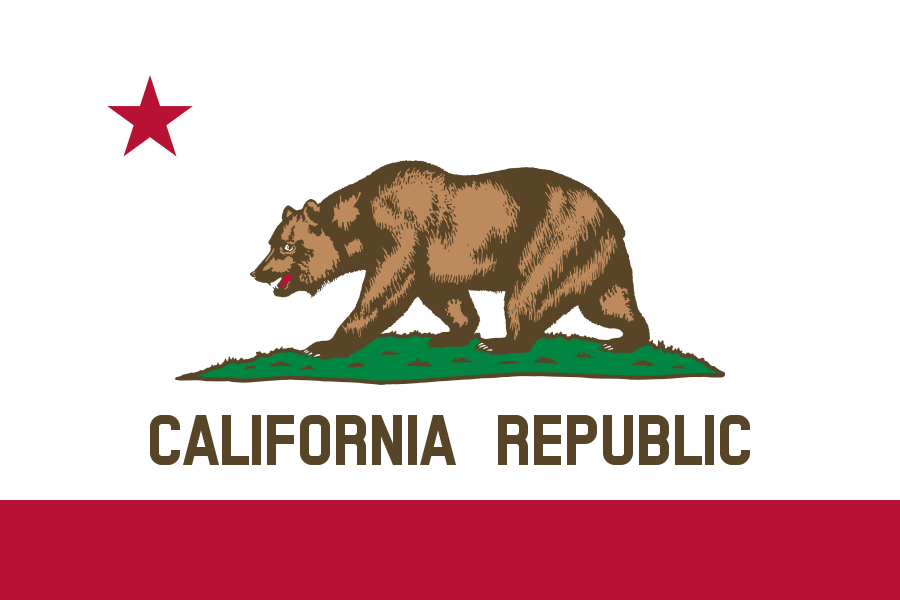
California is a U S state on the Pacific Coast...
Christmas is an annual festival celebrated on December th commemorating...
Los Angeles California's most populous city and Southern California's hub...
The Great Lakes are a chain of five large interconnected...
Trending

32 minutes ago Danielle Deadwyler Responds to X-Files Casting Backlash, Acknowledging Gillian Anderson's Input
32 minutes ago Jaylon Tyson's Reduced Playing Time: Cavaliers' Roster Decisions and His Journey to the NBA
2 hours ago Dean Wade out of Cavaliers' starting lineup for Game 7 against Pistons.
Joseph Duggar is an American television personality best known for his appearances on the TLC reality shows Kids and Counting...
3 hours ago Cody Johnson jokes about son at ACMs, emphasizes visuals, shares baby update.
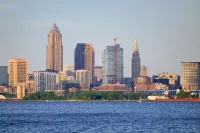
4 hours ago Cleveland Metroparks and Asian Festival Shut Down Due to Overcrowding Issues
Popular
Thomas Massie is a Republican politician and engineer representing Kentucky's...

Michael Joseph Jackson the King of Pop was a highly...
William Franklin Graham III known as Franklin Graham is an...

Kash Patel is an American lawyer who currently serves as...
Sir David Attenborough is a highly acclaimed English broadcaster natural...
Paula White-Cain is a prominent American televangelist and key figure...