


Cubans are the citizens and nationals of Cuba, a country with a diverse population primarily speaking Spanish. A significant Cuban diaspora exists, with many tracing their ancestry to Cuba but not necessarily holding citizenship. The United States hosts the largest Cuban population outside of Cuba itself.
1900: Spanish migration
Between 1900 and 1930, close to a million Spaniards migrated to Cuba.


1902: Migration from the Iberian Peninsula
After the founding of the republic in 1902, a considerable migration (over 1 million) arrived from the Iberian Peninsula to the island.
1902: Formal independence of Cuba
In 1902, Cuba gained formal independence, marking the end of a period of American influence and initiating the formation of a national identity.
1930: Spanish migration
Between 1900 and 1930, close to a million Spaniards migrated to Cuba.
1955: Spanish Civil War
In December 2011, under the Historical Memory Law, descendants had until this date to present themselves at the Spanish embassy and turn in documentation that proves their parents or grandparents fled Spain between 1936 and 1955.
1959: Fulgencio Batista ousted
In 1959, de facto leader Fulgencio Batista was ousted by revolutionaries led by Fidel Castro.
1959: Cuban Revolution
In 1959, the Cuban Revolution, led by Fidel Castro, transformed Cuba's political landscape, reinforcing a sense of national identity centered around revolutionary and socialist ideals and leading to the Cuban Diaspora.
April 1960: Miguel Díaz-Canel born
Miguel Mario Díaz-Canel y Bermúdez was born on April 20, 1960.
1961: Cuban population increase
Around 1961, Cuba's overall population began increasing from around 7 million to 11 million today.
1976: Fidel Castro as President
From 1976, Fidel Castro acted as President of the Council of State.
1995: Mt-DNA lineages population study
A 1995 study done on the population of Pinar del Río, found that 50% of the Mt-DNA lineages (female lineages) could be traced back to Europeans, 46% to Africans and 3% to Americans.
2006: Cuba's Birth Rate and Population Decline
In 2006, Cuba's birth rate was one of the lowest in the Western Hemisphere, and the government reported the first drop in population since the Mariel boatlift.
2008: Geographical origin study
According to another study in 2008, regarding the geographical origin attributed to each mtDNA haplogroup, 55% of the sequences found in Cubans are of West Eurasian origin and 45% of African origin.
2009: Detection of autochthonous lineages
According to Fregel et al. in 2009, the detection of autochthonous male E-M81 and female U6 lineages from the Canaries in Cuba and Iberoamerica, demonstrates that Canary Islanders with indigenous Guanche ancestors actively participated in the American colonization.
December 2011: Deadline for citizenship applications
In December 2011, under the Historical Memory Law, descendants had until this date to present themselves at the Spanish embassy and turn in documentation that proves their parents or grandparents fled Spain between 1936 and 1955.
2011: Raúl Castro succeeds Fidel Castro
In 2011, Raúl Castro succeeded his brother Fidel as First Secretary of the Communist Party of Cuba.
2012: Cuban Population
In 2012, the population of Cuba was 11,167,325 inhabitants, with the largest urban populations found in Havana, Santiago de Cuba, Holguín, Camagüey, Santa Clara, and Guantánamo.
2014: Autosomal DNA study
An autosomal study from 2014 found the genetic ancestry in Cuba to be 72% European, 20% African and 8% Amerindian.
2014: Genetic ancestry in self-reported "negro (Black)"
Based on genetic testing in 2014, the average African, European and Native American ancestry in those self-reporting to be "negro (Black)" was 65.5% "African", 29% "European" ancestry and 5.5% "Native American" or other ancestry.
2014: Genetic testing in Cuba
Based on genetic testing in Cuba in 2014, the average European, African and Native American ancestry in those auto-reporting to be white were 86%, 6.7%, and 7.8%.
2015: Cuban-born Residents Naturalized
As of 2015, 68% of Cuban-born residents of the United States have naturalized, automatically losing their Cuban citizenship.
2017: Cuban populations in Florida
In 2017, 995,439 Cubans lived in the state of Florida.
2018: Native American ancestry contribution study
According to a 2018 genome-wide data study, the eastern region of the island had an average Native American ancestry contribution of 10%, as compared to an average of 5% in the rest of the island.
2019: Cubans in Spain
As of 2019, there were 151,423 Cubans in Spain, marking the second largest Cuban diaspora.
2021: First non-Castro leader
In 2021, Miguel Díaz-Canel succeeds the brothers Fidel and Raúl Castro as First Secretary of the Communist Party, making him the first non-Castro leader of Cuba since the revolution.
2024: Cuban Immigrants in the U.S.
As of 2024, the United States Census Bureau's American Community Survey showed a total population of 1,688,798 Cuban immigrants in the United States.
Mentioned in this timeline
The United States of America is a federal republic primarily...
Florida the southernmost state in the contiguous United States is...
Spain officially the Kingdom of Spain is a large country...

War is defined as an armed conflict involving the armed...
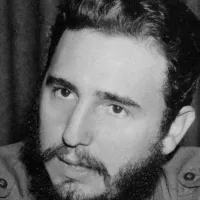
Fidel Castro was a Cuban revolutionary and politician who led...
Cuba is an island country in the Caribbean comprising the...
Trending

3 hours ago Brian Austin Green Explains Absence From Sharna Burgess Dancing with the Stars Performances

3 hours ago Knicks Likely to Release Former Champion James Wiseman Amid Roster Adjustments

3 hours ago Adam Levine Selects Alex Warren as Advisor for The Voice
3 hours ago Jalen Smith Sentenced to Six Years Over NCAA Point Shaving Scheme
3 hours ago Travis Bazzana Faces Elimination in High-Stakes American League Championship Series Action
3 hours ago Yandy Diaz Poised to Reach Rare MLB Milestone During ALCS Playoff Series
Popular

Ken Paxton is an American politician and lawyer serving as...
Ilhan Omar is a prominent American politician currently serving as...

Jameis Winston is an American football quarterback currently playing for...

Cristiano Ronaldo widely considered one of the greatest footballers captains...

Elon Musk is a visionary entrepreneur and engineer known for...

Michael Joseph Jackson the King of Pop was a highly...