History of Earth Day in Timeline


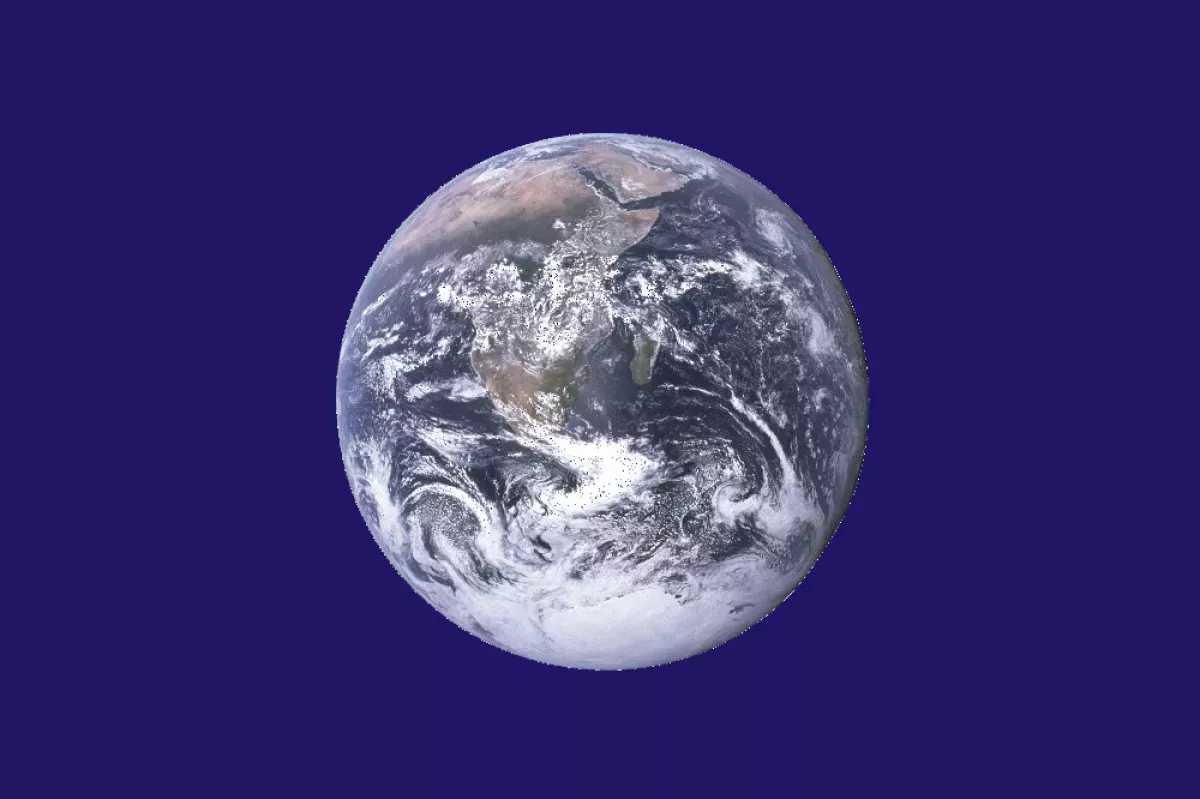
Earth Day is an annual event held on April 22nd dedicated to environmental protection. It began on April 22, 1970, and has grown into a global movement coordinated by earthday.org, involving over 1 billion people across more than 193 countries. The day serves as a demonstration of support for environmental issues and promotes awareness and action towards a sustainable future.
2 hours ago : Earth Day Celebrations: Car-Free Initiatives and Community Events Across New York City.
Earth Day sees HabCenter hosting events, Staten Island closing roads for a Car-Free Day, and NYC bringing back open streets across boroughs. Celebrations encourage environmental awareness and sustainable practices.


1918: Soviet Adoption of Gregorian calendar
In 1918, the Soviets adopted the Gregorian calendar.
1920: Institution of Subbotnik by Lenin
In 1920 Lenin instituted Subbotnik, during which people would have to do community service to remove rubbish from public property and collecting recyclable material.
1946: Walter Reuther Leads UAW
In 1946, Walter Reuther had led the United Auto Workers (UAW).
1955: Proclamation of Lenin's Birthday as a national holiday
In 1955, Nikita Khrushchev proclaimed Lenin's birthday, April 22, a national holiday celebrating communism
1962: Publication of Silent Spring
In 1962, Rachel Carson wrote and published her influential bestseller, Silent Spring. This book was inspired by pre-1960 grassroots activism against DDT and widespread opposition to open-air nuclear weapons.

1968: Human Ecology Symposium
In 1968, Morton Hilbert and the U.S. Public Health Service organized the Human Ecology Symposium, an environmental conference for students about environmental degradation and human health. This event was the beginning of Earth Day.
1968: University of Arizona Meeting
In 1968, University of Arizona students and professors, including Ecology & Evolutionary Biology professor Stephen M. Russell, met at Chiricahua National Monument to envision a celebration of the earth.
January 28, 1969: Union Oil Platform A blowout
On January 28, 1969, Union Oil's Platform A, located off the coast of Santa Barbara, California, experienced a blowout, resulting in a major oil spill that killed over 10,000 marine animals and mobilized activists to create environmental regulation, environmental education, and Earth Day.
September 20, 1969: Senator Nelson announces plans for an environmental teach-in
On September 20, 1969, Senator Nelson announced his plans for an "environmental teach-In" at the University of Washington, hoping to engage youth in environmental issues.
1969: First Idea of Earth Day
In 1969, John McConnell introduced the idea of a global holiday called "Earth Day" at the UNESCO Conference on the Environment.
1969: John McConnell proposes a day to honor the Earth
In 1969, at a UNESCO conference in San Francisco, peace activist John McConnell proposed a day to honor the Earth and promote peace, to be observed on March 21, 1970. Later, Senator Gaylord Nelson proposed a nationwide environmental teach-in on April 22, 1970.
1969: Cuyahoga River Fire
In early 1969, the Cuyahoga River catching fire led Senator Gaylord Nelson to believe the time was ripe for an environmental initiative.
1969: Group meets at Columbia University to discuss Earth Day
In the winter of 1969, a group of students met at Columbia University to discuss plans for Earth Day with Denis Hayes. They agreed to lead the New York City activities.
January 23, 1970: Project Survival at Northwestern University
On January 23, 1970, Project Survival, an early environmentalism-awareness education event, was held at Northwestern University. This was the first of several events leading up to the first Earth Day.
January 28, 1970: Environmental Rights Day and Declaration of Environmental Rights
On January 28, 1970, the first anniversary of the oil blowout, Environmental Rights Day was created, and the Declaration of Environmental Rights, written by Rod Nash, was read. The event was connected to the creation of the National Environmental Policy Act.
April 1970: First Earth Day
In April 1970, the first Earth Day was held, following a federal proclamation from U.S. Sen. Gaylord Nelson. The event was preceded by planning efforts from Morton Hilbert and students.
April 22, 1970: First Earth Day
On April 22, 1970, the first Earth Day was held to demonstrate support for environmental protection.
1970: Challenges faced by regional coordinators of Earth Day
By 1970, 'teach-ins' had become passé, and leading activists on college campuses viewed the environment as a distraction from the anti-war and civil rights movements.
1970: Edward Furia was Project Director of Earth Week
In 1970, Edward Furia was Project Director of Earth Week.
1970: New York City's support for Earth Day
In 1970, New York City's liberal Republican mayor, John Lindsay, supported Earth Day, viewing it as an issue that could unite the city and distinguish him from President Nixon.
1970: Organized labor funds Earth Day
In 1970, organized labor, particularly the United Auto Workers (UAW) under Walter Reuther, provided the largest source of funding for the first Earth Day. The UAW donated $2,000 (equivalent to $16,581 in 2025) and provided essential resources like telephone capabilities and printed materials.
1970: First Earth Day focused on the United States
In 1970, the first Earth Day was focused on the United States.
1970: First Earth Day
On the first Earth Day in 1970, an estimated 20 million Americans participated in rallies, marches, and teach-ins calling for environmental reform.
1970: Walt Kelly's Pogo poster for Earth Day
Walt Kelly created an anti-pollution poster featuring his comic strip character Pogo with the quotation "We have met the enemy and he is us" to promote the 1970 Earth Day.
February 26, 1971: UN Support for Earth Day
On February 26, 1971, UN Secretary-General U Thant signed a proclamation supporting John McConnell's global initiative to celebrate Earth Day annually.
1972: UN Secretary-General Kurt Waldheim observed Earth Day
In 1972, United Nations secretary-general Kurt Waldheim observed Earth Day with similar ceremonies on the March equinox, and the United Nations Earth Day ceremony has continued each year since.
1978: Margaret Mead added her support for the equinox Earth Day
In 1978, Margaret Mead added her support for the equinox Earth Day
September 11, 1980: First Canadian Earth Day
On September 11, 1980, the first Canadian Earth Day was held, organized by Paul D. Tinari. Activities included educational lectures, litter pick-up, and tree planting.
1980: Earth Day festival in Lafayette Park
In 1980, Mike McCabe and Byron Kennard led the Earth Day effort, marked by a festive festival in Lafayette Park in Washington, D.C.
May 5, 1990: Chart Performance of "Tomorrow's World"
On May 5, 1990, "Tomorrow's World," an Earth Day-themed single released by Warner Bros. Records, reached number 74 on the Hot Country Songs chart.
1990: Earth Day goes international
In 1990, Denis Hayes took Earth Day international, organizing events in 141 nations.
1990: Earth Day activities mobilize 200 million people
In 1990, Earth Day activities mobilized 200 million people in 141 countries, boosting recycling efforts and paving the way for the 1992 United Nations Earth Summit in Rio de Janeiro.
1990: Two separate groups sponsor Earth Day events
In 1990, two separate groups, The Earth Day 20 Foundation and Earth Day 1990, formed to sponsor Earth Day events, leading to disagreements about leadership and strategies.
1992: United Nations Earth Summit in Rio de Janeiro
In 1992, the United Nations Earth Summit was held in Rio de Janeiro.
2003: Water for Life Campaign
In 2003, the Earth Day theme was the Water for Life Campaign, which included the "What's in Your Water?" project developed by Earth Day Network, featuring global water-related events and educational materials.
2004: Voter Registration and Tree Planting
In 2004, the Earth Day Network and its partners focused on voter registration, registering hundreds of thousands of voters, and organized major tree planting events in the U.S.
2005: Healthy Environments for Children
In 2005, the theme for Earth Day was Healthy Environments for Children, highlighting the importance of environmental health for the well-being of children.
March 20, 2008: Global Celebrations for Equinox Earth Day
On March 20, 2008, ceremonies were held worldwide, including at the United Nations, to observe Earth Day at the moment of the equinox, with the ringing of the Japanese Peace Bell.
2008: Call For Climate Mobilization
In 2008, Earth Day galvanized millions with a 'Call For Climate,' featuring rallies in major U.S. cities and a challenge to make one million calls to Congress for climate change legislation.
2009: National Teach-In on Global Warming Solutions
In 2009, the National Teach-In on Global Warming Solutions reached college campuses, civic organizations, and faith groups across the U.S., with members of Congress addressing students via video conference.
2010: 40th Anniversary Actions
In 2010, approximately one billion people took action for the 40th anniversary of Earth Day, with 20,000 partners addressing climate change and building a green economy. Earth Day Network also partnered with Twentieth Century Fox Home Entertainment's Avatar Home Tree Initiative to plant one million trees by the end of 2010.
2010: Climate Rally on the National Mall
In 2010, over 150,000 activists gathered at the Climate Rally on the National Mall in Washington, D.C., advocating for comprehensive climate legislation from the U.S. Congress.
September 2011: Tree Planting Project Recognized
In September 2011, at the Clinton Global Initiative, President Clinton recognized the Earth Day Network's project to plant over 1.1 million trees in 17 of the world's most severely deforested countries as an exemplary approach to addressing global challenges.
2012: A Billion Acts of Green Achieved
In 2012, Earth Day Network announced the achievement of A Billion Acts of Green at the United Nations Conference on Sustainable Development in Rio, along with initiatives engaging elected officials and faith communities.
2013: The Face of Climate Change
In 2013, the Earth Day theme was "The Face of Climate Change," aiming to personalize the climate change challenge through images collected via #faceofclimate and displayed worldwide.
2013: MobilizeU Expansion
In 2013, the MobilizeU program, which educates and activates college students around Earth Day, expanded to 296 universities in 51 countries.
2014: Personalizing Climate Change
In 2014, Earth Day focused on personalizing the global climate change challenge and weaving it into the five-year countdown to Earth Day 2020.
2014: Green Cities Theme
In 2014, the theme for Earth Day was Green Cities, highlighting the importance of sustainable urban development.
2015: Global Citizen 2015 Earth Day
In 2015, EDN hosted Global Citizen 2015 Earth Day, a large-scale event focused on environmental issues.
2015: United Nations Climate Change Conference in Paris
In 2015, the United Nations Climate Change Conference was held in Paris where the draft climate protection treaty was adopted by consensus.
2015: It's Our Turn to Lead
In 2015, the global theme for the 45th anniversary of Earth Day was "It's Our Turn to Lead."
2016: Trees for Earth Theme
In 2016, the theme for Earth Day was Trees for Earth, emphasizing the importance of planting trees to combat climate change.
2016: UN Climate Accord Signed
On Earth Day in 2016, world leaders from 175 nations signed a significant climate accord at the United Nations.
2017: Launch of Global Environmental and Climate Literacy Goal
For Earth Day 2017, Earth Day Network launched the goal of achieving global environmental and climate literacy by 2020.
2017: Environmental and Climate Education Theme
The theme for Earth Day 2017 was environmental and climate education, highlighting its role as the foundation for progress in addressing environmental threats.
April 2018: End Plastic Pollution Campaign
In April 2018, Earth Day's theme was 'End Plastic Pollution,' accompanied by a Plastics Pollution Calculator and educational resources, resulting in widespread media coverage and initiatives to reduce plastic waste.
2019: Protect Our Species Campaign
Earth Day 2019's theme was Protect Our Species, focusing on spreading awareness about the causes and consequences of species extinctions.
2020: Global Environmental and Climate Literacy Goal Deadline
By 2020, Earth Day Network had aimed to achieve global environmental and climate literacy, envisioning a world fluent in climate change concepts.
2020: 50th Anniversary and Climate Action
Earth Day 2020 marked the 50th anniversary with the theme "climate action," featuring online activities like Earth Day Live due to the COVID-19 pandemic.
2020: 50th Anniversary Countdown
Earth day 2014 was the start of a five-year countdown leading to the 50th anniversary of Earth Day in 2020, with a focus on uniting people worldwide to address global climate change.
April 22, 2021: Earth Day Live Livestream Event
On April 22, 2021, earthday.org organized the second-annual Earth Day Live livestream event featuring global activists, leaders, and influencers, as part of the Restore Our Earth theme for Earth Day 2021.
2021: Leaders' Climate Summit
In 2021, the Biden administration organized a Leaders' Climate Summit, a virtual meeting featuring 40 world leaders and various speakers, including Pope Francis, to discuss climate issues.
2022: Earth Day 2022: Invest in Our Planet
In 2022, the Earth Day theme was 'Invest in Our Planet,' featuring programs like The Great Global Cleanup and Sustainable Fashion. On April 22, Wynn Alan Bruce self-immolated in protest against climate inaction.
November 2023: Babies vs. Plastics Report Release
In November 2023, earthday.org released the 'Babies vs. Plastics' report, highlighting the health threat of microplastics, particularly affecting children in the Global South.
2023: Earth Day 2023: Invest in Our Planet continuation
In 2023, Earthday.org continued the "Invest in our Planet" theme, reporting over one billion citizens participated in Earth Day 2022.
2023: Earth Day 2023 theme and Earth images publication
In 2023, the official theme for Earth Day was "Invest In Our Planet." Additionally, on Earth Day 2023, a collection of Earth images from deep space were published.
May 10, 2024: Oral history interview with Martha Ames Burgess
On May 10, 2024, ethnobotanist Martha Ames Burgess recounted a 1968 meeting to envision a celebration of the earth.
2024: Earthday.org 2024 Theme: Planet vs. Plastics
The theme for Earthday.org in 2024 is 'Planet vs. Plastics'. To mark Earth Day 2024, the organization called for a 60% global reduction in plastic production by 2040.
2025: Value of the $2,000 donation to Earth Day in 1970
In 2025, $2,000 donated to Earth Day in 1970 is equivalent to $16,581.
2025: Value of the $375/month salary for Earth Day coordinators in 1970
In 2025, $375 from 1970 is equivalent to $3,292.
2025: Earth Day 2025 Theme: Our Power, Our Planet
The theme for Earth Day 2025 is 'Our Power, Our Planet'.
2040: Targeted Global Reduction in Plastic Production
Earthday.org has set a goal to achieve a 60% global reduction in plastic production by the year 2040, as part of their 'Planet vs. Plastics' initiative.
Mentioned in this timeline

Ukraine is a country in Eastern Europe the second largest...

Google LLC is a multinational technology corporation specializing in a...
The White House located at Pennsylvania Avenue NW in Washington...
California is a U S state on the Pacific Coast...

The Union of Soviet Socialist Republics USSR existed from to...

India officially the Republic of India is a South Asian...
Trending
12 minutes ago Amazon Prime Video abruptly cancels 'The Runarounds' after one season despite plans.

12 minutes ago Angel Reese Traded to Atlanta Dream from Chicago Sky in WNBA Blockbuster.

4 months ago Sabrina Carpenter slams Trump White House for using 'Juno' in ICE video.

1 hour ago Tim Buckley Joins Iowa State Basketball as Assistant Coach Under T.J. Otzelberger

1 hour ago Jeff Merkley Discusses War, Economy, and Mental Health at Sisters Town Hall.

21 days ago Boeing Shares Attract Investment: KKM Financial and Capitolis Increase Holdings
Popular
William Franklin Graham III commonly known as Franklin Graham is...

Paula White-Cain is a prominent American televangelist and key figure...

XXXTentacion born Jahseh Dwayne Ricardo Onfroy was a controversial yet...

George Soros is a Hungarian-American investor and philanthropist with a...
Eric Swalwell is an American lawyer and politician currently serving...

Pam Bondi is an American attorney and politician She served...