History of Gwanghwamun Square in Timeline


Gwanghwamun Square, located in Seoul, South Korea, is a historically significant public square in front of Gyeongbokgung Palace. For centuries it has served as a public space and road. Known historically as Yukjo-geori (Street of Six Ministries), it was the location of important royal administrative buildings. Today, the square features statues of Admiral Yi Sun-sin, a naval commander famed for his victories against the Japanese navy during the Imjin War, and King Sejong the Great, the creator of the Korean alphabet, Hangul.
4 hours ago : BTS Reunites in Gwanghwamun Square: A Comeback Concert for the Ages
BTS's highly anticipated comeback concert at Gwanghwamun Square in Seoul drew 260,000 fans. Strict safety measures were implemented, limiting the concert to one hour due to safety concerns about the huge turnout.


April 1968: Statue of Admiral Yi Sun-shin erected
On April 27, 1968, the statue of Admiral Yi Sun-shin was erected in Gwanghwamun Square.
2002: Site of street cheering during FIFA World Cup
In 2002, Gwanghwamun Plaza was one of the sites of street cheering during the 2002 FIFA World Cup.
February 2004: New pedestrian-friendly urban space announced
In February 2004, plans for a new pedestrian-friendly, open urban space in Gwanghwamun Square were announced as part of the city's environmentally friendly urban renewal projects, along with similar projects for Namdaemun and Seoul Plaza.
December 2006: Further plans for the square announced
In December 2006, further plans for Gwanghwamun Square were announced in conjunction with the restoration of Gwanghwamun. The Cultural Heritage Administration of Korea was set to carry out the project, with completion scheduled for August 2009.
February 2008: Construction delayed due to opposition
In February 2008, the start of construction on Gwanghwamun Square was delayed due to opposition from the National Police Agency, who were concerned about the square being used for mass protests.
April 2008: Construction commenced
On April 23, 2008, construction of Gwanghwamun Square commenced after the government declared it a demonstration-free zone, overcoming previous opposition.
2008: Waterway stones recorded events from 1392 to 2008
In 2008, the waterway's floor had 617 stones recording the major events from 1392 to 2008 in Gwanghwamun Square.
August 2009: Completion of square scheduled
In August 2009, the completion of the Gwanghwamun Square project was scheduled, in conjunction with the restoration of Gwanghwamun, carried out by the Cultural Heritage Administration of Korea.
August 2009: Gwanghwamun Square officially opens
On August 1, 2009, Gwanghwamun Square officially opened after a 15-month renovation costing ₩44.5 billion, downsizing Sejongno from 16 lanes to 10. The square was adorned with a flower carpet symbolizing the history of Seoul as the capital from 1394 to the opening date.
October 2009: Statue of King Sejong the Great unveiled
On October 9, 2009, a bronze statue of King Sejong the Great was unveiled in Gwanghwamun Square to celebrate Hangul Day and the 563rd anniversary of the invention of the Korean alphabet.
November 2009: Filming of KBS drama "Iris"
On November 29, 2009, parts of Sejong-ro were closed for twelve hours to film gunfight scenes for the KBS spy action television drama series "Iris," starring Lee Byung-hun, Kim Tae-hee, Jung Joon-ho, Kim Seung-woo and Kim So-yeon.
December 2009: Open-air ice rink hosted
From December 12, 2009, to February 15, 2010, Gwanghwamun Square hosted an open-air ice rink for the first winter after its opening. The ice rink was 2,250 sq. m.
February 2010: Open-air ice rink hosted
From December 12, 2009, to February 15, 2010, Gwanghwamun Square hosted an open-air ice rink for the first winter after its opening. The ice rink was 2,250 sq. m.
June 2011: Square designated as smoke-free zone
As of June 1, 2011, Gwanghwamun Square was designated as a smoke-free zone by the Seoul Metropolitan Government, with a fine of ₩100,000 for violations.
July 2012: Beast guerrilla concert
On July 26, 2012, boy band Beast held a guerrilla concert at Gwanghwamun Square for 4,000 people, promoting their fifth mini album "Midnight Sun." The performance was broadcast on SBS's music show "Inkigayo."
September 2012: Sejong-ro designated pedestrian- and cyclist-only
On September 23, 2012, the government designated a 550-meter section of Sejong-ro as pedestrian- and cyclist-only on a trial basis. The section started from the road at the Gwanghwamun three-way intersection, went along the plaza in front of the Sejong Center for the Performing Arts, and ended at the Sejong-ro intersection.
2012: Filming location for tvN drama "Queen and I"
In 2012, Gwanghwamun Square was used as a filming location for the tvN drama "Queen and I," featuring the "Gwanghwamun kiss" scene between characters Kim Boong-do and Choi Hee-jin.
2014: Kyuhyun's "At Gwanghwamun"
In 2014, Kyuhyun of Super Junior used Gwanghwamun as a theme for his chart-topping single, "At Gwanghwamun." Jo Sung-mo of TRAX recorded a live electric guitar cover of the song with Gwanghwamun Gate in the background.
2016: Major site of protests against Park Geun-hye's government
In 2016, Gwanghwamun Square was a major site of the 2016–17 protests against Park Geun-hye's government.
2020: Gwanghwamun Square closed for redesign
In 2020, Gwanghwamun Square was closed for redesign and renovation, which lasted until August 2022.
August 2022: Expanded plaza reopened
On August 6, 2022, the redesigned and expanded Gwanghwamun Square reopened to the public, featuring a reduced Sejong-daero with 6 lanes and a pedestrian plaza more than doubled in size.
Mentioned in this timeline
Korea is a peninsular region in East Asia comprised of...
FIFA the F d ration Internationale de Football Association is...
Music is a cultural universal involving the arrangement of sound...
The Sun the star at the center of our Solar...
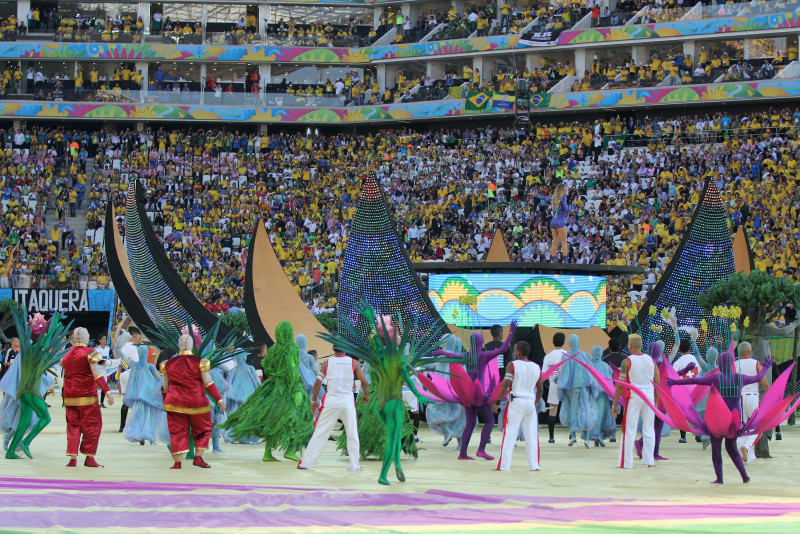
The FIFA World Cup is a quadrennial international football tournament...

September is the ninth month of the year in the...
Trending
46 minutes ago Saddiq Bey Proves Pelicans Right After Trade: Flipping the Narrative Brilliantly
10 days ago Newsom supports age restrictions on social media citing parental experience and teen phone obsession.
11 months ago Mark Williams' Status Uncertain for Friday's Game; Will Rest on Sunday.
47 minutes ago Kirill Kaprizov aims for Wild's goal record after scoring against St. Louis.
48 minutes ago Michael Strahan's Lifestyle Brand Expands with Belk Partnership and Career Announcement.

48 minutes ago Maggie and Jake Gyllenhaal's Bond: Closer Than Ever, Reflecting on Careers and Relationships.
Popular
Hillary Diane Rodham Clinton is a prominent American politician lawyer...
Jesse Jackson is an American civil rights activist politician and...

Ken Paxton is an American politician and lawyer serving as...

Jim Carrey is a Canadian-American actor and comedian celebrated for...
Bill Clinton served as the nd U S President from...
XXXTentacion born Jahseh Dwayne Ricardo Onfroy was a controversial yet...