


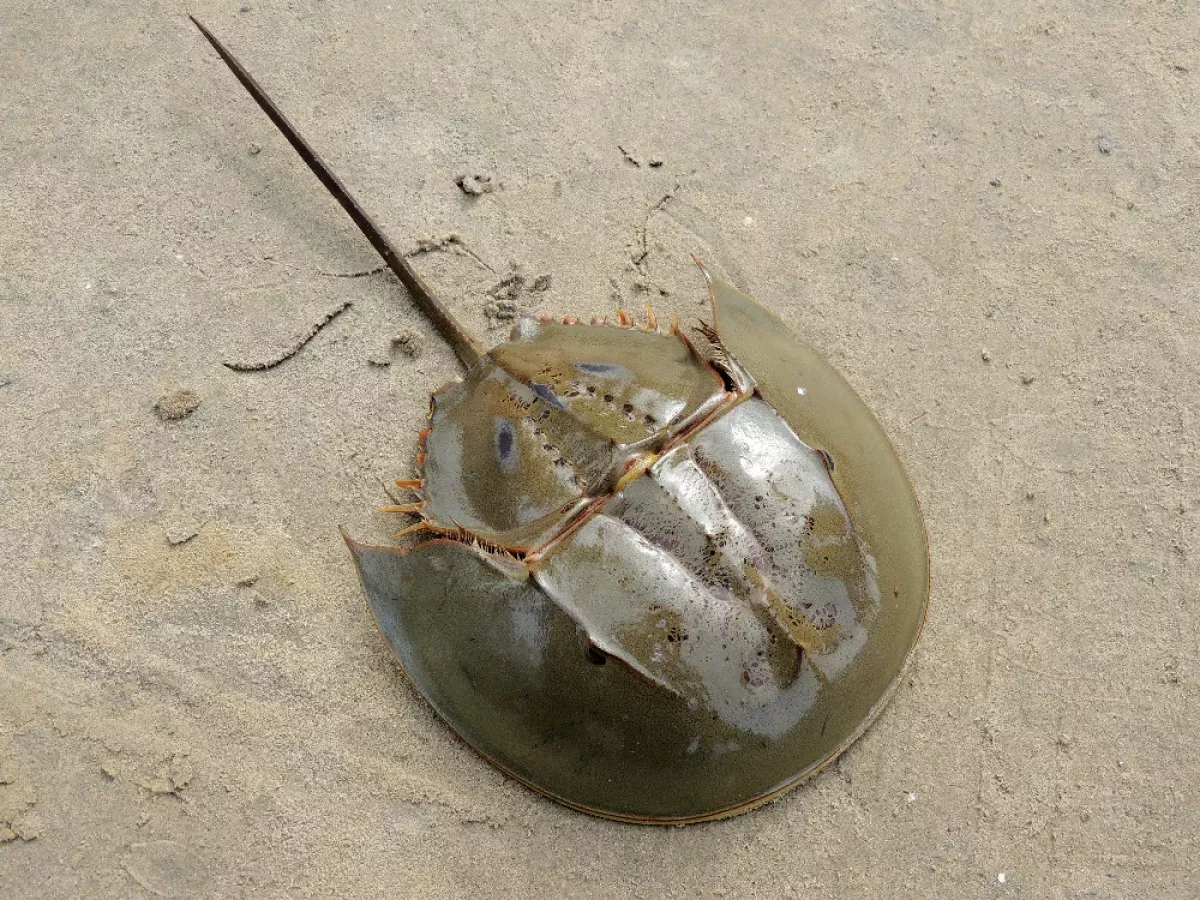
Horseshoe crabs, members of the Limulidae family, are the last surviving xiphosurans. Despite their name, they are not true crabs but chelicerates, making them closer relatives to arachnids like spiders and scorpions. Their body comprises three parts: the cephalothorax, abdomen, and telson. The horseshoe-shaped cephalothorax contains most of the animal's eyes, limbs, and internal organs. Having changed little since the Triassic period, they are considered "living fossils".
1986: Discovery of rFC as an Alternative to LAL
In 1986, researchers at Kyushu University found that isolated rFC could be used as an alternative to LAL for the same medical tests.


May 2003: Synthetic rFC Availability
In May 2003, synthetically isolated Limulus clotting factor C (rFC) became available, offering an alternative to horseshoe crab blood in medical testing.
2008: Horseshoe Crab Harvesting Ban in New Jersey
In 2008, New Jersey indefinitely banned the use of horseshoe crabs as fishing bait to protect the red knot, a shorebird reliant on their eggs. Delaware banned catching female crabs, and South Carolina implemented a permanent moratorium.
2010: Decline in Indo-Pacific Horseshoe Crab Population
The Indo-Pacific horseshoe crab population significantly declined in Malaysia and Indonesia after 2010. Overharvesting for food, especially of gravid females, is a primary cause, leading to an unbalanced sex ratio.
2013: Increased rFC Production and Acceptance
By 2013, Hyglos GmbH started producing rFC, alongside Lonza Group, and European regulators accepted it. Combined with Eli Lilly and Company's support, these developments suggest a decrease in harvesting horseshoe crab blood.
2015: Phylogeny of Xiphosurans
A 2015 phylogeny indicated that extinct xiphosurans transitioned to freshwater habitats at least five times. This transition also occurred twice in horseshoe crabs, with Victalimulus and Limulitella inhabiting swamps and rivers.
December 2019: US Senate Report on Pyrogenicity Tests
In December 2019, a US Senate report encouraged the FDA to evaluate and promote the use of alternative pyrogenicity tests, potentially reducing the reliance on horseshoe crab blood. This report received backing from PETA.
June 2020: U.S. Pharmacopeia Decision on rFC
In June 2020, the U.S. Pharmacopeia decided not to give rFC equal standing with horseshoe crab blood. This decision might hinder wider rFC adoption as companies would need to demonstrate its safety and efficacy, potentially deterring them from using the substitute.
2020: Lamsdell et al. Publication
In 2020, Lamsdell et al. published a work, the specifics of which are not included in the current text.
2021: Bicknell et al. Publication
In 2021, Bicknell et al. published a work, the details of which are not provided here.
2023: Horseshoe Crab Harvesting Halt in Cape Romain National Wildlife Refuge
In 2023, the US Fish and Wildlife Service stopped horseshoe crab harvesting in South Carolina's Cape Romain National Wildlife Refuge from March 15 to July 15 to support their reproduction and protect the food source for migratory birds.
Mentioned in this timeline

South Carolina located in the Southeastern South Atlantic and Deep...

Indonesia is a Southeast Asian and Oceanian country situated between...
Trending

3 hours ago Cornell University Bans Fraternity Parties Following Severe Sexual Assault Allegations

4 hours ago Harrison Ford Transforms Jackson Hole Ranch Into Dedicated Wildlife Sanctuary
4 hours ago Danny Trejo Addresses Backlash Over Daily Wire ICE Movie Casting

8 days ago Muchova and Osaka Clash in High-Stakes WTA Beijing Fourth Round Matchup
5 hours ago Fed Official John Williams Debates Potential Interest Rate Adjustments for 2027
5 hours ago Apple Prepares to Debut New iPad Mini and Touchscreen MacBook in Late October
Popular

Ken Paxton is an American politician and lawyer serving as...

Ilhan Omar is a prominent American politician currently serving as...

Jameis Winston is an American football quarterback currently playing for...

Cristiano Ronaldo widely considered one of the greatest footballers captains...
Michael Joseph Jackson the King of Pop was a highly...

Kimberly Guilfoyle is an American television personality and former prosecutor...