History of IPhone in Timeline


The iPhone is a smartphone developed and marketed by Apple, running on the iOS operating system. The first iPhone was announced in 2007 by Steve Jobs and since then, Apple has released new models and iOS versions annually. The latest models are the iPhone 17, 17 Pro, 17 Pro Max, iPhone Air, and iPhone 17e. By July 2025, over 3 billion iPhones have been sold, making Apple the largest vendor of mobile phones since 2023.
4 hours ago : iPhone 18 Pro: New Features, Color Leak, and Fold with 3D Hinge Rumors
Rumors suggest the iPhone 18 Pro will launch later this year with 12 new features but may lack a popular color. The iPhone Fold might feature a 3D-printed hinge.


1998: Meaning of the "i" in iMac
According to Steve Jobs in 1998, the "i" in "iMac" (and subsequently "iPod", "iPhone" and "iPad") stands for internet, individual, instruct, inform, and inspire.
2004: Apple begins developing a smartphone
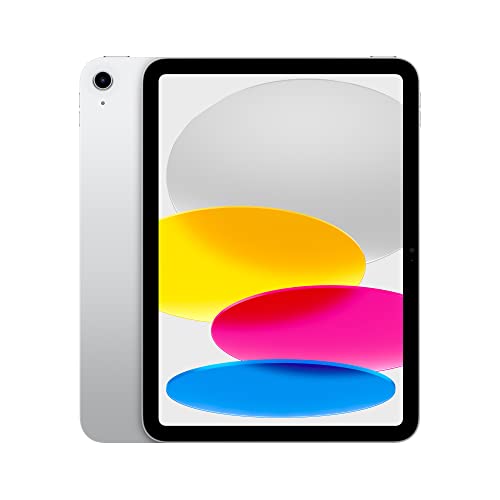
In 2004, Apple started developing a smartphone under the highly confidential "Project Purple", led by Tony Fadell, Scott Forstall, and Jony Ive.
January 9, 2007: First-generation iPhone announcement
On January 9, 2007, the first-generation iPhone was announced by Apple CEO Steve Jobs at Macworld 2007.
June 11, 2007: iPhone to Support Third-Party Web Applications
On June 11, 2007, at WWDC 2007, Apple announced that the iPhone would support third-party Ajax web applications that share the look and feel of the iPhone interface.
June 29, 2007: First-generation iPhone launches
On June 29, 2007, the first-generation iPhone launched in the United States at a starting price of US$499, requiring a two-year contract with AT&T.
October 17, 2007: SDK for Third-Party Developers Announced
On October 17, 2007, Steve Jobs announced that a software development kit (SDK) would be made available to third-party developers in February 2008.
February 2008: Announcement of SDK for Third-Party Developers
In February 2008, Apple announced the upcoming release of a software development kit (SDK) for third-party developers to create applications for the iPhone.
March 6, 2008: iPhone SDK Officially Released
On March 6, 2008, the iPhone SDK was officially announced and released.
2008: iPhone reached 1.1% of worldwide mobile phone market share in 2008
In 2008, the iPhone reached 1.1% of the worldwide mobile phone market share and 8.2% of the smartphone market. Apple sold 6.1 million units of the original iPhone between Q3 FY2007 and Q4 FY2008.
2008: App Store released in 2008
The App Store was released in 2008, revolutionizing mobile development and turning the iPhone into a versatile device with a wide range of features and apps. Before the iPhone, smartphones lacked a thriving app ecosystem.
June 8, 2009: iPhone 3GS announcement
On June 8, 2009, the iPhone 3GS was announced at WWDC 2009, introducing video recording functionality.
2009: Apple Rejects Newspapers App
In 2009, Apple rejected the Newspapers app due to The Sun's "obscene" topless Page 3 girls.
2009: iPhone ranked second in the U.S. in market share in 2009
In 2009, the iPhone was ranked second in the U.S. in market share, behind BlackBerry.
June 7, 2010: iPhone 4 announcement
On June 7, 2010, the iPhone 4 was announced at WWDC 2010, introducing a redesigned body, the Apple A4 processor, Retina display, and a front-facing camera for FaceTime.
June 2010: Introduction of "consolidated.db" File with iOS 4 Update
In June 2010, the "consolidated.db" file was added with the iOS 4 update, containing a record of iPhone users' locations.
July 2010: Apple Claimed to Collect User Location Data
In July 2010, Apple claimed that it collected iPhone users' GPS coordinates and nearby Wi-Fi networks twice a day.
September 2010: Discovery of Hidden Location Tracking File
In September 2010, forensic expert Christopher Vance discovered a hidden unencrypted file named "consolidated.db" that contained a record of iPhone users' locations.
2010: Android overtook the iPhone's installed base in 2010
According to the NPD Group, Android overtook the iPhone's installed base in 2010.
2010: Jailbreaking Found Legal in the U.S.
In 2010, the U.S. found jailbreaking iPhones to be legal.
2010: iPhone 3GS was the best-selling smartphone in the U.S. in 2010
In 2010, the iPhone 3GS was the best-selling smartphone in the U.S., marking the first time an iPhone device reached the top spot in that market.
January 2011: Verizon to carry iPhone 4
In January 2011, Verizon announced that they would be carrying the iPhone 4, with a model compatible with Verizon's CDMA network releasing on February 10.
April 20, 2011: Publicization of iPhone Location Tracking Research
On April 20, 2011, The Guardian publicized research by Alasdair Allan and Pete Warden, who found that anyone with physical access to an iPhone could obtain a detailed record of its owner's location and movements over the past year. The file was also automatically backed up by iTunes.
April 27, 2011: Apple's Response to Location Tracking Controversy
On April 27, 2011, Apple responded to the location tracking controversy, claiming that the data was used to cache nearby Wi-Fi hotspots and cell towers to improve location speed and accuracy.
October 4, 2011: iPhone 4s announcement
On October 4, 2011, the iPhone 4s was announced, introducing the Siri virtual assistant, a dual-core A5 processor, and an 8 megapixel camera with 1080p video recording functionality.
2011: Apple sold 100 million iPhones worldwide by 2011
By 2011, Apple had sold 100 million iPhones worldwide and became the largest mobile phone vendor globally by revenue, surpassing Nokia.
2011: iPhone credited with helping Apple become one of the world's most valuable companies by 2011
By 2011, the original iPhone was described as "revolutionary" and has been credited with helping Apple become one of the world's most valuable publicly traded companies.
2011: Apple Diversifies Manufacturing
In 2011, Apple CEO Tim Cook changed the company's manufacturing strategy to diversify its supply base.
2011: Pegasus widely used since 2011
Since 2011, Pegasus has been widely used and is still in use by law enforcement and governments as of July 2022.
September 12, 2012: iPhone 5 announcement
On September 12, 2012, the iPhone 5 was announced, introducing a larger 4-inch screen, faster 4G LTE connectivity, a thinner and lighter aluminum alloy body, and the new Lightning connector.
2012: iPhone 4s Manufactured by Two Companies
In 2012, the iPhone 4s became the first model to be manufactured simultaneously by two stand-alone companies: Foxconn and Pegatron.
September 10, 2013: iPhone 5s and iPhone 5c announcement
On September 10, 2013, the iPhone 5s and iPhone 5c were announced. The iPhone 5s included a 64-bit A7 processor and Touch ID fingerprint authentication. The iPhone 5c was a lower-cost device with colorful plastic frames.
October 2013: Apple Passes 60 Billion App Downloads
As of October 2013, Apple had passed 60 billion app downloads.
2013: Pegatron Makes Part of iPhone 5c Line
In 2013, Pegatron manufactured part of the iPhone 5c line.
2013: Trade-in Discounts for New iPhones
Since 2013, iPhone buyers can obtain a trade in discount when buying a new iPhone directly from Apple.
July 2014: China Central Television Report on iPhone Tracking
In July 2014, a report on state-owned China Central Television called iPhone tracking a "national security concern".
September 9, 2014: iPhone 6 and iPhone 6 Plus announcement
On September 9, 2014, Apple introduced the iPhone 6 and iPhone 6 Plus, featuring larger screens and Apple Pay mobile payment technology. The Apple Watch was also introduced on the same day.

2014: Pegatron Makes 30% of iPhone 6 Devices
In 2014, Pegatron manufactured 30% of the iPhone 6 devices.
2014: iOS 8 Adopts File-Based Encryption
In 2014, iOS 8 adopted file-based encryption, changing how the iPhone stored user data. Prior to this, data was unencrypted, allowing easy access by law enforcement.
September 9, 2015: iPhone 6s and 6s Plus introduced
On September 9, 2015, the iPhone 6s and 6s Plus were introduced, featuring a stronger aluminum alloy frame and a 12-megapixel main camera capable of 4K video recording.

2015: iPhone Upgrade Program Unveiled
In 2015, Apple unveiled the iPhone Upgrade Program, a 24-month leasing agreement.
2015: Apple and FBI Dispute Begins
In 2015, a dispute unfolded between Apple and the FBI after the FBI recovered the iPhone 5c of one of the San Bernardino attackers.
March 21, 2016: First-generation iPhone SE introduced
On March 21, 2016, the first-generation iPhone SE was introduced, a low-cost device incorporating newer hardware from the iPhone 6s in the frame of the older iPhone 5s.

July 27, 2016: Apple announced it had sold their billionth iPhone on July 27, 2016
On July 27, 2016, Apple announced that it had sold their billionth iPhone.
September 7, 2016: iPhone 7 and 7 Plus announcement
On September 7, 2016, the iPhone 7 and 7 Plus were announced, introducing larger camera sensors, IP67 water and dust resistance, a quad-core A10 Fusion processor, and the removal of the 3.5 mm headphone jack. The AirPods wireless earbuds were also introduced.

September 2016: Over 140 Billion App Downloads
As of September 2016, there had been over 140 billion app downloads from the App Store.
2016: Pegasus suite of exploits targeting iOS and Android discovered
In 2016, researchers discovered the Pegasus suite of exploits targeting iOS and Android, leading to international media coverage. Some Pegasus exploits are zero-click, enabling device compromise without user interaction, such as via a malformed iMessage. Pegasus can collect data like chats, passwords, and photos, and remotely activate the device's microphone and camera. Apple addressed the vulnerabilities with an update and introduced a bug bounty program, however researchers have criticized Apple for underpaying researchers, being uncommunicative, and being slow to fix vulnerabilities.
2016: DOJ Withdraws Request in Apple-FBI Dispute
In 2016, the DOJ withdrew its request to compel Apple to produce a modified version of iOS after the FBI bought an exploit to bypass the iPhone's passcode.
January 2017: App Store has Over 2.2 Million Apps
In January 2017, the App Store had over 2.2 million apps for the iPhone.
September 12, 2017: iPhone 8, 8 Plus, and iPhone X announcement
On September 12, 2017, the iPhone 8, 8 Plus, and iPhone X were announced. The iPhone X introduced a bezel-less design, Face ID, and a US$999 starting price.

September 12, 2018: iPhone XR, iPhone XS, and XS Max announcement
On September 12, 2018, the iPhone XR, iPhone XS, and XS Max were announced. The XS Max introduced a larger 6.5-inch screen, while the XR was a lower-cost device available in vibrant colors.

2018: Apple Removes Tumblr from App Store
In 2018, Apple removed Tumblr from the App Store, citing illegal content, causing Tumblr to ban all adult content from their platform.
September 10, 2019: iPhone 11, 11 Pro, and 11 Pro Max announcement
On September 10, 2019, the iPhone 11, 11 Pro, and 11 Pro Max were announced. All models gained an Ultra-Wide lens and larger batteries.

2019: Apple Investigates Foxconn Parts Usage
In 2019, Apple investigated reports that some Foxconn managers had used rejected parts to build iPhones.
April 17, 2020: Second-generation iPhone SE introduced
On April 17, 2020, the second-generation iPhone SE was introduced, a low-cost device incorporating newer hardware from the iPhone 11, in the frame of the older iPhone 8.
October 13, 2020: iPhone 12, 12 Mini, 12 Pro, and 12 Pro Max announcement
On October 13, 2020, the iPhone 12, 12 Mini, 12 Pro, and 12 Pro Max were announced. All models featured OLED displays, 5G connectivity, and the MagSafe system.

January 27, 2021: Tim Cook said that 1 billion iPhones were being actively used worldwide on January 27, 2021
During Apple's earnings call on January 27, 2021, Tim Cook stated that 1 billion iPhones were being actively used worldwide.
April 2021: Apple Introduced App Tracking Transparency (ATT) with iOS 14.5
In April 2021, Apple introduced App Tracking Transparency (ATT) with iOS 14.5. ATT requires apps to ask for explicit permission before being allowed to track the user across other apps and websites.
August 2021: Apple Announces Plans to Scan iCloud Photos
In August 2021, Apple announced plans to scan iCloud Photos for child abuse imagery and filter explicit images sent and received by children using iPhones.
September 14, 2021: iPhone 13, 13 Mini, 13 Pro, and 13 Pro Max announcement
On September 14, 2021, the iPhone 13, 13 Mini, 13 Pro, and 13 Pro Max were announced. All models featured larger camera sensors, larger batteries and a narrower notch. The Pro models introduced 120Hz refresh rate displays.

2021: iPhone has higher brand loyalty than any other smartphone as of 2021
As of 2021, the iPhone has a higher brand loyalty than any other smartphone.
March 8, 2022: Third-generation iPhone SE introduced
On March 8, 2022, the low-cost third-generation iPhone SE was introduced, incorporating the A15 Bionic chip from the iPhone 13.
July 2022: Pegasus still in use by law enforcement and governments as of July 2022
As of July 2022, Pegasus is still being used by law enforcement and governments, having been widely used since 2011.
September 7, 2022: iPhone 14, 14 Plus, 14 Pro, and 14 Pro Max announcement
On September 7, 2022, the iPhone 14, 14 Plus, 14 Pro, and 14 Pro Max were announced. All models introduced satellite phone emergency calling functionality. The Pro models introduced a 48-megapixel main camera and the "Dynamic Island".

December 2022: Apple Cancels Photo-Scanning Feature
In December 2022, Apple announced that the photo-scanning feature would never be implemented.
2022: Satellite Communications Added to iPhone
In 2022, Apple added satellite communications to the iPhone, with the release of the iPhone 14 and iPhone 14 Pro.
2022: Self-Service Repair Program Rolled Out
In 2022, Apple rolled out a self-service repair program, allowing any user to buy parts, rent repair tools from Apple, and obtain repair manuals.
September 12, 2023: iPhone 15, 15 Plus, 15 Pro, and 15 Pro Max announcement
On September 12, 2023, the iPhone 15, 15 Plus, 15 Pro, and 15 Pro Max were announced. All models switch to using USB-C and the 15 and 15 plus now feature the Dynamic Island, a 48-megapixel main camera.

2023: Apple sold 223 million iPhones in fiscal year 2023
Apple sold 223 million iPhones in its financial year 2023, which ended on September 24.
2023: Chinese government banned the use of iPhones by government civil servants in 2023
In 2023, the Chinese government banned the use of iPhones by government civil servants, aiming to reduce reliance on foreign technology and enhance cybersecurity.
2023: Apple becomes the largest mobile phone vendor
Since 2023, Apple has been the largest vendor of mobile phones.
January 1, 2024: More than 2.3 billion iPhones have been sold as of January 1, 2024
As of January 1, 2024, more than 2.3 billion iPhones have been sold.
May 2024: Iranian president Mokhber banned imported iPhone 14 and newer models in May 2024
In May 2024, Iranian president Mokhber banned imported iPhone 14 and newer models.
August 2024: App Store Contains Nearly 2 Million Applications
As of August 2024, Apple's App Store contains nearly 2 million applications.
August 2024: Nearly 2 million apps available on the App Store
As of August 2024, there are nearly 2 million apps available for download from Apple's App Store.
September 9, 2024: iPhone 16 Lineup Announcement
On September 9, 2024, Apple announced the iPhone 16, 16 Plus, 16 Pro, and 16 Pro Max. The iPhone 16 and 16 Plus featured a new vertical camera layout. The Pro models included larger displays, a 48-megapixel Ultra-Wide camera, and the largest batteries in an iPhone up to that date. All models gained Apple Intelligence AI features, a refined thermal system, Wi-Fi 7 support, and a new "Camera Control" button.

2024: iOS 18 Introduces RCS Support
In 2024, iOS 18 introduced Rich Communication Services (RCS) support, improving group chats between iOS and Android users.
July 2025: Over 3 billion iPhones sold
As of July 2025, more than 3 billion iPhones have been sold worldwide.
July 2025: Apple CEO Tim Cook said that 3 billion iPhones have been sold in July 2025
In July 2025, Apple CEO Tim Cook announced that 3 billion iPhones have been sold.
September 9, 2025: iPhone 17 Lineup Announcement
On September 9, 2025, Apple announced the iPhone 17, 17 Pro, 17 Pro Max, and iPhone Air. These devices featured the new faster A19 and A19 Pro chip with improved CPU and GPU performance including faster AI tasks.
September 2025: iPhone 17 Lineup Features
In September 2025, the iPhone 17 lineup was released which featured the new faster A19 and A19 Pro chip with improved CPU and GPU performance including faster AI tasks. The always on display and ProMotion 120 Hz are standard now in all the new iPhones. The iPhone Air is the thinnest iPhone ever made yet and is the first iPhone to only have a speaker from the earpiece only.
March 2, 2026: iPhone 17e Announcement
On March 2, 2026, the iPhone 17e was announced as the newest member of the iPhone 17 family.
Mentioned in this timeline

Google LLC is a multinational technology corporation specializing in a...
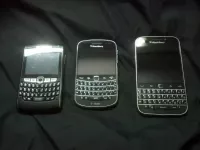
BlackBerry a once-popular brand of smartphones known for their physical...

India officially the Republic of India is a South Asian...

Verizon Communications is a leading American telecommunications company headquartered in...

The Guardian is a British daily newspaper founded in as...

The apple is a widely cultivated edible fruit originating from...
Trending
18 minutes ago Panthers' 2026 Draft Strategy: Addressing Roster Needs and Risky Offseason Moves.
18 minutes ago Junior Caminero smashes first homer of the 2026 season in impressive display.

1 hour ago Nordic Thriller 'Detective Hole' Outshines 'Stranger Things' on Netflix, Receives High Praise.

1 hour ago Justin Rose Seeks Masters Redemption, Facing Augusta Challenge After Multiple Near Misses.

1 hour ago MLB 2026 Season Sees Increased Interest: Cubs-Rays, Cardinals-Tigers Game Updates

16 hours ago Jake Paul urges Trump to be on front lines amidst war comments.
Popular

William Franklin Graham III commonly known as Franklin Graham is...

Paula White-Cain is a prominent American televangelist and key figure...

XXXTentacion born Jahseh Dwayne Ricardo Onfroy was a controversial yet...

George Soros is a Hungarian-American investor and philanthropist with a...

Pam Bondi is an American attorney and politician She served...

Eric Swalwell is an American lawyer and politician currently serving...