


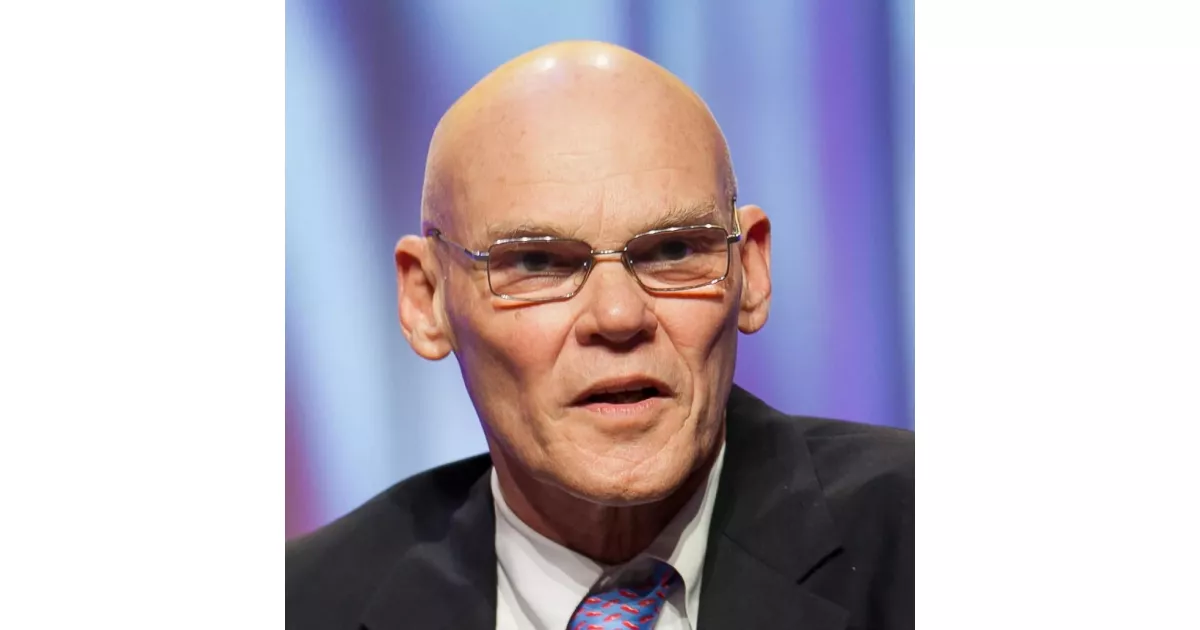
James Carville is an American political consultant and author known for strategizing for political candidates both in the United States and internationally. As a prominent Democrat, he frequently appears as a political pundit on cable news, podcasts, and in public speeches, offering his analysis on U.S. elections. He has also worked as an actor occasionally.
October 25, 1944: James Carville's Birth
On October 25, 1944, Chester James Carville Jr. was born. He later became an American political consultant, author, and occasional actor.


1958: Gus Weill Opens Advertising Firm
In 1958, Gus Weill opened the first advertising firm in Baton Rouge that specialized in political campaigns. James Carville was later trained in consulting by Gus Weill.
1962: Graduation from High School
In 1962, James Carville graduated from Ascension Catholic High School in Donaldsonville, Louisiana, and attended Louisiana State University (LSU).
1966: Enlistment in the Marine Corps
In 1966, James Carville began a two-year enlistment in the United States Marine Corps and was stationed stateside at Camp Pendleton in Oceanside, California.
1968: Wofford's Arrest
In 1968, Harris Wofford was arrested at the Democratic National Convention for disorderly conduct, before his senatorial run.
1968: End of Marine Corps Service
In 1968, James Carville completed his two-year enlistment in the United States Marine Corps, attaining the rank of corporal.
1969: Santos Attended University of Kansas
In 1969, Juan Manuel Santos began his undergraduate studies at the University of Kansas.
1970: Bachelor's Degree from LSU
In 1970, James Carville finished his studies at LSU at night, earning his Bachelor of Science degree in general studies.
1972: Campaign Work for Ossie Bluege Brown
In 1972, James Carville distributed "hate sheets" with negative literature on a political opponent on behalf of Ossie Bluege Brown during Brown's campaign for district attorney of East Baton Rouge Parish.
1973: Juris Doctor Degree
In 1973, James Carville earned his Juris Doctor degree from LSU and later worked as a junior high school science teacher.
1973: Santos Graduated University of Kansas
In 1973, Juan Manuel Santos graduated from the University of Kansas with a degree in economics and business.
1975: General Juan Alberto Melgar Castro's Coup
In 1975, General Juan Alberto Melgar Castro seized power in a coup, removing President Oswaldo López Arellano after the bananagate bribery scandal involving United Fruit Company. Nora Gúnera de Melgar was his wife.
1977: Ghani Earned Master's Degree from Columbia University
In 1977, Ashraf Ghani earned his master's degree from Columbia University.
1978: Harper's Son's Death
In 1978, John Harper's son had been shot and killed by Franklin County, Ohio, police during a pharmacy robbery, which became a point of contention during Wilkinson's campaign.
1979: Departure from Law Firm
In 1979, James Carville left his position as an attorney at McKernan, Beychok, Screen and Pierson, a Baton Rouge law firm.
1981: Santos as Fulbright Fellow
In 1981, Juan Manuel Santos returned to the U.S. as Fulbright visiting fellow at the Fletcher School of Law and Diplomacy at Tufts University, and also earned a master's degree from Harvard Kennedy School.
June 1984: Prayer Breakfast Controversy
In June 1984, during the general election for the Texas Senate seat, Phil Gramm, Doggett's opponent, emphasized themes of "family values" including his insistence at a prayer breakfast on "having people who believe in Christianity in charge of government", which Carville counter-punched as antisemitic.
November 1984: Doggett's Defeat
In November 1984, Lloyd Doggett was defeated in the general election for the Texas Senate seat. After the defeat, Carville found himself out of work, scared and without health insurance or money.
1984: Campaign for Lloyd Doggett
In 1984, James Carville managed Lloyd Doggett's unsuccessful campaign for the open Texas Senate seat, becoming acquainted with Paul Begala.
1985: Consultant for Cathy Long's Election
In early 1985, James Carville consulted to help Cathy Long win a special election to central Louisiana's now-defunct 8th congressional district.
1986: Casey's Election as Governor
In 1986, James Carville helped Bob Casey Sr. win election as the 42nd Governor of Pennsylvania.
September 25, 1987: Appearance on "Your Government"
On September 25, 1987, James Carville appeared on WLEX-TV's "Your Government" public affairs program and implored reporters to look into the background of Wilkinson's opponent John Harper's family, noting: "there might be problems with some of Harper's children."
1987: Campaign Manager for Wallace Wilkinson
In 1987, James Carville worked as a campaign manager to cast Kentucky businessman Wallace Wilkinson as a self-made millionaire anti-establishment gubernatorial candidate.
1988: Campaign Manager for Frank Lautenberg
In 1988, James Carville served as campaign manager to New Jersey U.S. Senator Frank Lautenberg during Lautenberg's successful re-election campaign.
1988: Santos Lectured as Nieman Fellow at Harvard University
In 1988, Juan Manuel Santos lectured as a Nieman Fellow at Harvard University.
1989: Assisting Zell Miller
In 1989, James Carville began assisting conservative Democrat and four-term lieutenant governor Zell Miller in winning the state party's gubernatorial nomination.
August 1990: Miller's Primary Victory
In August 1990, Zell Miller won the nominating contest against Andrew Young.
November 1990: Miller's General Election Victory
In November 1990, Zell Miller defeated Johnny Isakson in the general election with the assistance of James Carville.
1990: Miller Wins Nomination
In 1990, James Carville assisted Zell Miller in winning the state party's gubernatorial nomination. Miller campaigned on a platform of shock incarceration boot camps for first-time drug offenders and made a state lottery a central theme of his campaign.
1990: Consulting for Jim Mattox
In 1990, James Carville consulted for Texas Attorney General Jim Mattox, who based his campaign for the Democratic gubernatorial nomination on the claim that a state lottery would solve Texas' revenue needs without additional state taxes.
April 1991: Heinz's Death and Senate Seat Vacancy
In April 1991, after Senator John Heinz died in a plane crash, James Carville hatched a plan to offer the appointment of the Senate seat to Chrysler chairman Lee Iacocca, who declined the offer within 24 hours. Ultimately, Governor Casey appointed Wofford to fill the seat.
June 1992: Criticism of Sister Souljah
In June 1992, James Carville orchestrated Bill Clinton's criticism of hip hop artist Sister Souljah at the Rainbow Coalition's "Rebuild America" conference in Washington, D.C., to regain media attention. Clinton's speech opened a public conflict with Jesse Jackson.
1992: Lead Strategist in Clinton's Campaign
In 1992, James Carville gained national attention as the lead strategist in Bill Clinton's successful presidential campaign.
1992: Clinton's Presidential Campaign
In 1992, James Carville played a crucial role in Bill Clinton's successful presidential campaign against George H.W. Bush by implementing a populist economic strategy. Carville repurposed the rhetoric from Harris Wofford's senatorial campaign and integrated articles from Donald L. Barlett and James B. Steele's book, "America: What Went Wrong?", which became a key element of Clinton's campaign during the economic recession.

1992: Gennifer Flowers Allegations
In 1992, James Carville worked to protect Bill Clinton from Gennifer Flowers' allegations of an extramarital affair, which surfaced before the New Hampshire primary. Carville criticized the media for reporting the story and alleged Flowers was paid for sharing her story.
1992: Mary Matalin worked for Republican George H. W. Bush
In 1992, Mary Matalin worked for Republican George H. W. Bush on his presidential reelection campaign.
1992: Carville Gains National Attention
In 1992, Wofford's surprise victory in the senate race helped earn James Carville national attention, with the Democratic Party hoping he could help win the White House in the 1992 U.S. Presidential election.
1992: Miller at Democratic National Convention
In 1992, Zell Miller, whom James Carville assisted in his gubernatorial campaign, was a keynote speaker at the Democratic National Convention.
1992: Campaign consultants became public celebrities
In 1992, campaign consultants became public celebrities. Joe Lockhart, a former press secretary to Bill Clinton, characterized Carville as "a multimedia corporation, and he's been smart about it."
1992: Consulting for Richard Katz
In late 1992, James Carville began consulting for San Fernando Valley state assemblyman Richard Katz in his run for the open 1993 Los Angeles mayoral election.
November 1993: Marriage to Mary Matalin
In November 1993, James Carville married political consultant Mary Matalin in New Orleans.
1993: Campaign District Manager of the Year Award
In 1993, James Carville received the Campaign District Manager of the Year award from the American Association of Political Consultants. His work on the Clinton campaign was highlighted in the documentary film "The War Room."
1993: Katz's Mayoral Election Loss
In 1993, despite retaining James Carville and spending a million dollars on campaign television commercials, Richard Katz finished behind three other candidates in the Los Angeles mayoral election and did not advance to the general election.
1994: Consulting for Fernando Henrique Cardoso
In 1994, James Carville consulted for Fernando Henrique Cardoso in his successful campaign for the Brazilian presidency. Cardoso, supported by a heterodox alliance, implemented reforms including privatizing government-owned enterprises and modifying social security and tax systems.
1994: Consultation for Wofford's Re-election
In 1994, James Carville consulted for Harris Wofford's re-election campaign, but Wofford was narrowly defeated by Republican Rick Santorum.
1994: Newsweek Feature
In 1994, Newsweek featured James Carville where he described himself as less than an attentive scholar during his time at LSU.
1994: Democrats Last Held Control of Congress
In 1994, was the last time Democrats won control of Congress.
November 1997: Carlos Flores Election Victory
In November 1997, Carlos Flores, whom James Carville consulted for, won the Honduran presidential election against Nora Gúnera de Melgar. His opponent's campaign was aided by Dick Morris, a rival political consultant who claimed ignorance of Carville's involvement.
1997: Consulting for Carlos Flores Facussé
In 1997, James Carville consulted for Carlos Flores Facussé, the leader of the National Congress of Honduras, in his successful presidential campaign.
1997: Paula Jones Lawsuit Remark
In 1997, during the Paula Jones civil lawsuit against Bill Clinton, James Carville made a controversial remark about dragging a hundred dollars through a trailer park. The remark was later referenced by Lindsey Graham during Brett Kavanaugh's SCOTUS confirmation hearings in 2018.
January 1998: Introduction to Eduardo Duhalde
In January 1998, James Carville was introduced to Eduardo Duhalde by the U.S. Ambassador to Argentina, James Cheek. Carville would later consult for Duhalde's presidential campaign in 1999.
1998: Jamil Mahuad Witt Ecuadorian Presidential Election
In 1998, James Carville played a role in crafting the successful strategy to elect Jamil Mahuad Witt as President of Ecuador. Mahuad, an Ecuadorian-born attorney with an educational background at Harvard Kennedy School, emphasized his Harvard affiliation during the campaign.
1998: Advising Ernesto Pérez Balladares
In 1998, James Carville was retained by the Democratic Revolutionary Party (PRD) in Panama as their main advisor, to help re-elect President Ernesto Pérez Balladares, who was term-limited, during an election where opposition figures suggested the Clinton Administration favored his re-election. The proposal to lift the term limit was defeated despite significant spending.
1998: Consulting for Ehud Barak
In late 1998, James Carville, along with Bob Shrum and Stanley Greenberg, began consulting for Labor Party candidate Ehud Barak to help him prepare for the 1999 prime ministerial election, at the suggestion of President Clinton.
May 1999: Comments on Consulting Eduardo Duhalde
In May 1999, James Carville remarked that he was introduced to Eduardo Duhalde, who was running for president of Argentina, in January 1998 by the U.S. Ambassador to Argentina, James Cheek.
October 1999: Duhalde Loses Election to de la Rúa
In October 1999, amidst the Argentine Great Depression, Eduardo Duhalde lost the general election to Fernando de la Rúa of the Radical Civic Union party, who was advised by Dick Morris.
1999: Defamation Lawsuit
In 1999, Gennifer Flowers initiated a civil suit against James Carville, claiming defamation of character due to his handling of her allegations against Bill Clinton.
1999: Defamation Lawsuit by Gennifer Flowers
In 1999, Gennifer Flowers sued James Carville and George Stephanopoulos for defamation, alleging they ignored signs that tapes of her conversations with Bill Clinton were doctored. Larry Klayman of Judicial Watch represented Flowers.
1999: Reluctance to Discuss Work Abroad
In 1999, James Carville told a Los Angeles Times reporter that he would not comment on any work he does outside the U.S., indicating his discretion regarding international campaigns.
1999: Preparing Ehud Barak for Election
In early 1999, James Carville and colleagues continued consulting for Labor Party candidate Ehud Barak to help him prepare for the 1999 prime ministerial election, at the suggestion of President Clinton.
January 2000: Mahuad Forced from Office
In January 2000, Jamil Mahuad Witt, who was helped by James Carville in the 1998 election, was forced from office in a military coup following economic crisis and austerity measures. Mahuad then fled to exile in the United States.
2000: Hillary Clinton Named as Defendant
In 2000, Gennifer Flowers added Hillary Clinton as a defendant to her defamation suit against James Carville and George Stephanopoulos.
2000: Sponsorship with Playboy and Captain Morgan
In 2000, James Carville enjoyed a sponsorship with Playboy media and Captain Morgan rum, arranged through a public relations firm, which included a trip to Hugh Hefner's Playboy mansion.
December 2001: De la Rúa Resigns During Riots
In December 2001, Fernando de la Rúa resigned as president of Argentina during widespread riots.
2001: Special Prime Ministerial Election
In 2001, Ehud Barak, who won the election after consulting with Carville in 1999, called for a special prime ministerial election after serving for over two years.
2001: Consulting for Tony Blair
In 2001, James Carville worked on Tony Blair's successful general election campaign in the United Kingdom. Carville found working on campaigns abroad more lucrative and less risky than in the United States.
January 2002: Duhalde Appointed President of Argentina
In January 2002, following the resignation of Adolfo Rodríguez Saá, the Argentine Congress appointed Eduardo Duhalde as president of Argentina.
April 2002: Unsuccessful Coup Attempt in Venezuela
In April 2002, an unsuccessful coup attempt occurred in Venezuela.
August 2002: Sánchez de Lozada Comes to Power in Bolivia
In August 2002, Gonzalo Sánchez de Lozada came to power in Bolivia in a coalition government after garnering a plurality of votes in the election.
2002: Meeting with Arab Women Political Leaders
In 2002, James Carville and his wife, Mary Matalin, met with 55 Arab women political leaders on behalf of the U.S. State Department during the 2002 United States midterm elections as part of the "Women as Political Leaders" International Visitor (IV) Program, the first program under the Middle East Partnership Initiative.
2002: Carville Co-Hosts CNN's Crossfire
In 2002, James Carville began co-hosting CNN's 'Crossfire' with Paul Begala.
2002: Proposal to Visit Arab and Muslim Nations
In 2002, James Carville proposed visiting Arab and Muslim nations on behalf of the U.S. government to engage in "some kind of propaganda" to counter terrorism and promote American values.
2002: Carville Strategizes for Sánchez de Lozada in Bolivia
In 2002, through his firm Greenberg Carville Shrum (GCS), James Carville strategized in Bolivia on behalf of Revolutionary Nationalist Movement (MNR) party presidential candidate Gonzalo "Goni" Sánchez de Lozada.
May 2003: End of Duhalde's Presidency
In May 2003, Eduardo Duhalde's term as president of Argentina came to an end.
October 2003: Lozada Resigns and Flees to Exile
In October 2003, Gonzalo Sánchez de Lozada resigned as President of Bolivia and fled to exile in the United States following the 2003 Bolivian Gas Conflict.
2003: Carville Advises Venezuelan Business Interests
In early 2003, James Carville worked in Venezuela as an advisor to Venezuelan business interests seeking to destabilize the government of Hugo Chávez.
September 2004: Kerry Engages Carville as Informal Advisor
In September 2004, after conversations with Bill Clinton, John Kerry engaged the assistance of James Carville as an informal advisor to his 2004 presidential campaign.
October 2004: External Events Blamed for Kerry's Loss
In October 2004, in the aftermath of John Kerry's loss, James Carville and his colleagues sought to place blame on external events, including news media coverage of the Iraq War and the Osama bin Laden video.
2004: Strategist for John Kerry
In 2004, James Carville played a principal role in crafting strategy for Massachusetts senator John Kerry's unsuccessful presidential campaign.
2004: Speaker and 'Walking Conglomerate'
In 2004, James Carville was noted to be making more than 100 speeches per year and The New York Times highlighted his unique position as a political consultant. He was represented exclusively by the Washington Speakers Bureau, with a speaker's fee of $20,500 per hour.
2004: Miller at Republican National Convention
In 2004, Zell Miller, whom James Carville assisted in his gubernatorial campaign, was a keynote speaker at the Republican National Convention.
2004: Dismissal of Lawsuit
In 2004, a federal district court dismissed Gennifer Flowers' defamation case against James Carville and George Stephanopoulos with summary judgment.
2005: Cancellation of CNN's Crossfire
In 2005, CNN's 'Crossfire', co-hosted by James Carville, was cancelled.
2005: Carville Taught at Northern Virginia Community College
In 2005, James Carville taught a semester of "Topics in American Politics" at Northern Virginia Community College and had many prominent guests speak to the class.
2005: Our Brand Is Crisis Documentary Film
In 2005, the documentary film 'Our Brand Is Crisis,' portraying James Carville's work for Lozada in Bolivia, was released.
September 2006: Carville's Remark on Chávez
In September 2006, James Carville stated that he would be reluctant to call Hugo Chávez a democrat, referencing his work in Venezuela.
November 15, 2006: Carville Blasted Dean's Leadership
On November 15, 2006, James Carville criticized Democratic National Committee chair Howard Dean's leadership as "Rumsfeldian in its incompetence" and called for his ouster.
November 2006: Democrats Won Control of Congress
During the 2006 mid-terms, Democrats won control of both houses of Congress for the first time since the 1994 election. In late November 2006, James Carville proposed a truce of sorts after criticizing Howard Dean.
2006: Carville Became Host on XM Satellite Radio
In 2006, James Carville became a host on a sports radio show, 60/20 Sports, on XM Satellite Radio, with Luke Russert.
2006: Carville Executive Producer of All the King's Men
In 2006, James Carville was the executive producer of the film 'All the King's Men', which is loosely based on the life of Louisiana Governor Huey Long.
2006: Appeal Dismissal Affirmed
In 2006, the U.S. Court of Appeals for the 9th Circuit upheld the lower court's dismissal of Gennifer Flowers' defamation lawsuit against James Carville and George Stephanopoulos.
2006: Santos Appointed as Minister of Defence
In 2006, then President Alvaro Uribe appointed Juan Manuel Santos as Colombia's Minister of Defence.
2007: Carville Advised Scioli's Campaign for Governor of Buenos Aires
In 2007, James Carville advised Daniel Scioli's campaign for the governor of Buenos Aires.
2007: Carville Declared Obama Most Likely to Implode
In 2007, James Carville stated that Barack Obama was the Democratic candidate "most likely to explode or implode".
March 22, 2008: Carville Compared Richardson to Judas Iscariot
On March 22, 2008, James Carville compared New Mexico Governor Bill Richardson to Judas Iscariot for endorsing Barack Obama, calling it "an act of betrayal."
May 13, 2008: Carville Acknowledged Obama's Likely Nomination
On May 13, 2008, James Carville acknowledged that Barack Obama was likely to be the Democratic nominee, marking a shift from his previous optimistic comments about Hillary Clinton's campaign.
May 2008: Remarks on Hillary Clinton's toughness
In May 2008, during the primaries, James Carville insinuated that Hillary Clinton was a tougher candidate, remarking to political journalist Eleanor Clift: "If she gave him one of her cojones, they'd both have two."
2008: Carville Advised Hillary Clinton During Presidential Campaign
In 2008, James Carville advised Hillary Clinton during her presidential campaign.
2008: Relocation to New Orleans
In 2008, James Carville and Mary Matalin relocated their family from Virginia to New Orleans.
2008: Strategist for Hillary Clinton
In 2008, James Carville played a principal role in crafting strategy for New York Senator Hillary Clinton's unsuccessful presidential campaign.
2008: Speculation on Clinton's Run
In 2008, rival political consultant Dick Morris speculated that James Carville and Stanley Greenberg infiltrated Kerry's campaign as a way to engineer his defeat and clear a path for Hillary Clinton to run.
March 4, 2009: Carville an Architect of Strategy to Cast Limbaugh as Face of Republican Party
On March 4, 2009, it was reported that James Carville, along with Paul Begala and Rahm Emanuel, were the architects of the Democratic Party's strategy to cast conservative talk radio host Rush Limbaugh as the face of the Republican Party.
July 2009: Ghani Hires Carville as Campaign Advisor
In July 2009, Afghan presidential candidate Ashraf Ghani hired James Carville as a campaign advisor.
2009: Carville Advises Ghani in Afghan Election
In 2009, James Carville advised Ashraf Ghani in the Afghan presidential election, aiming to prevent Hamid Karzai from winning a majority in the first round. Ghani garnered 2.94% of the vote, and Karzai eventually became president after a cancelled run-off election.
2009: Remarks on Working Campaigns Abroad
In 2009, James Carville commented on the benefits of working campaigns abroad, stating they are more lucrative and less damaging to one's reputation compared to campaigns in the United States.
June 20, 2010: Santos Elected as President of Colombia
On June 20, 2010, Juan Manuel Santos was elected as President of Colombia after two rounds of voting.
2010: Netanyahu Participated in Secret Discussions
For several months in 2010, then Israeli Prime Minister Benjamin Netanyahu participated in secret, American-brokered discussions with Syria toward a peace treaty.
2010: Carville Advises Juan Manuel Santos
In 2010, James Carville worked as a senior advisor to presidential candidate Juan Manuel Santos in Colombia.
2010: Christian Science Monitor breakfast speech
On November 18th, 2010, James Carville spoke to an audience at a Christian Science Monitor breakfast and remarked: "If Hillary gave up one of her balls and gave it to Obama, he'd have two."
2011: Carville Advised Scioli's Campaign for Governor of Buenos Aires
In 2011, James Carville advised Daniel Scioli's campaign for the governor of Buenos Aires.
2011: Adviser for Palantir Technologies
In 2011, James Carville was retained by Palantir Technologies as a paid adviser, and was instrumental in bringing about Palantir's collaboration with the New Orleans Police Department to quietly deploy predictive policing software in New Orleans.
2012: Foreign Affairs Piece
In 2012, James Carville described in a piece he wrote for Foreign Affairs one of his earliest political jobs.
November 2013: Comments on Obama's approval ratings
In November 2013, James Carville commented on President Barack Obama's declining approval poll numbers, stating "I think the best thing he can do is take a toke on the mayor of Toronto's crack pipe, because his numbers are about 48."
2013: Carville Parts Ways with CNN
In 2013, James Carville parted ways with CNN.
2014: Mahuad Convicted of Embezzlement
In 2014, an Ecuadorian court convicted Jamil Mahuad, in absentia, of embezzlement during his time in office, and sentenced him to twelve years in prison. Interpol issued a warrant for his arrest.
November 2015: Scioli Defeated in Runoff Election
In November 2015, Daniel Scioli was defeated in a runoff election after James Carville consulted for his unsuccessful presidential campaign.
2015: Our Brand is Crisis Narrative Film
In 2015, the narrative film 'Our Brand is Crisis', inspired by the 2005 documentary, was released.
2017: Santos Acknowledged Illegal Payments
In 2017, Juan Manuel Santos acknowledged that his 2010 campaign received illegal payments from Brazilian conglomerate Odebrecht.
January 2018: Joins LSU Manship School Faculty
In January 2018, James Carville joined the faculty of Louisiana State University's Manship School of Mass Communication.
October 2018: Response to Lindsey Graham's Reference
In October 2018, during an interview on CNN, James Carville responded to Lindsey Graham's reference to his 1997 trailer park comment, stating he was making a joke and felt complimented that people still use his lines.
October 21, 2018: Participation at PoltiCon 2018
On October 21, 2018, James Carville participated with Fox News pundit Tucker Carlson at the 2018 PoltiCon in Los Angeles in "A conversation with Eddie Izzard", an event chaired by the British comedian.
2019: Podcast Launch
In 2019, James Carville and Al Hunt launched a podcast.
2019: Consultation for Mark Halperin's Book
In 2019, political pundit Mark Halperin consulted with James Carville for his upcoming book, How to Beat Trump: America's Top Political Strategists on What It Will Take.

January 2020: Endorsement of Michael Bennet's presidential campaign
In January 2020, James Carville endorsed Colorado Senator Michael Bennet's ultimately unsuccessful campaign for the Democratic presidential nomination and appeared on stage with Bennet at political events in New Hampshire.
February 2020: Suggestion to replace Democratic primaries
In February 2020, James Carville suggested jettisoning the Democratic presidential primaries and caucuses, letting House Speaker Nancy Pelosi select the Democratic Party's presidential and vice-presidential candidates. He also suggested Mitt Romney should "resign from the Senate to save the Democratic Party's ass, and run our convention."
February 2020: Criticism of Bernie Sanders
In February 2020, amid Bernie Sanders' rise in the polls, James Carville expressed his displeasure at the prospect of Sanders being nominated, branding Sanders as a "communist" and warning of the "end of days" if Sanders were to win the Democratic nomination.
November 2020: Prediction on the presidential election result
In November 2020, James Carville predicted that the result of the presidential election would be known by 10 p.m. on election day, a prediction that Politico later called "spectacularly incorrect".
2020: Podcast launch and media appearances
In 2020, James Carville co-launched the podcast 2020 Politics War Room with Al Hunt. He also made frequent appearances with Brian Williams on MSNBC to comment on the 2020 Democratic debates, caucuses and primaries.
2020: Strategist for Michael Bennet
In 2020, James Carville played a principal role in crafting strategy for Colorado senator Michael Bennet's unsuccessful presidential campaign.
May 2021: Sale of Uptown New Orleans House
In May 2021, James Carville sold his house in Uptown New Orleans.
2022: Leadership of "Penn Progress" Super PAC
In 2022, James Carville led the "Penn Progress" Super PAC, which supported Representative Conor Lamb's bid for the U.S. Senate seat. The Super PAC bankrolled TV ads that attacked John Fetterman, leading to criticism and disavowal requests.
June 27, 2024: Criticism of Biden's Debate Performance
Following U.S. President Joe Biden's poor performance during the June 27, 2024, debate, James Carville was among those who called for Biden to end his bid for re-election.
October 11, 2024: Theatrical Release of Carville Documentary
James Carville's biographical documentary film, Carville: Winning Is Everything, Stupid!, received a theatrical release on October 11, 2024. The film includes the 18 month period when he persuaded Biden to end his re-election.
Mentioned in this timeline
Bernie Sanders is a prominent American politician and the senior...
Lindsey Graham is a prominent American politician serving as the...
Barack Obama the th U S President - was the...
Bill Clinton served as the nd U S President from...
Nancy Pelosi is a prominent American politician notably serving as...
Hillary Diane Rodham Clinton is a prominent American politician lawyer...
Trending
3 hours ago Atlanta Hawks Dominate Charlotte Hornets in Record-Breaking 128-81 Season Opener Victory

4 hours ago Paul Bettany and Owen Wilson to Guest Star on Jimmy Kimmel Live
4 hours ago Robert Griffin III Attends UCF Event Amidst Ongoing NFL Injury Updates
4 hours ago Military Boards Quietly Defy Hegseth's Ban on Transgender Troops

1 year ago Aljamain Sterling questions Sean O'Malley's stardom, personality deemed 'a little dry'.
6 hours ago Scott Frost Seeks Five Million Dollars in Legal Dispute Over Nebraska Contract Termination
Popular

Ilhan Omar is a prominent American politician currently serving as...

Ken Paxton is an American politician and lawyer serving as...

Elon Musk is a visionary entrepreneur and engineer known for...

Michael Joseph Jackson the King of Pop was a highly...

Elizabeth Holmes is an American entrepreneur and the founder of...
Barack Obama the th U S President - was the...