


Johannesburg is the most populous city in South Africa and the capital of Gauteng province. With a metropolitan population of over 6.5 million, it ranks among the world's largest urban areas. Situated on the Witwatersrand hills, it's been a hub for mineral and gold trade. As the richest city in Africa by GDP, Johannesburg is South Africa's economic capital, hosting the Johannesburg Stock Exchange, the continent's largest.
May 1900: British forces occupy Johannesburg
In May 1900, during the Second Boer War, British forces under Field Marshal Frederick Sleigh Roberts occupied Johannesburg after battles near Krugersdorp.


1900: Potential name origin of Johannesburg
In 1900, Stephanus Johannes Paulus Kruger (Paul Kruger), president of the South African Republic (ZAR), was one of the people with the name "Johannes" who may have been the origin of the city's name.
1902: End of the Second Boer War
The Second Boer War ended in 1902, following which Johannesburg came under British control.
1904: Population of Johannesburg in 1904
In 1904, the population of Johannesburg was 155,642, of whom 83,363 were whites.
1917: Johannesburg becomes headquarters of Anglo-American Corporation
In 1917, Johannesburg became the headquarters of the Anglo-American Corporation, founded by Ernest Oppenheimer.
1928: Johannesburg given city status
Johannesburg, established in 1886, was given city status in 1928.
1948: Apartheid Imposed in South Africa
Starting in 1948, the system of apartheid, a comprehensive system of racial separation was imposed upon South Africa.
May 1956: Snowfall in Johannesburg
In May 1956, Johannesburg experienced snowfall.
March 1960: Demonstrations against Apartheid
In March 1960, Johannesburg witnessed widespread demonstrations against apartheid in response to the Sharpeville massacre.
August 1962: Snowfall in Johannesburg
In August 1962, Johannesburg experienced snowfall.
July 1963: Rivonia Raid and Arrests
On July 11, 1963, the South African Police raided a house in Rivonia, a suburb of Johannesburg, arresting nine members of the African National Congress (ANC), including Nelson Mandela, for planning sabotage, leading to the Rivonia Trial.
June 1964: Snowfall in Johannesburg
In June 1964, Johannesburg experienced snowfall.
June 1964: Lowest Daytime Maximum Temperature
On 19 June 1964, the lowest daytime maximum temperature recorded in Johannesburg was 1.5 °C (34.7 °F).
1973: Opening of Sandton City
Sandton City was opened in 1973, marking the beginning of the decline of the central area of the city.
June 1976: Soweto Uprising Begins
On June 16, 1976, demonstrations broke out in Soweto over a government decree that black schoolchildren be educated in Afrikaans instead of English, triggering rioting against apartheid that spread into the greater Johannesburg area.
1976: Soweto Uprising
In 1976, Soweto became the epicenter of the Soweto Uprising. Peaceful student protests against apartheid were met with brutal force.
1976: Opening of Rosebank Mall
Rosebank Mall opened in 1976 as suburban shopping malls became increasingly popular.
1977: City Deep Terminal opened
City Deep Terminal, Africa's largest dry port, was officially opened by the South African Railways Services (SARS) in 1977.
1977: First major railway system
This is the first new major railway system that has been laid in South Africa since 1977.
June 1979: Lowest Recorded Nighttime Minimum Temperature
On 13 June 1979, the lowest nighttime minimum temperature ever recorded in Johannesburg was −8.2 °C (17.2 °F).
1979: Opening of Eastgate
Eastgate opened in 1979 as property speculators directed large amounts of capital into suburban shopping malls.
September 1981: Snowfall in Johannesburg
In September 1981, Johannesburg experienced snowfall.
1984: Nationwide protests, strikes and riots against Apartheid
In 1984, South Africa was in turmoil as a series of nationwide protests, strikes and riots took place against apartheid.
1986: Intensified Struggles against Apartheid
In 1986, black townships around Johannesburg were scenes of some of the fiercest struggles between the police and anti-apartheid demonstrators.
1989: Soweto's population estimated to equal Johannesburg's
It was estimated that in 1989, the population of Soweto was equal to that of Johannesburg, if not greater.
1991: Urban blight after Group Areas Act was scrapped
In 1991, after the Group Areas Act was scrapped, Johannesburg experienced urban blight as many poor black people and immigrants moved into the city, leading to abandonment of buildings and relocation of corporations.
1994: End of "blacks only" city designation
In 1994, Soweto, which had been designated a "blacks only" city, saw the end of this segregationist policy.
1994: ANC loses majority
In the 2016 municipal elections, the ruling party, the ANC, lost their majority in Johannesburg for the first time since taking power in 1994, claiming only 44.12% of the vote.
1994: Increased Xenophobic Violence
Since 1994, Johannesburg has seen increased incidents of xenophobic violence against migrants from other African countries.
1994: Establishment of several museums
Since 1994, several museums were established to remember and educate on South Africa's political history, including the Apartheid Museum and Mandela House.
1994: Vodacom formed
Vodacom was formed in 1994, just after the South African elections of 1994.
1995: 1995 Rugby World Cup final
In 1995, Ellis Park Stadium hosted the Rugby World Cup final, in which the South African Springboks defeated the New Zealand All Blacks.
2000: Subdivision into eleven regions
In 2000, upon the creation of the Metropolitan Municipality, Johannesburg was subdivided into eleven regions, named Region 1 to Region 11.
2001: Household Statistics from 2001 Census
According to the 2001 census, 86% of formal households in Johannesburg have a flush or chemical toilet, and 91% have refuse removed by the municipality at least once a week.
2001: Investment in the city centre
Between 2001 and 2006, R9-billion (US$1.2 billion) was invested in the city centre.
2002: MetroBus fleet expansion
In 2002, MetroBus added 200 modern Volvo, Scania AB, and Marcopolo/Brasa buses to its fleet.
2003: 2003 Cricket World Cup Final at Wanderers Stadium
In 2003, the Wanderers Stadium hosted the Cricket World Cup Final, where Australia defended their title against India.
January 2005: Formation of University of Johannesburg
On 1 January 2005, the University of Johannesburg was formed through the merger of Rand Afrikaans University, Technikon Witwatersrand, and the Johannesburg campuses of Vista University.
October 2006: Gautrain Rapid Rail construction started
In October 2006, construction of the Gautrain Rapid Rail began, as part of the Gauteng Provincial Government's Blue IQ Project.
2006: The seven regions defined
As of 2006, the text indicates the existence of seven regions within the municipality.
2006: Investment in the city centre
Between 2001 and 2006, R9-billion (US$1.2 billion) was invested in the city centre.
2006: Sleet in Johannesburg
In 2006, Johannesburg experienced light sleet.
2006: Film School Wins Academy Award
In 2006, one of Johannesburg's film schools won an Academy Award for Best Foreign Student Film.
2006: Reorganisation into seven regions
In 2006, the eleven regions were reorganised into the current seven regions, named alphabetically from Region A to Region G.
June 2007: Snowfall in Johannesburg
On 27 June 2007, Johannesburg experienced snow, with up to 10 centimetres accumulating in the southern suburbs.
2007: Murders in Johannesburg municipality
In 2007, the number of murders in the Johannesburg municipality amounted to 1,697, according to the South African Medical Research Council, a rate of 43 per 100,000 inhabitants.
May 2008: Xenophobic Riots in Alexandra Township
On 12 May 2008, a series of riots started in the township of Alexandra, in the north-eastern part of Johannesburg, when locals attacked migrants from Mozambique, Malawi and Zimbabwe, killing two people and injuring 40 others.
December 2008: CCTV surveillance on every street corner
As of December 11, 2008, every street corner in central Johannesburg was under high-tech CCTV surveillance, operated by the Johannesburg Metropolitan Police Department (JMPD). The system detects stolen or hijacked vehicles and the average police response time is claimed to be 60 seconds.
2008: Johannesburg ranked as a worldwide centre of commerce
In 2008, Johannesburg was ranked 47 out of 50 top cities in the world as a worldwide center of commerce, according to a survey by Mastercard. It was the only city in Africa to receive this distinction.
June 2010: Airport to Sandton Gautrain line opened
In June 2010, the east–west Gautrain line from the airport to Sandton opened in time for the 2010 FIFA World Cup.
2010: Further investment expected and Giuliani enlisted for 2010 FIFA World Cup
By 2010, further investment of around R10-billion (US$1.5 billion) was expected in the city centre. The local government enlisted Rudy Giuliani to help reduce crime in preparation for the 2010 FIFA World Cup.
2010: High-speed rail link proposed
In 2010, a high-speed rail link was proposed between Johannesburg and Durban.
2010: 2010 FIFA World Cup Final in Johannesburg
In 2010, the FIFA World Cup final took place at FNB Stadium in Johannesburg, and the closing ceremony featured Nelson Mandela's final public appearance.
2010: Rea Vaya bus rapid system developed
In 2010, the Rea Vaya bus rapid system was developed in Johannesburg to create an efficient public transport system.
2010: Soccer City venue of FIFA World Cup final
Several large-scale league and cup games are played at Soccer City the venue of the 2010 FIFA World Cup final.
August 2011: North-south Gautrain line opened
On August 2, 2011, the north–south Gautrain line opened, except for Park Station.
2011: Population within the Metropolitan Municipality in 2011
As of 2011, the central "main place" within the Metropolitan Municipality had a population of 957,441 and an area of 334.81 km.
2011: Population Estimate of Johannesburg's Urban Agglomeration
In 2011, the population of Johannesburg's urban agglomeration was estimated to be 7,860,781 by "citypopulation.de".
June 2012: Gautrain Rapid Rail construction completed
In June 2012, construction of the Gautrain Rapid Rail was completed.
August 2012: Snowfall in Johannesburg
On 7 August 2012, Johannesburg experienced snowfall.
2015: Johannesburg Hosts African Union Summit
In 2015, Johannesburg hosted the African Union Summit, sparking international outrage as South Africa aided the arrival and escape of Omar al-Bashir despite an international arrest warrant for war crimes.
2015: 2015 Johannesburg Riots
The 2015 Johannesburg riots displayed outbreaks of mass violence against migrants.
August 2016: DA Mayor elected
In August 2016, Herman Mashaba was sworn in as the first Democratic Alliance mayor of Johannesburg after the ANC lost their majority.
2016: UN Estimate of Metropolitan Area Population
In 2016, the UN's Population Division estimated the metropolitan area population to be 9,616,000.
2016: Murder rate declines sharply
In 2016, the murder rate in Johannesburg had declined to 29.4 per 100,000 inhabitants.
2017: Rea Vaya losses
In 2017, the Rea Vaya bus rapid transit was recorded to be making huge losses recovering only about 40 per cent of the operating costs and relying heavily on government subsidies.
2018: Johannesburg Hosts 10th BRICS Summit
In 2018, Johannesburg hosted the 10th BRICS Summit.
December 2019: ANC returns to city executive
In December 2019, the ANC returned to the city's executive following the election of Geoff Makhubo to the mayoralty.
2019: 2019 Johannesburg Riots
The 2019 Johannesburg riots similarly displayed outbreaks of mass violence against migrants.
July 2021: Geoff Makhubo dies
On 9 July 2021, Geoff Makhubo died and Eunice Mgcina was appointed acting mayor.
August 2021: Jolidee Matongo elected mayor
On 10 August 2021, Jolidee Matongo was elected unopposed as the new mayor of Johannesburg.
September 2021: Jolidee Matongo dies
In September 2021, Mayor Jolidee Matongo died in a car accident, leading to Mpho Moerane being elected as his successor.
2021: Gillooly's Interchange renamed
In 2021, Gillooly's Interchange was renamed George Bizos Interchange.
2022: Population of Johannesburg in 2022
According to the 2022 South African National Census, the population of Johannesburg is 4,803,262 people, making it the most populous city in South Africa.
July 2023: Snowfall in Johannesburg
On 10 July 2023, Johannesburg experienced snowfall.
August 2023: Building Fire in Johannesburg
On 31 August 2023, at least 76 people died when a hijacked building caught fire in Johannesburg.
2023: Johannesburg Hosts 15th BRICS Summit
In 2023, Johannesburg hosted the 15th BRICS summit.
March 2025: Rescue Plan Launched
In March 2025, South African President Cyril Ramaphosa launched a rescue plan to address the city's rapidly declining infrastructure.
2025: G20 Johannesburg Summit
In 2025, the G20 Johannesburg Summit saw heads of state and government convene for the first G20 Presidency of an African country.
Mentioned in this timeline
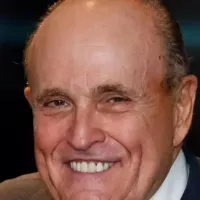
Rudy Giuliani is an American politician and disbarred lawyer best...
India officially the Republic of India is a South Asian...
New Zealand is an island country in the southwestern Pacific...
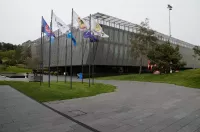
FIFA or the F d ration Internationale de Football Association...
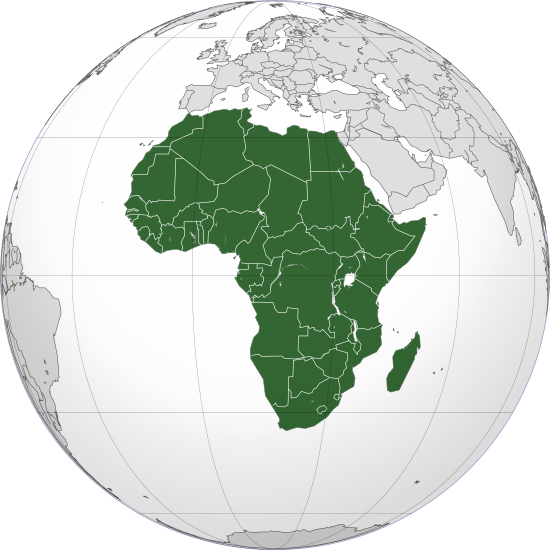
Africa is the second-largest and second-most populous continent home to...
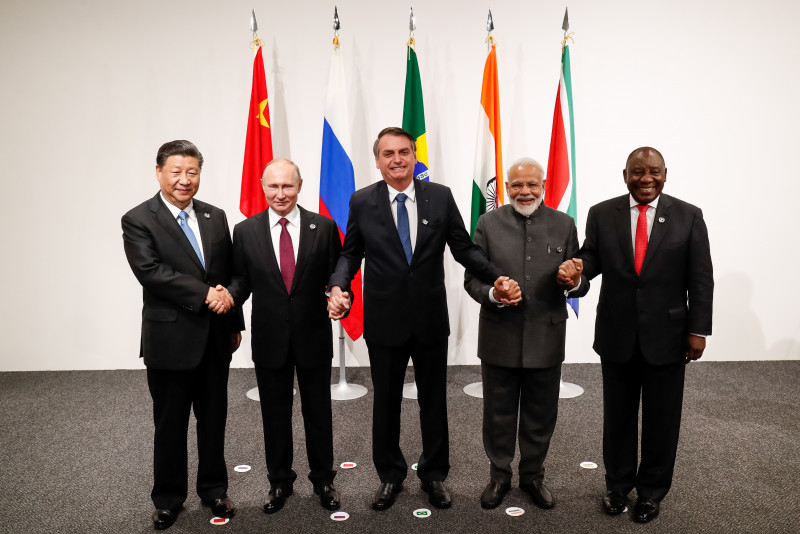
BRICS is an intergovernmental organization composed of Brazil Russia India...
Trending
2 days ago Investors Rotate Assets Away From AI Stocks Towards Healthcare and Bonds
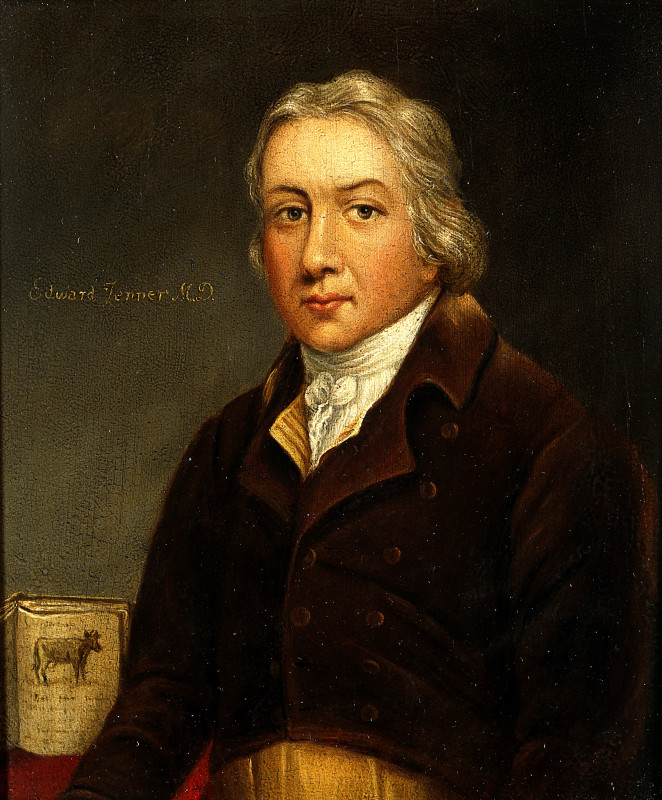
4 hours ago Routine Vaccines May Protect Heart Health Amidst New Federal Policy Controversies

5 hours ago Maria Bartiromo Reportedly Rejected Donald Trump's Offer for White House Press Secretary Position

5 hours ago Rory McIlroy Seeks New Goals Amidst Shifting Dynamics with Rival Patrick Reed
1 day ago Sonay Kartal Advances to Wuhan Open Semi-Finals
6 hours ago Abdul El-Sayed Addresses Sister-in-Law's Terror Watchlist Lawsuit Ahead of Obama Visit
Popular
Ilhan Omar is a prominent American politician currently serving as...

Ken Paxton is an American politician and lawyer serving as...
Elon Musk is a visionary entrepreneur and engineer known for...

Michael Joseph Jackson the King of Pop was a highly...

Jameis Winston is an American football quarterback currently playing for...
Cristiano Ronaldo widely considered one of the greatest footballers captains...