


Zimbabwe is a landlocked country in Southeast Africa, situated between the Zambezi and Limpopo Rivers. It shares borders with South Africa, Botswana, Zambia, and Mozambique. Harare is the capital and largest city, followed by Bulawayo as the second largest.
1922: Referendum of 1922
Southern Rhodesia became a self-governing British colony, subsequent to a 1922 referendum.


September 1923: United Kingdom Annexes Southern Rhodesia
On September 12, 1923, the United Kingdom annexed Southern Rhodesia.
October 1923: First Constitution for Southern Rhodesia
On October 1, 1923, the first constitution for the new Colony of Southern Rhodesia came into force, making it a self-governing British colony.
1923: End of Company Rule
In 1923, company rule ended with the establishment of Southern Rhodesia as a self-governing British colony.
1930: Land Apportionment Act
In 1930, the Land Apportionment Act restricted black land ownership to certain segments of the country, setting aside large areas solely for the purchase of the white minority.
1950: Zimbabwe's Population
In 1950, Zimbabwe had a population of 2,746,396.
1952: Construction of the University of Zimbabwe
In 1952, the University of Zimbabwe, the country's first and largest university, was built in Mount Pleasant, a suburb of Harare.
1953: Purchasing power drops to 1953 levels
By 2005, the purchasing power of the average Zimbabwean had dropped to the same levels in real terms as 1953.
1953: Central African Federation
In 1953, Britain consolidated the two Rhodesias with Nyasaland (Malawi) in the Central African Federation, which Southern Rhodesia dominated.
1956: Publication of Feso
In 1956, the first Shona novel, Feso by Solomon Mutswairo, was published, incorporating the Shona oral tradition.
1960: Name Selection Meeting
In 1960, black nationalists held a meeting to choose an alternative name for the country, proposing names such as "Matshobana" and "Monomotapa" before settling on "Zimbabwe".
1960: Zimbabwe as National Reference
In 1960, the term "Zimbabwe" was first recorded as a term of national reference by black nationalist Michael Mawema.
1961: Zimbabweland reference
In 1961, a letter written by Michael Mawema refers to "Zimbabweland".
1961: Zimbabwe National Party
In 1961, the Zimbabwe National Party became the first to officially use the name Zimbabwe.
1962: Zimbabwe as Preferred Term
By 1962, "Zimbabwe" was sufficiently established as the generally preferred term of the black nationalist movement.
1963: Dissolution of the Federation
In 1963, Britain dissolved the Central African Federation, forming three separate divisions. Southern Rhodesia continued to have minority rule by Europeans.
October 1964: Zambian Independence
Following Zambian independence in October 1964, Ian Smith's Rhodesian Front government in Salisbury dropped the designation "Southern".
November 1965: Unilateral Declaration of Independence
On November 11, 1965, Ian Smith issued a Unilateral Declaration of Independence (UDI) from the United Kingdom.
1965: Unilateral Declaration of Independence
In 1965, the white minority government unilaterally declared independence as Rhodesia, leading to international isolation and a 15-year guerrilla war.
December 1966: First Mandatory Trade Embargo
In December 1966, the United Nations imposed the first mandatory trade embargo on an autonomous state, Rhodesia.
1968: Sanctions Expanded
In 1968, sanctions against Rhodesia were expanded by the United Nations.
1970: Rhodesia Declared a Republic
In 1970, following the results of a referendum the previous year, Smith declared Rhodesia a republic, though it went unrecognised internationally.
1975: Peak in white population
In 1975, the white population in Zimbabwe peaked at around 278,000, or 4.3% of the total population.
March 1978: Internal Settlement Accord
In March 1978, Ian Smith reached an accord with three African leaders, led by Bishop Abel Muzorewa, offering a biracial democracy in exchange for protecting the white population.
April 1979: Elections Held
In April 1979, elections were held as a result of the Internal Settlement, with the United African National Council (UANC) carrying a majority of parliamentary seats.
June 1979: Muzorewa Becomes Prime Minister
On June 1, 1979, Abel Muzorewa became prime minister, and the country's name was changed to Zimbabwe Rhodesia.
December 1979: Reversion to British Colonial Status
On December 11 and 12, 1979, the Rhodesian House of Assembly voted to revert to British colonial status, and Britain formally took control of Zimbabwe Rhodesia as the Colony of Southern Rhodesia. Britain then lifted sanctions.
December 1979: Lancaster House Agreement
On December 21, 1979, delegations from every major interest represented reached the Lancaster House Agreement, effectively ending the guerrilla war. The country would temporarily revert to British rule until an election could be conducted.
1979: Zimbabwe Rhodesia Name
In 1979, Zimbabwe was known as Zimbabwe Rhodesia.
1979: The House of Hunger won the Guardian Fiction Prize
In 1979, the book The House of Hunger by Dambudzo Marechera won the Guardian Fiction Prize in the UK.
April 1980: Zimbabwe's Sovereignty
In April 1980, Zimbabwe achieved de jure sovereignty following a peace agreement that ended international isolation and a 15-year guerrilla war with black rebel forces.
April 1980: Independence of Zimbabwe
On April 11, 1980, Southern Rhodesia became the independent nation of Zimbabwe. Prince Charles granted independence to Zimbabwe in a formal ceremony.
April 1980: Zimbabwe's first independence celebration
On April 18, 1980, Zimbabwe celebrated its first independence at the Zimbabwe Grounds.
1980: First President and Prime Minister
In 1980, Canaan Banana became Zimbabwe's first president, a largely ceremonial role, and Robert Mugabe became the country's first prime minister and head of government.
1980: Robert Mugabe Becomes Prime Minister
In 1980, Robert Mugabe became the Prime Minister of Zimbabwe as his ZANU–PF party won the general election, marking the end of white minority rule. The party has remained the country's dominant party since.
1980: Economic and population statistics
In 1980, Zimbabwe's economy was growing at about five per cent a year, and the population growth was among the highest in Africa at about 3.5 per cent per annum.
1980: Zimbabwe Defence Forces set up after independence
In 1980, following Zimbabwean independence, the Zimbabwe Defence Forces were established by unifying three armed forces: the Zimbabwe African National Liberation Army (ZANLA), the Zimbabwe People's Revolutionary Army (ZIPRA), and the Rhodesian Security Forces (RSF).
1980: School education made free
In 1980, school education was made free in Zimbabwe.
1980: Integration of guerrilla fighters into the Rhodesian armed forces
In early 1980, after majority rule, British Army trainers oversaw the integration of guerrilla fighters into a battalion structure overlaid on the existing Rhodesian armed forces.
1981: Formation of the Fifth Brigade
In 1981, the Fifth Brigade was formed.
April 1982: New Place Names Gazetted
On April 18, 1982, new names for 32 places were gazetted.
1982: Air Marshal Norman Walsh retires
In 1982, Air Marshal Norman Walsh retired and was replaced by Air Marshal Azim Daudpota.
February 1984: 42 Place Name Changes
By February 1984, there had been 42 changes to place names in Zimbabwe, including three rivers and several changes from colonial names.
1985: Air Marshal Azim Daudpota hands over command
In 1985, Air Marshal Azim Daudpota handed over command to Air Chief Marshal Josiah Tungamirai.
1985: Warriors won the Eastern Africa cup
In 1985, The Warriors won the Eastern Africa cup.
1987: Mugabe revises constitution
In 1987, Mugabe revised the constitution, abolishing the ceremonial presidency and the prime ministerial posts to form an executive president.
1987: Mugabe Becomes President
In 1987, Robert Mugabe became the President of Zimbabwe, after converting the country's initial parliamentary system into a presidential one.
1987: Zimbabwe represented at the Rugby World Cup
In 1987, Zimbabwe's national rugby side represented the country at the Rugby World Cup tournament.
1987: End of Gukurahundi
The Gukurahundi campaign officially ended in 1987 after Nkomo and Mugabe reached a unity agreement, merging their parties into the Zimbabwe African National Union – Patriotic Front (ZANU–PF).
1988: Disbandment of the Fifth Brigade
In 1988, the Fifth Brigade was disbanded after the demonstration of mass brutality and murder during the brigade's occupation of Matabeleland.
1988: Government increased school enrollment charges
Since 1988, the government of Zimbabwe has steadily increased the charges attached to school enrollment.
March 1990: Mugabe Victory
Elections in March 1990 resulted in another victory for Mugabe and the ZANU–PF party, which claimed 117 of the 120 contested seats.
1990: Life expectancy
In 1990, the average life expectancy in Zimbabwe was 60 years.
1990: Election results
In the 1990 election, Edgar Tekere's Zimbabwe Unity Movement (ZUM), obtained 20% of the vote.
1991: Zimbabwe represented at the Rugby World Cup
In 1991, Zimbabwe's national rugby side represented the country at the Rugby World Cup tournament.
1991: Establishment of National University of Science and Technology
In 1991, the National University of Science and Technology, the second largest public research university in Zimbabwe, was established in Bulawayo.
1992: Adult literacy rate at 80.4% in census
In the 1992 census, Zimbabwe's adult literacy rate was recorded at 80.4%.
March 1994: Introduction of "Raise the Flag of Zimbabwe" as national anthem
In March 1994, "Raise the Flag of Zimbabwe" was introduced as the national anthem, replacing "Ishe Komborera Africa" after a nationwide competition.
1995: Parliamentary elections boycott
During the 1995 parliamentary elections, most opposition parties, including the ZUM, boycotted the voting.
1995: Government campaigns against homosexuals begin
From 1995, the Zimbabwean government carried out campaigns against both homosexual men and women.
1996: Civil Servants Strike
In 1996, civil servants, nurses, and junior doctors went on strike over salary issues, expressing growing discontent with Mugabe and ZANU–PF party policies.
1997: HIV Pandemic and Land Redistribution
By 1997, an estimated 25% of the population had been infected by HIV. Land redistribution re-emerged as a main issue for the government.
1997: Economic Decline Begins
From 1997, Zimbabwe's economy experienced a consistent decline which included hyperinflation in later years.
1998: HIV/AIDS prevalence rate
By 2016 HIV/AIDS prevalence had been reduced to 13.5% compared to 40% in 1998.
1998: Zimbabwe's involvement in the war in the Democratic Republic of the Congo
From 1998 to 2002 Zimbabwe's involvement in the war in the Democratic Republic of the Congo drained hundreds of millions of dollars from the economy.
1999: Zimbabwe sees the lowest ever economic growth
From 1999 to 2009, Zimbabwe saw the lowest ever economic growth with an annual GDP decrease of 6.1%.
2000: Wildlife decline due to poaching and deforestation
A report in June 2007 estimated that 60% of Zimbabwe's wildlife had died since 2000 as a result of poaching and deforestation.
2000: Airlines pulled out of Zimbabwe
Between 2000 and 2007, several airlines pulled out of Zimbabwe.
2000: Catherine Buckle wrote about Land Reform
In 2000, Catherine Buckle wrote two books, African Tears and Beyond Tears, which tells of the ordeal she went through under the 2000 Land Reform.
2000: Warriors won the Southern Africa championship
In 2000, The Warriors won the Southern Africa championship.
2000: Land reform program damaged the farming sector
In 2000, Zimbabwe's land reform program badly damaged the commercial farming sector. Coffee production came to a virtual halt after seizure or expropriation of white-owned coffee farms.
2000: Fast Track Land Reform Programme
In 2000, the government pressed ahead with its Fast Track Land Reform programme, a policy involving compulsory land acquisition aimed at redistributing land from the minority white population to the majority black population.
2000: Opposition wins seats
In 2000, the opposition returned to the polls and won 57 seats, only five fewer than ZANU-PF.
2000: Threats to education due to economic changes
Since the economic changes in 2000, education in Zimbabwe came under threat due to teacher strikes, student hunger, and soaring uniform prices.
2000: Decline in tourism begins
Since the land reform programme in 2000, tourism in Zimbabwe has steadily declined.
2000: Economy declines
The economy declined from 2000 with a 5% decline that year.
2000: Erosion of gains on the national health
The gains on the national health were eroded by the economic crisis since 2000.
2001: Enactment of Zimbabwe Democracy and Economic Recovery Act (ZDERA)
In 2001, the United States enacted the Zimbabwe Democracy and Economic Recovery Act (ZDERA).
2001: Zimbabwe Democracy and Economic Recovery Act of 2001 (ZDERA)
Since January 2002, the government has had its lines of credit at international financial institutions frozen, through U.S. legislation called the Zimbabwe Democracy and Economic Recovery Act of 2001 (ZDERA).
January 2002: Government credit lines frozen by the U.S.
Since January 2002, the government has had its lines of credit at international financial institutions frozen, through U.S. legislation called the Zimbabwe Democracy and Economic Recovery Act of 2001 (ZDERA).
February 2002: EU places restrictive measures on Zimbabwe
In February 2002, the EU placed targeted or restrictive measures on Zimbabwe. At least 20 government officials were banned from entering Europe, and EU funding was halted.
2002: Tight media restrictions by the government
Between 2002 and 2008, the government imposed tight restrictions on the media due to the economic and political crisis.
2002: Suspension from the Commonwealth and ZDERA effect
In 2002, Zimbabwe was suspended from the Commonwealth of Nations due to farm seizures and election tampering. The Zimbabwe Democracy and Economic Recovery Act (ZDERA) also came into effect in 2002, freezing credit to the Zimbabwean government.
2002: Passage of Access to Information and Protection of Privacy Act
In 2002, the Access to Information and Protection of Privacy Act was passed, leading to the shutdown of privately owned news outlets, including Daily News.
2002: Earlier Science and Technology Policy
In June 2012, Zimbabwe's Second Science and Technology Policy was launched and replaces the earlier Science and Technology Policy dating from 2002.
2002: Adult literacy rate at 97.0% in census
In the 2002 census, Zimbabwe's adult literacy rate was recorded at 97.0%.
2002: Presidential election amid vote-rigging allegations
Presidential elections were held again in 2002 amid allegations of vote-rigging, intimidation, and fraud.
2003: Economic Collapse
By 2003, Zimbabwe's economy had collapsed, leading to the emigration of approximately a quarter of its population, with the majority of those remaining living in poverty.
2003: General Constantine Chiwenga appointed Commander of the Zimbabwe Defence Forces
In 2003, General Constantine Chiwenga was promoted and appointed Commander of the Zimbabwe Defence Forces. Lieutenant General P. V. Sibanda replaced him as Commander of the Army.
2003: Warriors won the Southern Africa championship
In 2003, The Warriors won the Southern Africa championship.
2003: Implementation of the Targeted Sanctions Program
In 2003, the Targeted Sanctions Program was implemented in the United States, listing Zimbabwean companies and people who are not allowed to deal with U.S. companies.
2004: Warriors qualified for the Africa Cup of Nations
In 2004, The Warriors qualified for the Africa Cup of Nations.
2005: Start of Operation Murambatsvina
In 2005, Mugabe's slum clearance programme called Operation Murambatsvina began.
2005: Warriors won the Southern Africa championship
In 2005, The Warriors won the Southern Africa championship.
2005: ICRISAT assists farmers with conservation agriculture
In 2005, the International Crops Research Institute for the Semi-Arid Tropics began assisting Zimbabwe's farmers in adopting conservation agriculture techniques.
2005: Split in the MDC
In 2005, the MDC split into two factions: the Movement for Democratic Change – Mutambara (MDC-M) and the Movement for Democratic Change – Tsvangirai (MDC-T).
2005: Government overtures to white farmers
In 2005, the Zimbabwean government, led by central bank governor Gideon Gono, started making overtures that white farmers could come back.
2005: Parliamentary elections amid fraud claims
The 2005 Zimbabwe parliamentary elections were held on 31 March, and multiple claims of vote rigging, election fraud and intimidation were made by the Movement for Democratic Change party and Jonathan Moyo, calling for investigations into 32 of the 120 constituencies.
2005: Reinstatement of the Senate
Under the constitutional changes in 2005, an upper chamber, the Senate, was reinstated in Zimbabwe.
2006: Re-formation of the Fifth Brigade
By 2006, the Fifth Brigade had been re-formed.
2006: Doctors call for assistance to health service
In 2006 an association of doctors in Zimbabwe made calls for Mugabe to make moves to assist the ailing health service.
2006: Warriors qualified for the Africa Cup of Nations
In 2006, The Warriors qualified for the Africa Cup of Nations.
2006: Lowest life expectancies in the world
In 2006, Zimbabwe had one of the lowest life expectancies in the world according to UN figure—44 for men and 43 for women.
2006: Britons of Rhodesian or Zimbabwean origin
In 2006, it was estimated that between 200,000 and 500,000 resident Britons were of Rhodesian or Zimbabwean origin.
2006: Discovery of Marange diamond fields
In 2006, the Marange diamond fields were discovered and considered the biggest diamond find in over a century.
2006: MDC congresses
In 2006, the two MDC camps had their congresses, with Tsvangirai being elected to lead MDC-T.
January 2007: Government issues long-term leases to some white farmers, while demanding others vacate
In January 2007, the Zimbabwean government issued long-term leases to some white farmers. At the same time, however, the government also continued to demand that all remaining white farmers, who were given eviction notices earlier, vacate the land or risk being arrested.
March 2007: Crackdown on MDC rally
In March 2007, there was a crackdown by the police force on an MDC rally.
June 2007: Zimbabwe Conservation Task Force report on wildlife decline
In June 2007, the Zimbabwe Conservation Task Force released a report estimating that 60% of Zimbabwe's wildlife had died since 2000 as a result of poaching and deforestation.
2007: British Airways suspended flights to Harare
In 2007, British Airways suspended all direct flights to Harare.
2007: EU funding to Zimbabwe cancelled
Prior to the 2002 elections, there was $128 million that was budgeted for the Zimbabwean government from 2002 to 2007, this was cancelled.
2007: 20,000 teachers left Zimbabwe since 2007
Since 2007, the education department stated that 20,000 teachers have left Zimbabwe.
March 2008: Presidential and parliamentary election
On 29 March 2008, Zimbabwe held a presidential and parliamentary election where the Movement for Democratic Change – Tsvangirai (MDC-T) gained a majority in the lower house of parliament.
April 2008: MDC formations co-operating
On 28 April 2008, Tsvangirai and Mutambara announced that the two MDC formations were co-operating.
June 2008: Tsvangirai pulls out of presidential run-off
On 22 June 2008, citing the continuing unfairness of the process, Tsvangirai pulled out of the presidential run-off, the election commission held the run-off, and President Mugabe received a landslide majority.
August 2008: Cholera epidemic strikes Zimbabwe
In August 2008 large areas of Zimbabwe were struck by the ongoing cholera epidemic.
August 2008: Hyperinflation reaches estimated high
In August 2008, inflation reached an estimated high of 11,200,000% according to the Central Statistical Office, leading to the introduction of a new 100 trillion dollar note.
September 2008: Power-sharing agreement
In September 2008, a power-sharing agreement was reached between Morgan Tsvangirai and President Mugabe.
November 2008: Hospital operations shut down
At the end of November 2008, some operations at three of Zimbabwe's four major referral hospitals had shut down, along with the Zimbabwe Medical School.
November 2008: Misappropriation of funds
In November 2008, the government of Zimbabwe spent US$7.3 million donated by The Global Fund to Fight AIDS, Tuberculosis and Malaria for unintended purposes.
December 2008: Cholera outbreak spreads
By December 2008 more than 10,000 people had been infected in all but one of Zimbabwe's provinces, and the outbreak had spread to Botswana, Mozambique, South Africa and Zambia.
2008: Tight media restrictions by the government
Between 2002 and 2008, the government imposed tight restrictions on the media due to the economic and political crisis.
2008: Crackdowns on opposition gatherings during election campaign
In 2008, there were several crackdowns on opposition gatherings during the election campaign.
2008: Mugabe admits opposition win in 2008 polls
In December 2014, President Robert Mugabe admitted that the opposition had won the 2008 polls by 73%.
2008: Crisis in Zimbabwe
In late 2008, Zimbabwe faced a crisis involving living standards and public health, including a cholera outbreak in December. NGOs took over providing food during a period of food insecurity.
2008: Hyperinflation
The Zimbabwean economy was experiencing hyperinflation. After 2008, the economy saw rapid growth after the use of currencies other than the Zimbabwean dollar was permitted.
January 2009: Zimbabweans permitted to use other currencies
In January 2009, acting Finance Minister Patrick Chinamasa announced that Zimbabweans would be permitted to use other, more stable currencies to do business, alongside the Zimbabwean dollar.
February 2009: Tsvangirai sworn in as prime minister
On 11 February 2009, Tsvangirai was sworn in as prime minister by Mugabe.
February 2009: Implementation of the power-sharing agreement
On 13 February 2009, the power-sharing agreement between Morgan Tsvangirai and President Mugabe was fully implemented.
February 2009: Introduction of the multi-currency system
The situation changed drastically after the Unity Government and the introduction of the multi-currency system in February 2009.
March 2009: Cholera cases recorded
By 9 March 2009 The World Health Organization estimated that 4,011 people had succumbed to the waterborne disease since the outbreak began, and the total number of cases recorded had reached 89,018.
April 2009: Zimbabwean dollar suspended indefinitely
In April 2009, in an effort to combat inflation and foster economic growth, the Zimbabwean dollar was suspended indefinitely.
2009: Zimbabwean economy rebounds
After the formation of the Unity Government and the adoption of several currencies instead of the Zimbabwe dollar in 2009, the Zimbabwean economy rebounded.
2009: Zimbabwe sees the lowest ever economic growth
From 1999 to 2009, Zimbabwe saw the lowest ever economic growth with an annual GDP decrease of 6.1%.
2009: HIV infection rate
In 2009 the HIV infection rate in Zimbabwe was estimated to be 14% for people aged 15–49.
2009: Allegations of crimes against humanity by Mugabe government
In 2009, Gregory Stanton, president of the International Association of Genocide Scholars, stated there was "clear evidence that Mugabe government was guilty of crimes against humanity and that there was sufficient evidence of crimes against humanity to bring Mugabe to trial in front of the International Criminal Court."
2009: Warriors won the Southern Africa championship
In 2009, The Warriors won the Southern Africa championship.
2009: Improvement in humanitarian situation
In 2009, the United Nations Office for the Coordination of Humanitarian Affairs reported that the humanitarian situation in Zimbabwe had improved, but conditions remained precarious.
2009: Under five mortality rate
The under five mortality rate, per 1,000 births was 94 in 2009.
May 2010: Licensing of privately owned newspapers
In May 2010, the Zimbabwe Media Commission licensed three privately owned newspapers, including the previously banned Daily News, for publication.
June 2010: NewsDay became the first independent daily newspaper
In June 2010, NewsDay became the first independent daily newspaper to be published in Zimbabwe in seven years.
November 2010: IMF describes Zimbabwean economy as buoyant
In November 2010, the International Monetary Fund described the Zimbabwean economy as "completing its second year of buoyant economic growth".
December 2010: Mugabe threatens expropriation
By December 2010, Mugabe threatened to expropriate remaining privately owned companies in Zimbabwe unless "western sanctions" were lifted.
2010: Adult literacy rate at 92% by UNDP
In 2010, the United Nations Development Programme (UNDP) recorded Zimbabwe's adult literacy rate at 92%.
2010: Maternal mortality rate
The 2010 maternal mortality rate per 100,000 births for Zimbabwe was 960.
February 2011: IMARA releases favorable report on investment prospects in Zimbabwe
In February 2011, the pan-African investment bank IMARA released a favourable report on investment prospects in Zimbabwe, citing an improved revenue base and higher tax receipts.
2011: Increase in smallholders practicing conservation agriculture
Between 2005 and 2011, the number of smallholders practicing conservation agriculture in Zimbabwe increased from 5,000 to more than 150,000.
2011: Improvement in living conditions
In 2011, a survey by Freedom House suggested that living conditions had improved since the power-sharing agreement.
February 2012: Air Zimbabwe ceased operations
In February 2012, Air Zimbabwe, the country's flagship airline, ceased operations.
June 2012: Second Science and Technology Policy launched
In June 2012, Zimbabwe's Second Science and Technology Policy was launched, after being elaborated with UNESCO assistance. It replaces the earlier policy dating from 2002.
2012: WHO on access to water and sanitation
According to the World Health Organization in 2012, 80% of Zimbabweans had access to improved drinking water sources, and only 40% had access to improved sanitation facilities.
2012: GDP grows by 8-9% per year
After the formation of the Unity Government and the adoption of several currencies instead of the Zimbabwe dollar in 2009, between 2009 and 2012 GDP grew by 8–9% per year.
2012: Students completing degrees abroad
In 2012, more than 22% of Zimbabwean tertiary students were completing their degrees abroad.
2012: UN report on humanitarian situation
In 2012, the United Nations Office for the Coordination of Humanitarian Affairs stated in its 2012–2013 planning document that the "humanitarian situation has improved in Zimbabwe since 2009, but conditions remain precarious for many people".
2012: End of ZBC monopoly in broadcasting
In 2012, the Zimbabwe Broadcasting Corporation's (ZBC) monopoly in the broadcasting sector was ended with the licensing of two private radio stations.
2012: Potato declared a national strategic food security crop
In 2012, the government declared potato a national strategic food security crop.
2012: Researchers employed in public sector
In 2012, there were 200 researchers employed in the public sector, one-quarter of whom were women.
2012: Miss Heritage Zimbabwe contest held annually since 2012
Since 2012, Zimbabwe has held a national beauty pageant, the Miss Heritage Zimbabwe contest, annually.
January 2013: Finance ministry reports $217 in treasury
In January 2013, the Zimbabwean finance ministry reported that they had only $217 in their treasury.
July 2013: Mugabe re-elected
In the July 2013 Zimbabwean general election, Mugabe was re-elected president, in an election described as "rigged" by The Economist and "stolen" by the Daily Telegraph.
2013: We Need New Names shortlisted for the Booker Prize
In 2013, NoViolet Bulawayo's novel We Need New Names was shortlisted for the Booker Prize. The novel was inspired by a photograph of a child who lost their home in Operation Murambatsvina.
2013: Abolition of semi-presidential system
In 2013, Zimbabwe abolished the semi-presidential system with the adoption of a new constitution after a referendum.
2013: Adult literacy rate at 90.70%
In 2013, Zimbabwe's adult literacy rate was recorded at 90.70%, according to data available at the time.
2013: UN report on humanitarian situation
In 2013, the United Nations Office for the Coordination of Humanitarian Affairs stated in its 2012–2013 planning document that the "humanitarian situation has improved in Zimbabwe since 2009, but conditions remain precarious for many people".
2013: Continental average of researchers in the public sector
In 2013, the continental average of researchers employed in the public sector was 91.
2013: Less political interference in the media
Since the appointment of a new media and information minister in 2013, the media has faced less political interference.
October 2014: Metallon Corporation Zimbabwe's largest gold miner
As of October 2014, Metallon Corporation was Zimbabwe's largest gold miner.
December 2014: Mugabe admits opposition win in 2008 polls
In December 2014, President Robert Mugabe admitted that the opposition had won the 2008 polls by 73%.
2014: Zimbabwe recovers to 1990s levels
By 2014, Zimbabwe had recovered to levels seen in the 1990s but growth faltered between 2012 and 2016.
2014: Publications in Internationally Cataloged Journals
In 2014, Zimbabwe counted 21 publications per million inhabitants in internationally cataloged journals, according to Thomson Reuters' Web of Science (Science Citation Index Expanded).
2014: UN Report on women's rights
In 2014, a UN report found that deep-rooted cultural issues, patriarchal attitudes, and religious practices negatively impacted women's rights and freedoms in Zimbabwe.
2014: Marange diamond field production
In 2014, the Marange field was estimated to have produced 12 million carats worth over $350 million.
2014: Maternal mortality rate
The 2014 maternal mortality rate per 100,000 births for Zimbabwe was 614.
2015: Zimbabwe's gold production
In 2015, Zimbabwe's gold production reached 20 metric tonnes.
2015: Life expectancy recovered
Life expectancy in Zimbabwe recovered to 60 in 2015.
July 2016: Nationwide protests
In July 2016, nationwide protests took place in Zimbabwe due to the economic collapse.
December 2016: IFRC case study on gender violence
In December 2016, the International Federation of Red Cross and Red Crescent Societies conducted a case study which determined sex and gender based violence against women and girls was increasing in areas that had experienced disasters.
2016: Decline in wheat production
Between 2000 and 2016, there was a decline in annual wheat production from 250,000 tons to 60,000 tons.
2016: Growth falters
By 2014, Zimbabwe had recovered to levels seen in the 1990s but growth faltered between 2012 and 2016.
2016: HIV/AIDS prevalence reduced
By 2016 HIV/AIDS prevalence had been reduced to 13.5% compared to 40% in 1998.
2016: Remaining white-owned farms
By 2016, there remained about 300 of the original 4,500 farms owned by white farmers.
2016: Zimbabwe allows trade in the US dollar and various other currencies
In 2016, Zimbabwe allowed trade in the United States dollar and various other currencies such as the rand (South Africa), the pula (Botswana), the euro, and the pound sterling (UK).
2016: Hypothetical GDP calculation
In 2016, Zimbabwe would have had a GDP of US$52 billion if the 1980 growth rate had been maintained. Instead, it had a formal sector GDP of only US$14 billion.
2016: Tourism Contribution to Zimbabwe's GDP
In 2016, the total contribution of tourism to Zimbabwe was $1.1 billion (USD), or about 8.1% of Zimbabwe's GDP.
2016: Midwives per 1,000 live births
The number of midwives per 1,000 live births was unavailable in 2016.
November 2017: Coup takes place
In November 2017, a coup took place, ending Mugabe's 30-year presidential incumbency.
November 2017: Coup d'état and Mugabe's removal
In November 2017, the army led a coup d'état, placing Mugabe under house arrest, and ZANU–PF sacked Mugabe as party leader, replacing him with Emmerson Mnangagwa. Mugabe resigned on 21 November 2017.
December 2017: Report on cost of Mugabe era
In December 2017, Zimbabwe News reported on the economic cost of the Mugabe era, estimating a US$38 billion loss in potential economic growth and significant population discrepancies.
2017: Inter Censal Demography Survey on religion
According to the 2017 Inter Censal Demography Survey by the Zimbabwe National Statistics Agency, 84% of Zimbabweans are Christian, 10% do not belong to any religion, and 0.7% are Muslim.
2017: Airlines resumed flights to Zimbabwe
As of 2017, several major commercial airlines had resumed flights to Zimbabwe.
2017: Portuguese included in secondary education
Beginning in 2017, teaching Portuguese was included in secondary education of Zimbabwe.
2017: Warriors qualified for the Africa Cup of Nations and won the Southern Africa championship
In 2017, The Warriors qualified for the Africa Cup of Nations and won the Southern Africa championship.
2017: Institute for Security Studies (ISS) study on corruption
In 2017, a study by the Institute for Security Studies (ISS) concluded that the deterioration of government and the economy led to increased corruption.
2017: Mugabe's Resignation
In 2017, following over a year of protests and Zimbabwe's rapidly declining economy, a coup d'état resulted in Robert Mugabe's resignation. Emmerson Mnangagwa has since served as Zimbabwe's president.
2017: Coup against Robert Mugabe
In 2017, the coup against Robert Mugabe occurred.
July 2018: General elections
On 30 July 2018, Zimbabwe held its general elections, which were won by the ZANU-PF party led by Mnangagwa. Nelson Chamisa contested the results but the court confirmed Mnangagwa's victory.
2018: New ZIDERA comes into effect
A new Zimbabwe Democracy and Economic Recovery Act (ZIDERA) came into effect in 2018 with the motto: "Restore Democracy or there won't be any friendship, there must be free elections, free media and human rights, Zimbabwe must enforce the ruling of the SADC Tribunal".
2018: Current population
As of 2018, the population of Zimbabwe is about 13 million.
2018: Mnangagwa elected president
In 2018, Emmerson Mnangagwa was officially elected president with 50.8% of the vote in the Zimbabwean general election.
2018: Rejoining the Commonwealth
In 2018, President Mnangagwa announced that his government would seek to rejoin the Commonwealth.
2018: Warriors won the Southern Africa championship
In 2018, The Warriors won the Southern Africa championship.
March 2019: EU channels money through NGOs as seen during Cyclone Idai
The government channels money through NGOs as it was seen on 4 March 2019 – 21 March 2019 during Cyclone Idai.
June 2019: Inflation rate reaches 175%
In June 2019, the Zimbabwean inflation rate reached 175%, leading to mass unrest across the country.
2019: Warriors qualified for the Africa Cup of Nations
In 2019, The Warriors qualified for the Africa Cup of Nations.
2019: Elephant deaths due to drought
In 2019, at least 55 elephants died in Zimbabwe because of drought.
July 2020: UN expresses concerns over suppression of freedom of expression in Zimbabwe
On 24 July 2020, the Office of the United Nations High Commissioner for Human Rights (OHCHR) expressed concerns that Zimbabwean authorities may have used the COVID-19 crisis as a pretext to suppress freedom of expression and peaceful assembly.
July 2020: Government criticized for internet shutdowns
The Zimbabwean government received negative feedback in July 2020 for shutting down the internet amid planned protests.
August 2020: #ZimbabweanLivesMatter campaign
In August 2020, the #ZimbabweanLivesMatter campaign on Twitter drew the attention of international celebrities and politicians towards human rights abuses in Zimbabwe.
2020: This Mournable Body shortlisted for the Booker Prize
In 2020, Tsitsi Dangarembga's novel, This Mournable Body, was shortlisted for the Booker Prize.
March 2021: U.S. renews sanctions on Zimbabwe
In March 2021, the U.S. renewed its sanctions on Zimbabwe.
2021: Zimbabwean media ranked 130th out of 180
In 2021, Reporters Without Borders ranked the Zimbabwean media as 130th out of 180, noting improvements but continued attacks and arrests of journalists.
2021: Warriors qualified for the Africa Cup of Nations
In 2021, The Warriors qualified for the Africa Cup of Nations.
2021: Zimbabwe's Estimated Population
In 2021, based on the 2022 revision of the World Population Prospects, the population of Zimbabwe was estimated by the United Nations at 15,993,524.
2022: Census report shows the population is primarily of African origin
According to the 2022 census report, 99.6% of the population is of African origin.
2022: World Population Prospects revision
In 2022, the World Population Prospects were revised estimating the population of Zimbabwe in 2021.
2022: Team is ranked 68th
In 2022, the Zimbabwe national football team was ranked 68th.
2022: Census lists the total white population
The 2022 census lists the total white population at 24,888 (roughly 0.16% of the population), one-eleventh of its peak.
July 2023: President supports Russia in Russo-Ukrainian war
In July 2023, Zimbabwean President Emmerson Mnangagwa voiced support for Russia in the Russo-Ukrainian war.
August 2023: Mnangagwa wins second term
In August 2023, President Emmerson Mnangagwa won a second term in an outcome of the election rejected by the opposition and questioned by observers.
September 2023: Land control signed to Blue Carbon
In September 2023, Zimbabwe signed control over almost 20% of the country's land to the carbon offset company Blue Carbon.
2023: Fact-finding mission by the Commonwealth
As of 2023, the Commonwealth is conducting a fact-finding mission prior to asking the Secretary-General to issue a recommendation regarding Zimbabwe's rejoining.
2024: Country Demographics
In 2024, Zimbabwe is estimated to have a population of roughly 16.9 million people. The Shona ethnic group makes up 80% of the population, followed by the Northern Ndebele and other smaller minorities. Zimbabwe has 16 official languages, with English, Shona, and Ndebele being the most common. Zimbabwe is a member of the United Nations, the Southern African Development Community, the African Union, and the Common Market for Eastern and Southern Africa.
2025: Zimbabwe's Global Innovation Index Ranking
Zimbabwe was ranked 129th in the Global Innovation Index in 2025.
Mentioned in this timeline
The United States of America is a federal republic primarily...
CNN Cable News Network is an American multinational news media...

The Guardian is a British daily newspaper founded in as...
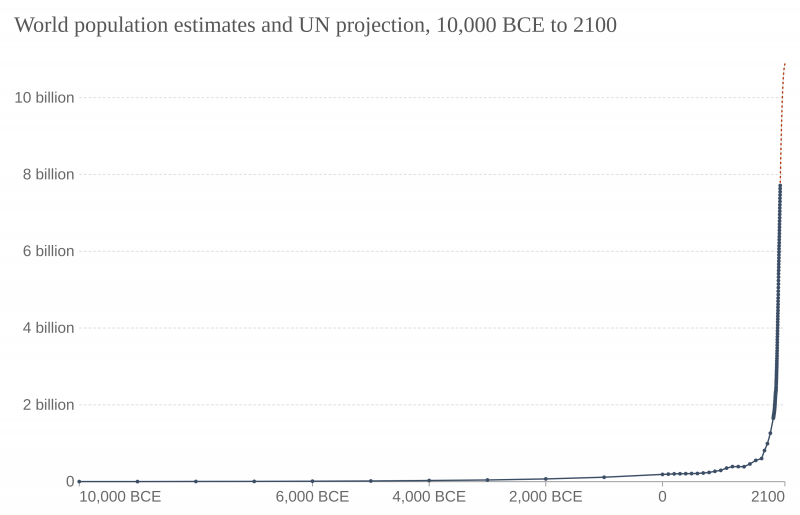
The world population the total number of living humans surpassed...
The rapid advancement of artificial intelligence continues to dominate the...
Inflation in economics signifies a rise in the average price...
Trending

4 hours ago Paris Hilton Hosts Alice + Olivia Breast Cancer Awareness Charity Event
20 hours ago JD Vance Faces Scrutiny Over Iran War Stance and Policy Disagreements

4 hours ago Travis Hunter Scores First Touchdown of 2026 Season in London Game
4 hours ago NYC Dogs Dress Up in Spooky Costumes for Annual Tompkins Square Halloween Parade

3 months ago Timothy Olyphant Discusses Deadwood Legacy and Unique Personal Lifestyle Choices

6 hours ago Christian Kirk Nears Return to Injury-Stricken 49ers Roster
Popular
Ilhan Omar is a prominent American politician currently serving as...

Ken Paxton is an American politician and lawyer serving as...

Elon Musk is a visionary entrepreneur and engineer known for...

Jameis Winston is an American football quarterback currently playing for...

Michael Joseph Jackson the King of Pop was a highly...

Cristiano Ronaldo widely considered one of the greatest footballers captains...