Rise to Success: Career Highlights of John Foster Dulles


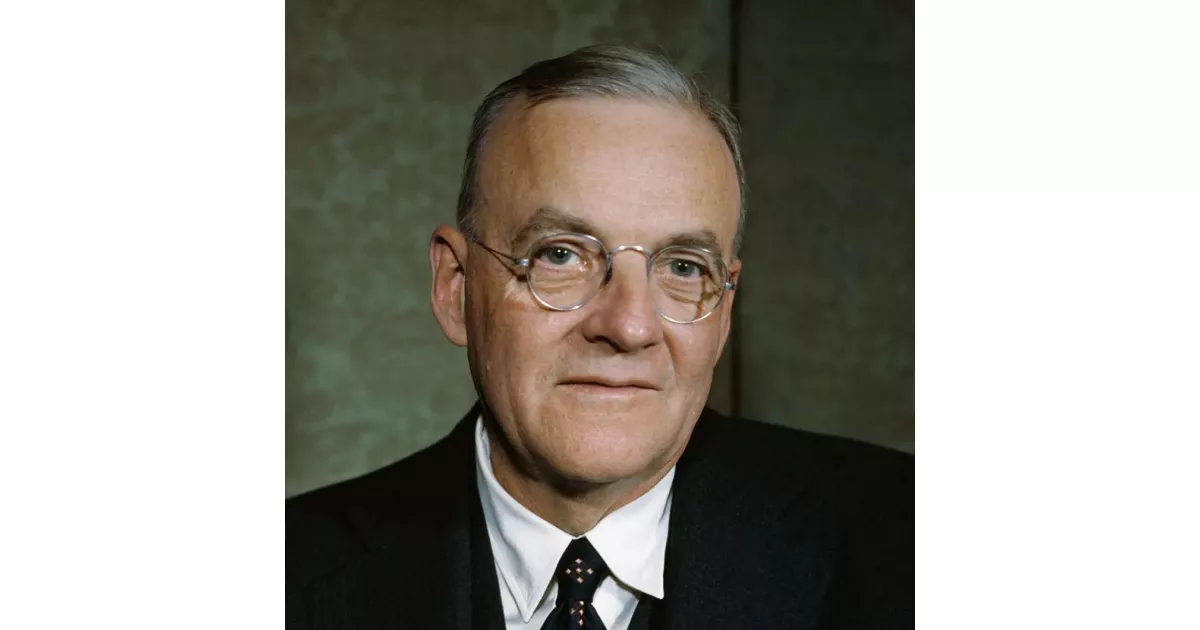
How John Foster Dulles built a successful career. Explore key moments that defined the journey.
John Foster Dulles was a prominent American diplomat and politician, serving as Secretary of State under President Dwight D. Eisenhower during the Cold War. Known for his staunch anti-communism, Dulles advocated a policy of 'brinkmanship,' pushing the Soviet Union to the edge of war to deter aggression. He championed the 'domino theory,' fearing the spread of communism across Southeast Asia, and played a key role in forming alliances like SEATO to contain Soviet influence. His strategies significantly shaped U.S. foreign policy during a critical period of global tension.
1935: Trustee of Rockefeller Foundation
From 1935 to 1952, John Foster Dulles served as a trustee of the Rockefeller Foundation.


1944: Foreign policy advisor in elections
During the 1944 and the 1948 campaigns, Dulles served as Dewey's chief foreign policy adviser. In 1944, Dulles took an active role in establishing the Republican plank calling for the establishment of a Jewish commonwealth in The British Mandate for Palestine.
1944: Chief Foreign Policy Advisor
In 1944, Dulles served as the chief foreign policy advisor to Thomas E. Dewey, who was the Republican presidential nominee.
1945: Participation in the San Francisco Conference
In 1945, Dulles participated in the San Francisco Conference as an advisor to Arthur H. Vandenberg and helped draft the preamble to the United Nations Charter.
1946: United Nations General Assembly
In 1946, Dulles attended the United Nations General Assembly as a United States delegate.
1947: Delegate to the United Nations General Assembly
In 1947, Dulles attended the United Nations General Assembly as a United States delegate.
1948: Foreign Policy Advisor for Dewey's Presidential Campaign
In 1948, John Foster Dulles continued as the chief foreign policy advisor to Thomas E. Dewey, the Republican presidential nominee, during his presidential campaign.
1948: Republican Presidential Nominee
In the elections of 1944 and 1948, Dulles was an associate of Governor Thomas E. Dewey of New York, who became the Republican presidential nominee. During the 1944 and the 1948 campaigns, Dulles served as Dewey's chief foreign policy adviser.
November 8, 1949: Lost Special Election
On November 8, 1949, Dulles lost the special election to finish the term to Democratic nominee Herbert H. Lehman.
1949: Appointment as U.S. Senator
In 1949, Dulles was appointed as a U.S. Senator for New York by Dewey.
1950: Special Advisor to President Truman
From 1950 to 1952, Dulles became a special advisor to President Harry S. Truman, focusing on the Indo-Pacific region.
1950: United Nations General Assembly
In 1950, Dulles attended the United Nations General Assembly as a United States delegate.
1950: Publication of War or Peace
In 1950, Dulles published War or Peace, a critical analysis of the American policy of containment, advocating instead a policy of liberation.
1951: Initiation of ANZUS Treaty
In 1951, Dulles helped initiate the ANZUS Treaty for mutual protection with Australia and New Zealand.
1952: Architect of Treaties
From 1950 to 1952, John Foster Dulles was the primary architect of the Treaty of San Francisco, which ended World War II in Asia, the U.S.–Japan Security Treaty, which established the U.S.–Japan Alliance, and the ANZUS security treaty between Australia, New Zealand, and the United States.
1952: End of Rockefeller Foundation Trusteeship
In 1952, John Foster Dulles concluded his service as a trustee of the Rockefeller Foundation, a role he had held since 1935.
January 1953: Appointment as Secretary of State
In January 1953, Dulles was appointed and confirmed as Secretary of State, marking the beginning of his tenure under President Eisenhower, during which he strongly opposed communism and favored military build-up and alliances.
1953: Planning of Guatemalan Coup
In 1953, John Foster Dulles participated in planning a military coup in Guatemala, claiming President Jacobo Árbenz's government was veering towards communism.
1953: Appointment as Secretary of State
In 1953, President Eisenhower appointed Dulles as Secretary of State.
1954: Creation of SEATO
In 1954, John Foster Dulles designed the Southeast Asia Treaty Organization (SEATO), which provided for collective action against aggression and was signed by several nations.
1954: Involvement in Guatemalan Coup d'état
In 1954, John Foster Dulles helped instigate the Guatemalan coup d'état.
1954: Instigation of Guatemalan Coup
In 1954, John Foster Dulles instigated a military coup by the Guatemalan army through the CIA, alleging the democratically elected President Jacobo Árbenz's government was turning communist; Dulles had previously been a lawyer for United Fruit Company.
1954: Geneva Conference and Vietnam Partition
In 1954, at the Geneva Conference, John Foster Dulles forbade contact with the Chinese delegation, refused to shake hands with Zhou Enlai, and opposed the plan to partition Vietnam, leading to the conference's failure to resolve the conflict.
November 1956: Opposition to Suez Canal Invasion
In November 1956, John Foster Dulles strongly opposed the Anglo-French invasion of the Suez Canal zone, after Egypt's nationalization of the canal; he was hospitalized and unable to participate in decision-making during the crucial days.
1957: Renegotiation of U.S.-Japan Security Treaty
From 1957 to 1959, John Foster Dulles oversaw the renegotiation of a revised version of the U.S.–Japan Security Treaty, after resisting revision for many years.
1958: Opposition to Gamal Abdel Nasser
By 1958, John Foster Dulles became an outspoken opponent of Egyptian President Gamal Abdel Nasser, preventing Nasser's government from receiving arms from the United States, which subsequently allowed the Soviet Union to gain influence in Egypt.
1958: Threat of Nuclear Weapons Against China
In 1958, John Foster Dulles authorized the Secretary of the Air Force to publicly state that the United States was prepared to use nuclear weapons in a conflict with China over Quemoy and Matsu islands.
April 15, 1959: Resignation from Office
Due to declining health and evidence of bone metastasis from colon cancer, John Foster Dulles resigned from office on April 15, 1959.
1959: Renegotiation of U.S.-Japan Security Treaty
From 1957 to 1959, John Foster Dulles oversaw the renegotiation of a revised version of the U.S.–Japan Security Treaty, after resisting revision for many years.
1959: Resignation from Secretary of State
In 1959, Dulles resigned from his position as Secretary of State due to cancer.
Mentioned in this timeline
The United States of America is a federal republic primarily...
The Union of Soviet Socialist Republics USSR existed from to...
New Zealand is an island country in the southwestern Pacific...
San Francisco is the fourth-most populous city in California and...
China officially the People's Republic of China PRC is located...
Japan is an East Asian island country located in the...
Trending

4 hours ago Elena Rybakina Faces Leylah Fernandez in Ningbo Open Tennis Final
4 hours ago Report Reveals Trump Administration Deportation Figures Amidst Immigration Policy Analysis
5 hours ago Israel Considers Cryptocurrency Use to Counter Potential Economic Sanctions
6 hours ago WWE Legend Ric Flair Hospitalized Following Fall and Blood Clot Procedure

6 hours ago Ana de Armas Stuns in Louis Vuitton at Academy Museum Gala

7 hours ago Zendaya Launches Oscar Campaign for Best Actress Role in Dune 3
Popular
Ilhan Omar is a prominent American politician currently serving as...
Ken Paxton is an American politician and lawyer serving as...
Elon Musk is a visionary entrepreneur and engineer known for...
Michael Joseph Jackson the King of Pop was a highly...

Elizabeth Holmes is an American entrepreneur and the founder of...
Barack Obama the th U S President - was the...