


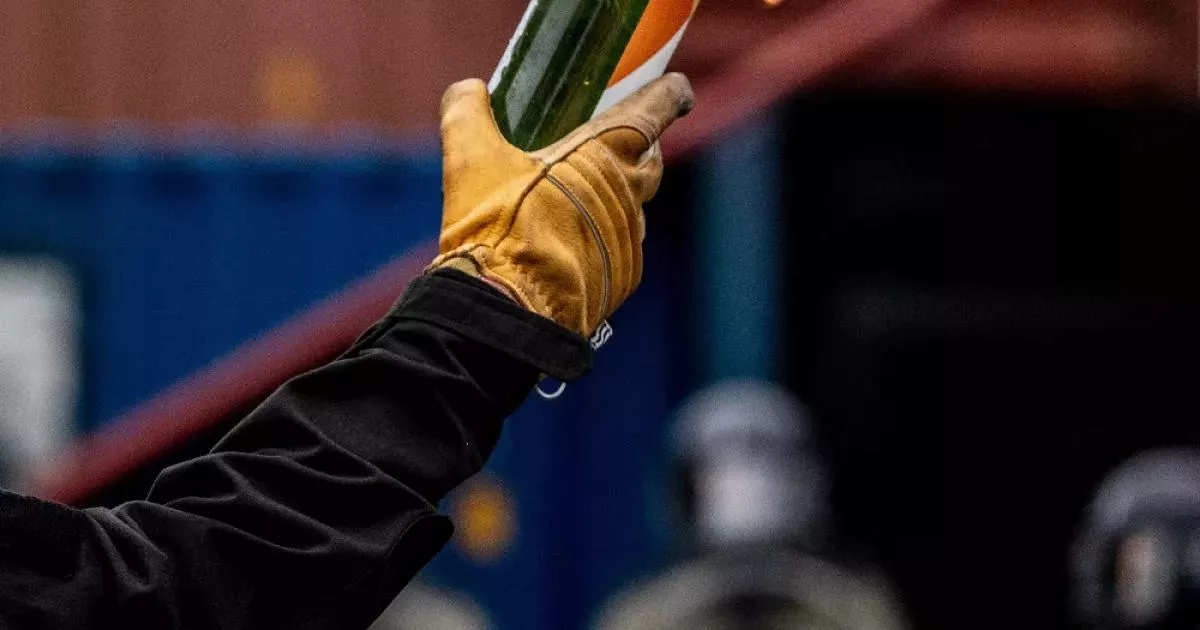
A Molotov cocktail is a simple incendiary weapon. It comprises a breakable container filled with a flammable substance, such as gasoline, and a fuse that is lit before throwing. Upon impact, the container shatters, and the ignited fuel spreads fire. It is cheap and easily made, they've been used in street fighting, guerrilla warfare, and other conflict situations.
July 1936: First Use of Improvised Incendiary Devices in the Spanish Civil War
In July 1936, during the Spanish Civil War, General Francisco Franco ordered Spanish Nationalist forces to deploy improvised incendiary devices against Soviet T-26 tanks supporting the Spanish Republicans in an assault on Seseña. These devices preceded what would later be known as "Molotov cocktails".


April 1939: Continued Use of Petrol Bombs in the Spanish Civil War until April 1939
Until April 1939, both sides of the Spanish Civil War continued to employ simple petrol bombs, ignited with toxic gas or petrol-soaked blankets, achieving some success in combat.
November 1939: Finnish Refinement of the Petrol Bomb Design during the Winter War in November 1939
In November 1939, at the start of the Winter War, the Finnish perfected the design and tactical use of the petrol bomb, including refining the fuel mixture with alcohol, kerosene, tar, and potassium chlorate. They also developed wind-proof matches or chemical phials for ignition and found that leaving the bottle partially empty improved breakage.
1939: Use of Gasoline-Filled Bottles by Japanese Infantry in the Battle of Khalkhin Gol
In 1939, during the Battle of Khalkhin Gol, Japanese infantry, lacking anti-tank equipment, attacked Soviet tanks using gasoline-filled bottles. Japanese infantrymen claimed to have destroyed hundreds of Soviet tanks this way, however, Soviet loss records do not corroborate this claim.
1939: Coining of the name "Molotov cocktail"
In 1939, during the Winter War, Finnish forces coined the name "Molotov cocktail" as a pejorative reference to Soviet foreign minister Vyacheslav Molotov, who was one of the architects of the Molotov–Ribbentrop Pact.
April 1940: Norwegian Army's Use of "Hitler Cocktails" in April 1940
During the Norwegian campaign in April 1940, the Norwegian Army, lacking suitable anti-tank weaponry, had to rely on petrol bombs and other improvised weapons, called "Hitler cocktails", to fight German armored vehicles.
July 1940: Demonstration of White Phosphorus Incendiary Bombs in July 1940
On July 29, 1940, Albright & Wilson demonstrated to the RAF how white phosphorus could ignite incendiary bombs. This involved throwing glass bottles filled with petrol and phosphorus at wood and a hut. When the bottles broke, the phosphorus would ignite spontaneously, also burning the petrol, resulting in a fire.
August 1940: War Office Production of Training Instructions for Molotov Cocktails in August 1940
In August 1940, the War Office created training instructions for making and using Molotov cocktails. These instructions advised scoring bottles for breakage and using fuel-soaked rags, windproof matches, or cinema film for ignition.
1940: British Public's Interest in Petrol Bombs in 1940
Early in 1940, the British public became very interested in the possibilities of the petrol bomb, due to the potential invasion of Great Britain. Because they could be made with common materials, people started quickly making a lot of them to use against enemy tanks.
1940: Mass Production of Molotov Cocktails in Finland in 1940
In 1940, the Alko corporation in Finland began mass-producing Molotov cocktails at its Rajamäki distillery, bundling them with matches for ignition. The bottles were filled with a petrol and paraffin mixture with tar, and featured pyrotechnic storm matches attached to the sides. An alternative "A bottle" design used an internal ampoule for ignition upon breakage. By spring 1940, over 542,000 bottles had been produced.
August 1941: Mass Production of No. 76 Grenades by August 1941
By August 1941, over 6,000,000 No. 76 Grenades, also known as SIP (Self-Igniting Phosphorus) grenades, had been manufactured. They were produced in vast numbers and mainly issued to the Home Guard as an anti-tank weapon.
1992: Use of Molotov Cocktails During the 1992 Los Angeles Riots
In 1992, Molotov cocktails were reportedly used in the United States for arson attacks on shops and other buildings during the Los Angeles riots.
2004: Use of Molotov Cocktails by U.S. Marines in Fallujah, 2004
In 2004, during the Second Battle of Fallujah, U.S. Marines used Molotov cocktails made with laundry detergent and gasoline to clear houses during combat, as a less expedient alternative to white phosphorus mortar rounds or propane tanks with C4, when contact was made in a house.
2013: Use of Petrol Bombs During Anti-Government Protests in Bangladesh in 2013
In 2013, during anti-government protests in Bangladesh, many buses and cars were targeted with petrol bombs, causing death and injuries.
2014: Use of Molotov Cocktails During the 2014-17 Venezuelan Protests
During the 2014-17 Venezuelan protests, protesters used Molotov cocktails similar to those used by demonstrators in other countries.
2014: Use of Petrol Bombs During Anti-Government Protests in Bangladesh in 2014
In 2014, during anti-government protests in Bangladesh, many buses and cars were targeted with petrol bombs, causing death and injuries.
May 2016: Arrest of Wil Casey Floyd for Throwing Molotov Cocktails in Seattle, May 2016
In May 2016, Wil Casey Floyd was arrested after throwing Molotov cocktails at Seattle police officers during a protest.
June 2017: Protesters Throw Balloons Filled with Foul-Smelling Liquid in Portland, Oregon, June 2017
On June 4, 2017, during protests against Donald Trump in Portland, Oregon, police claimed protesters began throwing balloons filled with "unknown, foul-smelling liquid" at officers.
2017: Use of "Puputovs" During the 2014-17 Venezuelan Protests
As the 2017 Venezuelan protests intensified, demonstrators began using "Puputovs", glass containers filled with excrement, being thrown at authorities after a PSUV official mocked protesters who had to crawl through sewage.
February 2018: Guilty Plea of Wil Casey Floyd for Using Incendiary Devices in February 2018
In February 2018, Wil Casey Floyd pleaded guilty for using incendiary devices.
2018: Sentencing of Trey Alexander Gwathney-Law for Molotov Cocktail Attack in 2018
In 2018, Trey Alexander Gwathney-Law was found guilty of making and possessing illegal firearms and was sentenced to 20 years in prison after attempting to burn Franklin-Simpson County Middle School with five Molotov cocktails.
2019: Use of Molotov Cocktails During the 2019-20 Hong Kong Protests
During the 2019-20 Hong Kong protests, riots broke out and Molotov cocktails were used to attack the police and create roadblocks. They were also used to attack an MTR station and one journalist was hit during the protests.
2020: Use of Molotov Cocktails During the 2020 George Floyd Protests
In 2020, Molotov cocktails were used by some during the riots following the George Floyd protests in the United States.
2022: Use of Molotov Cocktails During the Russian Invasion of Ukraine
In 2022, during the Russian invasion of Ukraine, the Ukrainian Defense Ministry encouraged civilians to produce Molotov cocktails, referred to locally as "Bandera smoothies", to combat Russian forces. Recipes were distributed via Ukrainian television, including the use of styrofoam as a thickening agent. The Pravda Brewery in Lviv even shifted from beer production to Molotov cocktails, using a recipe of polystyrene, grated soap, gasoline, oil, and a tampon as a fuse. Roskomnadzor also sued Twitter for not removing instructions for how to prepare and use molotov cocktails.
2025: Molotov Cocktail Attack on Demonstrators in Boulder, Colorado in 2025
In 2025, in Boulder, Colorado, a man used a Molotov cocktail and a flamethrower to attack a group of demonstrators calling for the release of Israeli hostages.
Mentioned in this timeline
Donald John Trump is an American politician media personality and...
Ukraine is a country in Eastern Europe the second-largest on...
The United States of America is a federal republic primarily...
Seattle is the most populous city in Washington and the...
Hong Kong is a densely populated special administrative region of...
Colorado a Mountain and Southwestern U S state is the...
Trending
4 hours ago Sassuolo vs Lazio Serie A Match Preview and Streaming Information

4 hours ago Sauce Gardner Faces Criticism Following Difficult NFL Trade Deadline Performance

4 hours ago Trisha Paytas Breaks Silence Regarding Ethan Klein Amid Ongoing Cheating Scandal Allegations

4 hours ago Martín Landaluce Faces Alexander Zverev at ATP Vienna Tournament

4 hours ago Chicago Bears Weigh Options Regarding Khalil Mack Potential Trade
5 hours ago DeForest Buckner Faces Trade Speculation Amid Indianapolis Colts Struggles
Popular
Ilhan Omar is a prominent American politician currently serving as...

Ken Paxton is an American politician and lawyer serving as...

Elon Musk is a visionary entrepreneur and engineer known for...
William Franklin Graham III known as Franklin Graham is an...
Barack Obama the th U S President - was the...
Nicki Minaj born Onika Tanya Maraj-Petty is a highly influential...