


Marines are military personnel trained for land and sea operations, specializing in amphibious warfare. Historically, they raided shores, boarded ships, and maintained order at sea. Modern marines engage in rapid response, humanitarian aid, special operations, and counter-terrorism. In most nations, they are part of the navy (e.g., Royal Marines), but in some cases, they belong to the army (e.g., French Troupes de marine) or function as an independent branch (e.g., US Marine Corps).
1900: Troupes de marine under War Ministry
In 1900, the Troupes de marine were put under the orders of the War Ministry and took the name of Troupes Coloniales (Colonial Forces).


1911: 1911 Revolution
Following the 1911 Revolution, the Qing dynasty's rule over China collapsed.
1911: Renaming to Royal Australian Naval Brigade
With the formation of the Royal Australian Navy in 1911, the Commonwealth Naval Militia was renamed the Royal Australian Naval Brigade.
1914: Establishment of Republic of China Marine Corps
In 1914, the Republic of China Marine Corps was established in mainland China following the 1911 Revolution, serving as the amphibious branch of the Republic of China Navy.
1915: Peak of Royal Australian Naval Brigade
In 1915, the Royal Australian Naval Brigade reached its peak, numbering 2,817 officers and men.
1917: Mutinied sailors of Petrograd
In 1917, the Stavka ordered formation of naval infantry brigades from surplus ship crew or shore duty sailors, building on the visuals of the mutinied sailors of Petrograd.
1919: Creation and Operation of the Meredessantpataljon
In 1919, the Meredessantpataljon, a short-lived infantry battalion of the Estonian Navy, was created from the crews of Estonian surface warships. Based in Tallinn, the unit was mainly used on the Southern Front during the Estonian War of Independence from March to June in 1919.
1919: Origin of the 32nd Marine Brigade
In 1919, the brigade traces its origin as the 32nd Infantry Regiment.
1920: Disbandment of Naval Brigade
In 1920, the Naval Brigade was disbanded and volunteers were absorbed into the Royal Australian Naval Reserve.
1921: Russian Civil War Aftermath
In 1921, following the victory of the Bolsheviks in the Russian Civil War, surrendering White Naval Infantrymen were either shot on the spot, or were tortured before being executed. Those who sided with the Bolsheviks were absorbed under the banner of the Soviet Navy and formed the backbone of the new Soviet Naval Infantry.
1921: Mutiny against the Soviet government
In 1921, members of the Soviet Naval Infantry took part in the mutiny against the Soviet government by the Baltic Fleet garrison on the Kronstadt island fort on the back end of the Russian Civil War. The mutiny was quickly put down by Soviet forces with retaliation against the rebels by the Soviet government resulting in their eventual execution.
1932: Establishment of Manchukuo
In 1932, Japan carved out the state of Manchukuo from the former territories of Manchuria for Puyi to rule over as a puppet Emperor.
1932: Founding of Royal Thai Marine Corps
In 1932, the Royal Thai Marine Corps was founded with the formation of the first battalion, assisted by the United States Marine Corps.
1932: Creation of Regimiento de Infanteria de Marina Riachuelo
In the final stages of the Chaco War, specifically between 1932–1935, the three-battalion sized Regimiento de Infanteria de Marina Riachuelo was created.
1935: Reappearance of Marines
Between 1935 and 1938, the Argentine marines reappeared in the form of five battalions of Marine Infantry, serving both on board ship and in coastal defense fortifications.
1936: Establishment of Rifle Companies
In 1936, the modern Colombian Marine Corps dates from the establishment of two rifle companies.
1940: Expansion to Regiment
In 1940, the Royal Thai Marine Corps was expanded to a regiment.
1946: Service during civil war
During the civil war between Conservatives and Liberals of 1946–58, the Colombian Marine Corps saw service and provided volunteers for service in the Korean War.
1947: Java and Madoera
Korps Mariniers battle honors include Java and Madoera between 1947–1948.
November 7, 1950: Formation of Philippine Marine Corps
On November 7, 1950, the Philippine Marine Corps (PMC) was formed as the naval infantry force under the command of the Philippine Navy.
October 13, 1954: Establishment of the Republic of Vietnam Marine Corps
On October 13, 1954, the Republic of Vietnam Marine Corps (VNMC) was established by Ngo Dinh Diem, then prime minister of the State of Vietnam. It draws its roots from the colonial-era Corps des Marines vietnamien under the french’s Commandos Marine.
1958: Designation change to Troupes d'Outre-Mer
In 1958, the designation of Troupes Coloniales was changed to Troupes d'Outre-Mer (Overseas Forces).
1960: Founding of Cambodian Marine Corps
In 1960, the Cambodian Marine Corps, or Corps de Fusiliers-Marins Khmères (CFMK), was founded as the naval infantry unit of the 1st Kingdom of Cambodia of 1953–1970 under the Royal Khmer Navy.
1961: Reversion to Troupes de marine
In 1961, the designation of the French Troupes d'Outre-Mer reverted to the original Troupes de marine.
November 1962: Formation of Naval Infantry Corps
On November 12, 1962, the Ecuadorian Navy formed a Naval Infantry Corps (Cuerpo de Infantería de Marina) headquartered in Guayaquil, organized into two security battalions and a commando battalion.
1962: New Guinea
Korps Mariniers battle honors include New Guinea in 1962.
1964: Raising of Naval Infantry Battalion
In 1964, the Myanmar Navy raised a naval infantry battalion of 800 men.
1967: Reorganization as Naval Infantry Unit
In 1967, the 32nd Infantry Regiment was reorganized and designated as a naval infantry unit under the banner of the 32nd Marines Regiment.
1967: Raising of Second Battalion
In 1967, the Myanmar Navy raised a second naval infantry battalion.
1968: Reorganization of Infantería de Marina
In 1968, the Argentine Infantería de Marina was reorganized as a separate corps within the Navy.
1970: Reorganisation under Khmer National Navy
After Lon Nol’s coup of 1970, FARK was reorganised to be Khmer National Armed Forces (FANK) and the naval infantry came under the jurisdiction of the Khmer National Navy (MNK).
1970: Cambodian Marine Corps active
During the 1970-75 Cambodian Civil War, the Cambodian Marine Corps was active.
November 1971: Formation of 307th Marine Infantry Battalion
In November 1971, the 307th Marine Infantry Battalion was formed for the defense of the Danube Delta and Romanian Black Sea shore.
May 1975: Disbandment of the Republic of Vietnam Marine Corps
In May 1975, the Republic of Vietnam Marine Corps (TQLC) was disbanded as a result of the fall of Saigon, marking the conclusion of the Vietnam War.
1979: Establishment of the South Africa Marine Corps
In 1979, the South Africa Marine Corps was established as a subbranch of the South African Navy, with the primary purpose of protecting harbors.
1979: Expansion of Marines
Since the Iranian Revolution in 1979, the number of marines in the Islamic Republic of Iran Navy (IRIN) has expanded to 2,600 personnel, in two marine brigades.
1982: Establishment of Marine Infantry Battalion
In 1982, the Honduran Navy established at least one 600-man marine infantry battalion (Batallón de Infantería de Marina or BIM).
1982: Deployment in counter-insurgency operations
Since 1982, IMAP detachments have been deployed, under army command, in counter-insurgency operations.
1985: Establishment of RFM
In 1985, the RFM (likely referring to a specific Marine force) was established with approximately 7000 soldiers.
1989: Disbandment of the South Africa Marine Corps
In 1989, the South Africa Marine Corps was disbanded following a major restructuring of the Navy at the end of the South African Border War.
April 14, 1990: Re-establishment of Pakistan Marines Corps
On April 14, 1990, the Pakistan Marines Corps of the Pakistan Navy was re-established at a brigade-level size with about 3,600 men.
1991: Formation of naval infantry companies
During the Croatian War of Independence (1991–5), the Croatian Navy formed naval infantry companies, especially on islands.
1992: Cambodia
Korps Mariniers battle honors include Cambodia between 1992–1993.
1993: Foundation of Ukrainian Marine Corps
In 1993, the Ukrainian Marine Corps was founded from a unit of the former Soviet Naval Infantry.
2000: Disbandment of the Bornholm Infantry Regiment
In 2000, the Bornholm Infantry Regiment, formerly the Marineregimentet, was disbanded.
2007: Creation of Naval Infantry Brigade
In 2007, the Royal Cambodian Navy created a force of 2,000 marines known as the 31st Naval Infantry Brigade.
2010: Limited Amphibious Assault Exercises
As of 2010 there were no plans by the Polish Army to create an active marine unit. Therefore, the 7th Brigade carries out only limited-scale exercises of amphibious assaults.
2010: Iraqi Navy force size
By 2010, the Iraqi Navy aimed to consist of 2,000 to 2,500 sailors.
2011: UAE Marine Battalion Merged
In 2011, the UAE Marine Battalion was merged into the United Arab Emirates Presidential Guard.
2012: Amphibious Light Infantry Role
From 2012, some Australian Army units began specializing in amphibious warfare, including the 2nd Battalion, Royal Australian Regiment, which took on an amphibious light infantry role.
April 2014: Formation of the Sea Battalion
On April 1, 2014, the Sea Battalion (Seebataillon) was formed in Eckernförde, Germany, succeeding the Naval Protection Force.
2015: Subordination to Romanian Danube Flotilla
Since 2015, the 307th Marine Infantry Regiment has been subordinated to the Romanian Danube Flotilla.
November 2016: Establishment of Sri Lanka Marine Corps
In November 2016, the Sri Lanka Navy established its Sri Lanka Marine Corps, with training assistance from the United States Marine Corps.
February 2017: First group graduates training
On 27 February 2017, the first group of members consisting of 6 officers and 158 sailors graduated from training.
2018: Formation of new naval infantry company
In 2018, a new naval infantry company, ~160-strong (Satnija mornaričko-desantnog pješaštva) was formed again as a part of the Navy Flotilla and is located in Ploče.
2018: Formation of Amphibious Rapid Deployment Brigade
In 2018, the Amphibious Rapid Deployment Brigade was first formed as Japanese marines tasked with offensive amphibious assault to retake islands. This was the first unit of its kind created since the demilitarisation of Japan after World War II.
2019: Proposals for Canadian Arctic Amphibious Capability
Since 2019, several authors have been proposing and discussing the creation of a Canadian Arctic amphibious capability, including adapting one to three Canadian Army infantry battalions.
May 2023: Elevation into Service Branch
On May 23, 2023, the Ukrainian Marine Corps was elevated into a service branch of the Armed Forces of Ukraine.
Mentioned in this timeline
Ukraine is a country in Eastern Europe the second-largest on...
The United States of America is a federal republic primarily...
Myanmar also known as Burma is a Southeast Asian country...
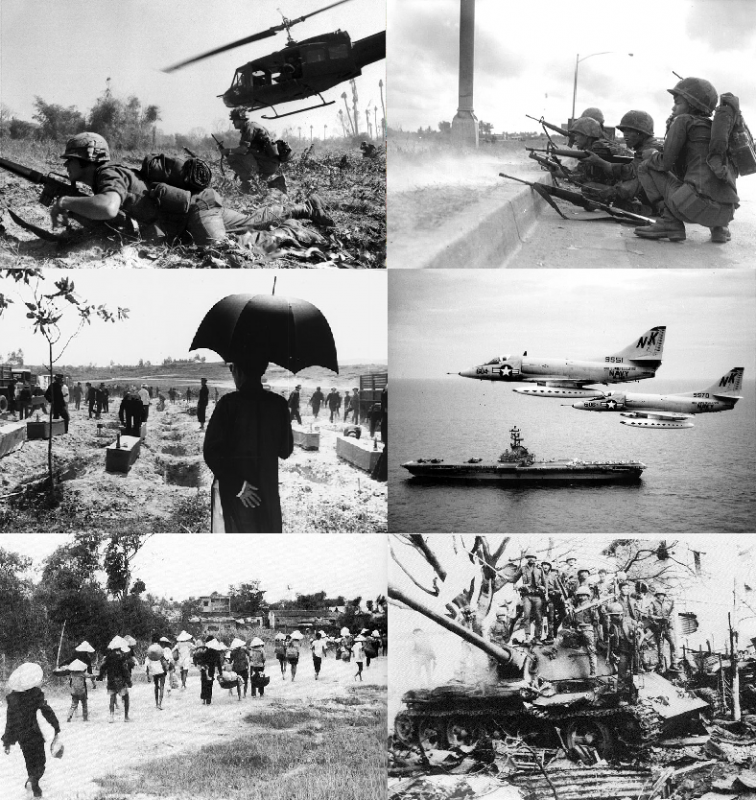
The Vietnam War was a conflict in Vietnam Laos and...
China officially the People's Republic of China PRC is located...
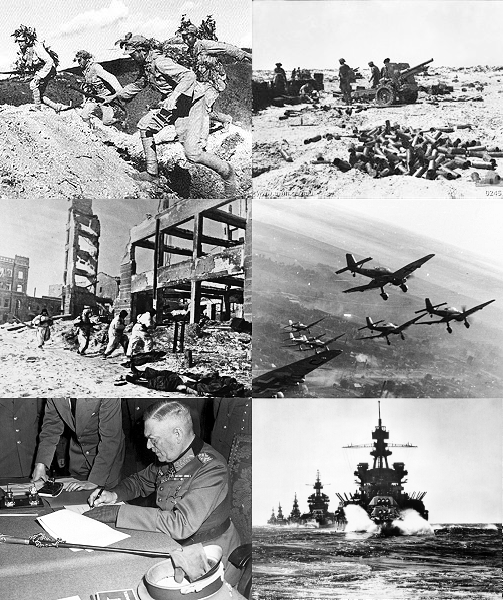
World War II - was a global conflict between the...
Trending

4 hours ago Tua Tagovailoa Subject of Intense Atlanta Falcons Trade Speculation

4 hours ago Slow Horses Season 6 Episode 4 Features A Controversial And Shocking Character Death
4 hours ago Trump Administration Freezes Green Cards for Tech Companies Like Microsoft

4 hours ago San Jose Sharks Secure Overtime Victory Against St. Louis Blues

4 hours ago Alexander Zverev Advances at Shanghai Masters Following Competitive Match Performances

5 hours ago Health Officials Urge Seasonal Vaccinations Amid Flu and Respiratory Virus Concerns
Popular

Ken Paxton is an American politician and lawyer serving as...

Cristiano Ronaldo widely considered one of the greatest footballers captains...

Elon Musk is a visionary entrepreneur and engineer known for...

Michael Joseph Jackson the King of Pop was a highly...

Shakira Isabel Mebarak Ripoll the Queen of Latin Music is...

Jameis Winston is an American football quarterback currently playing for...