


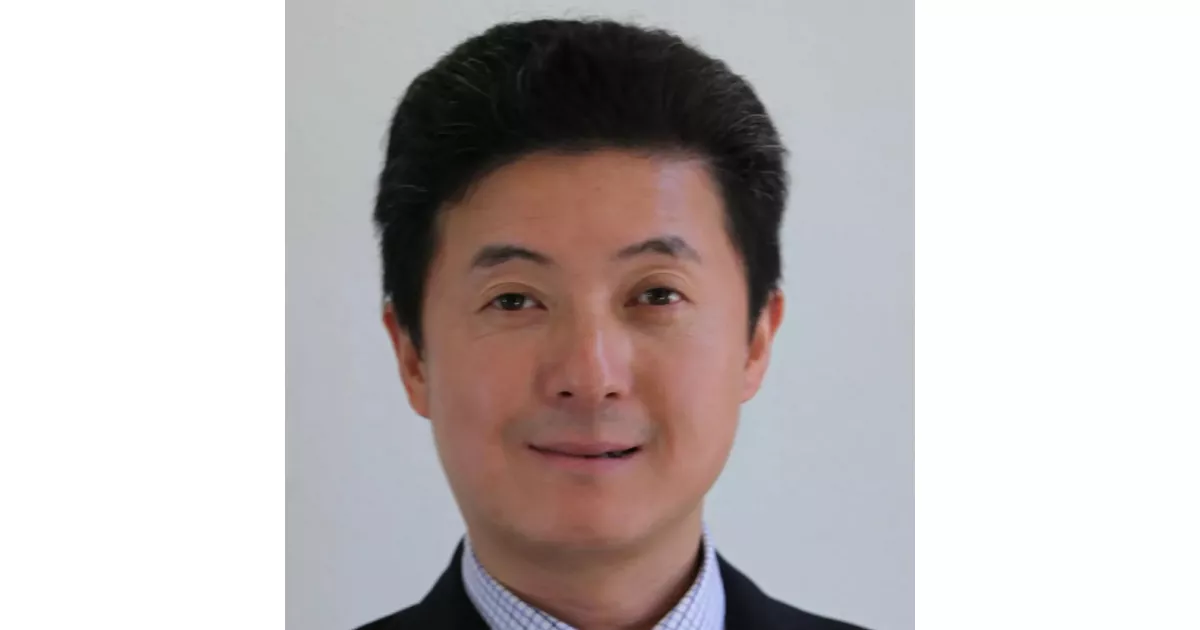
Shoucheng Zhang was a renowned Chinese-American physicist and professor at Stanford University. He specialized in condensed matter theory and made significant contributions to the understanding of topological insulators, quantum Hall effect, quantum spin Hall effect, spintronics, and high-temperature superconductivity. His groundbreaking discovery of topological insulators, a new state of matter allowing dissipationless electron conduction along edges, has paved the way for developing electronic devices with significantly reduced power consumption. This achievement earned him prestigious awards such as the Buckley Prize, Dirac Medal and Prize, Europhysics Prize, Physics Frontiers Prize, and the Benjamin Franklin Medal. His work continues to impact the world of electronics and the broader field of physics.
February 15, 1963: Birth of Shoucheng Zhang
Shoucheng Zhang was born on February 15, 1963 in Shanghai, China.


1963: Birth and Early Childhood
Shoucheng Zhang was born in Shanghai, China in 1963.
1978: Acceptance into Fudan University
At the age of 15, in 1978, Shoucheng Zhang was accepted into Fudan University.
1980: Studies at Free University of Berlin
In 1980, Shoucheng Zhang began studying at the Free University of Berlin, where he earned his B.S. in 1983.
1983: B.S. from Free University of Berlin
Shoucheng Zhang received his B.S. degree from the Free University of Berlin in 1983.
1987: Postdoctoral Fellow at ITP
Shoucheng Zhang began his postdoctoral fellowship at the Institute for Theoretical Physics (ITP) in Santa Barbara in 1987.
1987: Ph.D. from Stony Brook University
Shoucheng Zhang completed his Ph.D. in supergravity at Stony Brook University in 1987, initially under Peter van Nieuwenhuizen, before switching to condensed matter physics under Steven Kivelson.
1989: Joins IBM Almaden Research Center
In 1989, Shoucheng Zhang joined the IBM Almaden Research Center as a Research Staff Member.
1993: Joins Stanford University
Shoucheng Zhang started as an Assistant Professor of Physics at Stanford University in 1993.
2000: Revitalization of Spintronics
In early 2000, Shoucheng Zhang and his collaborators revitalized the field of spintronics with their proposal of an intrinsic spin Hall effect and its connection to geometrical phases in quantum mechanics.
2004: Professor at Stanford University
Starting in 2004, Shoucheng Zhang held concurrent titles as Professor of Applied Physics and Professor of Electrical Engineering at Stanford University.
2007: Quantum Spin Hall Effect Breakthrough
In 2007, Zhang's discovery of the "quantum spin Hall effect" was recognized as one of the "Top Ten Important Scientific Breakthroughs in the World" by Science Magazine.
2007: Receives Guggenheim Fellowship
Shoucheng Zhang received the Guggenheim fellowship in 2007.
2009: Thousand Talents Program Expert Panel
Shoucheng Zhang became a member of an expert panel for the Thousand Talents Program in 2009.
2009: Receives Alexander von Humboldt Research Prize
Shoucheng Zhang received the Alexander von Humboldt Research Prize in 2009.
2010: Begins Work on Majorana Fermion Theory
Between 2010 and 2015, Shoucheng Zhang and his team at Stanford University commenced work to test Ettore Majorana's theory of the Majorana fermion.
2010: Receives Europhysics Prize
Shoucheng Zhang was awarded the Europhysics Prize in 2010.
2010: J. G. Jackson and C. J. Wood Professor in Physics
Shoucheng Zhang was named the J. G. Jackson and C. J. Wood Professor in Physics in 2010.
2012: Receives Oliver Buckley Prize and Dirac Medal and Prize
Shoucheng Zhang received both the Oliver Buckley Prize and the Dirac Medal and Prize in 2012.
2013: Founds Danhua Capital
Shoucheng Zhang founded the venture capital firm Danhua Capital in 2013.
2013: Receives Physics Frontiers Prize
Shoucheng Zhang was awarded the Physics Frontiers Prize in 2013.
2014: Named Citation Laureate and Nobel Prize Candidate
Shoucheng Zhang was named a Citation Laureate by Thomson Reuters and identified as a top candidate for the Nobel Prize in 2014.
2015: Successfully Show How to Test Majorana Fermion Theory
By 2015, Zhang's group successfully showed how to test Majorana's theory.
2015: Receives Benjamin Franklin Medal and Elected to National Academy of Sciences
In 2015, Shoucheng Zhang received the Benjamin Franklin Medal and was elected as a member of the US National Academy of Sciences.
December 1, 2018: Death of Shoucheng Zhang
Shoucheng Zhang passed away on December 1, 2018.
Mentioned in this timeline
China officially the People's Republic of China PRC is located...
Reuters is a major international news organization headquartered in the...
Benjamin Franklin was a multi-talented American figure who excelled as...
Trending
4 hours ago Liudmila Samsonova Faces Lilli Tagger in WTA Osaka Round of 32 Match
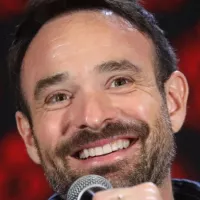
4 hours ago Charlie Cox Discusses Daredevil Ending and Marvel Future After Series Cancellation
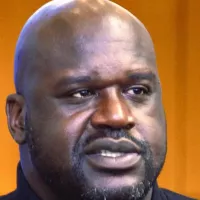
4 hours ago Shaquille O'Neal Pursues Fifth College Degree While Emphasizing Value of Real-World Experience

4 hours ago Von Miller Addresses Disappointing Start and Awaits More Playing Opportunities with Dallas Cowboys
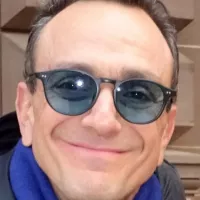
4 hours ago Sunil Malhotra Debuts as New Voice of Apu on The Simpsons Replacing Hank Azaria

5 hours ago Speculation Grows Regarding Mike Tomlin’s Potential Move to an NFC Team
Popular

Ilhan Omar is a prominent American politician currently serving as...

Ken Paxton is an American politician and lawyer serving as...

Michael Joseph Jackson the King of Pop was a highly...

Elon Musk is a visionary entrepreneur and engineer known for...
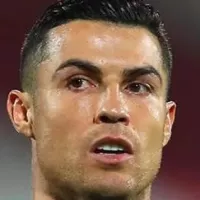
Cristiano Ronaldo widely considered one of the greatest footballers captains...

Greta Thunberg is a Swedish climate activist who gained international...