


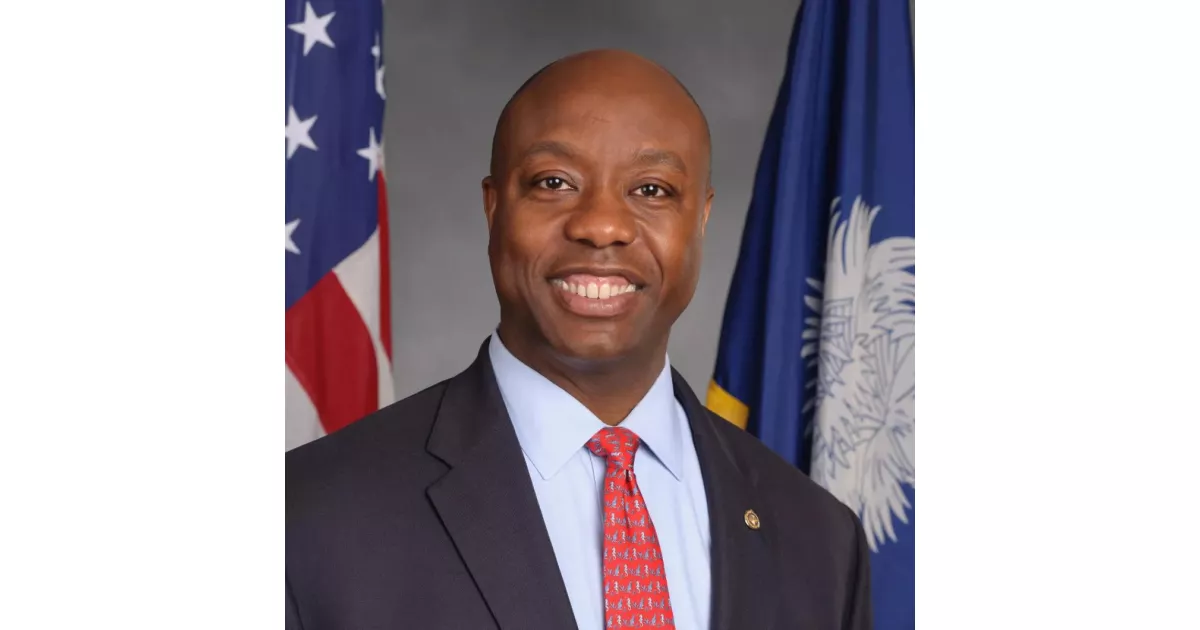
Tim Scott is a prominent American politician serving as the junior United States Senator from South Carolina since 2013. A member of the Republican Party, he made history as the first African American senator to be elected from the South since the Reconstruction era. Before his tenure in the Senate, Scott served in the U.S. House of Representatives and the South Carolina House of Representatives. His legislative focus typically centers on conservative fiscal policies, tax reform, school choice initiatives, and economic development in underserved communities through his 'Opportunity Zones' legislation. Scott is known for his advocacy of free-market principles and has been a frequent speaker on the national stage, highlighting his personal journey from humble beginnings to political prominence. He briefly sought the 2024 Republican presidential nomination, positioning himself as a candidate advocating for national unity and traditional conservative values.
September 19, 1965: Birth of Timothy Eugene Scott
On September 19, 1965, Timothy Eugene Scott was born, marking the beginning of the life of the future American businessman and politician.


1983: Enrollment at Presbyterian College
In 1983, Tim Scott began his studies at Presbyterian College after receiving a partial football scholarship.
1984: Discovery of Christian Faith
Around 1984, during his time at Presbyterian College, Scott was introduced to the Fellowship of Christian Athletes, which prompted his conversion to the Christian faith, becoming a foundational element of his life.
1988: Graduation from Charleston Southern University
Tim Scott concluded his undergraduate studies in 1988, graduating from Charleston Southern University with a Bachelor of Science degree in political science.
1989: Charleston County Voters Approve At-Large Elections
During a popular referendum held in 1989, the majority of voters in Charleston County officially approved the implementation of an at-large election system for council members.
February 1995: Election to Charleston County Council
In February 1995, Tim Scott secured a victory in a special election for an at-large seat on the Charleston County Council. By winning nearly 80% of the vote, he made history as the first Black Republican elected to any office in South Carolina since the late 19th century.
1995: Beginning of Charleston County Council Tenure
In 1995, Tim Scott began his service as a member of the Charleston County Council, a position he would hold for several years.
1995: Charleston County Council Appointment
In 1995, Tim Scott began his tenure serving on the Charleston County Council, marking the start of his political career.
1996: 1996 South Carolina Senate Election
In 1996, Tim Scott ran for a seat in South Carolina's 42nd Senate district, challenging the incumbent Democratic State Senator Robert Ford, but ultimately lost the election with 35% of the vote compared to Ford's 65%.
1997: Ten Commandments Display Controversy
During 1997, Tim Scott advocated for and personally installed a King James version of the Ten Commandments in the Charleston County Council chambers, leading to a legal challenge by the ACLU and Americans United for Separation of Church and State.
November 2000: Initial DOJ Negotiations with Charleston County
In November 2000, officials from the U.S. Department of Justice attempted to reach a negotiated settlement with Charleston County representatives regarding the racially discriminatory impact of the at-large voting system.
2000: Reelection to Charleston County Council
In the year 2000, Tim Scott successfully won reelection to his seat on the Charleston County Council.
January 2001: DOJ Sues Charleston County for Racial Discrimination
In January 2001, the U.S. Department of Justice initiated a lawsuit against Charleston County, South Carolina, alleging violations of the Voting Rights Act due to the use of at-large council seat elections which diluted the voting power of the African American minority.
2003: Retirement of J. C. Watts
In 2003, J. C. Watts retired from Congress, marking the end of his tenure and leaving a vacancy that would not be filled by another African-American Republican until the election of Tim Scott and Allen West.
2004: Decisive Election Victory
During the 2004 election cycle, Tim Scott was reelected to the Charleston County Council, securing 61% of the vote and defeating his Democratic challenger, Elliot Summey.
2007: Appointment to Council Chairman
In 2007, Tim Scott reached a leadership milestone by being appointed chairman of the Charleston County Council.
2008: Election to South Carolina House of Representatives
In 2008, Tim Scott ran for the District 117 seat in the South Carolina House of Representatives following the retirement of Tom Dantzler. After winning the Republican primary with 53% of the vote against Bill Crosby and Wheeler Tillman, he went on to win the general election unopposed, becoming the first African-American Republican elected to the state house in over a century.
2009: South Carolina Club for Growth Scorecard Recognition
During the 2009 period, Tim Scott began his participation in the South Carolina Club for Growth's scorecard evaluation, which ultimately assessed his legislative performance throughout the 2009–2010 term.
2009: South Carolina General Assembly Membership
Starting in 2009, Scott concluded his service on the Charleston County Council and transitioned to become a member of the South Carolina General Assembly.
2009: Conclusion of Charleston County Council Service
Tim Scott concluded his long-standing tenure serving on the Charleston County Council in 2009.
2010: Completion of 2009-2010 Scorecard and Taxpayer Association Praise
By 2010, Tim Scott concluded the 2009–2010 scorecard cycle with a score of 80 out of 100, earning a B grade. Additionally, he was recognized by the South Carolina Association of Taxpayers in 2010 for his principled stance against tax increases.
2010: Roland Burris Retirement
In 2010, Roland Burris retired from the U.S. Senate after having previously succeeded Barack Obama in the seat. This event marked the final departure of a black U.S. senator until Tim Scott's later entry into the 113th Congress.
March 2011: Welfare Reform Bill Co-sponsorship
In March 2011, Tim Scott co-sponsored a welfare reform bill that faced scrutiny from ThinkProgress, which alleged the legislation would terminate food stamp benefits for families with members participating in labor strikes, a claim the Republican Study Committee disputed.
July 2011: Legislation to Restrict NLRB Authority
In July 2011, Tim Scott introduced legislation intended to strip the National Labor Relations Board of its power to order employers to relocate, shut down, or transfer operations, a move that followed the NLRB's opposition to the relocation of a Boeing production facility to South Carolina.
2011: U.S. Debt Ceiling Debate and Vote
During the summer of 2011, Tim Scott participated in the debate regarding the U.S. debt ceiling. Although he initially advocated for the inclusion of a balanced budget amendment, he ultimately chose to vote no on the final debt ceiling bill after a period of contemplation, prayer, and meetings in 2011.
2011: U.S. House of Representatives Election
In 2011, Scott left the South Carolina General Assembly to begin representing South Carolina's 1st congressional district in the U.S. House of Representatives.
December 17, 2012: Appointment to the U.S. Senate
On December 17, 2012, South Carolina Governor Nikki Haley announced that she would appoint Tim Scott to fill the Senate seat vacated by Jim DeMint, who left to lead The Heritage Foundation. This appointment made Scott the first African American U.S. senator from South Carolina and the first from the Southern United States since the Reconstruction era.
January 2, 2013: Commencement of Sole African American Senator Tenure
Starting January 2, 2013, Tim Scott began a period serving as the only African American member of the United States Senate.
February 1, 2013: Conclusion of First Sole Tenure Period
On February 1, 2013, Tim Scott's initial term as the sole African American senator came to a close as he began serving alongside William 'Mo' Cowan.
July 16, 2013: Return to Sole African American Senator Status
On July 16, 2013, following a change in Senate composition, Tim Scott once again became the only African American serving in the U.S. Senate.
October 31, 2013: End of Second Sole Tenure Period
On October 31, 2013, the period in which Tim Scott was the exclusive African American senator concluded.
2013: Appointed to the U.S. Senate
Following the resignation of Jim DeMint in 2013, Governor Nikki Haley appointed Tim Scott to fill the vacant seat in the United States Senate.
2013: Commencement of U.S. Senate Tenure
In 2013, Tim Scott began serving as the senior United States senator from South Carolina, a position he has continued to hold since that year.
January 2014: Support for Affordable Care Act Legal Challenge
In January 2014, Tim Scott participated in a legal action by signing an amicus brief. This brief was filed in support of Senator Ron Johnson's challenge against the U.S. Office of Personnel Management regarding their ruling on the Affordable Care Act.
2014: U.S. Senate Special Election
In 2014, Tim Scott secured his position in the U.S. Senate by winning the special election for the seat he had been appointed to the previous year.
2016: Full Term Senate Election
Building on his success from the special election, Tim Scott was elected to serve his first full term in the United States Senate in 2016.
July 2018: Introduction of Bipartisan Anti-Lynching Legislation
In July 2018, Senator Tim Scott joined forces with Senators Cory Booker and Kamala Harris to introduce a bipartisan bill aimed at establishing lynching as a federal hate crime.
January 2019: Cosponsorship of the Health Insurance Tax Relief Act
In January 2019, Senator Tim Scott joined five other senators in cosponsoring the Health Insurance Tax Relief Act, a legislative effort aimed at delaying the implementation of the Health Insurance Tax for a period of two years.
February 2019: Opposition to Government Funding Legislation
In February 2019, Senator Tim Scott was among a group of 16 senators who cast a vote against legislation intended to avert a partial government shutdown. The bill contained provisions for $1.375 billion in funding for border security measures, specifically including the construction of 55 miles of fencing along the U.S.–Mexico border.
August 2019: Declaration of Intent Regarding Reelection
In August 2019, Tim Scott announced his intention to seek reelection, while also stating that if he chose to run, it would mark his final campaign for the seat.
April 2021: Republican Response to President Biden's Joint Address
In April 2021, Tim Scott was selected to deliver the official Republican Party response to President Joe Biden's first Joint Address to Congress, highlighting his role as a prominent voice within the party.
May 28, 2021: Vote Against Capitol Attack Commission
On May 28, 2021, Senator Tim Scott cast a vote against the formation of an independent commission intended to investigate the events of the January 6, 2021, attack on the U.S. Capitol.
2022: Opposition to the Respect for Marriage Act
In 2022, Tim Scott expressed his opposition to same-sex marriage and cast a vote against the Respect for Marriage Act, a piece of legislation intended to provide federal statutory recognition for same-sex unions.
2022: U.S. Senate Reelection
In 2022, Tim Scott successfully won his campaign for reelection to the United States Senate, continuing his legislative career.
2022: Senate Reelection Victory
In 2022, Tim Scott successfully won reelection to the Senate, securing his position by defeating the Democratic nominee, Krystle Matthews.
February 2023: Preparation for Presidential Run
In February 2023, Tim Scott began taking steps toward a presidential campaign by announcing a listening tour, which kicked off with a Black History Month event held in Charleston, South Carolina.
April 12, 2023: Formation of Presidential Exploratory Committee
On April 12, 2023, Tim Scott officially established an exploratory committee to assess the viability and potential of a campaign for the presidency of the United States.
May 2023: Candidacy for 2024 Presidential Nomination
In May 2023, Tim Scott officially announced his decision to run for the Republican Party's presidential nomination for the 2024 election cycle.
November 12, 2023: Suspension of Presidential Campaign
On November 12, 2023, Tim Scott officially announced the suspension of his presidential campaign during an appearance on the Fox News program Sunday Night in America with Trey Gowdy.
2023: Commitment to 20-week Federal Abortion Ban
During a 2023 interview, Tim Scott stated that if he were elected president, he would sign a federal law banning abortion after 20 weeks of pregnancy, reaffirming his pro-life stance.
2023: Vote against the Fiscal Responsibility Act of 2023
In 2023, Tim Scott was one of 31 Republican Senators who cast a vote against the final passage of the Fiscal Responsibility Act of 2023.
2024: Leadership Appointments and Post-Election Roles
Following the conclusion of the 2024 elections, Tim Scott secured the position of chair for the National Republican Senatorial Committee and also serves as the chair of the Senate Committee on Banking.
2024: Republican Presidential Primary Engagement
Leading into the 2024 election cycle, Tim Scott engaged in campaign activities throughout Iowa, the site of the first Republican presidential primary vote, alongside other declared and prospective candidates.
Mentioned in this timeline
Donald John Trump is an American politician media personality and...

Fox News Channel FNC is an American multinational conservative news...

The rapid advancement of artificial intelligence continues to dominate the...
Trey Gowdy is an American attorney television personality and former...

China officially the People's Republic of China PRC is located...
Hamas is a Sunni Islamist Palestinian nationalist political organization with...
Trending
4 hours ago Sonya Curry Remarries Five Years After Divorce From Dell Curry

4 hours ago Golden State Warriors Focus on Fast-Tracked Development for Rookie Yaxel Lendeborg

5 hours ago Sean Newcomb Featured as Potential Opener for Guardians in Critical ALDS Game 3

1 day ago Mark Zuckerberg Launches Meta's New Muse AI Assistant

5 hours ago Sydney Sweeney Discovered to Be Distant Cousin of Marilyn Monroe

5 hours ago Miguel Vargas Becomes Key Steady Presence for Chicago White Sox During Playoff Run
Popular

Ken Paxton is an American politician and lawyer serving as...

Cristiano Ronaldo widely considered one of the greatest footballers captains...

Michael Joseph Jackson the King of Pop was a highly...

Elon Musk is a visionary entrepreneur and engineer known for...

Shakira Isabel Mebarak Ripoll the Queen of Latin Music is...

Jameis Winston is an American football quarterback currently playing for...