Most Talked-About Controversies Linked to Yoon Suk Yeol


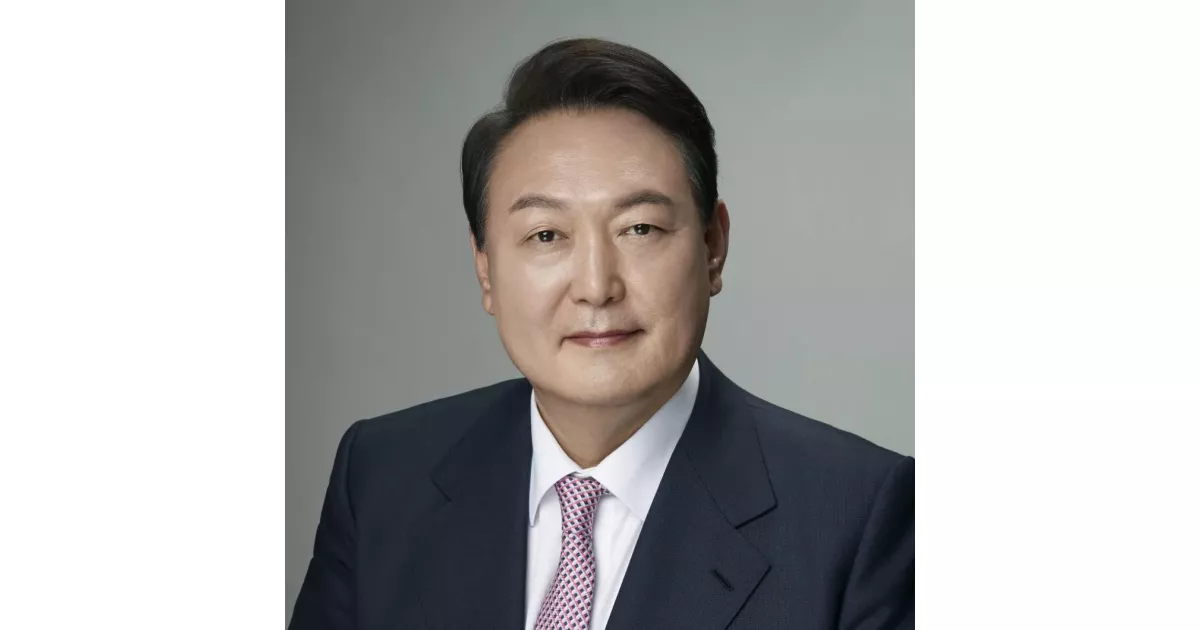
Controversies are a part of history. Explore the biggest scandals linked to Yoon Suk Yeol.
Yoon Suk Yeol is a South Korean politician and attorney who served as the 13th president of South Korea from 2022 until his removal from office in 2025. As a member of the People Power Party during his presidency, he holds the distinction of being the shortest-serving directly elected president in South Korea's democratic history since 1987. Before becoming president, Yoon served as the prosecutor general of South Korea from 2019 to 2021.
1979: Lee Sang-min Compares Police Protests to 1979 Coup
In response to police protests, Lee Sang-min compared them to the 1979 Coup d'état of December Twelfth, but later walked back the remarks. Yoon also criticized the protests.


1988: First South Korean Leader Not to Attend Ceremony
On 2 September, Yoon Suk Yeol boycotted the opening of the inaugural session of the new National Assembly, making him the first South Korean leader not to attend the ceremony since the restoration of democracy in 1988.
1997: Moratorium on Executions
The trial of Yoon for insurrection charges began on 14 April 2025. If found guilty, Yoon faces the death penalty or life imprisonment, although there has been a moratorium on executions in South Korea since the country's last execution in 1997.
2006: Medical School Enrollment Quota
The medical student enrollment quota was last been fixed in 2006, before the announcement on February 6, 2024.
2012: NIS Public Opinion Manipulation Scandal
In 2012, the National Intelligence Service (NIS) was involved in a public opinion manipulation scandal, which Yoon Suk Yeol investigated in 2013.
2013: Yoon Led Investigation into NIS Scandal
In 2013, Yoon Suk Yeol led a special investigation team that looked into the National Intelligence Service (NIS)'s involvement in the 2012 NIS public opinion manipulation scandal.
December 2016: Impeachment of President Park Geun-hye
In December 2016, the investigation into the Choi Soon-sil scandal, in which Yoon was a part of, led to the impeachment of then-president Park Geun-hye.
2018: Suspected election rigging of the Ulsan mayoral race
In 2018 there was suspected election rigging of the Ulsan mayoral race for Mayor Song Cheol-ho by senior secretaries at the Blue House.
April 2020: Democratic Party Attacked Yoon
In April 2020, Democratic Party lawmakers attacked Yoon Suk Yeol and called on him to resign after the prosecution started investigations into election law violation cases.
November 2020: Yoon Suspended from Position as Prosecutor General
On 24 November 2020, Minister of Justice Choo Mi-ae suspended Yoon Suk Yeol from his position, citing alleged ethical violations, abuse of power, and interference in investigations. Yoon filed an injunction which was temporarily approved.
2020: Allegations of Politically Motivated Criminal Complaints
In 2020, ahead of the legislative elections, Yoon Suk Yeol allegedly ordered a senior prosecutor and politician to file politically motivated criminal complaints against Democratic Party politicians, with the goal of influencing the election outcome. In response to these allegations, investigations were launched by the Supreme Prosecutor's Office and the Corruption Investigation Office for High-ranking Officials (CIO).
September 2021: Newsverse Report on Alleged Political Interference
In September 2021, Newsverse reported allegations that Yoon Suk Yeol, during his tenure as prosecutor general, instructed a senior prosecutor and politician to file politically motivated criminal complaints against Democratic Party politicians prior to the 2020 legislative elections. Yoon denied these allegations and reported informant Cho Sung-eun and Director of the National Intelligence Service Park Jie-won to the CIO.
September 2021: Call for Redeployment of Tactical Nuclear Weapons
In September 2021, Yoon Suk Yeol stated that he would ask the United States to redeploy tactical nuclear weapons in South Korea if there is a threat from North Korea. This proposal was rejected by the U.S.
October 2021: Controversial Remarks About Chun Doo-hwan
In October 2021, Yoon Suk Yeol made remarks in Busan complimenting former authoritarian military dictator Chun Doo-hwan, which sparked controversy due to Chun's history of human rights abuses. Yoon later apologized for the remarks and denied the alleged symbolism of a related photo posted on Instagram.
2021: Contradiction of Supreme Court Ruling
Critics argued that the actions of the police under the Yoon administration in November 2024, suppressing anti-government protests, contradicted a 2021 Supreme Court of Korea ruling.
2021: Yoon Suk-yeol elected president
In 2021, Yoon Suk-yeol was elected president of South Korea, marking a shift towards right-wing and conservative politics. His professional history already showed abuse of power.
2021: Drop in Approval Rating
Less than three months into his presidency, Yoon's approval rating dropped to less than 30 percent amidst the 2021–2023 inflation surge, a controversial education policy rollout, controversies over nepotism in personnel appointments, the police bureau proposal, and conflicts within the PPP.
May 2022: Criticism of Lack of Women's Representation in Government
As of May 2022, there were only a few women among the State Councilors and vice-ministerial level officials in the Yoon Suk Yeol government, leading to criticism of a lack of women's representation. Yoon later appointed Park Soon-ae and Kim Seung-hee as ministers to address these criticisms, increasing the ratio of female-to-male ministers to 30%.
May 2022: Increased Government Official Absences
Starting in May 2022, the frequency of government officials not attending National Assembly sessions increased under Yoon's administration.
July 2022: Proposal for a 'Police Bureau'
In late July 2022, Yoon Suk Yeol proposed the creation of a "police bureau" to increase government oversight of the police force, leading to protests by police officers who viewed it as a threat to the political neutrality of the police.
August 2022: Yoon Snubs Meeting with Nancy Pelosi
In August 2022, during U.S. House Speaker Nancy Pelosi's visit to South Korea as part of a larger Asia tour, Yoon Suk Yeol did not meet with her, citing his vacation plans as the reason.
September 2022: Controversy over Yoon's remarks in New York
On 21 September 2022, after chatting with U.S. President Joe Biden outside the seventh Global Fund meeting in New York City, Yoon Suk Yeol was filmed telling his aides and top diplomats, "Wouldn't [inaudible] lose face if these saekki do not pass it in the legislature?" The video went viral, leading to controversy and a drop in Yoon's approval rating. The Korean Ministry of Foreign Affairs sued MBC, which broke the story on air, "to restore trust in diplomacy".
October 2022: Itaewon Crowd Crush
On October 29, 2022, at least 158 people died in a crowd crush during Halloween festivities in Seoul's Itaewon district. Yoon declared a state of national mourning, but his handling of the situation faced criticism.
2022: Opposition to Feminism
Following an anti-feminist backlash in 2022, Yoon Suk Yeol acted in opposition to feminism, aiming to appeal to young men. Yoon stated structural sexism no longer exists in South Korea and pledged to abolish the Ministry of Gender Equality and Family. Political conflict related to gender issues was intense in South Korea in 2022.
2022: Yoon Pursued Friendlier Relations with Japan and the United States
In 2022, during his presidency, Yoon Suk Yeol pursued friendlier relations with Japan and the United States, and has been described as hawkish toward North Korea. His handling of the Seoul Halloween crowd crush in 2022 and the medical crisis has attracted criticism.
March 2023: Criticism of Yoon's approach to wartime labor compensation
As of March 2023, Yoon Suk Yeol's government faced criticism for its stance on compensating victims of forced labor during World War II, proposing voluntary donations from South Korean companies instead of seeking direct compensation or apology from the Japanese government and companies. 11 of the 15 surviving victims opposed Yoon's government's solution and demanded direct compensation from the Japanese government and companies.
March 2023: Controversy over Yoon's remarks at Samiljeol commemorative event
Yoon Suk Yeol's remarks at a commemorative event related to the Samiljeol on March 1, 2023, sparked controversy in South Korea. He stated that "Korea lost its national sovereignty and suffered because it was not properly prepared for historical changes in the world at the time, and we should reflect on this past.", drawing criticism from opposition parties who accused him of pro-Japanese sentiments.
April 2023: Drop in Approval Rating
In April 2023, Yoon's approval rating dropped back to 30% largely due to widespread disapproval of Yoon's Japanese policy.
August 2023: Non-Attendances in National Assembly
Over a period of one year and four months from May 2022 to August 2023, there were 29 non-attendances by heads of government departments, vice ministers, and heads of affiliated organizations.
2023: Neutralization of Moon Administration's efforts
By the end of 2023, Moon's efforts have been virtually neutralized due to President Yoon Suk-yeol's coercive measures to punish members of the former Moon administration, along with attacks on gender equality, setting South Korea to decrease its LDI levels.
2023: Decline in World Press Freedom Index
In 2023, South Korea's ranking in the World Press Freedom Index by Reporters Without Borders dropped from 47th place to 62nd place.
2023: Attempt to Increase Maximum Weekly Working Hours
In 2023, Yoon Suk Yeol's administration attempted to increase South Korea's maximum weekly working hours from 52 to 69, but the plan was reconsidered due to widespread backlash.
February 2024: Increase in Medical School Enrollment Quota
On February 6, 2024, Yoon Suk Yeol announced that the medical student enrollment quota would be increased from 3,058 to 5,058 students per academic year from 2025 onward. This decision was met with opposition from the medical community, leading to strikes and resignations.
May 2024: Drop in World Press Freedom Index
In May 2024, South Korea's ranking in the World Press Freedom Index dropped to 62nd place, influenced by the Yoon administration's sanctions against critical media outlets like MBC. A hot mic incident involving an MBC journalist led to a police raid on the journalist's house and a retaliatory banning of MBC from access to Yoon.
May 2024: Lowest Approval Rating Recorded
In May 2024, Yoon recorded the lowest approval rating since he took office at a rate of 21%, with his economic and foreign policy, as well as his lack of communication, being cited as the main reasons for the low approval rating.
July 2024: Petition for Impeachment
In June and July 2024, over a million people signed a petition calling for Yoon to be impeached.
November 2024: Controversy over New Right appointments and restrictions on Korea Liberation Association
In November 2024, an event by the Korea Liberation Association was scheduled to be held at Seoul National Cemetery, but the Ministry of Patriots and Veterans Affairs blocked the event from being held. Critics alleged that the Yoon administration was retaliating against the association for criticizing the administration's New Right tendencies.
November 2024: Allegations of Police Suppression of Protests
In November 2024, critics alleged that police, under orders of the Yoon administration, were being used to suppress anti-government protests. According to MBC, police unsuccessfully applied for four arrest warrants for protestors, contradicting a 2021 Supreme Court of Korea ruling.
November 2024: Calls for Yoon's Resignation
In November 2024, over 3,000 professors and researchers signed a declaration asking Yoon to resign. On 28 November, 1,466 South Korean Catholic priests called for Yoon to be impeached, issuing a declaration titled "How can a person be like this".
December 2024: Approval Rating Drops Following Martial Law Attempt
Following his brief attempt to declare martial law, a poll by Gallup held from 3 to 5 December 2024 found that Yoon's approval rating had fallen to 13% in part due to the declaration of martial law. A week later, Gallup found that his approval rating fell further to 11%.
December 2024: Accusations of Attempted Imposition of Martial Law
In December 2024, Yoon Suk Yeol faced charges connected to his attempted imposition of martial law, which contributed to the extension of his detention by the Seoul Central District Court in January 2026.
December 2024: Police Attempt to Search Yoon's Office
On 11 December 2024, South Korean police attempted to search Yoon's office as part of an investigation into his controversial declaration of martial law. The search was blocked due to a lack of agreement with the presidential security service.
December 2024: Yoon Declared Martial Law
On 3 December 2024, Yoon Suk Yeol declared martial law in South Korea, accusing members of the National Assembly of supporting North Korea, but lifted it after the Assembly passed an emergency motion nullifying the declaration. An impeachment motion was introduced against Yoon the next day.
December 2024: Declaration of Martial Law
On 3 December 2024, Yoon declared martial law and vowed to "rebuild a democratic and free Korea" after accusing other South Korean politicians of being "communist". The decree was soon declared invalid by the National Assembly, but Yoon complied and lifted the declaration after his cabinet convened.
December 2024: Staff Resignations and Calls for Yoon's Resignation
On 4 December 2024, a large number of Yoon's staff resigned following the end of martial law. On 8 December 2024, PPP leader Han Dong-hoon stated that Yoon would resign as early as February 2025 if he remained in office. On 12 December, Yoon vowed to "fight to the end", resisting the push for his resignation.
December 2024: Apology for Martial Law Declaration and Arrest of Kim Yong-hyun
On 7 December 2024, Yoon issued an apology in a televised address following widespread criticism over his declaration of martial law. On 8 December, Kim Yong-hyun was arrested for his role in the martial law order, after resigning from office three days prior.
December 2024: Overseas Travel Ban Issued Against Yoon
On 9 December 2024, the Ministry of Justice issued an overseas travel ban against Yoon following an investigation into allegations of rebellion linked to his brief imposition of martial law.
December 2024: Summons for Questioning
Yoon was summoned thrice by the CIO for questioning on 18, 25, and 29 December 2024 over his declaration of martial law. He refused to attend any of the summons.
2024: R&D budget cut causes uproar
In 2024, The decision by the Yoon administration to reduce South Korea's research and development (R&D) budget by 15% compared to the previous year has caused significant uproar among researchers who fear this cutback might undermine South Korea's competitiveness in the global technology sector.
2024: Accusations of covering up military deaths
In 2024, Yoon Suk Yeol was accused of covering up for senior military officials over the deaths of one South Korean marine in 2023 and two more soldiers in 2024 by blocking bills seeking to investigate the matter.
2024: V-Dem Institute Report on South Korea's Democracy
In 2024, the Swedish V-Dem Institute reported that under Yoon Suk Yeol's administration, South Korea was dropping in its liberal democracy index (LDI). They described Yoon as "South Korea's Donald Trump."
2024: Opposition Victory in Parliamentary Elections
In the 2024 parliamentary elections, the opposition achieved a landslide victory, weakening Yoon's position. The PPP obtained 108 seats, while the main opposition party, the DPK, secured 175 seats.
2024: Conviction and Imprisonment Sentence
On 16 January 2026, Yoon was convicted in a related trial and sentenced to five years' imprisonment on charges of abuse of power, obstruction of justice and falsification of official documents related to his failed martial law bid in 2024.
January 2025: Yoon Suk Yeol Arrested and Incarcerated
In January 2025, Yoon Suk Yeol became the first sitting president in South Korean history to be arrested and incarcerated.
January 2025: Suspension of Impeachment Proceedings
On 14 January 2025, the impeachment proceedings against Yoon were abruptly suspended after a brief period, as he failed to attend the session at the Constitutional Court. Subsequent hearings were held until 25 February 2025. On 21 January, he attended the proceedings for the first time.
January 2025: Arrest Warrant Issued and Standoff
On 31 December 2024, the Seoul Western District Court issued an arrest warrant for Yoon with charges relating to abuse of power and orchestration of the martial law declaration. On 1 January 2025, he released a statement to his supporters pledging to "fight alongside you to the very end to protect this nation". On 3 January, authorities tried to carry out the warrant at the presidential compound but abandoned the attempt. On 6 January, the warrant expired, and the Seoul Western District Court extended the warrant the next day.
January 2025: Investigation for Treason
On 7 January 2025, it was reported that the Corruption Investigation Office for High-ranking Officials (CIO) was investigating Yoon for treason based on evidence that he had attempted to manufacture a conflict with North Korea by launching a drone from Baengnyeongdo.
January 2025: Police Seizure of Yoon's Phones
On May 23, police announced the seizure of Yoon's phones as part of its investigations into Yoon's attempted arrest in January 2025.
February 2025: Conclusion of Impeachment Trial
On 25 February 2025, Yoon issued an apology on the last day of the impeachment trial, but continued to defend his actions. The trial concluded with a total of 11 hearings held over 73 days and 16 people testifying as witnesses.
February 2025: Potential Resignation Date Proposed
On 8 December 2024, PPP leader Han Dong-hoon stated that Yoon would resign as early as February 2025 if he remained in office. A PPP special task force proposed that Yoon leave office in February or March 2025 and called for elections to replace him to be held in April or May.
March 2025: Potential Resignation Date Proposed
A PPP special task force proposed that Yoon leave office in February or March 2025 and called for elections to replace him to be held in April or May. This proposal was made on 8 December 2024.
April 2025: Insurrection Trial Begins
On 14 April 2025, the trial of Yoon for insurrection charges began. Yoon denied the charges, saying his attempt to impose martial law did not amount to an insurrection.
April 2025: Raid on Yoon's Residence and Indictment
On 30 April 2025, prosecutors conducted a court-approved raid on Yoon's private residence as part of an investigation into allegations of back room deals and influence peddling. On 1 May, Yoon was indicted for abuse of power.
April 2025: Impeachment Upheld and Removal from Office
On 4 April 2025, by a unanimous decision, an eight-judge Constitutional Court upheld Yoon's impeachment, formally removing him from office. This made him the shortest-serving president in South Korea's democratic history. An election to determine his successor was required to take place within 60 days following his removal.
May 2025: Departure from PPP and Public Appearance
On 17 May 2025, Yoon left the People Power Party, and endorsed its candidate, Kim Moon-soo, for the 2025 South Korean presidential election. On 21 May, he made his first public appearance without connection to his legal cases, attending the premiere in Seoul of a documentary on alleged electoral fraud in the 2024 parliamentary election.
July 2025: Second Arrest of Yoon
On 10 July 2025, Yoon was arrested for the second time on additional charges brought by special counsel Cho Eun-suk.
July 2025: Request to Detain and Indictment
On 6 July 2025, South Korean prosecutors filed a request to detain Yoon a day after he appeared before them for questioning over his declaration of martial law last year. He was formally arrested again on 10 July 2025 and indicted for abuse of power on 19 July.
August 12, 2025: Kim Keon Hee's Arrest
On August 12, 2025, Kim Keon Hee was arrested after the Seoul Central District Court granted a special prosecutor's request for an arrest warrant amid serious corruption allegations.
October 2025: Allegations of Drone Deployments toward North Korea
In October 2025, Yoon Suk Yeol faced allegations tied to drone deployments toward North Korea, which contributed to the extension of his detention by the Seoul Central District Court in January 2026.
2025: Increase in Medical School Enrollment Quota
Yoon Suk Yeol announced that the medical student enrollment quota would be increased from 3,058 to 5,058 students per academic year from 2025 onward.
January 2, 2026: Extension of Yoon Suk Yeol's Detention
On January 2, 2026, the Seoul Central District Court issued a fresh arrest warrant for former President Yoon Suk Yeol, extending his detention over allegations tied to drone deployments toward North Korea in October 2025 and his attempted imposition of martial law in December 2024.
January 2026: Prosecution Seeks Death Penalty
On 13 January 2026, the prosecution sought the death penalty for Yoon.
January 2026: Conviction and Imprisonment Sentence
On 16 January 2026, Yoon was convicted in a related trial and sentenced to five years' imprisonment on charges of abuse of power, obstruction of justice and falsification of official documents related to his failed martial law bid in 2024.
January 2026: Kim Keon Hee sentenced to prison for corruption
On 28 January 2026, Seoul Central District Court sentenced Kim Keon Hee, Yoon's wife, to 20 months in prison for corruption, for receiving luxury gifts like a Graff diamond necklace and a Chanel bag from the Unification Church in return for promises of business favors.
January 18, 2026: Detention Order Extension
On January 18, 2026, Yoon Suk Yeol's detention order, which was due to expire, was extended by up to six months.
February 2026: Conviction for Insurrection
On 19 February 2026, Yoon was convicted of leading an insurrection, and sentenced to life imprisonment.
Mentioned in this timeline
Donald John Trump is an American politician media personality and...
Nancy Pelosi is a prominent American politician notably serving as...
Joe Biden served as the th President of the United...

Instagram is a globally prominent social media platform centered on...

Ukraine is a country in Eastern Europe the second-largest on...
The United States of America is a federal republic primarily...
Trending
3 hours ago Jordan Addison Steps Up as Justin Jefferson Ruled Out for Week 4

3 hours ago Erin Andrews Discusses Skipping Taylor Swift's New Music Video Amidst Public Commentary

3 hours ago Erling Haaland Linked With LaLiga Move Amid Manchester City Relegation Uncertainty
3 hours ago Gabby Williams Leads Valkyries Rally Against Wings to Reach WNBA Semifinals
3 hours ago Xavier Worthy Faces Critical Performance Review with Kansas City Chiefs
3 hours ago Iran Sets Conditions for Reopening Strait of Hormuz Amid Ongoing Tanker Disruptions
Popular

Ken Paxton is an American politician and lawyer serving as...

Jameis Winston is an American football quarterback currently playing for...

Shakira Isabel Mebarak Ripoll the Queen of Latin Music is...

Elon Musk is a visionary entrepreneur and engineer known for...
Bernie Sanders is a prominent American politician and the senior...

Michael Joseph Jackson the King of Pop was a highly...