


4B, a radical feminist movement originating in South Korea around 2019, advocates for women's abstention from traditional relationships and societal expectations. Its core tenets include refusing to date, marry, or engage in sexual relations with men, as well as rejecting motherhood. This movement represents a departure from conventional societal norms, signifying a shift in perspectives on women's roles and challenging established patriarchal structures. By rejecting traditional relationships, 4B participants seek to liberate themselves from perceived societal constraints and redefine women's autonomy. The movement's emergence in South Korea reflects the country's evolving social landscape and the growing discourse surrounding gender equality.
1982: Birth Year of Kim Ji-young
This year marks the birth of the fictional character Kim Ji-young, the namesake of the influential novel "Kim Ji-young, Born 1982," which served as an inspiration for the 4B movement and other feminist movements in South Korea.


2005: UnniNetwork Promotes "Bihon"
In 2005, the feminist activist group UnniNetwork began promoting "bihon" (single) as a political agenda to challenge the traditional emphasis on marriage in Korea.
2006: #MeToo Movement Origins
The #MeToo movement originated in the United States in 2006.
2016: "Escape the Corset" Movement Begins
The "Escape the Corset" movement started in 2016, inspiring the later 4B movement. It called for women to liberate themselves from various forms of oppression, including beauty standards.
2017: Early Stages of 4B on Femi Wiki
Around 2017, the term 4B emerged within Korean feminist circles on Twitter and Femi Wiki, a Korean feminist Wiki site, defined it as 'The motto of radical feminism, which means 'non-marriage, non-procreation, non-relationship, non-sex.'
2017: #MeToo Movement Gains Global Momentum
In 2017, the #MeToo movement gained significant traction globally, including in South Korea, where it empowered women to share their experiences of sexual harassment and violence.
2018: 4B Movement Continued Development
Between 2017 and 2018, the 4B principles were being articulated in online feminist groups, laying the groundwork for the movement's later emergence.
2019: 4B Movement Gains Traction
In 2019, the 4B movement claimed to have 4,000 members. Proponents like Jung Se-young and Baeck Ha-na criticized marriage for reinforcing traditional gender roles.
2019: Origins of the 4B Movement
The 4B ("Four Nos") movement, a radical feminist movement, originated in South Korea in 2019. Its proponents refuse to date, marry, or have sex with men, or have children.
2019: 4B Movement's Rise on Social Media
The 4B movement gained wider recognition on Twitter and various feminist social media accounts in 2019. Many members identified as "anonymous women," reflecting a common practice in Korean digital feminist movements.
2022: Survey on Childbearing Preferences
A 2022 survey revealed that 65% of South Korean women and 48% of men did not want children, highlighting the country's declining fertility rate and its potential demographic consequences.
2023: South Korea's Low Fertility Rate
As of 2023, South Korea's fertility rate reached a low of 0.7, significantly impacting the country's demographics.
Mentioned in this timeline
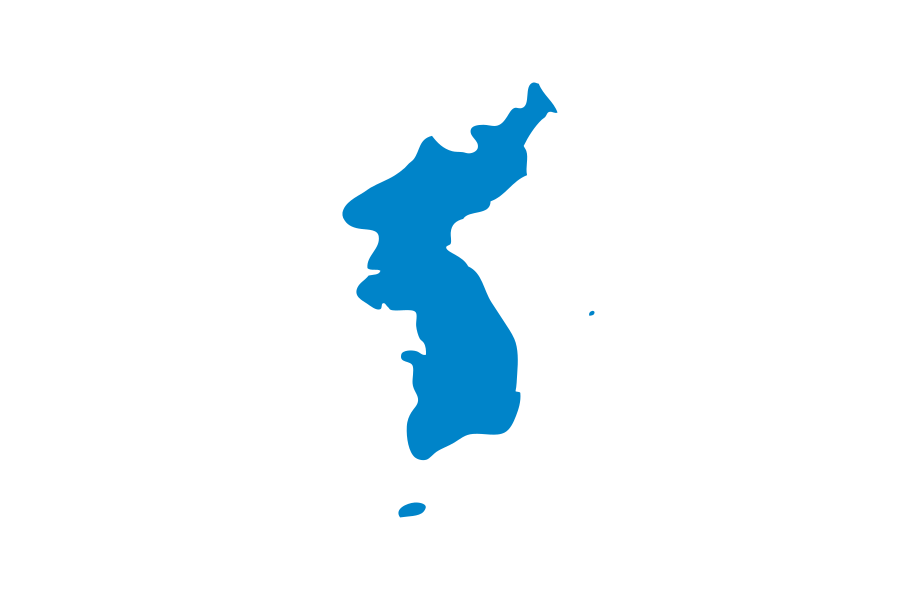
Korea is a peninsular region in East Asia comprised of...
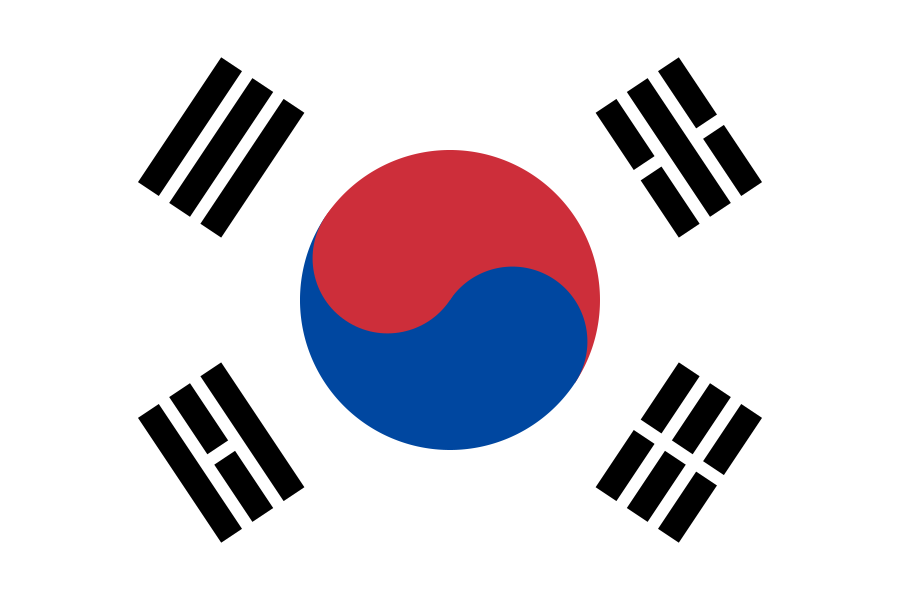
South Korea or the Republic of Korea is located in...
Trending

4 hours ago North Korea Conducts Submarine Missile Tests and AI Torpedo Trials

4 hours ago Mads Mikkelsen Announced as Villain Lead for Call of Duty: Modern Warfare 4

4 hours ago Victor Wembanyama Pursues Defensive Excellence and Championship Glory for San Antonio Spurs

4 hours ago Anthony Davis Prepares for NBA Season With Strong Preseason Performance

4 hours ago Sidney Crosby and Longtime Penguins Teammates Celebrate Two Decades of Professional Partnership

5 hours ago Healthy Joel Embiid Expected to Transform Philadelphia 76ers Performance This NBA Season
Popular
Ilhan Omar is a prominent American politician currently serving as...

Ken Paxton is an American politician and lawyer serving as...

Elon Musk is a visionary entrepreneur and engineer known for...

Michael Joseph Jackson the King of Pop was a highly...

Jameis Winston is an American football quarterback currently playing for...

Cristiano Ronaldo widely considered one of the greatest footballers captains...