


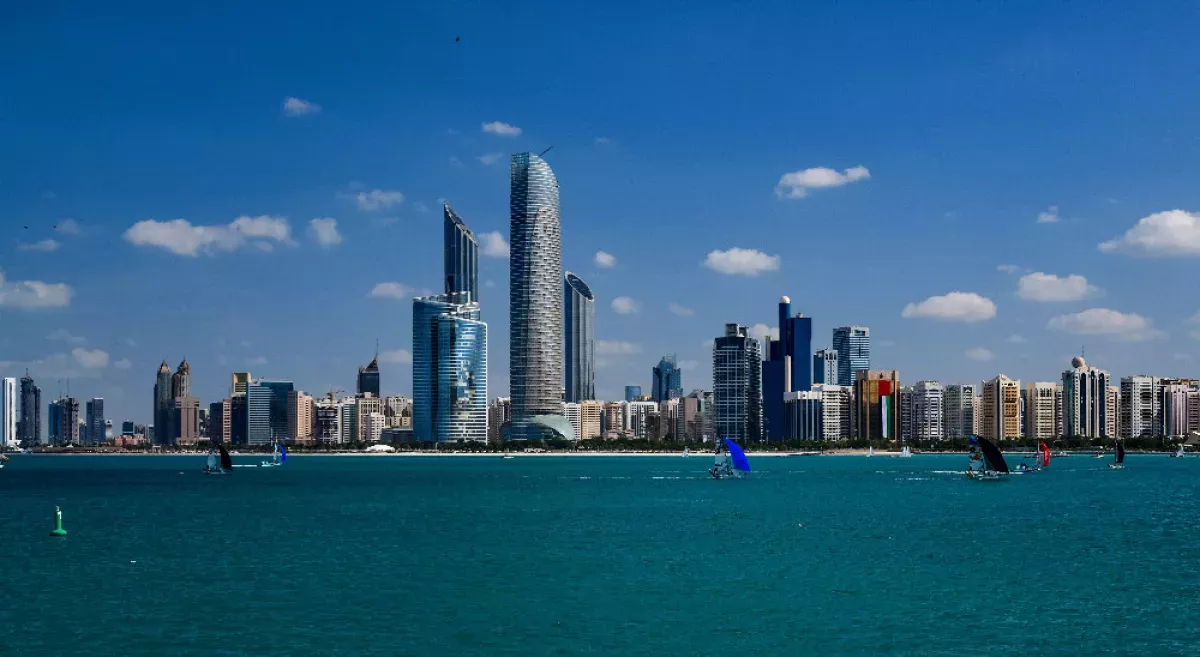
Abu Dhabi is the capital city of the United Arab Emirates (UAE) and the second-most populous city in the UAE after Dubai. It is the capital of the Abu Dhabi Emirate and located on a T-shaped island extending into the Persian Gulf. It serves as the seat of the Abu Dhabi Central Capital District.
1905: Birth of Abdulla bin Sulayem
In 1905, Abdulla bin Sulayem, a poet known for his contributions to Classical Arabic poetry, was born.


January 1936: Concession Agreement for Oil Exploration
On January 5, 1936, Petroleum Development Trucial Coast Ltd (PDTC) entered into a concession agreement with Sheikh Shakhbut bin Sultan Al Nahyan to explore for oil.
January 1939: Seventy-Five-Year Concession Signed
In January 1939, a seventy-five-year concession was signed for oil exploration.
1947: British Influence Maintained After Indian Withdrawal
Following their withdrawal from India in 1947, the British maintained their influence in Abu Dhabi as interest in the oil potential of the Persian Gulf grew.
1953: Offshore Concession Obtained by D'Arcy Exploration Company
In 1953, D'Arcy Exploration Company obtained an offshore concession, which was transferred to Abu Dhabi Marine Areas (ADMA), a joint venture between BP and Compagnie Française des Pétroles.
1954: Death of Mubarak Al Oqaili
In 1954, Emirati poet Mubarak Al Oqaili, who made headway in Classical Arabic poetry, passed away.
1958: Oil Discovery in Umm Shaif Field
In 1958, oil was discovered in the Umm Shaif field using the ADMA Enterprise drilling platform.
1959: Onshore Oil Discovery at Murban No.3
In 1959, Petroleum Development Trucial Coast (PDTC) made an onshore oil discovery at Murban No.3.
1959: Death of Salem bin Ali al Owais
In 1959, Salem bin Ali al Owais, an important Emirati poet known for his contributions to Classical Arabic poetry, passed away.
1962: Discovery of Bu Hasa Oil Field
In 1962, the Bu Hasa oil field was discovered.
1963: Discovery of Lower Zakum Oil Field
In 1963, the Lower Zakum oil field was discovered.
August 6, 1966: Bloodless Coup Led by Zayed Al Nahyan
On August 6, 1966, a bloodless coup, backed by the British, led by Shakhbut's younger brother Zayed Al Nahyan, took place due to perceived mismanagement of oil revenues.
1967: City Planned by Katsuhiko Takahashi
In 1967, the city of Abu Dhabi was planned by Japanese architect Katsuhiko Takahashi under the guidance of Sheikh Zayed.
1968: Al Maqta Bridge Built
In 1968, Al Maqta Bridge was built as the first connection to the previously small fishing village on the island in Abu Dhabi.
1969: First town bus entered service
In about 1969, the first town bus entered service in Abu Dhabi, as part of a very informal service.
December 2, 1971: Formation of the United Arab Emirates
On December 2, 1971, Abu Dhabi, along with five other emirates, formed the United Arab Emirates (UAE). Sheikh Zayed bin Sultan Al Nahyan was appointed as the first President of the UAE on December 2, 1971.
1976: Death of Abdulla bin Sulayem
In 1976, Abdulla bin Sulayem, an Emirati poet known for his contributions to Classical Arabic poetry, passed away.
1977: Mussafah Bridge Opened
In 1977, the second Mussafah Bridge was opened in Abu Dhabi.
1982: AUH Opened
In 1982, Abu Dhabi International Airport (AUH) opened, replacing Al Bateen Executive Airport as the main international airport for Abu Dhabi.
1995: Introduction of the Internet
In 1995, the Internet was introduced into Abu Dhabi, supported by a bandwidth of 6 GB, with 50,000 dialup and 150,000 broadband ports.
November 1996: Construction of the Grand Mosque Begins
Construction of the Sheikh Zayed Grand Mosque began on November 5, 1996.
2004: Death of Sheikh Zayed bin Sultan Al Nahyan
In 2004, Sheikh Zayed bin Sultan Al Nahyan, the first President of the United Arab Emirates, died.
2005: Crude Birth and Death Rates
As of 2005, Abu Dhabi's crude birth rate was 13.6%, while the crude death rate was about 2%.
2005: Water Demand Estimated
In 2005, the water demand for 2005–06 was estimated to be 511 MiGD in Abu Dhabi.
2006: Per capita income grew by 9%
In 2006, Abu Dhabi's per capita income grew by 9%, reaching a GDP per capita of $49,700, ranking third in the world in purchasing power parity.
2006: Establishment of Emirates Integrated Telecommunications Company
In 2006, Emirates Integrated Telecommunications Company (EITC – better known as Du) was established in Abu Dhabi.
2006: ADWEA Supplied 560.2 MiGD of water
In 2006, the Abu Dhabi Water and Electricity Authority (ADWEA) supplied 560.2 MiGD (million imperial gallons per day) of water.
September 2007: Plan Abu Dhabi 2030 Urban Structure Framework Plan Published
In September 2007, the Abu Dhabi Urban Planning Council (UPC) published the visionary Plan Abu Dhabi 2030 Urban Structure Framework Plan.
December 2007: Internal Prayer Halls of the Grand Mosque Open
In December 2007, the internal prayer halls of the Sheikh Zayed Grand Mosque were initially opened.
2007: Total Electricity Supplied
As of 2007, the total electricity supplied to Abu Dhabi was 8,367 MW, with a per capita consumption of about 41,000 kWh.
2007: Release of The Kingdom
In 2007, the film "The Kingdom" was released, featuring Abu Dhabi as one of its shooting locations.
June 2008: Department of Transport began public bus service
On June 30, 2008, the Department of Transport began public bus service in Abu Dhabi with four routes, which were zero-fare until the end of 2008.
July 2008: High-Rise Buildings Under Construction, Approved, or Proposed
As of July 2008, there were 62 high-rise buildings between 23 to 150 m under construction, approved for construction, or proposed for construction.
2008: Launch of Abu Dhabi Jiujitsu Schools Program
In 2008, the Abu Dhabi Jiujitsu Schools Program was launched under the patronage of crown prince Mohammed bin Zayed Al Nahyan, starting in 14 schools for pupils in grades 6 and 7.
2009: Etisalat Announced Implementing FTTH network
During the third quarter of 2009, Etisalat announced implementing a fiber-to-the-home (FTTH) network in Abu Dhabi.
2009: 30%+ growth in passenger usage
In 2009, Abu Dhabi International Airport experienced a growth of more than 30% in passenger usage.
2009: Government Diversification of Economic Plans
In 2009, the government diversified its economic plans, with non-oil and gas GDP outstripping that attributable to the energy sector.
2009: Inaugural Abu Dhabi Grand Prix
Since 2009, Abu Dhabi has hosted the Abu Dhabi Grand Prix of Formula One at the Yas Marina Circuit. The inaugural race took place in 2009.
2009: Abu Dhabi Education Council Brings in Teachers
Starting in 2009, the Abu Dhabi Education Council began recruiting thousands of licensed teachers from native English speaking countries to support the New School Model Program in government schools.
September 2010: New York University Opens Satellite Campus
In September 2010, New York University opened a government-sponsored satellite campus in Abu Dhabi, adding to the city's growing list of international educational institutions.
2010: GDP per capita reached $49,600
In 2010, Abu Dhabi's GDP per capita reached $49,600, ranking ninth globally.
2010: Sheikh Zayed Bridge Opened
In 2010, the Sheikh Zayed Bridge opened in Abu Dhabi.
2010: Abu Dhabi becomes a major shooting spot for film companies
Since 2010, Abu Dhabi has become a prominent filming location for numerous film companies, including those from Hollywood.
2010: Opening of Sheikh Zayed Bridge
The Sheikh Zayed Bridge, designed by Zaha Hadid, opened in late 2010.
2011: Completion of Al-Mafraq Bridge
Al-Mafraq bridge, connecting the city to Reem Island, was completed in early 2011. This multi-layer interchange bridge has 27 lanes.
2011: Cultural Foundation Reconstruction
In spring 2011, the Cultural Foundation in Abu Dhabi was closed for reconstruction, while still housing the UAE Public Library and Cultural Center. This period also saw a strong presence of cultural societies like the Abu Dhabi Classical Music Society.
2013: Release of Arrambam
In 2013, the film "Arrambam" was released, featuring Abu Dhabi as one of its shooting locations.
2014: Population Statistics
As of 2014, 477,000 of the 2,650,000 people living in the emirate were UAE nationals and approximately 80% of the population were expatriates.
2015: Expansion of the School-Jitsu Program
By 2015, the plan was for up to 500 schools to be participating in the School-Jitsu program, teaching Brazilian jiu-jitsu to 9 to 13-year-old students as part of the curriculum.
2015: Passenger Numbers at Zayed International Airport Rose
In 2015, passenger numbers at Zayed International Airport rose by 17.2 percent, with more than 23 million travelers.
2015: Release of Baby and Furious 7 and Star Wars: The Force Awakens
In 2015, the films "Baby", "Furious 7", and "Star Wars: The Force Awakens" were released, all featuring Abu Dhabi as a filming location.
2016: Release of Dishoom
In 2016, the film "Dishoom" was released, featuring Abu Dhabi as one of its shooting locations.
March 2017: Designation of Al Ain and Al Dhafra Regions
In March 2017, Sheikh Khalifa decreed the eastern region as "Al Ain Region" and the western region as "Al Dhafra Region".
2017: Ban on Israeli Symbols at International Judo Federation
In 2017, the International Judo Federation refused to allow the Israeli flag and the Israeli national anthem at international games in Abu Dhabi, leading to criticism.
2018: Completion of Qaṣr Al-Waṭan Construction
Construction of UAE Presidential Palace, Qaṣr Al-Waṭan, was completed in 2018.
2018: Abu Dhabi launched Ghadan 21
In 2018, Abu Dhabi launched Ghadan 21, a string of initiatives to diversify the economy, with a total injection of AED 50 billion across four main areas: business and investment, society, knowledge and innovation, and lifestyle. The first phase included over 50 initiatives.
2018: Ban lifted on Israeli symbols at International Judo Federation
In 2018, the ban on Israeli symbols was lifted, and the Israeli flag and national anthem were allowed to be displayed at the International Judo Federation event in Abu Dhabi. Israeli minister of sports Miri Regev was also allowed to attend.
2018: Release of Race 3
In 2018, the film "Race 3" was released, featuring Abu Dhabi as one of its shooting locations.
March 2019: Abu Dhabi hosts the Special Olympics World Games
In March 2019, Abu Dhabi hosted the first Special Olympics World Games in the Middle East, with more than 7,500 athletes participating in 24 sporting disciplines from March 14 to 21.
March 2019: Opening of Qaṣr Al-Waṭan to the Public
The UAE Presidential Palace, Qaṣr Al-Waṭan, opened to the public in March 2019.
June 2019: Multi-faith prayer room inaugurated at Zayed International Airport
On June 30, 2019, the Department of Community Development (DCD) in Abu Dhabi inaugurated a multi-faith prayer room at Zayed International Airport.
July 2019: Abu Dhabi allocated $163 million to global entertainment partners
In July 2019, Abu Dhabi allocated $163 million to finance global entertainment partners as part of its plan to diversify the economy and wean it off oil.
July 2019: Grand Mosque Listed Among Top Global Attractions
In July 2019, the Grand Mosque was listed among the top global attractions by TripAdvisor.
July 2019: Noor Abu Dhabi solar park project completed
On July 2, 2019, the Noor Abu Dhabi solar park project, the largest solar project in the world, was completed as part of the UAE's Energy Strategy 2050.
September 2019: Licenses Granted to Churches and Hindu Temple
On 22 September 2019, the Department of Community Development (DCD) in Abu Dhabi granted licenses to 17 churches and the first-ever traditional Hindu temple.
October 2019: Announcement of Mohamed bin Zayed University of Artificial Intelligence (MBZUAI)
In October 2019, Abu Dhabi announced the establishment of the world's first graduate-level AI research institution, the Mohamed bin Zayed University of Artificial Intelligence (MBZUAI).
2019: Host of the 2019 AFC Asian Cup
In 2019, Abu Dhabi hosted the AFC Asian Cup, adding to its list of international football events.
2019: Formation of Abu Dhabi Government Media Office
In 2019, the Abu Dhabi Government Media Office (ADGMO) was formed to represent the government in the media.
2019: Release of Saaho and Six Underground
In 2019, the films "Saaho" and "Six Underground" were released, featuring Abu Dhabi as one of its shooting locations.
September 2020: MBZUAI Begins Accepting Applications
In September 2020, the Mohamed bin Zayed University of Artificial Intelligence (MBZUAI) began accepting applications for its master's and PhD programs, a year before classes were scheduled to commence.
2020: Synagogue construction commenced
In 2020, construction commenced on the first synagogue in Abu Dhabi, adding to the diverse range of religious institutions already present, including Christian churches, Hindu temples, Sikh gurdwaras, and Buddhist temples alongside mosques.
May 2021: Sheikh Zayed Grand Mosque Center at Arabian Travel Market
In May 2021, the Sheikh Zayed Grand Mosque Center attended the Arabian Travel Market 2021 exhibition to promote its religious and cultural activities.
2021: Abu Dhabi public bus system completes 53.3 million passenger trips
As of 2021, the Abu Dhabi public bus system had completed 53.3 million passenger trips, with a fleet of 583 buses for the city of Abu Dhabi.
2021: Abu Dhabi Introduced Toll Gates
In 2021, Abu Dhabi introduced four toll gates on all bridges entering the main Abu Dhabi island that only operate during peak hours, and by year-end had over 1.8 million registered cars in the system.
2021: Release of The Misfits and Dune
In 2021, the films "The Misfits" and "Dune" were released, featuring Abu Dhabi as one of its shooting locations.
2021: Passengers Using Public Ferries
In 2021, the number of passengers who used public ferries in Abu Dhabi reached 114,093.
April 2022: Oil Production in the UAE
As of April 2022, oil production in the UAE was about 3.0 million barrels per day (BPD).
April 2022: Abu Dhabi Announces 100% Capacity for Activities
On April 29, 2022, Abu Dhabi announced a 100% capacity allowance for commercial activities, tourist attractions, and events in the emirate.
2022: Abu Dhabi Launched Autonomous Public Transport Options
In 2022, Abu Dhabi launched autonomous self-driving public transport options in Yas Island and Saadiyat Island, including autonomous trams (Automated Rapid Transit or "ART"), taxis, and minibuses.
2022: Renovation and Expansion of Al Bateen Executive Airport
In 2022, Al Bateen Executive Airport underwent renovation and expansion to accommodate twin-aisle jets and resumed operation to private, business, and VIP traffic.
2022: Release of Vikram Vedha
In 2022, the film "Vikram Vedha" was released, featuring Abu Dhabi as one of its shooting locations.
February 2023: Inauguration of Abrahamic Family House
The Abrahamic Family House was inaugurated on 16 February 2023.
March 2023: Opening of Abrahamic Family House to the Public
The Abrahamic Family House officially opened to the public on 1 March 2023.
October 2023: ITC launched the ART Service
During October 2023, the Integrated Transport Centre (ITC) launched the ART (Automated Rapid Transit) Service on mainland Abu Dhabi as a pilot phase as part of the Smart Mobility project. It spans approximately 27 kilometres.
2023: Etihad Rail Network Completed Phase 2
In 2023, Abu Dhabi City was connected to the second phase of the Etihad Rail network, which was completed for freight operations across the seven emirates.
2023: Abu Dhabi's Population and Investment Authority Size
In 2023, Abu Dhabi's urban area had an estimated population of 2.5 million out of 3.8 million in the emirate. The Abu Dhabi Investment Authority (ADIA) was estimated to manage approximately US$1 trillion in assets in 2023.
2023: Umm Yifeenah Bridge Inaugurated
In 2023, Sheikh Khaled bin Mohamed Al Nahyan inaugurated the Umm Yifeenah Bridge, an 11 km highway connection between Al Reem Island and Sheikh Zayed bin Sultan Street.
July 2024: Zayed International Airport launched world's first-of-its-kind "Smart Travel" biometric
In July 2024, Zayed International Airport launched the world's first-of-its-kind "Smart Travel" biometric.
December 5, 2024: Zayed International Airport named "World's Most Beautiful Airport"
On December 5, 2024, Zayed International Airport in Abu Dhabi (AUH) won the title of "World's Most Beautiful Airport" at the Prix Versailles, a prestigious award for architecture and design.
2024: Second Sphere Venue Confirmed
In 2024, The Madison Square Garden Company confirmed that a second Sphere venue, identical to the Sphere in Las Vegas, would be built in Abu Dhabi.
2024: Release of Crew and Bade Miyan Chote Miyan
In 2024, the films "Crew" and "Bade Miyan Chote Miyan" were released, featuring Abu Dhabi as filming locations.
May 2025: Disney Announces Theme Park Resort in Abu Dhabi
On May 7, 2025, The Walt Disney Company announced plans to build its seventh worldwide theme park resort in Abu Dhabi on Yas Island.
2025: Abu Dhabi ranked as the safest city in the world
In 2025, Abu Dhabi was ranked as the safest city in the world for the ninth year running by the statistical analysis website Numbeo.
2025: Opening of Abu Dhabi's First Flying Taxi Vertiport
In 2025, Abu Dhabi's first flying taxi vertiport is set to open at the Zayed Port Cruise Terminal. This vertiport will accommodate helicopters and eVTOLs, providing direct transportation to Saadiyat Island, the Corniche, and the Louvre Abu Dhabi.
2025: WeRide and Uber launched Robotaxi commercial operations
In 2025, WeRide and Uber announced the launch of Level 4 fully driverless Robotaxi commercial operations in Abu Dhabi. Public commercial operations commenced on 26 November without a vehicle specialist inside the AV, starting with Yas Island.
2025: Disney to Build Disneyland Abu Dhabi
In 2025, it was confirmed that Disney would build a theme-park in Abu Dhabi called Disneyland Abu Dhabi, located on Yas Island.
2025: Forthcoming release of War 2
The film "War 2", which features Abu Dhabi as a shooting location, is set to be released in 2025.
2030: Abu Dhabi Economic Vision 2030 planned
Abu Dhabi Economic Vision 2030, planned by the Abu Dhabi Urban Planning Council, aims to create a sustainable economy not dependent on a single source of revenue, with the non-oil portion of income increasing from about 40% to about 70%.
2030: Abu Dhabi's 2030 Urban Structure Framework Plan
Abu Dhabi's 2030 Urban Structure Framework Plan, a part of Abu Dhabi's expansion, includes the contruction of new bridges and roads.
2030: Abu Dhabi Plan 2030
The Abu Dhabi Plan 2030 encourages the development of tall buildings, leading to the construction of many new skyscrapers.
2030: Visionary Plan Abu Dhabi
The Abu Dhabi Urban Planning Council (UPC) is the agency responsible for the future of Abu Dhabi's urban environments and the expert authority behind the visionary Plan Abu Dhabi 2030 Urban Structure Framework.
2030: UAE Expansion of Maximum Production Capacity
The UAE is looking to expand its maximum production capacity from approximately 4 million BPD to 5 million BPD by 2030.
2030: Surface Transport Master Plan 2030
The government's Surface Transport Master Plan 2030 anticipates a massive expansion of public transport in Abu Dhabi, including 130 km of metro and 340 km of tramways and bus rapid transit (BRT) routes.
2031: UAE's National Sport Strategy 2031
Abu Dhabi is following the UAE's National Sport Strategy 2031, which aims to increase participation in sports and expand sport facilities.
2050: UAE's Energy Strategy 2050
The UAE's Energy Strategy 2050 aims to reduce the carbon emission of power generation by 70%.
Mentioned in this timeline
India officially the Republic of India is a South Asian...
Iraq officially the Republic of Iraq is a country in...
A star is a self-gravitating luminous plasma spheroid exemplified by...
Star Wars is a globally recognized American media franchise created...
Football commonly known as soccer in many regions is the...

The tiger a large cat species belonging to the Panthera...
Trending
3 hours ago Oregon Quarterback Dylan Raiola Benched Following Performance Struggles Against UCLA
4 hours ago Ryan Day Supports Son RJ Day at High School Senior Night
5 hours ago Vivek Ramaswamy's Nuclear Startup Atlas Atomics Reaches $1.9 Billion Valuation

5 hours ago José Mourinho Defends Kylian Mbappé Against Ridiculous Criticism at Real Madrid
5 hours ago Oregon QB Dante Moore Ruled Out Against UCLA; Dylan Raiola Named Starter

5 hours ago Robert Lewandowski's Team Secures Remarkable Comeback Win in Major League Soccer
Popular

Ken Paxton is an American politician and lawyer serving as...

Cristiano Ronaldo widely considered one of the greatest footballers captains...

Michael Joseph Jackson the King of Pop was a highly...

Elon Musk is a visionary entrepreneur and engineer known for...

Shakira Isabel Mebarak Ripoll the Queen of Latin Music is...

Bernie Sanders is a prominent American politician and the senior...