


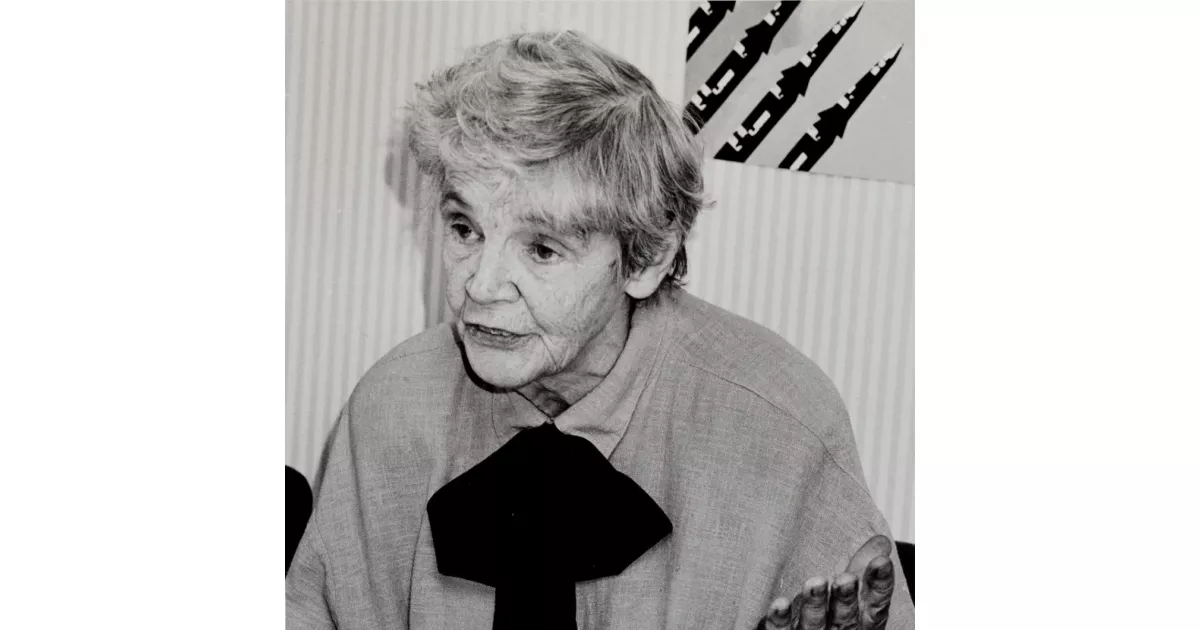
Alice Mary Stewart was a British physician and epidemiologist who specialized in social medicine and the effects of radiation on health. Her groundbreaking research revealed the dangers of low-level radiation, even challenging official opposition. She is known for her study on workers at the Hanford plutonium production plant, demonstrating the health hazards of radiation exposure. Notably, she was the first to establish a link between x-rays of pregnant women and increased cancer risks in their children. Her significant contributions to understanding radiation's impact on health were recognized with the Right Livelihood Award in 1986.
October 1906: Alice Stewart's Birth
Alice Mary Stewart was born in Sheffield, England in October 1906. Her parents were both physicians, and she followed in their footsteps by becoming a physician and epidemiologist.


1932: Completed Clinical Studies
In 1932, Alice Stewart completed her clinical studies at the Royal Free Hospital in London, marking a significant milestone in her journey to becoming a physician.
1935: Registrar at the Royal Free Hospital
Alice Stewart started working as a registrar at the Royal Free Hospital in 1935, gaining valuable experience in a prominent medical institution.
1936: Membership of the Royal College of Physicians
Alice Stewart became a member of the Royal College of Physicians in 1936, signifying her expertise and recognition within the medical community.
1939: Consultant at the Elizabeth Garratt Anderson Hospital
Alice Stewart began her role as a consultant at the Elizabeth Garratt Anderson Hospital in 1939, further solidifying her career in medicine.
1941: Move to Oxford and Interest in Social Medicine
In 1941, Alice Stewart moved to Oxford and began a temporary residency at the Radcliffe Infirmary. This move led her to develop a keen interest in social medicine while researching the health issues faced by wartime munitions workers.
1942: Assistant Head of Social and Preventive Medicine
In 1942, a department of social and preventive medicine was created at Oxford, and Alice Stewart was appointed as its assistant head.
1950: Head of the Social Medicine Unit
In 1950, Alice Stewart became the head of the social medicine unit at Oxford. Despite her leadership, she was not granted the title of 'professor', a decision she found disappointing.
1953: Pioneering Study of X-rays and Childhood Cancer
In 1953, Alice Stewart began a pioneering study funded by the Medical Research Council, investigating the link between X-ray exposure and childhood cancer. This research continued until 1956.
1956: Initial Rejection of Findings
Alice Stewart's findings on the link between x-ray exposure and childhood cancer were initially met with skepticism and rejected by the scientific community in 1956.
1974: Retirement
Alice Stewart retired from her position in Oxford in 1974, leaving behind a legacy of impactful research in social medicine and radiation exposure.
1986: Right Livelihood Award
Alice Stewart received the Right Livelihood Award in 1986 for her groundbreaking work in demonstrating the dangers of low-level radiation, even in the face of significant opposition.
1986: Right Livelihood Foundation Roll of Honor
In 1986, Alice Stewart was added to the esteemed roll of honor of the Right Livelihood Foundation, further cementing her contributions to public health.
1997: First Chair of the European Committee on Radiation Risk
Alice Stewart was appointed as the first Chair of the European Committee on Radiation Risk in 1997, a testament to her expertise and influence in the field.
1999: Publication of 'The Woman Who Knew Too Much'
Gayle Greene's biography of Alice Stewart, titled 'The Woman Who Knew Too Much,' was published in 1999, chronicling Stewart's life and her significant contributions to the understanding of radiation's impact on human health.
June 2002: Alice Stewart's Death
Alice Mary Stewart, a prominent British physician and epidemiologist, passed away in June 2002. She is best known for her groundbreaking work on the dangers of low-level radiation.

Trending

3 hours ago Jaxson Hayes Delivers Strong Performance Amidst Shifting Rotation Roles

3 hours ago Billionaire Rick Jackson Enters Georgia Political Race Seeking Voter Support

3 hours ago Trent Alexander-Arnold Faces Uncertain Future Amid Real Madrid Exit Rumors

4 hours ago Eduardo Camavinga Absent From Real Madrid El Clásico Squad Due To Tactical Decision

4 hours ago Max Verstappen Criticizes Austin Track Bumps and COTA Boss Remarks
4 hours ago Darryn Peterson Makes Impactful Debut for the Utah Jazz During NBA Preseason
Popular

Ilhan Omar is a prominent American politician currently serving as...

Ken Paxton is an American politician and lawyer serving as...

Elon Musk is a visionary entrepreneur and engineer known for...

Michael Joseph Jackson the King of Pop was a highly...

Barack Obama the th U S President - was the...

Greg Abbott is the current and th Governor of Texas...