


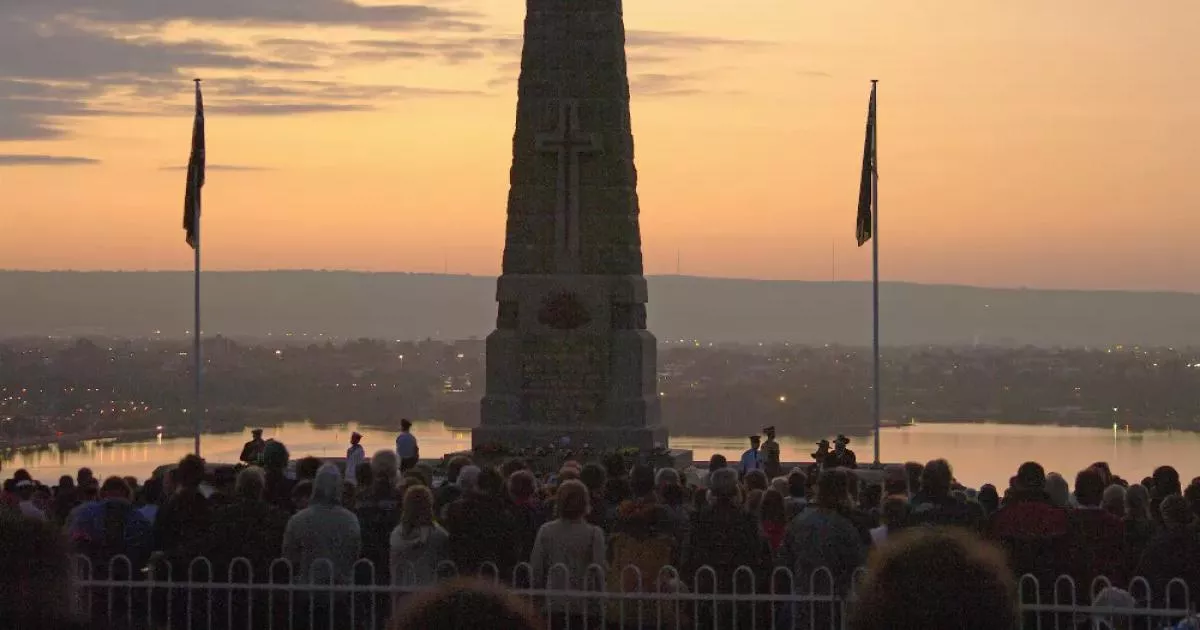
Anzac Day, observed annually on April 25th, is a significant national commemoration in Australia and New Zealand. It honors the sacrifices of all Australians and New Zealanders who served and perished in wars, conflicts, and peacekeeping missions, acknowledging their contributions and suffering. Originating as a tribute to the Australian and New Zealand Army Corps (ANZAC) who fought at Gallipoli during World War I, Anzac Day has evolved to encompass the sacrifices of all military personnel.
1901: Federation of Australia
The federation of Australia was proclaimed in 1901.


1914: World War I Begins
The First World War, a global conflict that had a profound impact on Australia and New Zealand, began in 1914.
April 1915: New Zealand's First Response to Gallipoli Landings
As news of the Gallipoli landings reached New Zealand in April 1915, the nation observed a half-day holiday and held impromptu services to acknowledge the event.
September 1915: Australia's First Gallipoli Memorial
Adelaide, South Australia, unveiled Australia's first memorial dedicated to the Gallipoli landing in September 1915, a testament to the impact of the campaign.
October 1915: "Anzac Day" First Used in South Australia
In October 1915, South Australia renamed Eight Hour Day to Anzac Day, marking the first official use of the term, and organized a carnival to support the Wounded Soldiers Fund.
December 1915: Melbourne's Anzac Remembrance Day
Melbourne held an Anzac Remembrance Day on 17 December 1915, demonstrating the growing significance of commemorating the Gallipoli campaign.
1915: ANZAC Landing at Gallipoli
On 25 April 1915, the Australian and New Zealand Army Corps (ANZAC) landed at Gallipoli as part of an Allied operation during World War I, encountering strong resistance from Ottoman forces.
1915: First Major Casualties for Australian and New Zealand Forces
The year 1915 marked the first significant casualties for Australian and New Zealand forces during World War I, particularly during the Gallipoli campaign.
January 1916: Queensland's Formalization of Anzac Day
In January 1916, Queensland established the Anzac Day Commemoration Committee, solidifying 25 April as "Anzac Day" and laying the groundwork for its national observance.
April 1916: First Dawn Services
An Australian battalion held a dawn service on the Western Front on the first anniversary of the Gallipoli landing in April 1916. Following this, similar services began to emerge across Australia.
1916: Anzac Day as a Day of Reflection and Recruitment
From 1916 onward, Anzac Day evolved into a day for both solemn remembrance and patriotic rallies, often used for recruitment drives during the war.
1916: Anzac Day Parade in Egypt
General John Monash oversaw an Anzac Day parade of troops in Egypt in 1916, highlighting the commemoration's reach beyond Australia and New Zealand.
1916: First Anzac Day March
The first Anzac Day march was held in London and Australia in 1916, aiming to encourage enlistment in the ongoing war.
1916: Anzac Day Formalized and Commemorated
The year 1916 marked the official naming of 25 April as Anzac Day, with ceremonies and services held in Australia, New Zealand, and London to honor those who served at Gallipoli.
1918: World War I Ends
The First World War ended in 1918, with the armistice signed on 11 November. This marked the end of the major fighting and the beginning of the peace process.
1919: Impact of Influenza on Anzac Day Commemorations
The 1919 influenza epidemic significantly impacted Anzac Day commemorations, leading to the cancellation of the Sydney parade and restrictions on public gatherings.
1920: Anzac Day Becomes Public Holiday in New Zealand
Advocacy by the New Zealand Returned Services' Association (RSA) led to the official recognition of Anzac Day as a public holiday in New Zealand in 1920.
1920: Anzac Biscuit Exemption
Around 1920, the Anzac biscuit, initially a homemade treat, began to be commercially produced and sold in Australia and New Zealand. The commercial production and sale of Anzac biscuits are specifically exempt from restrictions surrounding the use of the word "Anzac".
1920: Protection of Word "Anzac" Act
In 1920, the Protection of Word "Anzac" Act was passed in Australia. This act restricted the use of the word "Anzac" without the permission of the Minister for Veterans' Affairs.
1921: State Premiers' Conference Decision
In 1921, at the State Premiers' Conference in Australia, it was decided that Anzac Day would be observed annually on 25 April.
1921: Protection of Word 'Anzac' Regulations
In 1921, the Protection of Word 'Anzac' Regulations outlined the specifics of the 1920 Act, including penalties for violations. These regulations prohibit using "Anzac" for commercial purposes, entertainment, or as part of any entity's name without authorization. The regulations carry a maximum penalty of 12 months imprisonment or hefty fines.
1922: Invitation for Uniform Observance
In 1922, Australian states were invited to cooperate with the Commonwealth in observing Anzac Day, and religious bodies were invited to hold morning memorial services.
1927: First Domestic Anzac Day Rugby Matches
Domestic rugby matches in commemoration of Anzac Day began in 1927, with occasional exceptions.
1927: First Uniform Public Holiday
The year 1927 marked the first time all Australian states observed Anzac Day as a public holiday in some form.
1928: First Dawn Service at Sydney Cenotaph
The dawn service held at the Sydney Cenotaph in 1928 marked the beginning of a continuous tradition for these services.
1931: Government Officials Attend Dawn Service
In 1931, the dawn service at the Sydney Cenotaph was attended by the Governor and representatives of both state and federal governments for the first time.
1934: Quotation Attributed to Kemal Atatürk
A quotation about the fallen soldiers at Gallipoli was first attributed to Kemal Atatürk in 1934. This quotation was later inscribed on a monolith at Ari Burnu Cemetery (ANZAC Beach).
1935: First Anzac Day Stamp Issued
Australia Post issued its first stamp commemorating Anzac Day in 1935 to mark the 20th anniversary of the Gallipoli landings.
1939: Introduction of Dawn Service in New Zealand
The dawn service, originating from Australia, was introduced to New Zealand's Anzac Day commemorations in 1939.
1940: Adelaide's Gallipoli Memorial Relocated
The Adelaide City Council relocated the Gallipoli Memorial and its surrounding pergola to Lundie Gardens in 1940.
1942: First Commemoration at the Australian War Memorial
The first commemoration of Anzac Day at the Australian War Memorial took place in 1942, although it was a small event due to government restrictions on large public gatherings during World War II.
1949: Act Preventing Mondayization of Anzac Day Passed
An act passed in 1949 in New Zealand prevented the Mondayization of Anzac Day, which means it couldn't be moved to the 26th or 27th if the 25th fell on a weekend.
1953: First Appearance of Atatürk's Quotation
A version of the quote attributed to Kemal Atatürk about the fallen soldiers at Gallipoli first appeared in 1953 from a Turkish journalist.
1953: Anzac Day on a Saturday Sparks Debate
Anzac Day falling on a Saturday in 1953 led to widespread public debate in New Zealand, fueled by the legal ban on commerce and local restrictions on sports and entertainment.
1959: Renewed Debate on Anzac Day Observance
The debate over Anzac Day's observance resurfaced in 1959 when it coincided with a Saturday, prompting calls for its move to Sunday or abolition.
1960: Controversy Surrounding "The One Day of the Year" Play
Alan Seymour's play "The One Day of the Year," published in 1960, ignited controversy due to its critical portrayal of Anzac Day. The play, which explores social divisions and challenges traditional values through its protagonist's critique of Anzac Day as a day of excessive celebration, faced opposition from the Returned Services League. As a result, the play's scheduled performance at the Adelaide Festival of Arts was canceled.
1966: New Anzac Day Act
A new Anzac Day Act was passed in New Zealand in 1966, permitting sport and entertainment in the afternoon.
April 1975: Declining Interest in Anzac Day
Anzac Day received minimal coverage in April 1975, with The Australian newspaper dedicating only a single story to its passing.
1978: Women's Group Lays Wreath for Women in War
A women's group marked Anzac Day in 1978 by laying a wreath dedicated to women who were victims of rape and killing during wartime.
1978: Addition to Atatürk's Quotation
The phrase "There is no difference between the Johnnies and the Mehmets" was added to the quotation attributed to Kemal Atatürk in 1978.
1981: Women Against Rape in War March and Arrests
In 1981, over 60 women from the group Women Against Rape in War were arrested while marching on Anzac Parade to lay a wreath at the Stone of Remembrance in a demonstration against wartime sexual violence.
1985: Turkey Officially Recognizes ANZAC Cove
The Turkish government officially recognized the name "ANZAC Cove" on Anzac Day in 1985.
April 1990: Hawke's Gallipoli Visit and Support for Veterans
Bob Hawke, in April 1990, became the first Australian Prime Minister to visit Gallipoli. His decision to fund Anzac veterans' trips to Gallipoli for the 75th anniversary of the landing marked a turning point in Anzac Day's resurgence.
1990: 75th Anniversary of Gallipoli Landing
The 75th anniversary of the Gallipoli landing was marked in 1990 with a special Dawn Service at Gallipoli, attended by officials and veterans from Australia and New Zealand.
1990: Shop Trading Restrictions on Anzac Day in New Zealand
The Shop Trading Hours Act of 1990 in New Zealand prohibits shops from opening before 1 pm on Anzac Day.
1995: First Anzac Day AFL Match
The first Anzac Day match between AFL rivals Collingwood and Essendon took place in 1995 at the Melbourne Cricket Ground.
1997: First Anzac Test Rugby League Match
The inaugural Anzac Test, a rugby league match commemorating Anzac Day, took place in 1997, typically played before Anzac Day.
2000: Construction of Anzac Commemorative Site
A new site for the Gallipoli Dawn Service, called the Anzac Commemorative Site, was built on North Beach and completed in time for the 2000 service to accommodate the growing number of attendees.
2000: Howard's Visit to Gallipoli
Prime Minister John Howard, a strong supporter of Anzac Day commemorations, visited Gallipoli on Anzac Day in 2000.
2002: NRL Hosts Anzac Day Match
In 2002, the National Rugby League (NRL) started hosting an annual match between the St. George Illawarra Dragons and the Sydney Roosters to commemorate Anzac Day.
2004: Threat of Terrorist Attack at Gallipoli
In 2004, a terrorist threat at the Gallipoli site did not deter approximately 15,000 Australians from commemorating the fallen ANZAC troops in Turkey.
2005: Concerns Over Carnival-like Atmosphere at Anzac Day Events
A rock concert-style performance at the 2005 Anzac Cove commemoration, which involved drinking and sleeping among headstones and leaving the site littered with rubbish, ignited concerns about a shift towards a less respectful atmosphere at Anzac Day events.
2005: Criticism of Australian Prime Minister's Anzac Day Activities
In 2005, Australian Prime Minister John Howard faced criticism for prioritizing a barbecue with Australian troops over attending the New Zealand Anzac ceremony at Gallipoli, prompting criticism of a perceived Australian-centric view of the occasion.
2005: Howard's Second Visit to Gallipoli
John Howard made a second visit to Gallipoli on Anzac Day in 2005, further demonstrating his support for Anzac Day commemorations.
October 2008: Paul Keating's Criticism of Anzac Day Commemorations
Former Prime Minister Paul Keating sparked debate in October 2008 by criticizing the annual Anzac Day commemorations at Gallipoli. Keating argued that it was illogical to view the Gallipoli campaign as a defining moment for the nation's identity. His views were countered by then-Prime Minister Kevin Rudd, who emphasized the significance of the Gallipoli campaign in shaping Australia's national consciousness.
2008: Agreement for Substitute Public Holiday
In 2008, the Council for the Australian Federation reached an agreement to work towards a universal practice of observing a substitute public holiday on the Monday following Anzac Day when it falls on a Sunday.
2009: Lack of Awareness of New Zealand's Role in ANZAC
By 2009, observations from New Zealand historians highlighted a lack of awareness among some Australian children regarding New Zealand's integral role in ANZAC, further fueling the debate about the representation of both countries in the Anzac narrative.
2009: Additional Anzac Day NRL Game Introduced
From 2009, an additional NRL game was played on Anzac Day, initially between the Melbourne Storm and New Zealand Warriors.
2009: Tasmania Rejects Substitute Holiday Amendment
The Legislative Council of Tasmania rejected a bill amendment in 2009 that would have allowed for the substitute holiday in the state.
2011: Anzac Day Coincides with Easter Monday
In 2011, Anzac Day fell on Easter Monday, resulting in the Easter Monday holiday being moved to Tuesday.
2012: Controversial Remarks About Australian Soldiers
In 2012, a New Zealand journalist sparked controversy by making disparaging remarks about Australian World War I soldiers, characterizing them as lazy and dishonest. This incident ignited further tensions and highlighted the sensitivity surrounding national narratives and interpretations of shared history.
2013: Bill to Mondayize Anzac Day and Waitangi Day Passed
A bill to Mondayize both Anzac Day and Waitangi Day was passed in New Zealand in 2013 despite opposition from the governing National Party.
2013: Commercialization Threatens Centenary Commemoration
Historian Jonathan King voiced concerns in 2013 that the approaching centenary of the Gallipoli landings risked being overshadowed by commercial interests, potentially transforming it into a spectacle rather than a solemn occasion.
2013: First AFL Game for Premiership Points Outside Australia
In 2013, St Kilda and the Sydney Swans played an Anzac Day match in Wellington, New Zealand. This was the first AFL game played for premiership points outside of Australia.
2015: Start of Declining Crowds at Canberra War Memorial
2015 marked the beginning of a trend of declining crowds at the Canberra war memorial service.
2015: Commercialization of Anzac Day
Concerns about the increasing commercialization of Anzac Day were raised by historians and commentators. Historian Carolyn Holbrook pointed out companies' attempts to capitalize on "Anzac" as a brand. Notably, Woolworths' 2015 "Fresh in Our Memories" campaign sparked public backlash. The debate centered on the perceived exploitation of Anzac Day for profit, with calls for stricter government enforcement of regulations to prevent the misuse of "Anzac" in marketing.
2015: Peak Anzac
Historian Carolyn Holbrook identifies 2015 as the year of "Peak Anzac," highlighting the sustained significance of Anzac Day commemorations.
2015: Anzac Day Commemorations at Gallipoli Ballot
In 2015, a ballot was held to allocate passes for Australians and New Zealanders wishing to attend Anzac Day commemorations at Gallipoli. The ballot allocated 8,000 passes for Australians and 2,000 for New Zealanders, with an additional 500 for official representatives from all nations involved in the Gallipoli campaign.
2015: Digital Commemoration of Anzac Day
The centenary commemoration of Anzac coincided with the rise of the internet and social media, ushering in a new era of digital commemoration. Practices like Anzac Day selfies, online discussions, and virtual reality experiences created a more interactive and personalized engagement with the day. While some praised the expanded reach and engagement, others expressed concern over a potential shift away from the traditional solemnity and historical perspective.
2017: Last Anzac Test Rugby League Match
The final Anzac test rugby league match occurred in 2017.
2017: Recognition of Aboriginal Australians in War
The year 2017 saw increasing recognition of the contributions and sacrifices of Aboriginal Australians in war, with projects like "Black Diggers" and the "Aboriginal Diggers Project" highlighting their stories.
2018: "By The Left" Initiative for Female Veterans
The "By The Left" initiative was launched in 2018 to encourage female veterans to lead their sections in Anzac Day marches, addressing instances where they faced challenges for wearing medals on the "wrong" side.
2019: UNESCO Recognition for Anzac Day Archives
The minutes of the Anzac Day Commemoration Committee of Queensland were included in UNESCO's Memory of the World Australian Register in 2019.
2019: Continued Recognition of Aboriginal Australians in War
The recognition of Aboriginal Australians in war continued into 2019, marking a shift towards a more inclusive understanding of Anzac Day.
2020: Driveway at Dawn Movement
The COVID-19 pandemic in 2020 led to the cancellation of Anzac Day marches, prompting the emergence of the "Driveway at Dawn" movement, encouraging people to commemorate at home.
2020: Anzac Day AFL Match Canceled
The annual Anzac Day AFL match was not played in 2020 due to the COVID-19 pandemic.
2021: Anzac Day During Pandemic Restrictions
In 2021, Anzac Day marches in Australia proceeded with pandemic restrictions, including ticketing, limited numbers, and cancellations in some areas like Perth due to lockdowns. Overseas services were also cancelled.
2022: Return of Dawn Services and Parades
2022 saw the return of dawn services in Australia and Gallipoli after the easing of pandemic restrictions. Crowds returned to pre-pandemic levels in most Australian states and territories. However, Perth had limited attendance due to ongoing restrictions, and parades in New Zealand were canceled.
2023: Declining Crowds at Canberra War Memorial
In 2023, 30,000 people attended the Canberra war memorial service. This number reflects a declining trend in attendance since 2015.
2023: Second Biggest Home and Away Crowd in AFL History
The 2023 Anzac Day AFL match drew a crowd of 95,179, making it the second-largest home and away crowd in AFL history.
2023: Last Anzac Day NRL Game with New Zealand Warriors
The 2023 Anzac Day marked the last time the New Zealand Warriors participated in the additional NRL game.
2024: Collingwood Leads Anzac Day AFL Matches
As of 2024, Collingwood has won 17 Anzac Day AFL matches against Essendon, who have won 10, with two draws.
2024: South Sydney Rabbitohs Join Anzac Day NRL Games
The South Sydney Rabbitohs replaced the New Zealand Warriors in the additional Anzac Day NRL game in 2024.
Mentioned in this timeline
New Zealand is an island country in the southwestern Pacific...

The rapid advancement of artificial intelligence continues to dominate the...
Australia officially the Commonwealth of Australia is a country encompassing...
War is defined as an armed conflict involving the armed...
Turkey officially the Republic of T rkiye is a transcontinental...

Easter is a Christian holiday celebrating the resurrection of Jesus...
Trending

3 hours ago Jabari Walker Impresses with Powerful Dunk and Strong Preseason Performance for 76ers

3 hours ago Skip Bayless Discusses Personal Life Views and Current NBA Player Comparisons

3 hours ago Rookie Daniel Espino Named Starter for Guardians in Critical ALDS Game 3

3 hours ago John Cena's Matchbox Movie Receives Negative Critical Reception

3 hours ago Amanda Seyfried Jump-Scared by Daughter Nina in Viral Scream Mask Video

3 hours ago Hannah Waddingham Reveals Early Acting Roles in British Television Shows
Popular

Ken Paxton is an American politician and lawyer serving as...

Cristiano Ronaldo widely considered one of the greatest footballers captains...

Elon Musk is a visionary entrepreneur and engineer known for...

Jameis Winston is an American football quarterback currently playing for...

Michael Joseph Jackson the King of Pop was a highly...

Shakira Isabel Mebarak Ripoll the Queen of Latin Music is...