Challenges in the Life of Brett Kavanaugh in a Detailed Timeline


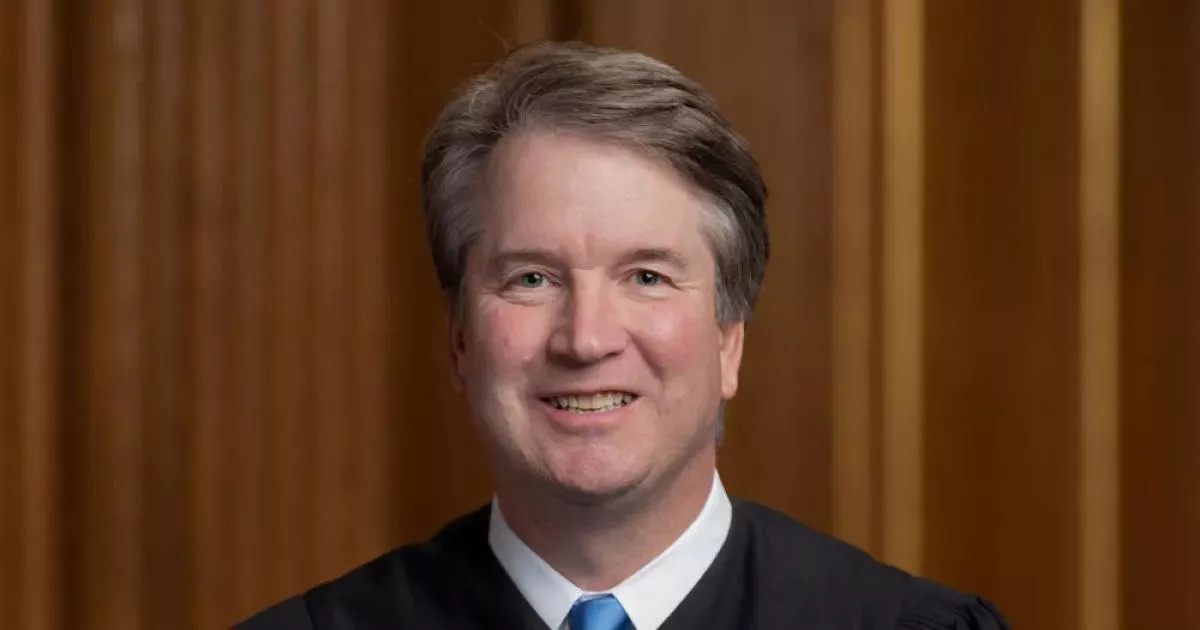
A closer look at the defining struggles that shaped Brett Kavanaugh's life and career.
Brett Kavanaugh is an American lawyer and jurist, currently serving as an Associate Justice of the Supreme Court of the United States. Nominated by President Donald Trump, he assumed the role on October 6, 2018. Prior to his Supreme Court appointment, Kavanaugh served as a U.S. circuit judge on the U.S. Court of Appeals for the District of Columbia Circuit, a position he held from 2006 to 2018.
1981: Swetnick's Allegations
Julie Swetnick described attending parties between 1981-1983 where Mark Judge and Brett Kavanaugh were present. She described witnessing efforts by Mark Judge and Brett Kavanaugh to cause girls to become inebriated so they could be gang raped.


1983: Alleged Incident with Deborah Ramirez
In 1983, Deborah Ramirez alleged that Kavanaugh exposed himself to her and thrust his penis against her face after they had both been drinking at a college party during the 1983–84 academic year.
1983: Swetnick's Allegations
Julie Swetnick described attending parties between 1981-1983 where Mark Judge and Brett Kavanaugh were present. She described witnessing efforts by Mark Judge and Brett Kavanaugh to cause girls to become inebriated so they could be gang raped.
1998: Arguments before Supreme Court
In 1998, Kavanaugh rejoined Starr as an Associate Counselor. In Swidler & Berlin v. United States (1998), Kavanaugh argued his first and only case before the Supreme Court, asking the Court to disregard attorney–client privilege in relation to the investigation of Foster's death; the court rejected Kavanaugh's arguments by a vote of 6–3.
2003: Nomination to U.S. Court of Appeals
In 2003, Brett Kavanaugh was nominated by President George W. Bush to the U.S. Court of Appeals for the D.C. Circuit. His confirmation hearings were contentious and stalled for three years.
2006: ABA Rating Downgrade
In 2006, the American Bar Association downgraded Kavanaugh's rating from 'well qualified' to 'qualified'.
July 2007: Accusations of Lying to Judiciary Committee
In July 2007, senators Patrick Leahy and Dick Durbin accused Kavanaugh of lying to the Judiciary Committee when he denied being involved in formulating the Bush administration's detention and interrogation policies.
April 2017: Senate 'Nuclear Option'
In April 2017, the Senate voted to invoke cloture, advancing the nomination to a final floor vote by applying the "nuclear option", which uses a simple majority vote instead of the traditional three-fifths supermajority.
July 2018: Issue Reemerges After Supreme Court Nomination
In July 2018, the issue of Kavanaugh's involvement in the Bush administration's detention and interrogation policies reemerged after his nomination to the Supreme Court.
July 2018: Kavanaugh on Supreme Court Shortlist and Sexual Assault Accusations
In early July 2018, Brett Kavanaugh was shortlisted for the Supreme Court. Around the same time in July 2018, Christine Blasey Ford accused Kavanaugh of sexual assault during their high school years.
July 30, 2018: Ford's Letter to Senator Feinstein
On July 30, 2018, Christine Blasey Ford wrote to Senator Dianne Feinstein, informing her of the accusation against Kavanaugh and requesting confidentiality.
September 2018: Criticism for Investigation into Foster's Death
In a September 2018 New York Times op-ed, Princeton University history professor Sean Wilentz criticized Kavanaugh for having invested federal money and other resources into investigating partisan conspiracy theories surrounding the cause of Vincent Foster's death.
September 23, 2018: Publication of Ramirez Allegation in The New Yorker
On September 23, 2018, The New Yorker published an article by Ronan Farrow and Jane Mayer featuring an allegation by Deborah Ramirez, who accused Kavanaugh of exposing himself and thrusting his penis against her face at a college party during the 1983–84 academic year.
October 4, 2018: White House Response to Ford's Allegation
On October 4, 2018, the White House announced that after reviewing the FBI's probe, they found no corroboration of Ford's allegation against Kavanaugh.
December 2018: Ethics Complaints Dismissed
In December 2018, a special federal panel dismissed eighty-three ethics complaints against Kavanaugh, stating that lower court judges lacked the authority to investigate Supreme Court justices.
September 2019: Publication of 'The Education of Brett Kavanaugh'
In September 2019, The New York Times reporters Kate Kelly and Robin Pogrebin published "The Education of Brett Kavanaugh: An Investigation," which contained information challenging Ford's account and suggesting pressure on Keyser to conform her story.

2019: Kavanaugh withdrew from teaching at Harvard
In 2019, Kavanaugh voluntarily withdrew from teaching at Harvard for the winter semester, after allegations of sexual misconduct against him.
June 8, 2022: Sophie Roske traveled to Kavanaugh's home with plans to murder him.
On June 8, 2022, Sophie Roske traveled from California to Kavanaugh's home in Maryland with plans to break into his home, murder Kavanaugh, and die by suicide. Roske called the police on herself and was arrested.
June 2022: Assassination Plot
In June 2022, Brett Kavanaugh was the target of an assassination plot by a suspect hoping to disrupt rulings in Dobbs and Bruen.
2022: Protests at Kavanaugh's Home
In 2022, Kavanaugh's home was the site of protests following the leak of a draft majority opinion for the Supreme Court case Dobbs v. Jackson Women's Health Organization.
2023: Release of Doug Liman's Documentary 'Justice'
In 2023, Doug Liman's documentary 'Justice' recounts the sexual assault allegations against Kavanaugh, including the testimony of Ford and Ramirez.
April 8, 2025: Sophie Roske pleaded guilty to attempted murder
On April 8, 2025, Sophie Roske pleaded guilty to attempted murder of a U.S. Supreme Court justice.
October 3, 2025: Sophie Roske sentenced to 97 months in prison
On October 3, 2025, U.S. district judge Deborah Boardman sentenced Sophie Roske to 97 months in prison and a lifetime of supervised release for attempted murder of a U.S. Supreme Court justice.
Mentioned in this timeline

Donald John Trump is an American politician media personality and...

Bill Clinton served as the nd U S President from...

George W Bush the rd U S President - is...

Ruth Bader Ginsburg was an American lawyer and Supreme Court...

The Affordable Care Act ACA also known as Obamacare is...

The White House located at Pennsylvania Avenue NW in Washington...
Trending

3 hours ago Healthy Joel Embiid Expected to Transform Philadelphia 76ers Performance This NBA Season

6 months ago Sixers face Spurs on April 6, 2026; Maxey stars, Payne injured.

3 hours ago Dateline Features the Tragic Murder Case of Ripley Businessman Kirby Carpenter

4 hours ago Speculation Grows Over Jayson Tatum and Jaylen Brown Partnership Dynamics

5 hours ago Kevin Bacon Seeks Fan Assistance Following Recent Heartbreaking Personal Loss
5 hours ago Tacoma Grocery Owner Extradited from India Over $600K Food Stamp Fraud Scheme
Popular

Ilhan Omar is a prominent American politician currently serving as...

Ken Paxton is an American politician and lawyer serving as...

Elon Musk is a visionary entrepreneur and engineer known for...

Michael Joseph Jackson the King of Pop was a highly...

Jameis Winston is an American football quarterback currently playing for...

Cristiano Ronaldo widely considered one of the greatest footballers captains...