Rise to Success: Career Highlights of Claudia Sheinbaum


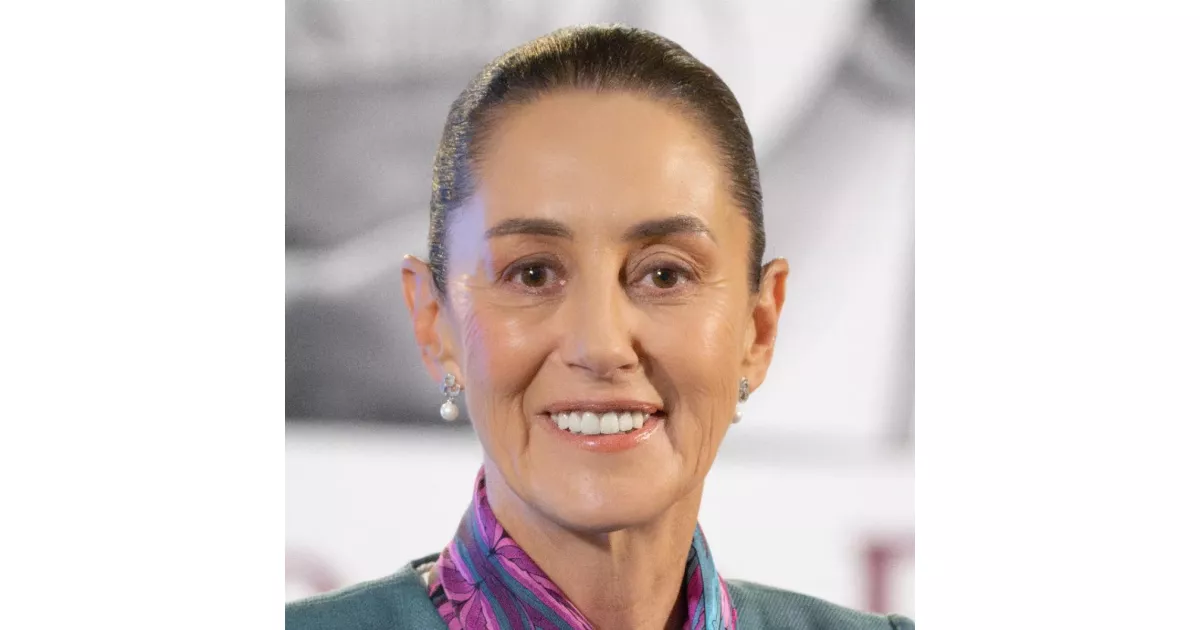
Discover the career path of Claudia Sheinbaum, from the first major opportunity to industry-changing achievements.
Claudia Sheinbaum Pardo is a Mexican politician, scientist, and academic currently serving as the 66th president of Mexico since 2024. She is notable for being the first woman and first Jewish person to hold this position. Affiliated with the National Regeneration Movement (Morena), she previously served as Head of Government of Mexico City from 2018 to 2023. Sheinbaum was also ranked as the fourth most powerful woman in the world by Forbes in 2024.
1989: Joined the Party of the Democratic Revolution
In 1989, Claudia Sheinbaum joined the Party of the Democratic Revolution (PRD).


1991: Ph.D. Thesis Work at Lawrence Berkeley National Laboratory
Between 1991 and 1994, Claudia Sheinbaum completed the work for her Ph.D. thesis at the Lawrence Berkeley National Laboratory in California, analyzing energy use in the Mexican transportation sector.
1994: Ph.D. Thesis Work at Lawrence Berkeley National Laboratory
Between 1991 and 1994, Claudia Sheinbaum completed the work for her Ph.D. thesis at the Lawrence Berkeley National Laboratory in California, analyzing energy use in the Mexican transportation sector.
1995: Joined UNAM Faculty
In 1995, Claudia Sheinbaum joined the faculty of the Institute of Engineering at UNAM.
December 2000: Appointed Secretary of the Environment of the Federal District
In December 2000, Claudia Sheinbaum was appointed as the secretary of the environment of the Federal District by Andrés Manuel López Obrador.
2000: Secretary of the Environment in the Federal District
From 2000 to 2006, Claudia Sheinbaum served as secretary of the environment in the Federal District under Andrés Manuel López Obrador.
2000: PRD Previously Governing Borough Since 2000
In 2015 Sheinbaum flipped the Tlalpan borough from the Party of the Democratic Revolution (PRD), which had governed the borough since 2000.
May 2006: End of Term as Secretary of the Environment
From December 2000 to May 2006, Claudia Sheinbaum served as the secretary of the environment of the Federal District under Andrés Manuel López Obrador. During her term, she was responsible for constructing an electronic vehicle registration center for Mexico City and oversaw the introduction of the Metrobús and the construction of the second storey of Mexico City's ring road, Anillo Periférico.
2006: End of Term as Secretary of the Environment
From 2000 to 2006, Claudia Sheinbaum served as secretary of the environment in the Federal District under Andrés Manuel López Obrador.
2006: Returned to UNAM and Began Publishing Articles
In 2006, Claudia Sheinbaum returned to UNAM after a period in government and began publishing articles in scientific journals.
2007: Contributed to IPCC Report
In 2007, Claudia Sheinbaum contributed to the "Industry" chapter of the WG3 (Mitigation) report of the Intergovernmental Panel on Climate Change 4AR.
October 2012: Inauguration of Line 12 of the Mexico City Metro
On October 30, 2012, Line 12 of the Mexico City Metro was inaugurated by the head of government of Mexico City, Marcelo Ebrard, and the president of Mexico, Felipe Calderón.
2012: Included in Proposed Cabinet
In 2012, López Obrador included Claudia Sheinbaum in his proposed cabinet for the Secretariat of Environment and Natural Resources as part of his campaign for the presidential election.
July 2013: Delivery of Line 12 Work
In July 2013, Marcelo Ebrard stated that the work on Line 12 was definitively delivered after seven months of reviews.
2013: Reversing Key Aspects of the 2013 Energy Reform
As president, Claudia Sheinbaum enacted a series of constitutional reforms with the support of her legislative supermajority, including reversing key aspects of the 2013 energy reform to strengthen state control over the energy sector.
2013: Served as Lead Author for IPCC Fifth Assessment Report
In 2013, Claudia Sheinbaum served as a lead author for a chapter in the IPCC Fifth Assessment Report.
2014: Joined Morena
In 2014, Claudia Sheinbaum joined López Obrador's splinter movement, the National Regeneration Movement (Morena).
2015: Elected Mayor of Tlalpan Borough
In 2015, Claudia Sheinbaum was elected mayor of Tlalpan borough.
2015: Nominated and Won Mayorship of Tlalpan
In the 2015 Federal District local elections, Claudia Sheinbaum was nominated by the National Regeneration Movement (Morena) for the mayorship of Tlalpan. She won with 29.48% of the vote.
August 2017: Participated in Poll for Head of Government Candidate
In August 2017, Claudia Sheinbaum participated in a poll by the National Regeneration Movement to determine the party's candidate for the head of government of Mexico City. She secured first place with 15.9% of the vote.
December 2017: Resigned to Run for Head of Government of Mexico City
On 5 December 2017, Claudia Sheinbaum resigned to run for Head of Government of Mexico City as a candidate for the Juntos Haremos Historia coalition, composed of Morena, the Labor Party (PT), and the Social Encounter Party (PES).
December 2017: Stepped Down as Mayor of Tlalpan
On 5 December 2017, Claudia Sheinbaum stepped down as mayor of Tlalpan to register her pre-candidacy for Head of Government of Mexico City.
April 2018: Campaign Launch for Head of Government
At her campaign launch on 1 April 2018, Claudia Sheinbaum prioritized fighting crime, generating jobs, maintaining the universal pension for seniors, and expanding the Mexico City Metrobús system.
July 2018: Elected Head of Government of Mexico City
On 1 July 2018, Claudia Sheinbaum was elected to a six-year term as the head of government of Mexico City with 47.08% of the vote.
December 2018: Inaugurated as Head of Government of Mexico City
On 5 December 2018, Claudia Sheinbaum was inaugurated as Mexico City's head of government. She became the first elected female head of government and the first to come from a Jewish background.
2018: Head of Government of Mexico City
In 2018, Claudia Sheinbaum became Head of Government of Mexico City, focusing on security, public transport, and social programs.
June 2019: Announced Six-Year Environmental Plan
In June 2019, Claudia Sheinbaum announced a new six-year environmental plan to reduce air pollution by 30%, plant 15 million trees, ban single-use plastics and promote recycling, build a new waste separation plant, provide water service to every home, construct 100 kilometers of trolleybus and metrobús-only corridors, and construct and install solar panels and water heaters.
2019: Declared Gender Violence Alert
In 2019, Claudia Sheinbaum declared a gender violence alert in response to rising public concern. Her administration launched a citywide hotline and built over 700 kilometers of "safe corridors" to improve security for women in public spaces.
February 2020: COVID-19 response
In February 2020, shortly after the first COVID-19 case in Mexico City was confirmed, Sheinbaum addressed the city, emphasizing that while the risk was low, the population needed to stay informed through official sources.
May 2021: Ebrard's Response to Metro Collapse
On May 4, 2021, Marcelo Ebrard expressed his willingness to respond and collaborate in the event of any request from the authorities regarding the collapse of Metro Line 12.
June 2021: Dismissal of Florencia Serranía Soto
On June 28, 2021, Sheinbaum dismissed the general director of the Mexico City Metro, Florencia Serranía Soto.
2021: Opening of Cablebús Cable Car System Lines 1 and 2
Claudia Sheinbaum introduced the Cablebús cable car system, with Lines 1 and 2 opening in 2021, and began construction on Line 3 the same year. Her administration expanded the Metrobús network by 33 kilometers, electrified Line 3, and added low-emission buses to the city’s Red de Transporte de Pasajeros.
2021: UNESCO Award for Pilares Community Centers
Community centers called pilares were established in marginalized neighborhoods and towns. In 2021, these spaces promoted arts, sports, education, and cultural activities and were recognized with an award from UNESCO.
2022: Mi Beca para Empezar Elevated to Constitutional Law
As part of her administration's education policy, the Mi Beca para Empezar scholarship program was created for 1.2 million students from preschool to secondary education and, in 2022, was elevated to constitutional law in Mexico City.
2022: Modernization of Metro Line 1
She continued the extension of Mexico City Metro Line 12 to Observatorio station and launched a MX$37 billion modernization of Metro Line 1 in 2022, including new trains, track replacements, and an upgraded control system.
June 2023: Resigned as Head of Government of Mexico City
On 16 June 2023, Claudia Sheinbaum resigned as Head of Government of Mexico City to participate in the internal selection for the Morena-led coalition, Juntos Hacemos Historia, ahead of the 2024 presidential election.
November 2023: Sheinbaum registered as presidential nominee
On November 19, 2023, Sheinbaum was registered as the presidential nominee of Sigamos Haciendo Historia, the successor coalition to Juntos Hacemos Historia.
2023: Resigned to Run for President
In 2023, Claudia Sheinbaum resigned as Head of Government of Mexico City to run for president.
2023: End of Term as Head of Government of Mexico City
In 2023, Claudia Sheinbaum's term as Head of Government of Mexico City came to an end.
February 2024: Sheinbaum formally registered her presidential candidacy
On February 18, 2024, Sheinbaum formally registered her presidential candidacy at the National Electoral Institute (INE).
March 2024: Campaign launch
On March 1, 2024, Sheinbaum launched her campaign at the Zócalo, outlining her proposals and emphasizing her commitment to continuing President López Obrador's Fourth Transformation policies. She pledged to pass "Plan C", a package of eighteen constitutional amendments proposed by López Obrador earlier that year, which include increasing the minimum wage above inflation, elevating social programs to constitutional law, and electing judiciary members by popular vote.
June 2024: Sheinbaum projected as president-elect
On June 2, 2024, Sheinbaum was projected the winner of the election by the INE's quick count at 11:50 CST, making her the virtual president-elect. On June 6, district tallies confirmed that Sheinbaum won a landslide victory. She received the highest number of votes ever recorded for a candidate in Mexican history, carried 31 out of 32 states, and achieved 59.76% of the vote, the highest vote percentage since free and fair elections began in Mexico.
June 2024: Sheinbaum started rolling out cabinet appointments
On June 20, 2024, Sheinbaum started rolling out her cabinet appointments in phases, beginning with the first announcements.
October 2024: Sheinbaum sworn in as president
On October 1, 2024, Sheinbaum was sworn in as president, becoming the first woman, as well as the first person of predominantly Jewish heritage, to hold the office. The presidential sash was handed to her by Ifigenia Martínez, the president of the Congress of the Union and a prominent figure for the Mexican left. In her address to Congress, Sheinbaum thanked her predecessor, highlighted her historic election as the first woman to the presidency, pledged responsible fiscal policies, and reassured foreign investors.
October 2024: Constitutional amendment published for CFE and PEMEX
On October 30, 2024, Sheinbaum published a constitutional amendment that reclassified both the Federal Electricity Commission (CFE) and Petróleos Mexicanos (Pemex) as public institutions.
November 2024: Attended G20 summit
In November 2024, Sheinbaum attended the G20 summit where she proposed allocating 1% of global military spending to reforestation efforts and advocated for expanding the United Nations Security Council. She also held bilateral meetings with various world leaders.
2024: Won Presidential Election
In the 2024 presidential election, Claudia Sheinbaum defeated Xóchitl Gálvez in a landslide.
2024: Ahead of the 2024 Presidential Election
On 16 June 2023, Claudia Sheinbaum resigned as Head of Government of Mexico City to participate in the internal selection for the Morena-led coalition, Juntos Hacemos Historia, ahead of the 2024 presidential election.
February 2025: Constitutional reform proposal submitted to Congress
In February 2025, Sheinbaum submitted a constitutional reform proposal to Congress aimed at prohibiting immediate reelection and barring family members of sitting officeholders from running for the same position.
February 2025: Reached agreement with President Trump to suspend tariffs
In February 2025, following President Trump’s executive order implementing tariffs on Mexican imports, Sheinbaum reached an agreement with Trump to suspend the tariffs for one month, committing to deploy 10,000 National Guard troops to the border.
April 2025: Moved to outlaw foreign propaganda
In April 2025, Sheinbaum moved to outlaw foreign propaganda in response to an anti-migrant advertisement broadcast on Mexican TV that was paid for by the Trump administration.
May 2025: Homicide rate decreased
During the first months of Sheinbaum's administration, the homicide rate decreased by approximately 25%, with daily homicides falling from 86.9 at the start of her term to 64.5 as of May 2025.
June 2025: Narcotics Confiscated
By June 2025, authorities had confiscated approximately 178 tonnes of narcotics, including 3 million fentanyl pills, from 1,150 clandestine laboratories.
August 2025: Plans to increase tariffs on imports from China
In August 2025, Sheinbaum's government announced plans to increase tariffs on imports from China, prompting a warning of retaliation from the Chinese government.
2025: Sheinbaum outlines key projects for 2025 budget
In early August, Sheinbaum met with governors and governors-elect to outline key projects for her 2025 budget. Sheinbaum also pledged to continue López Obrador's morning press conferences, known as mañaneras, at 7:00 AM CST.
2026: Review of the United States–Mexico–Canada Agreement
The appointment of Marcelo Ebrard as Secretary of the Economy was interpreted as a strategic move ahead of the scheduled review of the United States–Mexico–Canada Agreement (USMCA) in 2026.
Mentioned in this timeline
Donald John Trump is an American politician media personality and...
California is a U S state on the Pacific Coast...
Christopher Columbus an Italian explorer and navigator completed four voyages...
An earthquake is a sudden intense shaking of the Earth's...

A car also known as an automobile is a wheeled...

Mexico City is the capital and largest city of Mexico...
Trending
10 days ago Karrueche Tran Reacts to Unexpected Nickname from Deion Sanders' Grandson
4 hours ago Miami President Discusses Potential ACC Exit and Realignment to Big Ten or SEC

4 hours ago Bill Ackman Discusses Meta Investments and Criticizes Democratic Party Figures
5 hours ago Nasdaq Drops Amid AI Spending Concerns and Rising Oil Prices

5 hours ago JJ Watt Named New CBS Lead NFL Analyst Replacing Tony Romo
5 hours ago Josh O'Connor Delivers Knockout Performance in Highly Acclaimed London West End Production
Popular

Ilhan Omar is a prominent American politician currently serving as...

Ken Paxton is an American politician and lawyer serving as...

Michael Joseph Jackson the King of Pop was a highly...

Elon Musk is a visionary entrepreneur and engineer known for...

Cristiano Ronaldo widely considered one of the greatest footballers captains...

Linda Ronstadt is a versatile American singer renowned for her...