


The Coen Carrier Station, located in Coen, Queensland, Australia, is a heritage-listed telegraph station constructed in 1942 by the Postmaster-General's Department. Also known as the Coen Telegraph Station and Coen Carrier Repeater Station, it holds significance as a historical landmark and was officially added to the Queensland Heritage Register on May 27, 1997, recognizing its importance to the region's history and development of communication infrastructure.
July 1941: New airfields completed
By July 1941, a new airfield north of Coen and a new runway at Iron Range had been completed. However, the Coen Telegraph Station only had morse facilities and a 6-line pyramid switchboard at this time.


December 1941: Australia's declaration of war on Japan
Following simultaneous attacks by the Japanese on Hawaii, Hong Kong, and Malaya, Australia declared war on Japan on December 9, 1941. This event underscored the need to upgrade defence facilities on Cape York Peninsula, including telecommunications.
March 1942: Bombing of Darwin and Arrival of American troops
In March 1942, Darwin was bombed by the Japanese, and American troops arrived in north Queensland. These events accelerated plans to improve telecommunications to the Peninsula.
July 1942: Bombing of Townsville
In July 1942, Townsville was bombed by the Japanese, hastening plans to improve telecommunications on the Peninsula. Australia became the centre of communications in the South Pacific.
August 1942: Upgrade of telecommunications commenced
In August 1942, a major undertaking to upgrade telecommunications on Cape York Peninsula commenced. The US Army Signal Corps, the Australian Army Signals, and the Postmaster-General's Department (PMG) contributed personnel. Australian Army Engineers, supervised by the PMG, were responsible for the line northwards from the Hann River, including the upgrading of facilities at Coen and the construction of the new loop line from Coen to Iron Range.
November 1942: Line work completed
By November 23, 1942, the work of upgrading telecommunications on the Cape York Peninsula was completed.
December 1942: Telecommunications channels in service
All telecommunications channels between Townsville and Cape York were in service on December 9, 1942, but the Coen Carrier Station was not completed until Boxing Day. A PMG officer and two Army signals personnel staffed each of the carrier stations, with the PMG officers in charge. The prototype four-channel VF telegraph (Type R) manufactured by PMG's Melbourne workshops was installed between October and December 1942 at the Cape York Peninsula carrier stations.
1942: Building erected
In 1942, a prefabricated steel and corrugated iron building, the Coen Carrier Station, was erected as part of an urgent upgrade to the Cape York Peninsula overland telegraph line, responding to Japanese aggression.
1942: Four carrier stations erected
In 1942, four carrier stations were erected on Cape York Peninsula, including Coen Carrier Station.
1942: Designed and Built
In 1942, the Coen Carrier Station was designed and built by the Postmaster-General's Department.
1942: Australian Army Signals Corps
The station has a special association with the work of the Postmaster-General's Department in developing new technology in Australia during World War II, and with the important work of the Australian Army Signals Corps, who installed the Cape York Peninsula line and carrier equipment in 1942 and staffed the building during the war.
1945: Control of telecommunications facilities reverted to Postmaster-General's Department
In 1945, following the cessation of hostilities, control of the telecommunications facilities reverted to the Postmaster-General's Department. Circuits became available for public use, permitting telephone trunk calls from Cape York Peninsula to the rest of Australia for the first time.
1949: Fairview Carrier Station closed
Fairview Carrier Station was closed in 1949 and, although still in situ, is now an outstation of Olive Vale Station.
1958: System re-routed
In 1958, the Mount Surprise to Coen system was re-routed from Cooktown to Coen.
1960: Cape York Carrier Station closed
The Cape York Carrier Station was closed in 1960.
1963: Original line abandoned
In 1963, the original line from Mount Surprise to Fairview via Palmerville was abandoned as a trunk route.
1982: Broadband radio system in service as far as Coen
In 1982, a broadband radio system was in service as far as Coen, at which time the open-wire route to the south was abandoned as a trunk route, and the installation of an automatic exchange at Coen was made possible.
1987: Broadband extended to Thursday Island
In 1987, broadband was extended to Thursday Island, at which time the open-wire line north of Coen was abandoned.
1990: Building unoccupied
Following completion of the broadband system, the Coen Carrier Station was used to accommodate Telecom service personnel working in the region; but has been unoccupied since 1990.
May 1997: Added to Queensland Heritage Register
Coen Carrier Station was added to the Queensland Heritage Register in May 1997.
July 2014: Wikipedia Article Based on Queensland Heritage Register
This Wikipedia article was originally based on "The Queensland heritage register" published by the State of Queensland under CC-BY 3.0 AU licence, accessed on 7 July 2014.
September 2014: Geo-coordinates computed
The geo-coordinates were originally computed from the "Queensland heritage register boundaries" published by the State of Queensland under CC-BY 3.0 AU licence, accessed on 5 September 2014.
October 2014: Queensland Heritage Register Archived
The Queensland heritage register was archived on 8 October 2014.
Mentioned in this timeline
Hong Kong is a densely populated special administrative region of...
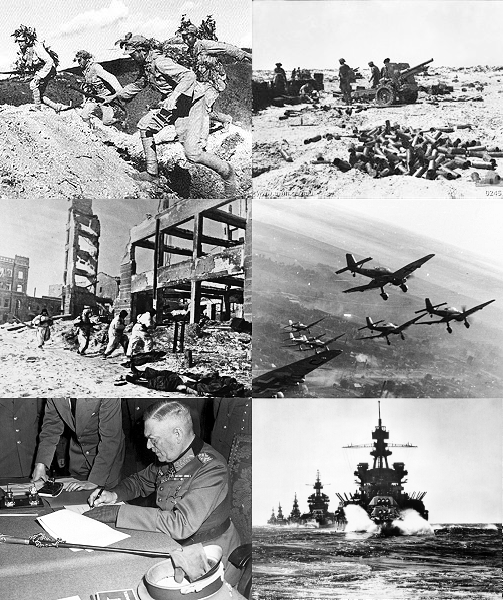
World War II - was a global conflict between the...

Japan is an East Asian island country located in the...

Australia officially the Commonwealth of Australia is a country encompassing...
War is defined as an armed conflict involving the armed...
Hawaii is a non-contiguous U S state located in the...
Trending
3 hours ago George Clooney Plans to Launch New Italian Restaurant in Provence, France

3 hours ago Hugh Jackman Shares Health Secrets and Teases Wolverine Return

3 hours ago Lakers Dominate Kings in Decisive NBA Preseason Victory
3 hours ago Darnell Nurse Discusses San Jose Sharks Performance Following Loss in Dallas

3 hours ago Fernando Mendoza Becomes Inspirational Figure for Raiders and Latino Community

3 hours ago Amanda Bynes Announces New Mystery Project Titled Kendall
Popular

Ken Paxton is an American politician and lawyer serving as...

Cristiano Ronaldo widely considered one of the greatest footballers captains...

Elon Musk is a visionary entrepreneur and engineer known for...

Shakira Isabel Mebarak Ripoll the Queen of Latin Music is...

Jameis Winston is an American football quarterback currently playing for...

Michael Joseph Jackson the King of Pop was a highly...