History of Davos in Timeline


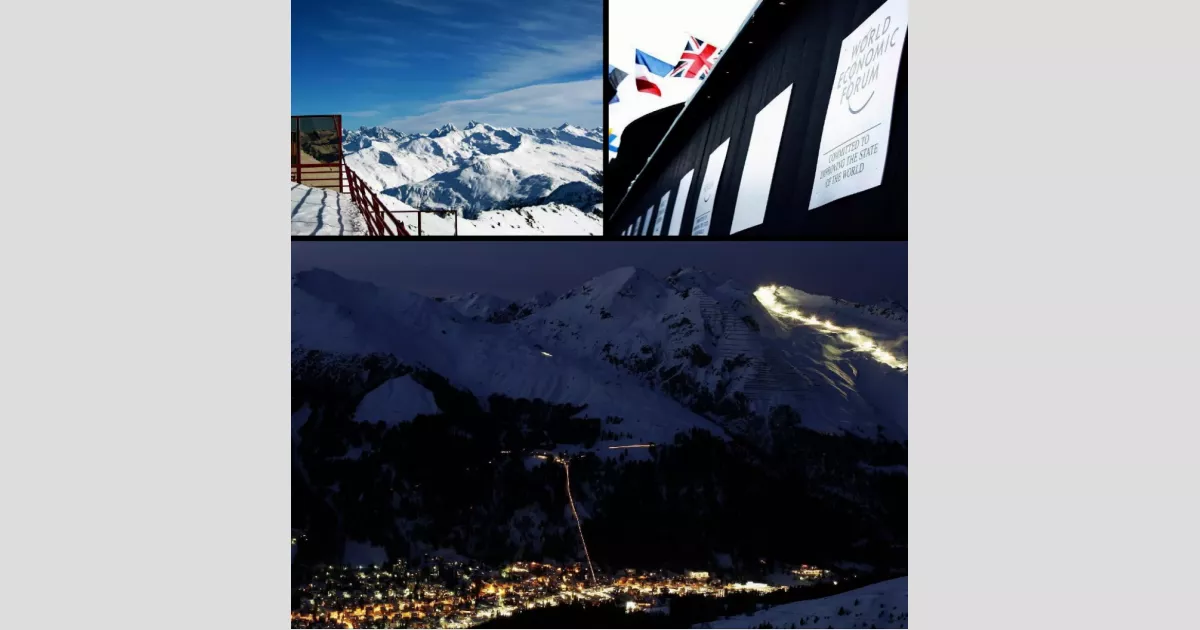
Davos is a resort town and municipality situated in the Prättigau/Davos Region within the canton of Grisons, Switzerland. Nestled in the Rhaetian Alps between the Plessur and Albula Ranges, it lies on the river Landwasser. As of 2020, Davos has a permanent population of 10,832 residents.
2 hours ago : Davos: Global Leaders, International Law Discussions, and Unique Iglu-Dorf Experience.
Davos discussions included alarming announcements about international law, emphasized continuums over dichotomies and offered a unique stay in Iglu-Dorf Klosters. These events are worthy of note.


1900: Peder Østlund set world records
In 1900, the Norwegian Peder Østlund set four world records in speed skating in Davos.
1913: Davos hosts European Bandy Championships
In 1913, Davos hosted the European Bandy Championships.
1913: European Bandy Championship held in Davos
In 1913, Davos hosted the only European Bandy Championship.
1917: Ernst Ludwig Kirchner lived in Davos
Since 1917, Ernst Ludwig Kirchner lived in Davos.
1919: Building construction period
About 25.9% of the buildings in Davos were built before 1919.
1923: Spengler Cup first held
In December 1923, the Spengler Cup, an international ice hockey tournament, was first held in Davos.
1936: Ernst Ludwig Kirchner depicted Davos
In 1936, Ernst Ludwig Kirchner, who had been living in Davos since 1917, began to depict Davos and the Junkerboden in his paintings, showcasing a Romantic and pantheistic atmosphere with a simplified formal structure.
1936: Wilhelm Gustloff's assassination
In 1936, Swiss Nazi leader Wilhelm Gustloff's assassination in Davos led to tensions with Nazi Germany.
1938: Ernst Ludwig Kirchner depicted Davos
In 1938, Ernst Ludwig Kirchner, who had been living in Davos since 1917, continued to depict Davos and the Junkerboden in his paintings, showcasing a Romantic and pantheistic atmosphere with a simplified formal structure.
1985: Changes in land usage since 1985
Since 1985, agricultural land in Davos has decreased by 736 hectares, while forested land has increased by 481 hectares.
1991: Building construction period
About 8.3% of the buildings in Davos were built between 1991 and 2000.
2000: Language spoken in Davos
As of 2000, German was the most spoken language in Davos (86.3%), with Serbo-Croatian (2.8%) and Italian (2.7%) being the second and third most common.
2000: Religious affiliation
From the 2000 census, 46.6% of the population belonged to the Swiss Reformed Church while 34.6% are Roman Catholic.
2000: Building types in Davos
Of the 2,133 inhabited buildings in Davos in 2000, about 30.7% were single family homes and 39.1% were multiple family buildings.
March 2003: Winterjam festival held in Davos
On 14 March 2003, a festival called Winterjam was held in Davos, with bands such as Sum 41, Crazy Town, and Guano Apes performing.
2004: Davos land usage in 2004/09 survey
According to the 2004/09 survey, about 35.0% of the area is used for agricultural purposes, 22.2% is forested, 2.3% is settled, and 40.5% is unproductive land.
2004: Davos area survey
As of the 2004 survey, the municipality of Davos covers an area of 284 square kilometers.
2009: Davos largest municipality in Switzerland
In 2009, Davos became the largest municipality in Switzerland after a municipal merger with Wiesen.
2010: Davos lost distinction after formation of Glarus Süd
In 2010, Davos lost its distinction as the largest municipality in Switzerland after the formation of Glarus Süd.
2010: Population change rate
Over the four years from 2010 to 2014, the population of Davos changed at a rate of -0.27%.
2013: Construction rate of new housing units
In 2013 the rate of construction of new housing units per 1000 residents was 23.46.
2014: Foreign nationals in Davos population
As of 2014, 27.0% of the population of Davos were resident foreign nationals.
2014: Age distribution in Davos
As of 2014, children and teenagers (0-19 years old) made up 17.3% of the population in Davos.
2014: Employment statistics in Davos
As of 2014, there were a total of 8,853 people employed in the municipality of Davos, with significant portions in the primary, secondary, and tertiary sectors.
2014: International Bandy tournament started
In 2014, an international Bandy tournament, starting in 2014, has been organised.
2014: Private households in Davos
In 2014, there were 5,441 private households in Davos with an average household size of 2.03 persons.
2015: Overnight stays in local hotels
In 2015 local hotels in Davos had a total of 797,348 overnight stays, of which 46.9% were international visitors.
2015: Marital status of residents
In 2015 there were 5,099 single residents, 4,666 people who were married or in a civil partnership, 550 widows or widowers and 794 divorced residents.
2015: Federal election results
In the 2015 federal election, the SVP was the most popular party with 30.0% of the votes.
2015: Vacancy rate in Davos
The vacancy rate for the municipality, in 2015, was 0.71%.
2017: Davos part of the Prättigau/Davos Region
Since 2017, the municipality is part of the Prättigau/Davos Region.
2019: Federal election results
In the 2019 federal election, the SP was the most popular party with 21.3% of the votes.
December 2020: Davos population in December 2020
As of December 2020, Davos has a population of 10,832.
2020: Davos population in 2020
In 2020, the permanent population of Davos was recorded at 10,832.
2022: Study commissioned on Nazi influence in Davos
In 2022, Davos mayor Philip Willhelm commissioned a study from historian Stefan Keller documenting the history of Nazi influence in Davos.
2023: Federal election results
In the 2023 federal election, the SVP was the most popular party with 29.1% of the votes.
September 2024: Grand Country Council election
On 22 September 2024, the last regular election of the Grand Country Council was held.
September 2024: Last regular election held
The last regular election (Landschaftswahlen) was held on 22 September 2024.
January 2025: Grand Country Council mandate period starts
In January 2025, the mandate period for the Grand Country Council starts.
2025: Composition of Davos's Small Country Council
As of 2025, Davos's Small Country Council is made up of two members of SP (Social Democratic Party), of whom one is the president), and one each of FDP (FDP.The Liberals), SVP (Swiss People's Party), and GLP (Green Liberal Party).
2025: Small Country Council mandate period
In the mandate period 2025-2028, the Small Country Council is presided by Landammann Philipp Wilhelm.
December 2028: Grand Country Council mandate period ends
The mandate period for the Grand Country Council ends in December 2028.
2028: Small Country Council mandate period
In the mandate period 2025-2028, the Small Country Council is presided by Landammann Philipp Wilhelm.
Mentioned in this timeline
Germany officially the Federal Republic of Germany is a nation...
Portugal officially the Portuguese Republic occupies the Iberian Peninsula in...
September is the ninth month of the year in the...
An election is a structured decision-making process where a population...
Trending
14 minutes ago Cavs' Health Improves: Wade's Return Boosts Playoff Hopes; Mobley's Status Questionable
14 minutes ago Estonia Buys Bunkers: Fortifying Border Amidst Russia Tensions, Bolstering Baltic Defenses

14 minutes ago Zion Williamson to play against Bucks, securing $16.8 million guarantee.

15 minutes ago Rudy Gobert Suspended for Flagrant Foul in Game Against 76ers

15 minutes ago Tirante vs. Tabilo: Rio Open 2026 Prediction and Highlights of Garin Match

15 minutes ago Fritz and Paul Advance to Delray Beach Quarterfinals: Predictions and Schedule
Popular
Jesse Jackson is an American civil rights activist politician and...
Randall Adam Fine is an American politician a Republican who...
Barack Obama the th U S President - was the...

Ken Paxton is an American politician and lawyer serving as...

Bernie Sanders is a prominent American politician currently serving as...

Pam Bondi is an American attorney lobbyist and politician currently...