


Debt relief encompasses the partial or complete forgiveness of outstanding debt. It can also involve slowing down or entirely halting the increase of debt. This process applies to various entities, including individuals, corporations, and even entire countries facing financial burdens. The goal of debt relief is typically to alleviate financial strain, stimulate economic recovery, or address systemic economic imbalances. It can be achieved through various mechanisms, such as debt restructuring, debt swaps, or outright debt cancellation, depending on the specific circumstances and the involved parties.
1900: The Wonderful Wizard of Oz published
In 1900, the novel "The Wonderful Wizard of Oz" was published, interpreted by some as promoting free silver to reduce debts through inflation.


1919: Versailles Treaty
In 1919, the Versailles Treaty stipulated that Germany had to pay reparations to Britain, France, and others, as well as repay loans to the United States.
1931: War debt payments suspended
In 1931, war debt payments by World War I Allies to the U.S. were suspended.
1953: US Treasury loans paid off
In 1953, loans made by the United States Treasury to the Allies during World War I were finally paid off after being postponed and reduced.
1953: Agreement on German External Debts
In 1953, the Agreement on German External Debts resumed Germany's war reparations, becoming a notable example of international debt relief.
1956: UN Supplementary Convention on the Abolition of Slavery
In 1956, the United Nations Supplementary Convention on the Abolition of Slavery banned debt bondage as a form of "modern day slavery".
1983: Latin American debt crisis
In 1983, the Latin American debt crisis started exploding, with Mexico being one of the first countries affected.
1998: Jubilee 2000 demonstration at G8 meeting
In 1998, demonstrations were held at the G8 meeting in Birmingham as part of the Jubilee 2000 campaign, pushing debt relief onto the agenda of Western governments and international organizations.
1999: Film Fight Club released
In 1999, the film "Fight Club" was released, featuring the destruction of credit card records as a form of debt relief.
2000: Jubilee 2000 campaign
In 2000, the Jubilee 2000 campaign advocated for debt relief for heavily indebted and underdeveloped developing countries.
2003: Non-housing personal debt increase
At the start of 2003, non-housing personal debt in the United States was approximately $2.05 trillion.
2003: Creation of Surcharges
In 2003, Texas created surcharges to pay for a roadway network that was never built.
July 2005: G8 Gleneagles meeting and MDRI agreement
In July 2005, following the G8's Gleneagles meeting, the Multilateral Debt Relief Initiative (MDRI) was agreed upon, offering 100% cancellation of multilateral debts owed by HIPC countries.
2007: Mortgage Forgiveness Debt Relief Act of 2007
In 2007, the Mortgage Forgiveness Debt Relief Act of 2007 provided that debt forgiven on a primary residence is not treated as income.
2008: Emergency Economic Stabilization Act of 2008 extends mortgage relief
In 2008, the Emergency Economic Stabilization Act of 2008 extended the Mortgage Forgiveness Debt Relief Act of 2007 for three years.
2008: Peak in non-housing personal debt
In Q4 of 2008, non-housing personal debt in the United States peaked at $2.71 trillion.
2009: Debt forgiven on a primary residence is not treated as income
In 2009, Debt forgiven on a primary residence is not treated as income due to the Mortgage Forgiveness Debt Relief Act of 2007.
2010: FTC implements changes in debt settlement industry
In 2010, the debt settlement industry experienced significant regulatory scrutiny, leading to changes implemented by the FTC.
2012: Emergency Economic Stabilization Act of 2008 expires
In 2012, the Emergency Economic Stabilization Act of 2008 expires and debt forgiven on a primary residence is treated as income again.
2012: Unsecured personal debt reaches previous peak again
In Q3 of 2012, unsecured personal debt in the United States reached the $2.71 trillion level again after the 2008 financial crisis.
2015: Mr. Robot premieres
In 2015, the television series "Mr. Robot" premiered, following hackers aiming to cancel debts.
2017: Student loan delinquency rates
As of Q3 2017, student loans have the highest rates of serious delinquency (90 or more days delinquent) with approximately 9.6% of all student loan debt falling into this bucket.
2017: Unsecured personal debt continues to rise
By the end of the third quarter of 2017, unsecured personal debt in the United States had risen steadily to $3.76 trillion.
2019: Texas Legislature forgives debt
In 2019, the Texas Legislature forgave an estimated $2.5 billion in debt by abolishing the "Driver Responsibility Surcharge" in most cases and eliminated red-light cameras statewide effectively canceling those debts.
2019: Mr. Robot series ends
In 2019, the television series "Mr. Robot" ended, following hackers aiming to cancel debts.
2024: Debt relief increases income
A 2024 study found that debt relief for debtors leads to a large increase in earned income, employment, assets, real estate, secured debt, home ownership, and wealth over subsequent decades.
2024: Debt relief increases support for incumbent governments
A 2024 study found that debtors who receive debt relief are more likely to support incumbent governments.
2025: Medical debt relief study
A 2025 study of medical debt relief found no evidence that it led to improvements in mental and physical health, healthcare utilization, and financial wellness. It did however find that it led moderate but statistically significant reduction in payments of existing medical bills.
Mentioned in this timeline
The United States of America is a federal republic primarily...
Texas is the second-largest U S state by area and...

Germany officially the Federal Republic of Germany is located in...
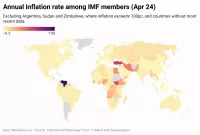
Inflation in economics signifies a rise in the average price...
France officially the French Republic is primarily in Western Europe...

World War I a global conflict between the Allies and...
Trending

3 hours ago Randy George Warns of Critical Missile Defense Shortages Amid Escalating Iran War

3 hours ago Teen Arrested for Alleged Mass Shooting Plot at Aurora Hindu Temple
4 hours ago Jaylen Waddle Fantasy Football Outlook and Week 6 Trade Value Analysis

4 hours ago Trump Publicly Criticizes Karl Rove and John Cornyn Over Texas Senate Race Support
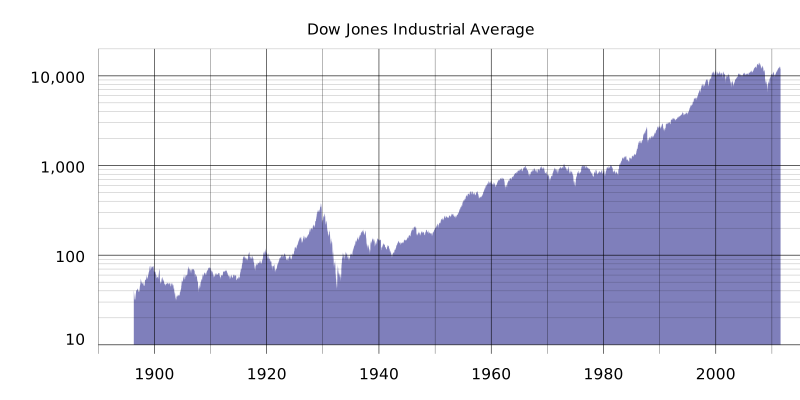
4 hours ago Dow Jones Industrial Average Rises Over 500 Points Amid Changing Investor Strategy

5 hours ago LIV Golf Players Face Backlash Seeking DP World Tour Return Amid Future Uncertainty
Popular

Ilhan Omar is a prominent American politician currently serving as...

Ken Paxton is an American politician and lawyer serving as...

Jameis Winston is an American football quarterback currently playing for...

Michael Joseph Jackson the King of Pop was a highly...

Elon Musk is a visionary entrepreneur and engineer known for...

Cristiano Ronaldo widely considered one of the greatest footballers captains...