Challenges in the Life of Gretchen Whitmer in a Detailed Timeline


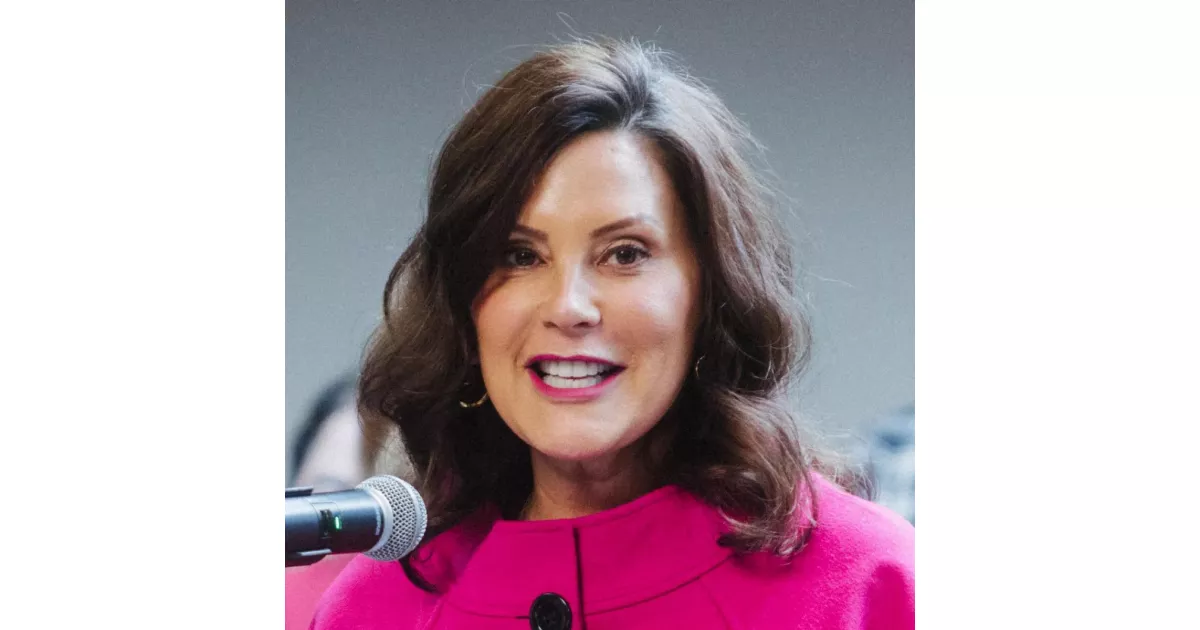
Life is full of challenges, and Gretchen Whitmer faced many. Discover key struggles and how they were overcome.
Gretchen Whitmer is the 49th and current governor of Michigan, serving since 2019. As a member of the Democratic Party, she previously held positions in the Michigan House of Representatives (2001-2006) and the Michigan Senate (2006-2015).
2012: Enactment of "Right-to-Work" Law
In 2012, Michigan enacted a "right-to-work law" that Whitmer later repealed.


2013: Shared Sexual Assault Experience
In 2013, Gretchen Whitmer gained national attention for a floor speech during a debate on abortion in which she shared her experience of being sexually assaulted.
2018: Healthcare Stance
In 2018, Gretchen Whitmer spoke against single-payer healthcare as unrealistic on a state level, but expressed support for federal-level Medicare for All. She also pledged to lower prescription drug costs and repeal Schuette's drug immunity law, which she believed protected drug companies from legal accountability if their drugs harmed or killed people.
2019: Struggle to Pass Budget
In 2019, Governor Whitmer struggled with the Republican-controlled legislature to pass a budget and made several concessions.
2019: Canceled Sale of Former State Prison
In 2019, Gretchen Whitmer canceled the sale of a former state prison due to concerns that the purchasing company intended to operate the facility as an immigrant detention center. The sale was canceled because the company could not guarantee the facility would not be used to house families separated under the Trump administration's family separation policy.
March 2020: Trump's comment about "the woman in Michigan"
In March 2020, President Donald Trump reportedly told Vice President Mike Pence, "don't call the woman in Michigan" in response to Gretchen Whitmer's criticisms of his administration's COVID-19 pandemic response. This event in March 2020 led to Whitmer embracing the description.
March 2020: Issued Stay-at-Home Order
In March 2020, at the outset of the COVID-19 pandemic, Gretchen Whitmer issued a stay-at-home order for Michigan.
April 2020: Armed Protestors at Michigan State Capitol
In April 2020 armed protestors demonstrated at the Michigan State Capitol, leading to calls for a ban on weapons inside the building.
April 2020: Legal Challenge to Stay-at-Home Order Rejected
In April 2020, a Michigan judge rejected a legal challenge to Gretchen Whitmer's stay-at-home order.
April 2020: Protests Against Restrictions
In April 2020, right-wing groups organized a protest against Governor Whitmer's COVID-19 restrictions at the Michigan State Capitol.
May 2020: Cecily Strong Portrays Whitmer on Saturday Night Live
In May 2020, amid her handling of the COVID-19 pandemic, Cecily Strong portrayed Gretchen Whitmer on Saturday Night Live after tweets in which Trump attacked her and dismissed her as "the woman in Michigan".
May 2020: Edenville Dam Failure
In May 2020, the Edenville Dam gave way after awaiting an overdue report on its safety standards. Whitmer directed the Michigan Department of Environment, Great Lakes, and Energy (EGLE) to form an investigation.
September 2020: COVID-19 Orders Issued
In September 2020, Gretchen Whitmer's COVID-19-related orders, which were issued from March through September 2020, were under the 1945 Emergency Powers of Governor Act.
October 8, 2020: Federal Indictment for Kidnapping Plot
On October 8, 2020, a federal indictment was unsealed against six men associated with the Wolverine Watchmen for plotting to kidnap Gretchen Whitmer and violently overthrow Michigan's government.
October 2020: Kidnapping Plot Thwarted
In October 2020, the Federal Bureau of Investigation thwarted a far-right militia group's kidnapping plot against Gretchen Whitmer.
October 2020: Michigan Supreme Court Decision
In October 2020, the Michigan Supreme Court ruled that the 1945 Emergency Powers of Governor Act was unconstitutional, limiting Whitmer's power to issue COVID-19 related executive orders without legislative approval.
December 2020: Veto of Repeal Legislation
In December 2020, Gretchen Whitmer vetoed the legislation passed by the legislature to repeal the 1945 Emergency Powers of Governor Act.
July 2021: Repeal of 1945 Act Approved
In July 2021, the legislature approved a citizen initiative to repeal the 1945 Emergency Powers of Governor Act, which took effect as Whitmer could not veto it.
April 2022: Acquittal of Harris and Caserta
In April 2022, two men (Harris and Caserta) were acquitted on all charges on grounds of entrapment by federal authorities in connection to the kidnapping plot.
August 2022: Conviction of Fox and Croft Jr.
In August 2022, two men (Fox and Barry Croft Jr.) were convicted of conspiracy to kidnap Gretchen Whitmer.
October 2022: Conviction of Morrison, Musico, and Bellar
In October 2022, three men (Morrison, Musico, and Bellar) were convicted of providing material support for a terrorist act in connection to the kidnapping plot.
Mentioned in this timeline

TikTok is a social media platform centered around short-form video...

Donald John Trump is an American politician media personality and...
Joe Biden served as the th President of the United...

Instagram is a globally prominent social media platform centered on...
Kamala Harris is an American politician and attorney She served...
Saturday Night Live SNL is a late-night live sketch comedy...
Trending
4 hours ago Treasury to Auto-Enroll 60 Million Children in New Trump Accounts Program

5 hours ago Novak Djokovic Returns to China Open With Positive Fitness Update

4 hours ago Citi Supports Hana Bank in Historic $100 Million Digital Bond Issuance

1 day ago Henry Winkler Shares Story Behind His Surprise Casting in Adam Sandler Movie The Waterboy

5 hours ago U.S. Forces Complete Official Withdrawal from Iraq After Decades of Military Presence
6 hours ago Evan Gershkovich Reflects on Russian Imprisonment in New Memoir
Popular

Jameis Winston is an American football quarterback currently playing for...

Shakira Isabel Mebarak Ripoll the Queen of Latin Music is...
Ken Paxton is an American politician and lawyer serving as...
Sylvester Stallone is an iconic American actor screenwriter and filmmaker...

Michael Joseph Jackson the King of Pop was a highly...
Peter Thiel is a prominent American entrepreneur venture capitalist and...